
1 Introduction to the Đức Ông Trần Quốc Nghiễn Temple
Quảng Ninh has had close ties with the Trần dynasty for 175 years of its history (1225-1400), as it was the dynasty’s ancestral homeland. When the kings died, their remains were brought back to their homeland for burial and worship. Many tombs, communal houses, temples, shrines, and sanctuaries dedicated to Trần emperors and generals still remain here.
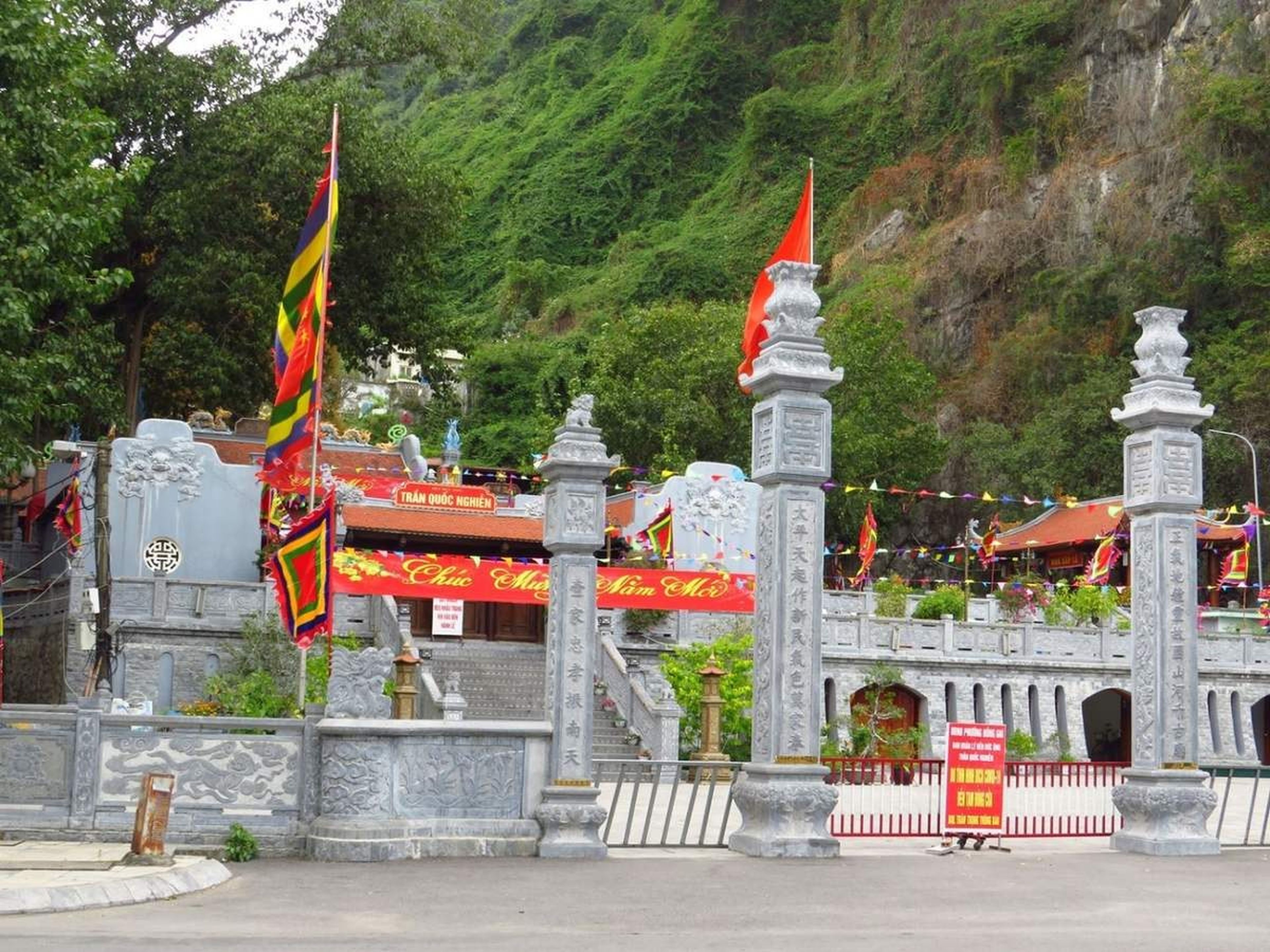
The Đức Ông Trần Quốc Nghiễn Temple is a famous sacred destination in Hạ Long that visitors should not miss. Recognized as a National Historic Site in 1993, the temple is not only a place of spiritual and cultural activity for local residents, but also preserves historical features and striking architecture.
- Address: Trần Quốc Nghiễn Street, Hồng Gai Ward, Hạ Long City, Quảng Ninh Province
- Area: 0,85 ha.
- Management unit: Đức Ông Temple Management Board - Hồng Gai Ward.
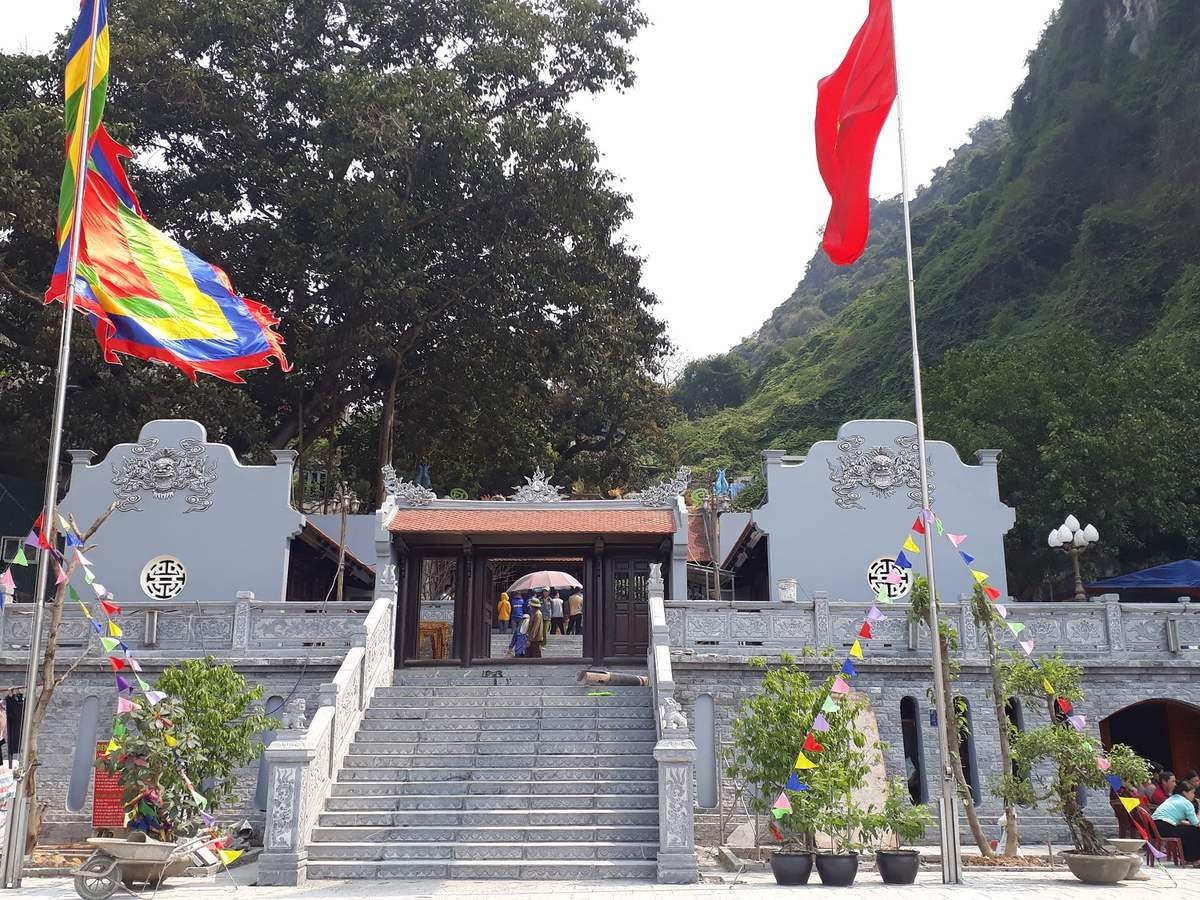
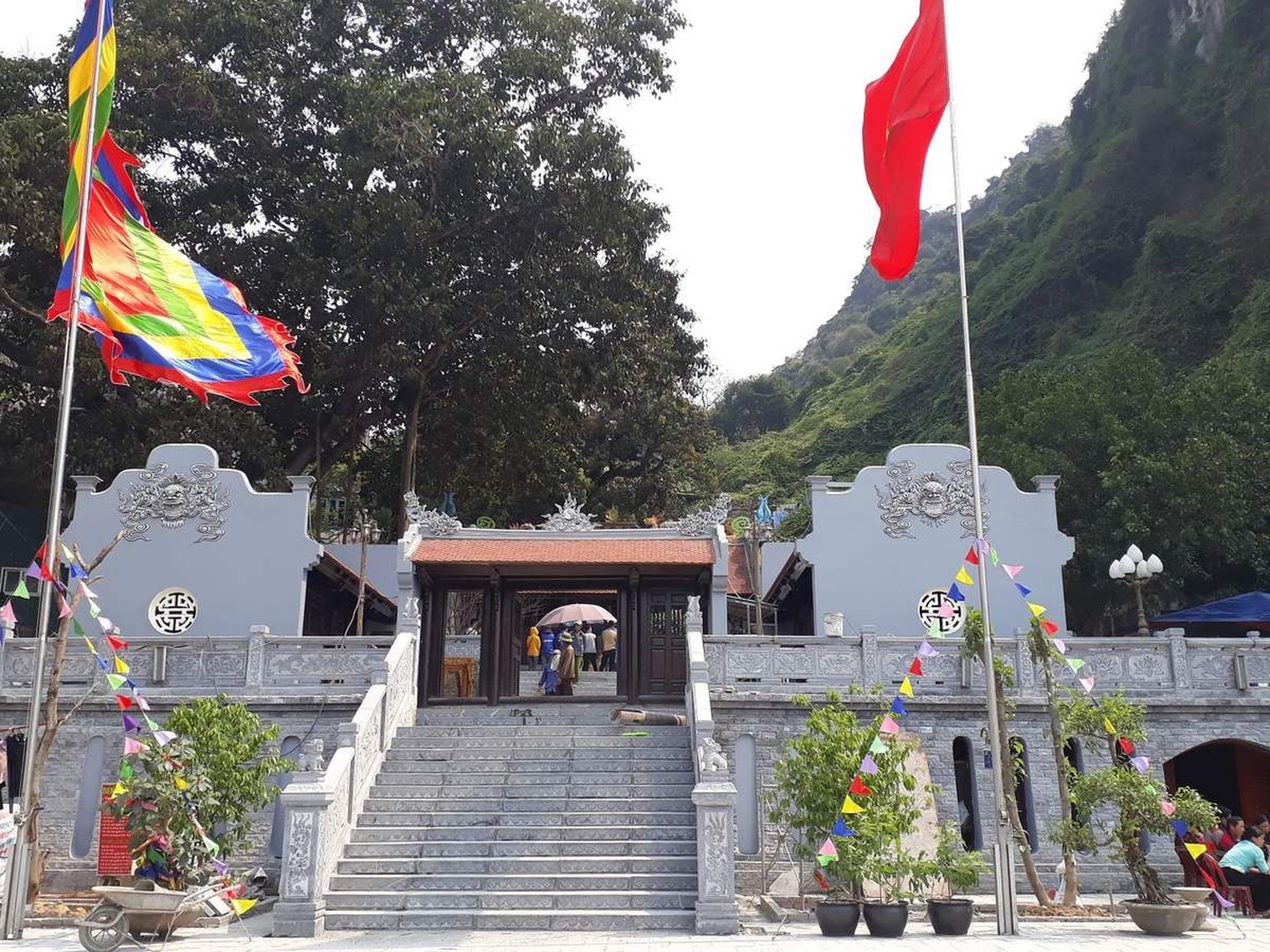
The Đức Ông Trần Quốc Nghiễn Temple has undergone some restoration and repainting, and its grounds are now quite spacious and well maintained
Trần Quốc Nghiễn was the eldest son of Hưng Đạo Đại Vương, the eldest grandson of An Sinh Vương Trần Liễu, and the nephew of King Trần Thái Tông. A gifted general, skilled in both literary and military arts, he was also a devoted son and a loyal servant of the court. During the resistance against the Yuan-Mongol invaders, he joined his father, Trần Quốc Tuấn, and other generals in achieving many great victories.
Most notably, he played a major role in the third Battle of Bạch Đằng River in 1288, defeating the enemy in the country’s northeastern region. To commemorate Trần Quốc Nghiễn, boat owners who passed by Bài Thơ Mountain joined together to build a temple in his honor. The temple was built around the end of the 13th century. After enduring many historical upheavals and the passage of time, it fell into disrepair and was restored several times by fishing-boat owners.
At that time, boat owners transported timber from forests in the districts of Tiên Yên, Ba Chẽ, and Hoành Bồ, among others, and hid it in the cave in front of the temple before carving and assembling it to build the temple. Later, local residents found a large amount of leftover wood in the cave and began calling it Đầu Gỗ Cave. Today, it has also become an appealing attraction near the Đức Ông Trần Quốc Nghiễn Temple.
Read more: Tuần Châu Island - Discover the shining jewel of Hạ Long Bay
2 Getting there
From central Hạ Long, visitors can choose from several ways to get there, such as renting a motorbike, taking a taxi, or riding a motorbike taxi. One route is to follow National Highway 18 to Đặng Bá Hát Street. At the junction with Ba Đèo, turn right and continue straight until you reach Lê Thánh Tông Street. At the roundabout where Lê Thánh Tông, Phú Gia 1, and 25 Tháng 4 streets meet, continue along Lê Thánh Tông and then turn right at Bến Đoan. Finally, turn left at the intersection of Bến Đoan and Trần Quốc Nghiễn streets and continue straight for a few hundred meters along Trần Quốc Nghiễn Street to reach the temple.
3 Explore the Đức Ông Trần Quốc Nghiễn Temple
3.1 A stunning location
The Đức Ông Trần Quốc Nghiễn Temple enjoys an exceptionally advantageous location in Hạ Long City, at the foot of Bài Thơ Mountain in the Bến Đoan-Hòn Gai area. Its formal name is Phúc Linh Từ (Phúc Linh Temple). Facing Hạ Long Bay, it offers a rare and beautiful vista. Bài Thơ 2 Bridge and Long Tiên Pagoda are also nearby. From here, visitors can easily head to the beach or explore the beautiful attractions in the surrounding area.
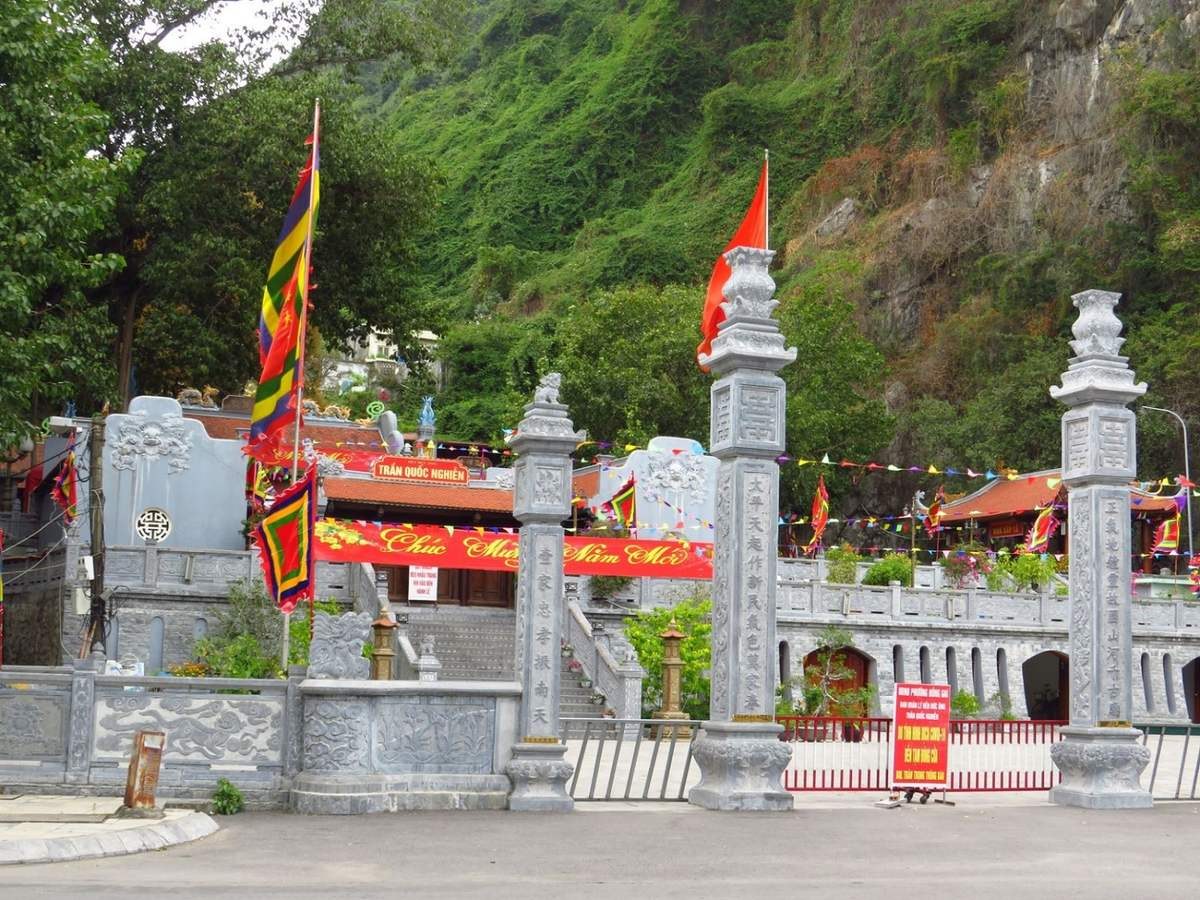
Set against the mountain and facing the sea, the temple’s beautiful location makes it a favorite stop for visitors exploring Hạ Long
3.2 Architecture of the Đức Ông Trần Quốc Nghiễn Temple
The temple complex includes a ceremonial hall with three bays in the front hall and one bay in the rear sanctuary. The central bay is dedicated to Đức Ông Trần Quốc Nghiễn, while the two sides honor the talented generals Yết Kiêu and Dã Tượng, who helped the Trần dynasty repel foreign invaders. The grounds also contain an ancient well. Although it is close to the sea, its water is clear, fresh, and sweet.
As a result, the Đức Ông Trần Quốc Nghiễn Temple served not only as a place for fishermen to stop and rest, but also as a source of fresh water for their voyages out to sea. The temple still preserves two stone steles and five ancient statues dating from the 13th century, carved and erected by some boat owners. In 2011, the Hạ Long City People’s Committee approved the master plan for the Đức Ông Trần Quốc Nghiễn Temple Historic Site, expanding the total construction area to 2.531.8m2. In 2013, the plan was further revised to expand the grounds of the historic site to 2689,8m2.

Bài Thơ Mountain is not far from the temple, and offers sweeping views of beautiful Hạ Long Bay. Photo: Gody.vn
Read more: Ti Tốp Island - Admire a peaceful island in the heart of Hạ Long Bay
3.3 Events held at the temple
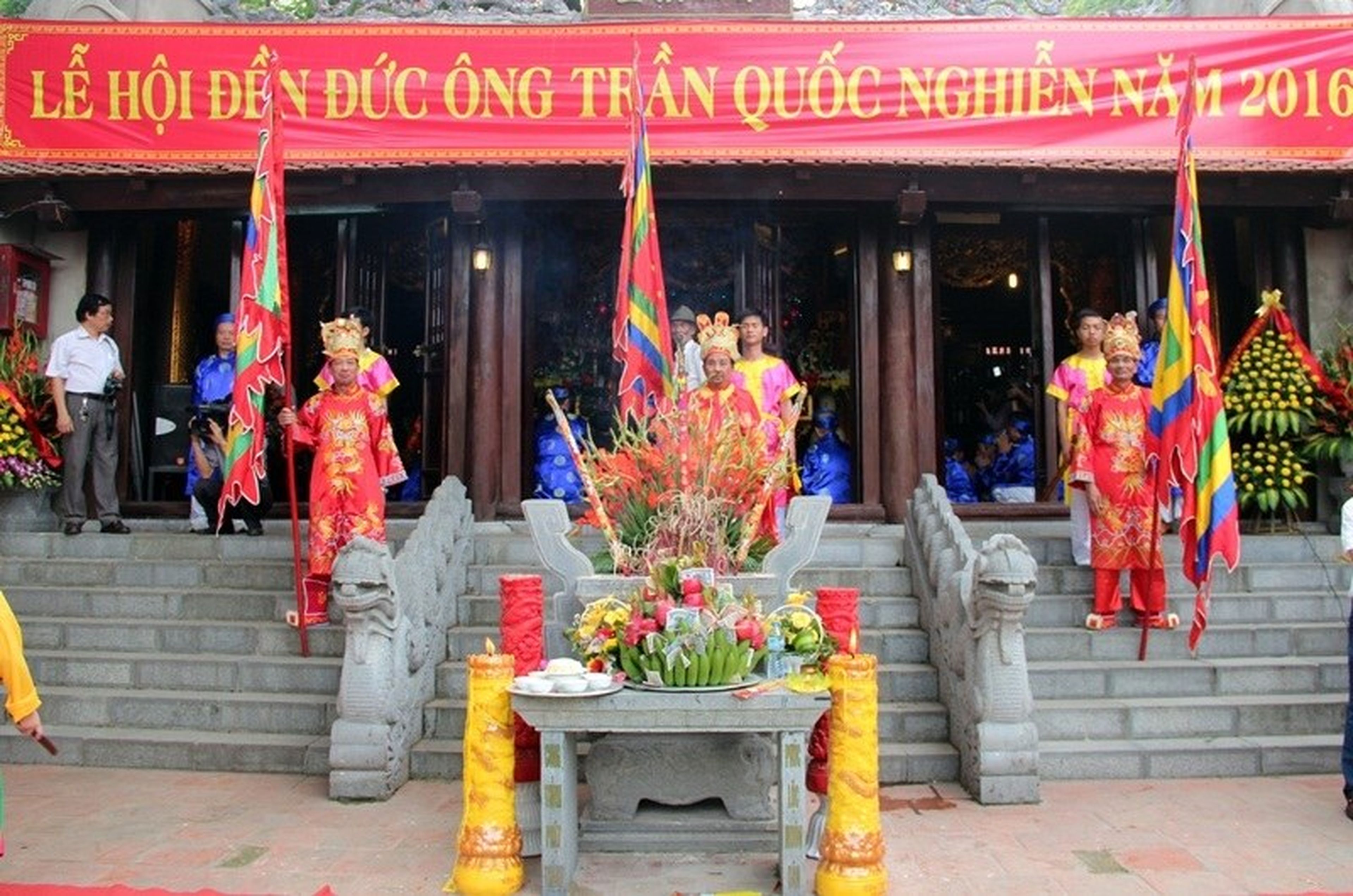
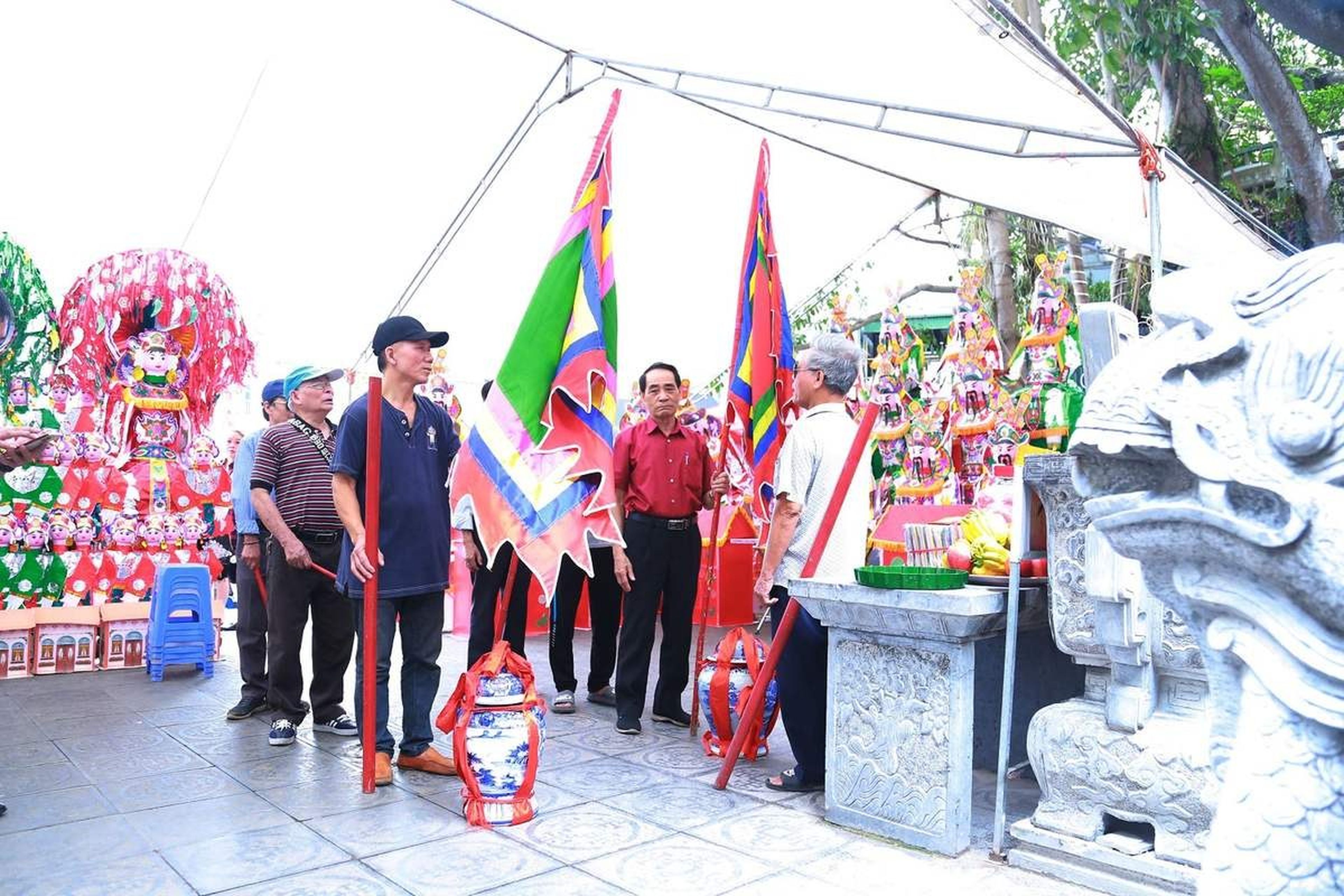
The Trần Quốc Nghiễn Temple Festival (also known as the Đức Ông Temple Festival) is held annually at the Đức Ông Trần Quốc Nghiễn Temple. It gives people an opportunity to reflect on the nation’s glorious history and inspire pride and patriotism in future generations through reenactments, including Đức Ông Trần Quốc Nghiễn and his generals making a ceremonial procession through the streets, a sacred torch procession, and a floating lantern ceremony.
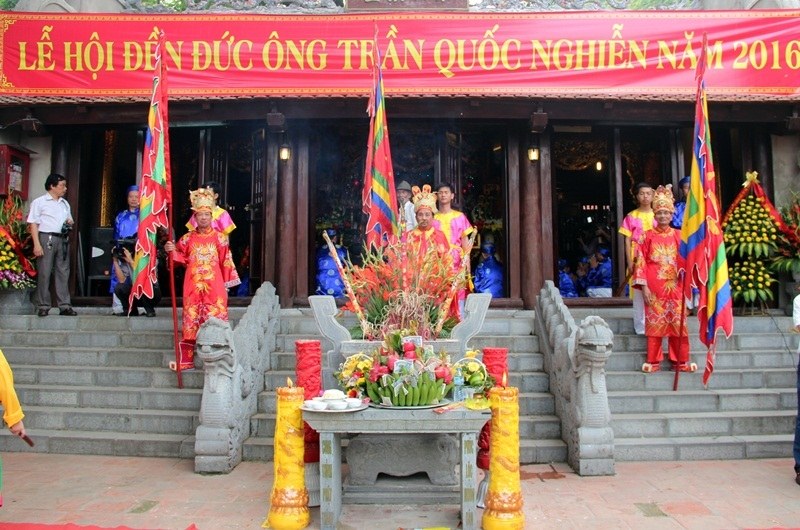
The festival lasts for 2 days and draws large numbers of local residents and visitors
The festival was originally held on the anniversary of Đức Ông Trần Quốc Nghiễn’s death, the 24th day of the 3rd lunar month. Since 2008, however, it has been revived and held annually on April 29 and 30. This is also a meaningful event in the religious and cultural life of Quảng Ninh residents, attracting large numbers of monks, Buddhists, local people, and visitors from across the country.
The event begins with a palanquin procession along 25/4 Street and Lê Thánh Tông Street to Long Tiên Pagoda, before returning to Đức Ông Shrine. On the day of the procession, residents living along both sides of the route come out to welcome Đức Ông with great respect and reverence. A wide range of activities take place over the two days, blending traditional and contemporary elements: ceremonial rites; Buddhist scripture ceremonies, Trần-dynasty ancestor worship, and Mother Goddess worship; a procession for Đức Ông; dragon, lion, and qilin dances; and floating lanterns released onto the sea to pray for favorable weather for seafarers and coastal communities throughout the year.
- Ceremonies: Held in the morning and featuring Đức Ông’s procession, lion, qilin, and dragon dances, a prayer for peace, and a Buddhist life-release ritual.
- Festivities: Held in the afternoon, with traditional folk games and music and dance performances.
- Evening: A sacred torch procession and a floating lantern ceremony on the sea.
The evening ceremonies are the most anticipated part of the festival for locals and visitors, as they symbolize Đức Ông bringing light and opening people’s minds. Releasing floating lanterns onto the sea is also a way to pray for favorable weather throughout the year, so that fishermen can work and fish in peace. The event extends across the entire Bài Thơ Mountain historic site, including Đức Ông Temple, Long Tiên Pagoda, and several streets in Hồng Gai and Bạch Đằng wards.
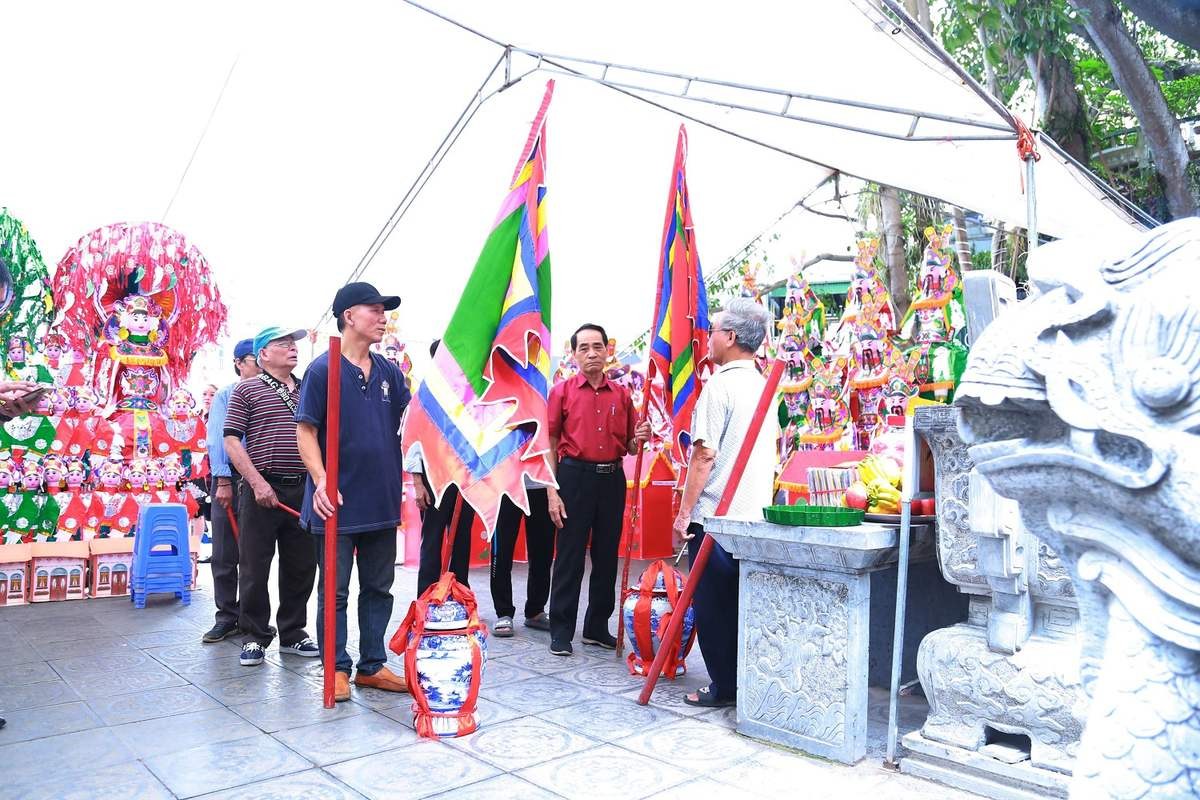
The statue procession team rehearses in anticipation of the Đức Ông Trần Quốc Nghiễn Temple Festival
The Đức Ông Trần Quốc Nghiễn Temple Festival has become a traditional cultural event for the people of Hạ Long and Quảng Ninh as a whole. Its main purpose is to preserve and promote the cultural values of the Bài Thơ Mountain historic site and to instill in younger generations a sense of pride in their homeland and the nation’s glorious history.
A visit to the Đức Ông Trần Quốc Nghiễn Temple will hopefully leave every visitor with a deeper understanding of history, as well as memories of Hạ Long City’s beautiful seascapes and islands.