
With its advantages in natural and cultural heritage, along with a rich island and marine tourism system, Quang Ninh has ample room to apply technology to enrich experiences and bring heritage values closer to tourists.

A scene applying AI in the music video "Touching the Heritage Land" by the Youth Union of Tuan Chau Ward. Photo: Provided by the unit
Destinations such as Ha Long Bay, Bai Chay Bridge, the city Museum - Library, along with beaches, caves, and cuisine steeped in local identity, were vividly recreated by youth union members of Tuan Chau Ward using AI technology in the music video "Touching the Heritage Land". After being posted, the music video garnered over 10,000 views. By blending music, visuals, and technology, the music video opens up a new approach to tourism promotion, bringing natural landscapes, cultural landmarks, and unique culinary highlights closer to the public, especially young people.
According to Ms. Vu Ngoc Han (Tuan Chau Ward Digital Volunteer Youth Team), the production team wanted to find a fresh storytelling method aligned with the information consumption habits of young people to introduce Ha Long Bay and the image of a green, civilized, and friendly Quang Ninh. Through visuals recreated by AI, the beauty of the heritage land is retold in a modern, highly intuitive language, contributing to spreading love for the homeland, evoking pride, and inspiring exploration of Quang Ninh.
Alongside promoting destinations, AI and smart technologies are also opening up avenues to improve the quality of tourism services. Since early 2025, Wyndham Garden Sonasea Van Don hotel has introduced robots to several operations, such as reception, luggage transport, and food delivery, creating added convenience and highlights in the accommodation experience.
Meanwhile, AI-powered chatbots on customer care platforms can assist with 24/7 inquiries, providing information on rooms, services, menus, and prices, while also suggesting suitable itineraries and attractions. These applications make interactions between businesses and tourists more flexible and convenient.
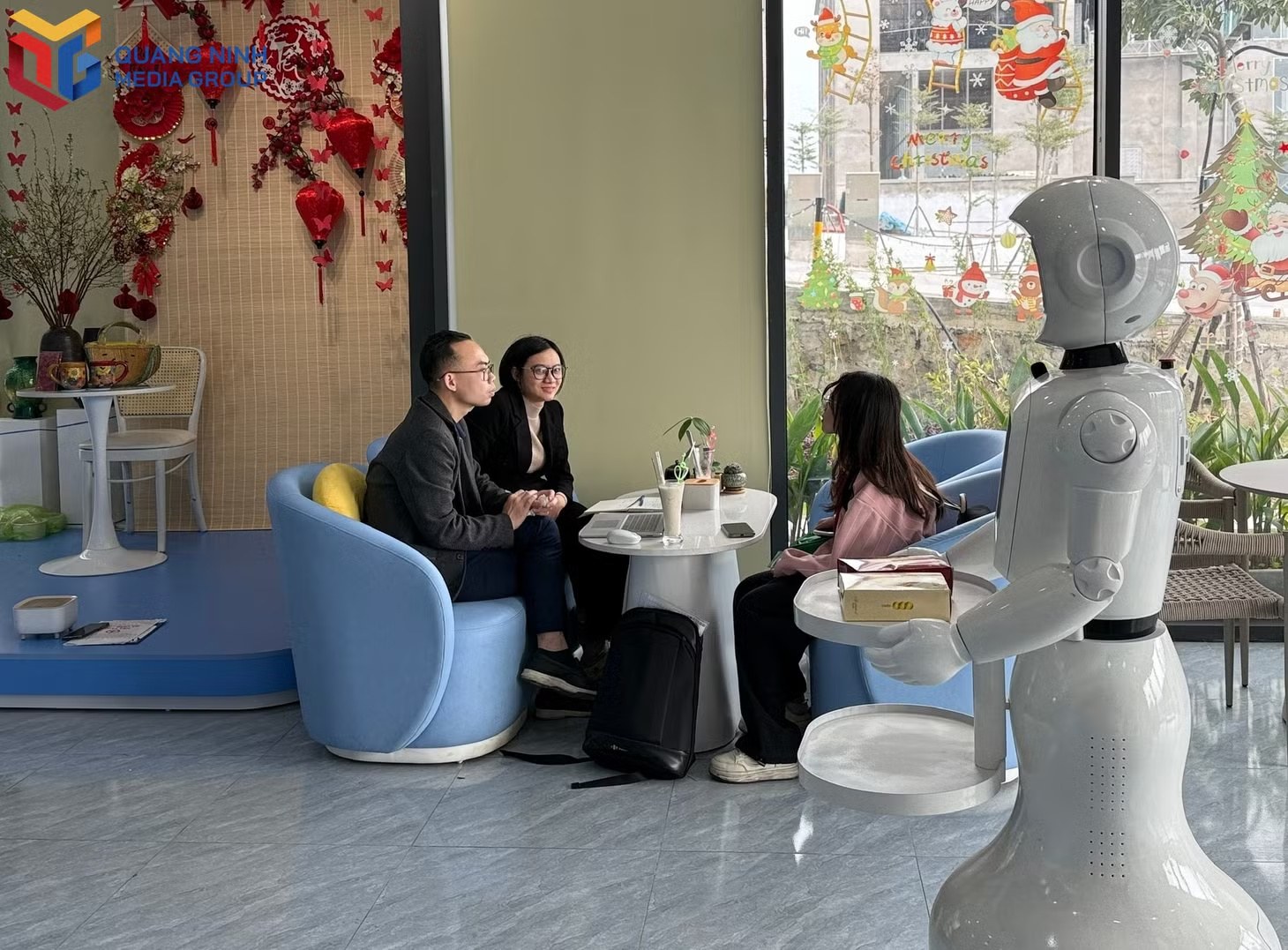
An AI robot used by a service business in Ha Long Ward to serve customers.
Recognizing the potential of technology, Quang Ninh has gradually stepped up capacity building for AI applications in tourism. The city has organized AI application training courses for more than 1,100 turns of officials, workers, and tourism business representatives. Through this, tourism practitioners have gained additional knowledge and skills to access new tools, gradually applying them to promotion, communications, and customer service.
In parallel, Quang Ninh is also aiming to integrate AI and the Internet of Things (IoT) into the management, protection, and promotion of cultural heritage values. When connected to digitized data, smart systems can support monitoring the condition of relics, identifying noteworthy changes, managing information, and providing additional bases for specialized agencies during the conservation process.
The foundation for these applications to operate effectively is a synchronized, standardized cultural data system capable of connectivity and sharing. According to the city's orientation, tangible and intangible cultural heritage, museums, and documentary heritage of ethnic groups will be digitized; at the same time, online tours, electronic tickets, and multilingual automated guides will be developed.
The goal by 2030 is that 100% of digitized cultural heritage types must have their data standardized according to the national standard framework and shared as regulated; at least 80% of the intangible cultural heritage of ethnic minority communities will be digitized and stored in specialized databases. At the same time, the development of the Digital Museum, database, and the digital experience and exhibition space of the City Museum will be completed.
On the foundation of standardized data, AI and interactive technologies can support introducing artifacts, recreating cultural spaces, helping visitors access information according to their needs, and exploring heritage through many new formats.




Comments (0)