

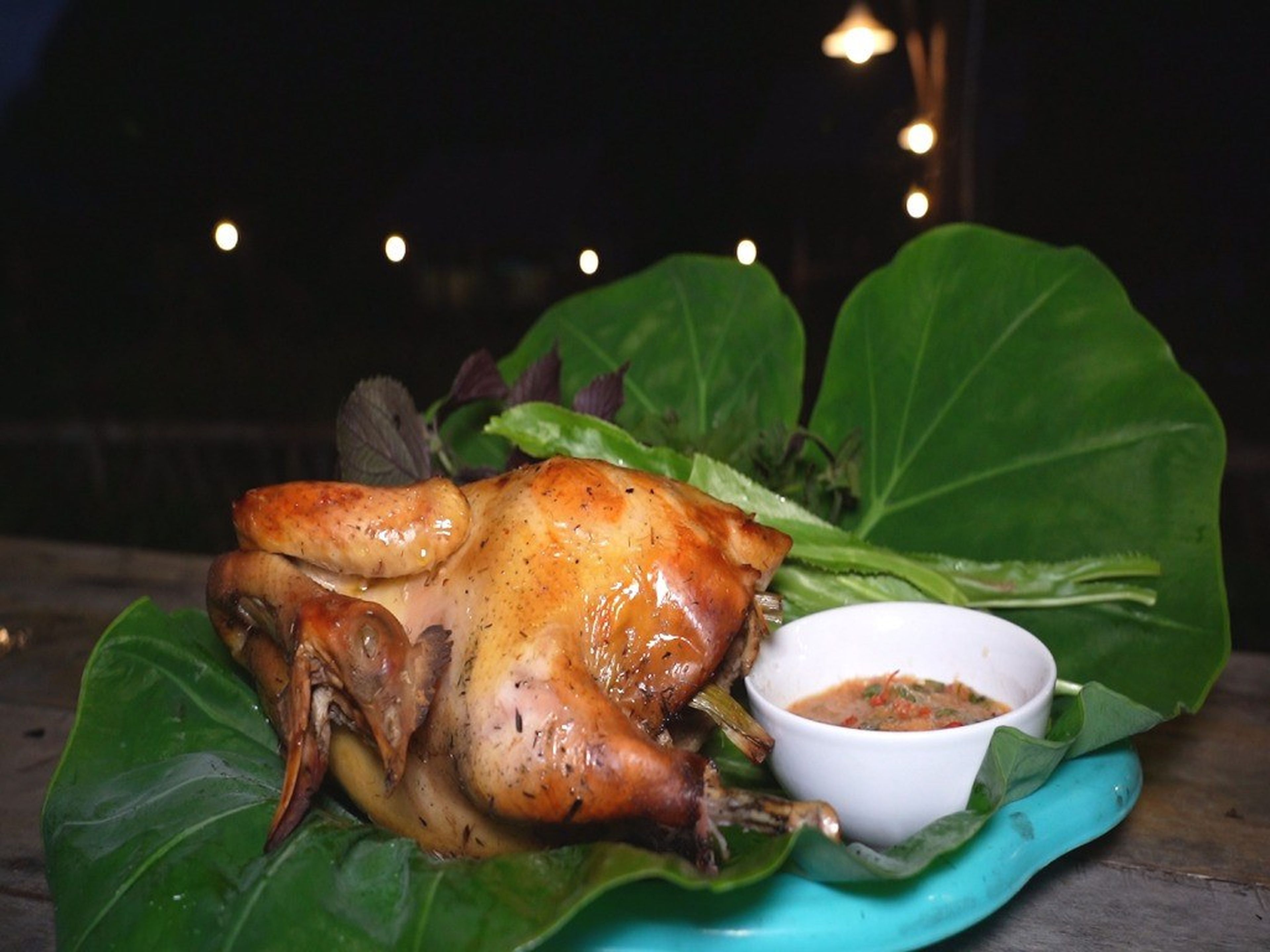
Hoành Bồ chicken is a distinctive local breed, prized by diners for its fragrant, naturally sweet meat. Hoành Bồ chicken roasted plain largely retains the meat’s natural flavor along with the fragrant aroma of Northwestern spices.
When traveling in Quảng Ninh, be sure to try the local specialty of Hoành Bồ chicken roasted plain
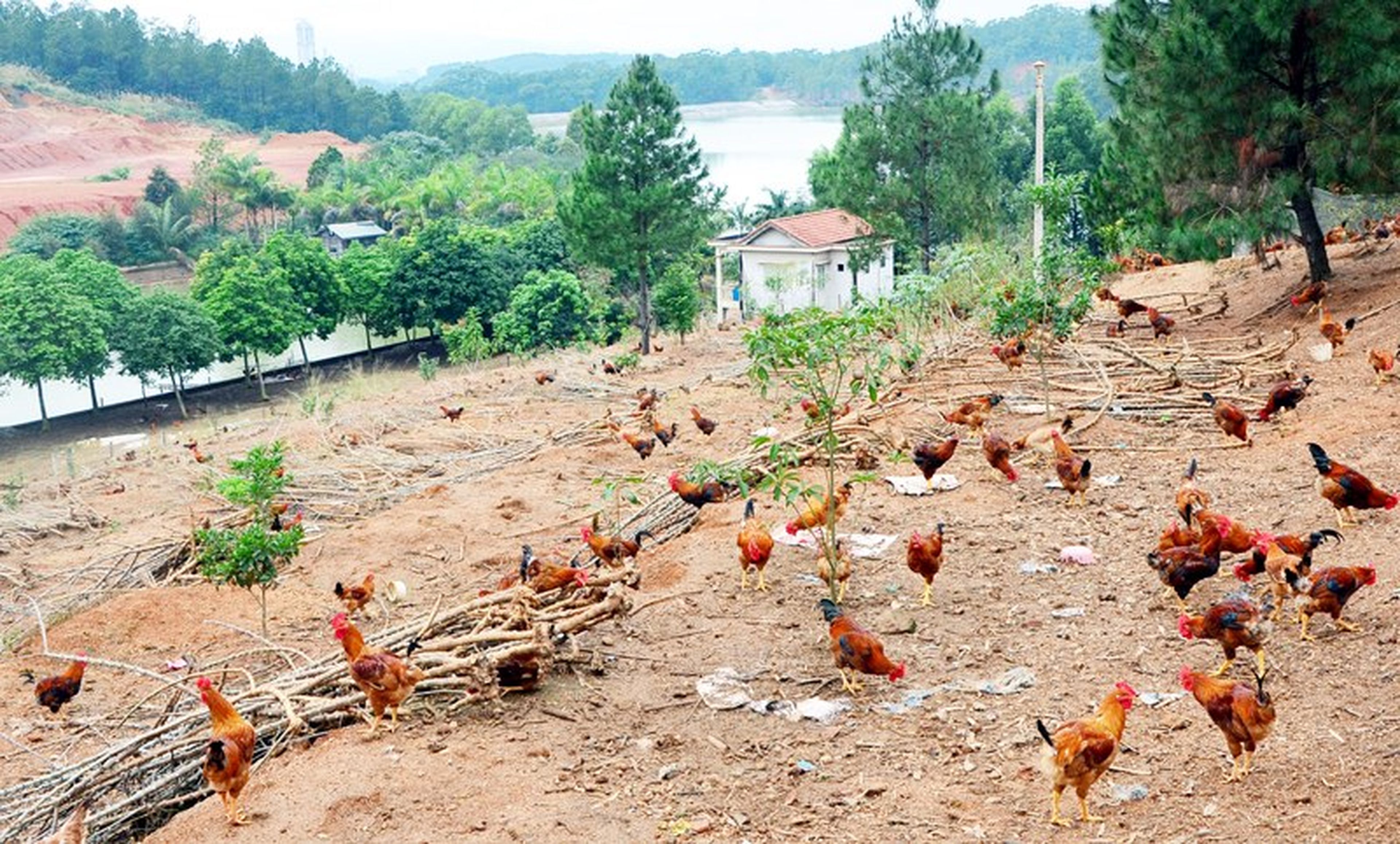
Hoành Bồ chicken roasted plain is a local specialty breed. The breed is small: hens weigh only 1.8–2.2kg, while capons weigh 2.5–3kg. These chickens have very small, short legs and bright yellow feet.
After generations of raising chickens, local residents selected the breed and developed the best care practices. To produce fragrant, delicious meat, they have their own breeding techniques. The chickens are primarily free-range, and their feed consists of “blooming rice and corn”—that is, rice and corn that have been soaked and boiled (because this breed has a poor digestive system, the rice is boiled to make it easier for the chickens to digest).
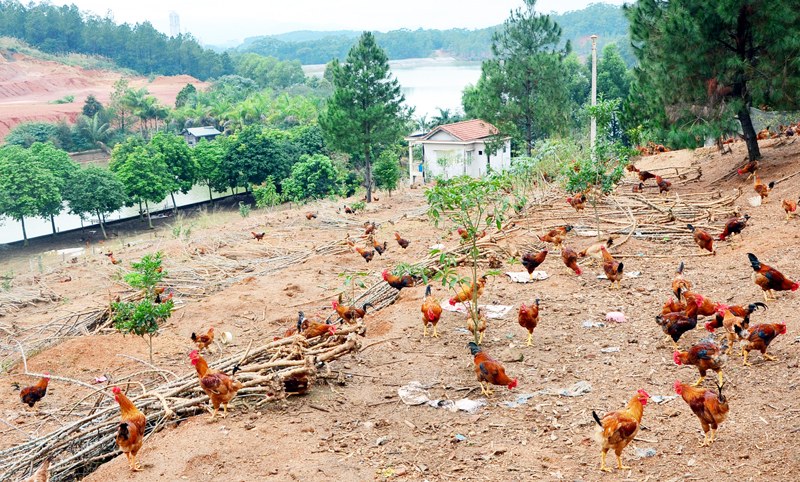
Hoành Bồ chicken. Photo: Quảng Ninh Newspaper.
After the free-range period comes the “caged” fattening stage. At this point, the chickens are confined completely and fed hot rice, while being kept from exercising so they can gain weight and develop more fragrant, delicious meat. At times, following folk experience, residents even give the chickens hot water to drink and hang their cages in trees to avoid disease outbreaks.
Thanks to its excellent breed and meticulous care, Hoành Bồ chicken is highly prized as food. In particular, when boiled, the chicken has shiny, golden skin that is crisp and thin, with very little fat beneath it. Sometimes, when a chicken is boiled and the meat is chopped in the kitchen, guests upstairs can already smell its enticing aroma.
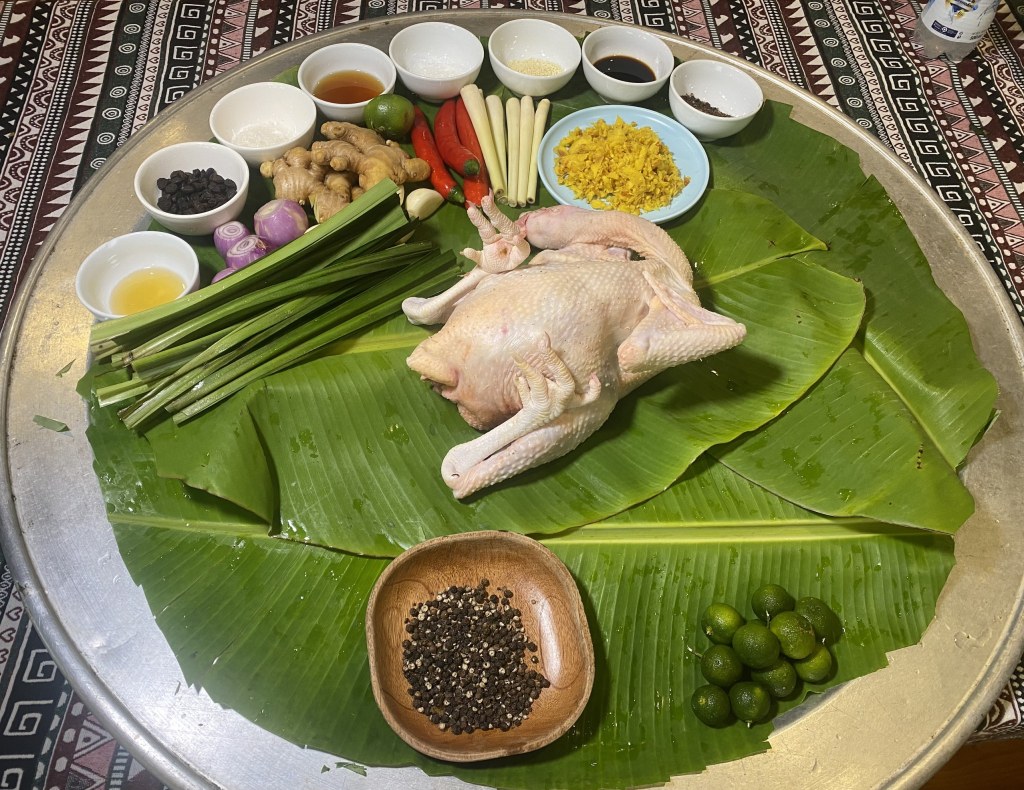
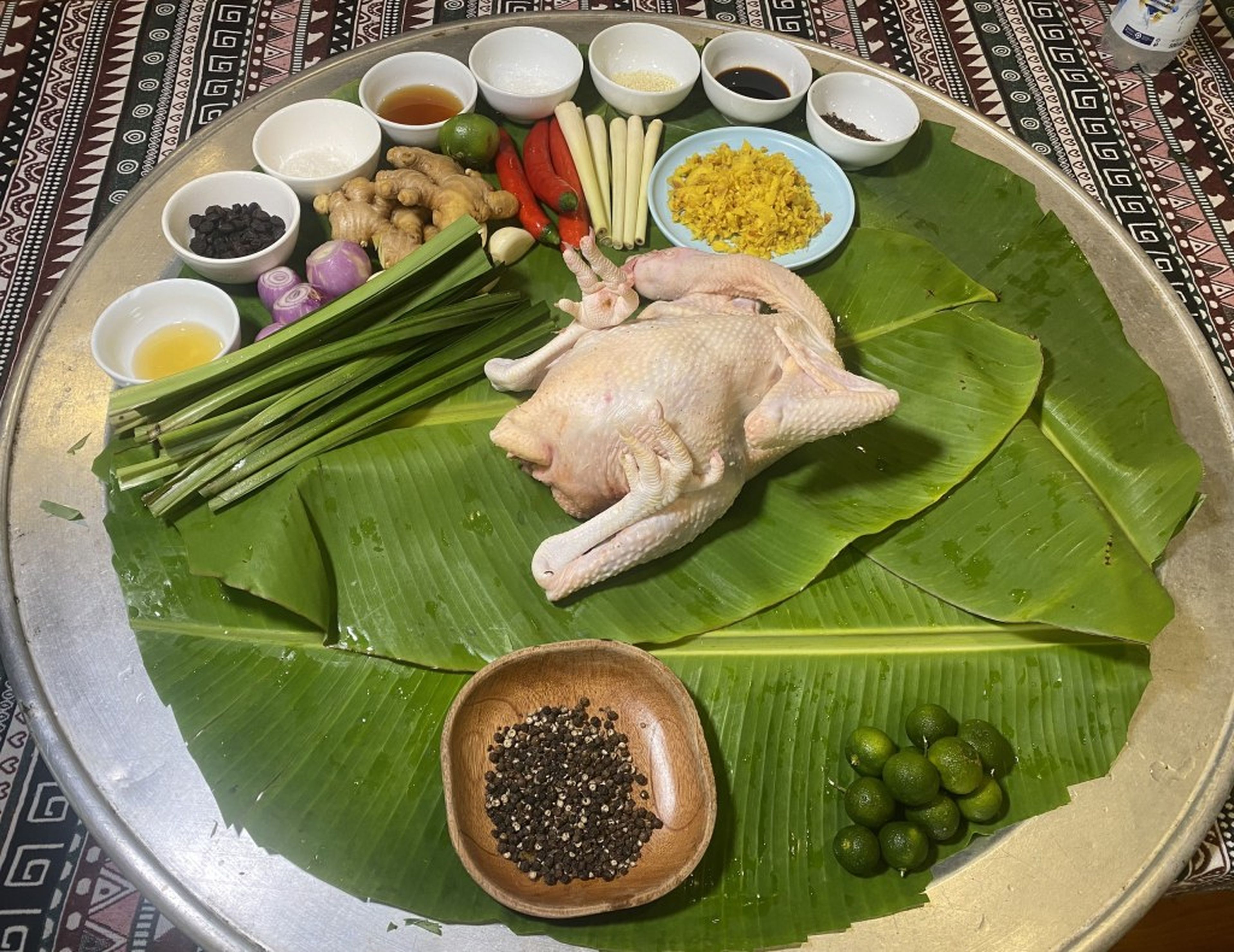
Ingredients for marinating the chicken. Photo: Quảng Ninh Newspaper.
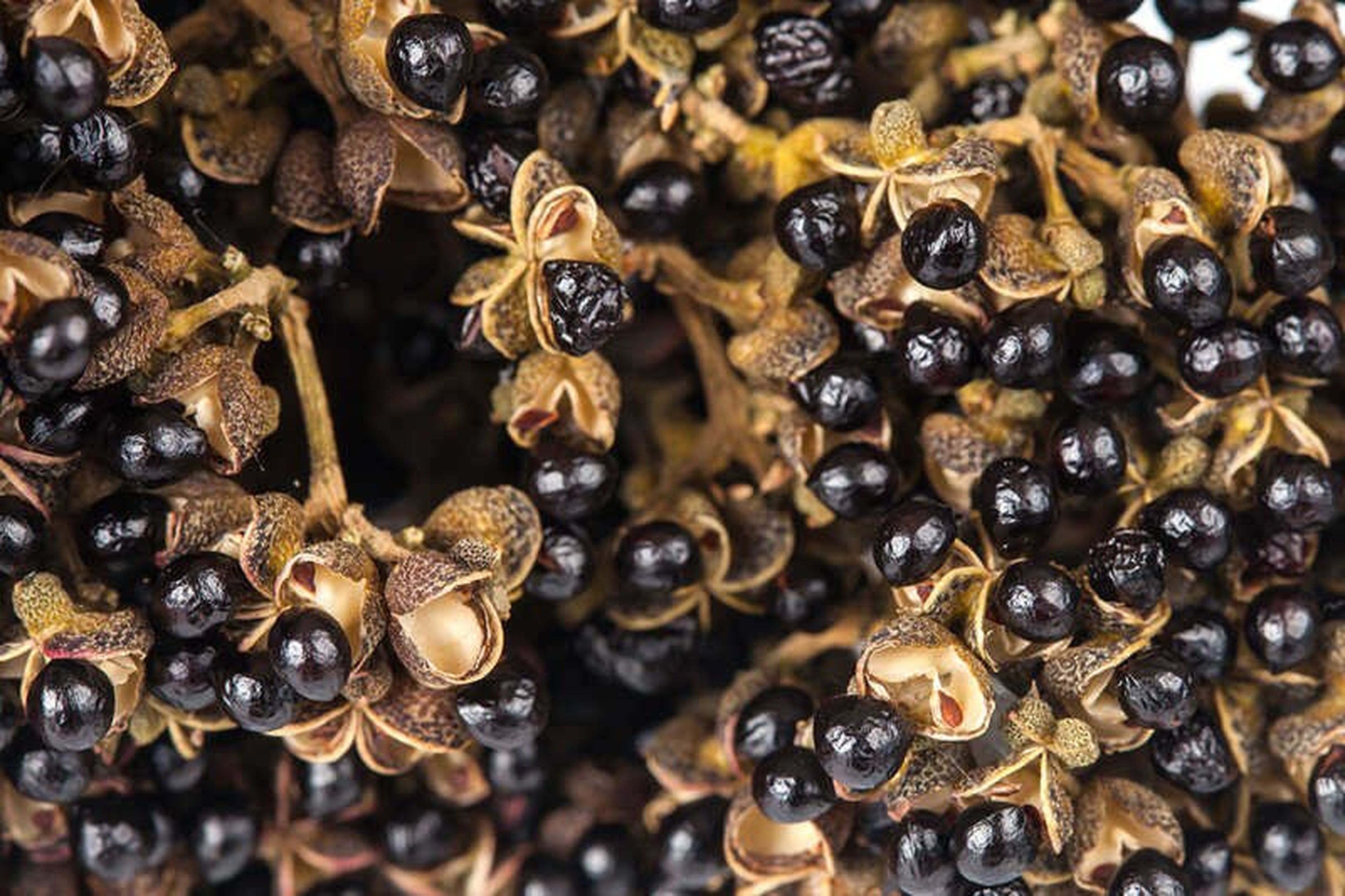
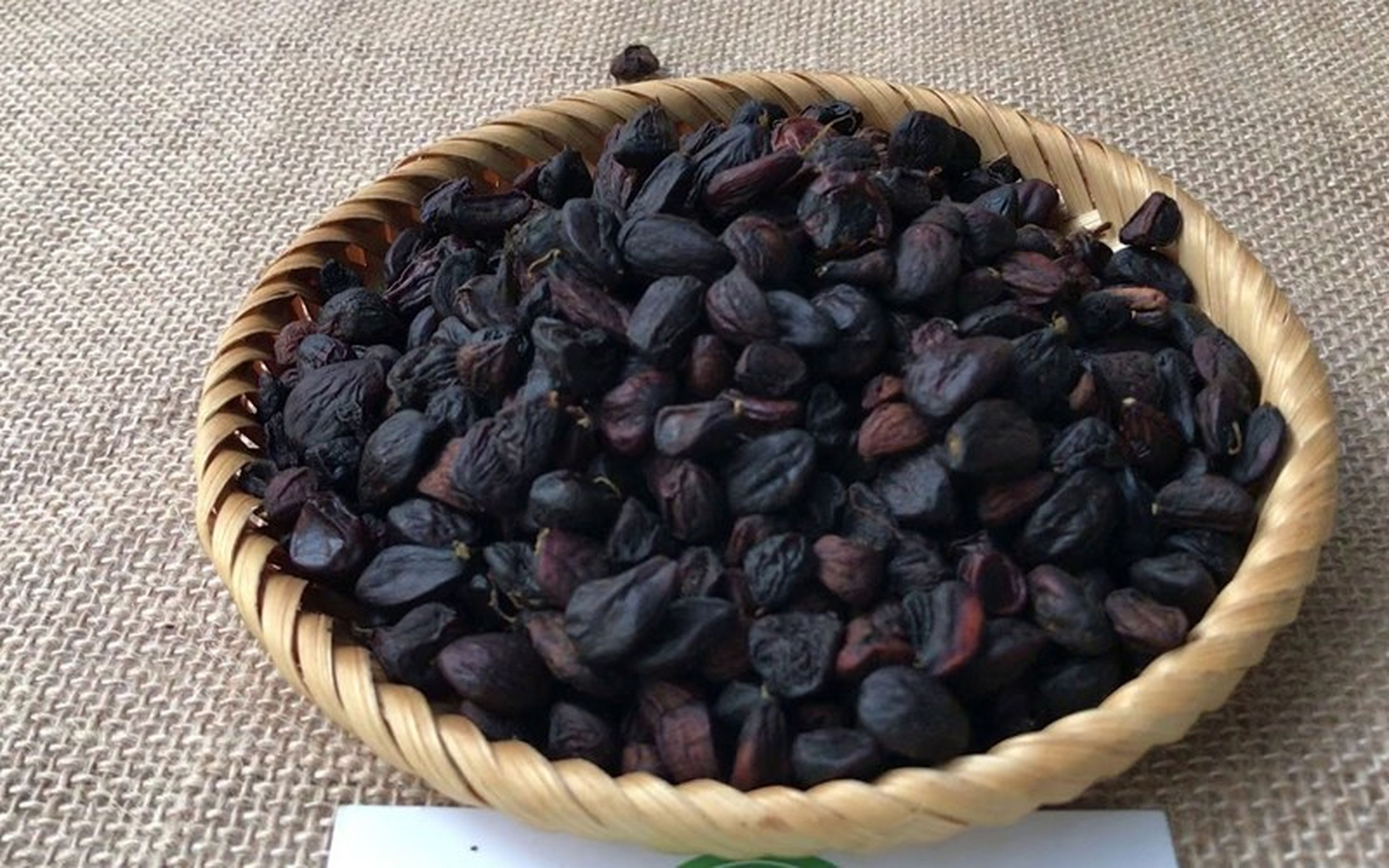
To make Hoành Bồ chicken roasted plain the most important step is mixing the spice blend for marinating. Spices such as lemongrass, shallots, garlic, chili, galangal, mắc mật seeds and mắc khén seeds are finely chopped and placed in a mortar to be lightly crushed. The highlights are mắc mật and mắc khén seeds, two characteristic spices of the Northwestern mountainous region.
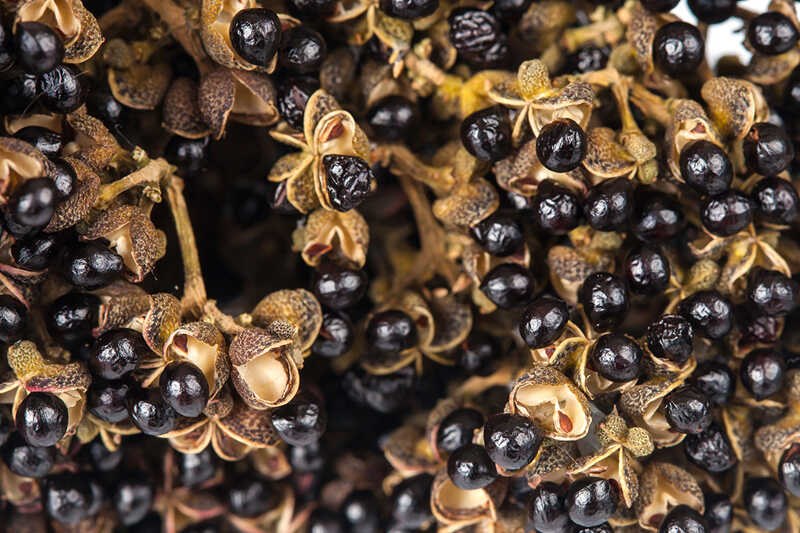
Mắc khén seeds.
The spice mixture is then poured into a bowl and seasoned with sugar, seasoning powder, fish sauce, soy sauce… All the ground spices are stuffed into the chicken’s cavity, along with an extra sprig of pandan leaf. In particular, people also insert a can of beer into the chicken’s cavity, both to add flavor and to shape the chicken.
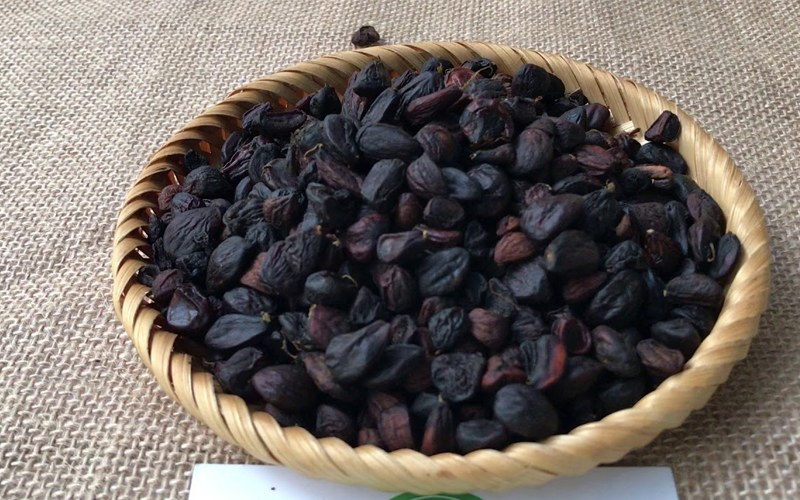
Mắc mật seeds.
Finally, the chicken is tightly wrapped in fresh banana leaves and covered with an upside-down cast-iron pot. The pot is then covered with rice husk ash and charcoal and continuously heated. In this way, the chicken is roasted plain for about 4–5 hours; the cast-iron pot grows continually hotter and cooks the meat inside.
After nearly 5 hours buried under hot ash and charcoal, the dish of Hoành Bồ chicken roasted plain is ready to enjoy. The finished chicken has golden, crisp, thin skin and little fat. Although roasted whole, the meat is still evenly cooked and tender down to every fiber; in particular, nearly all of the juices released from the chicken are retained.
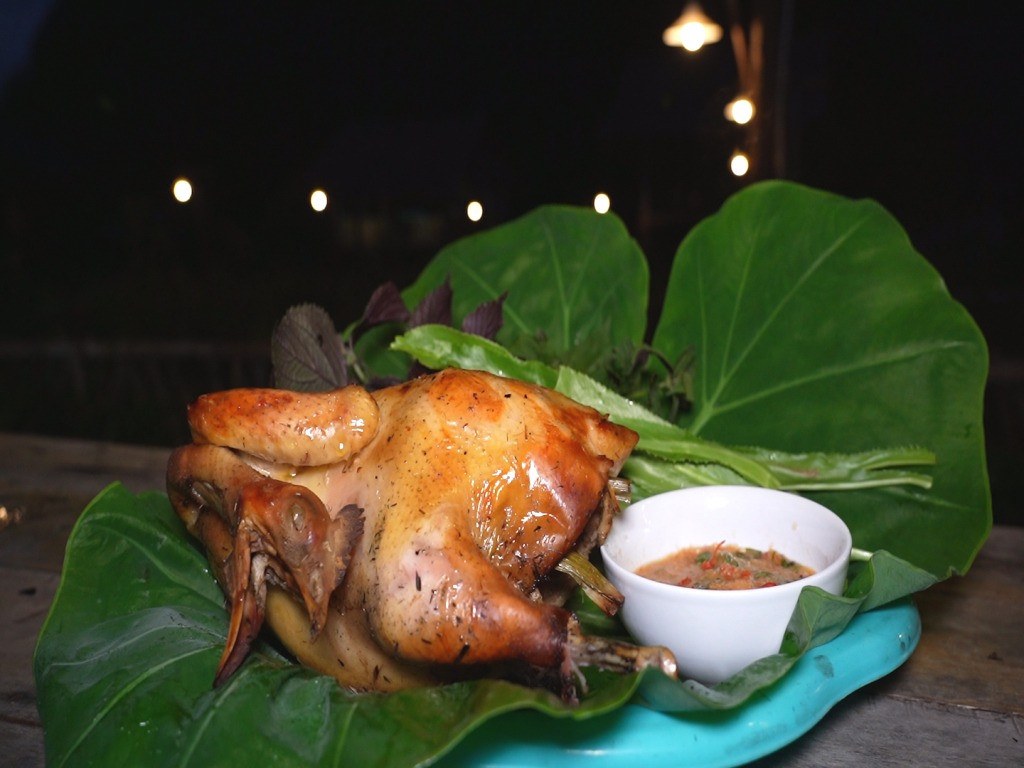
Finished roasted chicken. Photo: Quảng Ninh Newspaper.
Although diners have to wait nearly 5 hours before they can enjoy the dish, the chicken will not disappoint even the most discerning guests. From its aroma to its meat, it is unlike any other roasted chicken dish. Dip the chicken in a bowl of dipping sauce prepared to your taste, and you have a perfect, truly authentic meal.