

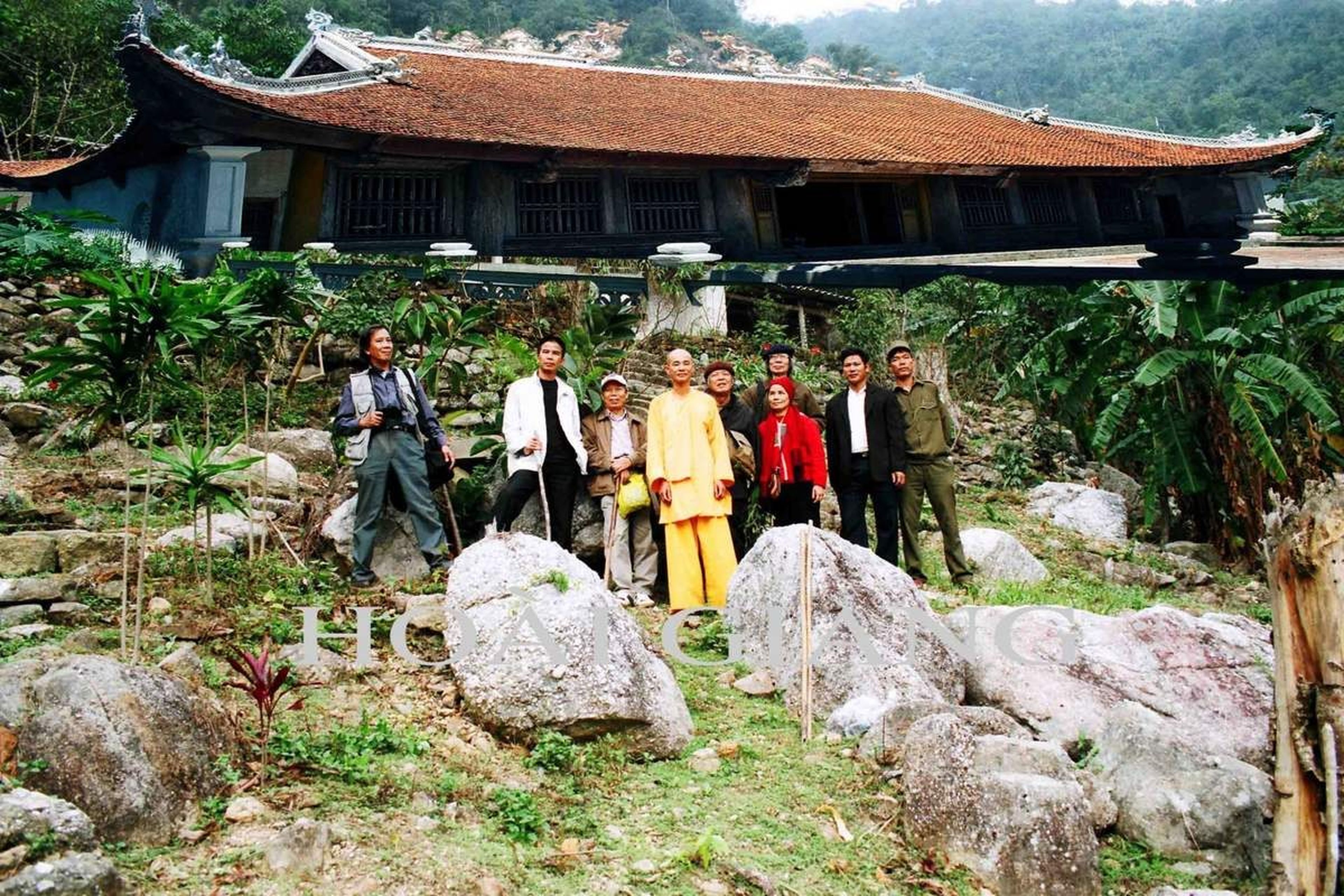
1 Overview of Ho Thien Pagoda in Dong Trieu
Ho Thien Pagoda in Dong Trieu (also known as Tru Phong Pagoda) was built by Phap Loa in 1322 on Tru Phong Mountain. It served as a place where senior monks of the Truc Lam Zen sect continued their studies after successfully completing their courses at Quynh Lam Monastery. If you are planning to visit Ha Long Bay, Ti Top Island, Thien Cung Cave… consider setting aside some time to stop by and explore this pagoda.
Address: Binh Khe Ward (former Dong Trieu City), Quang Ninh Province
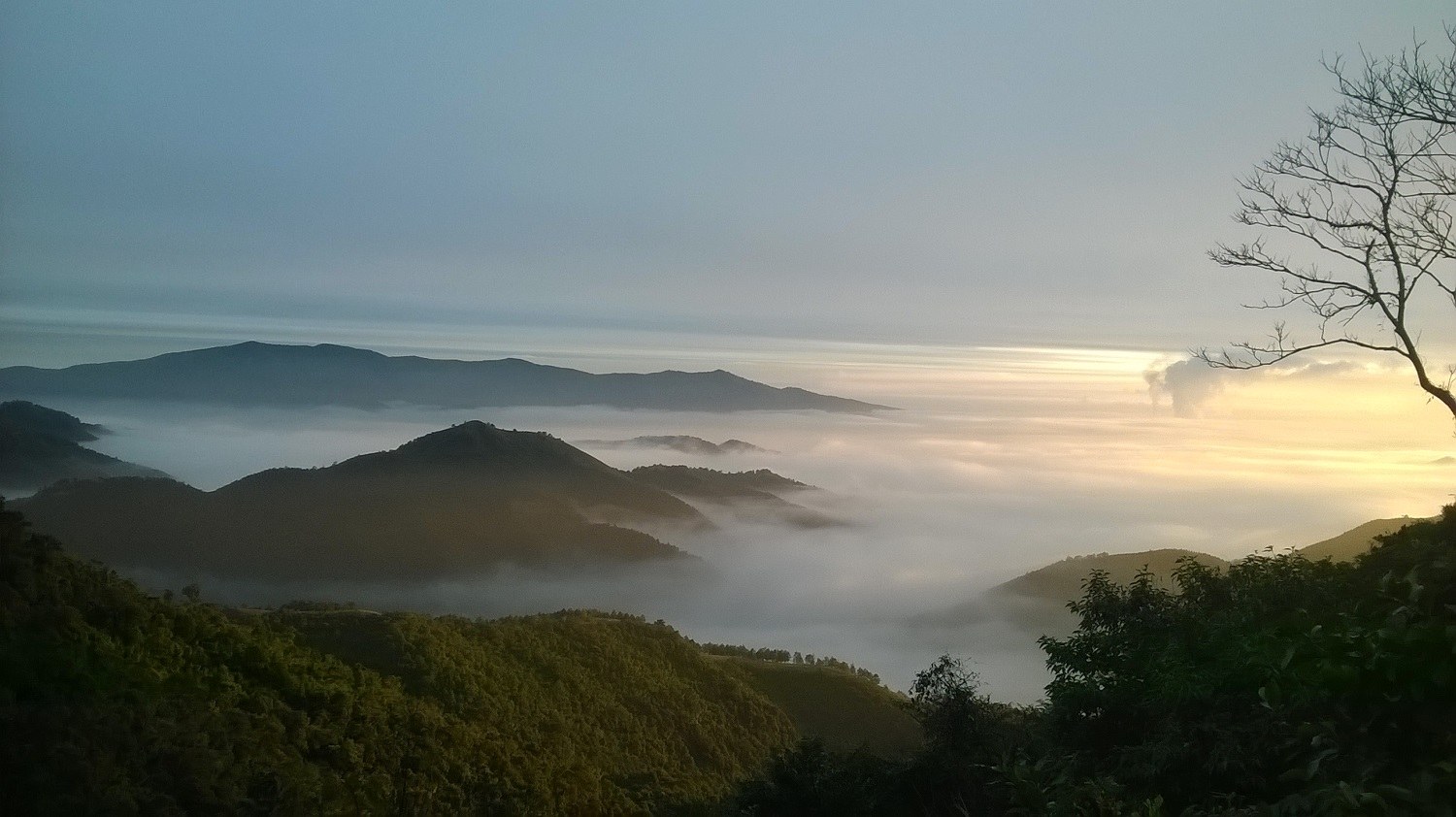
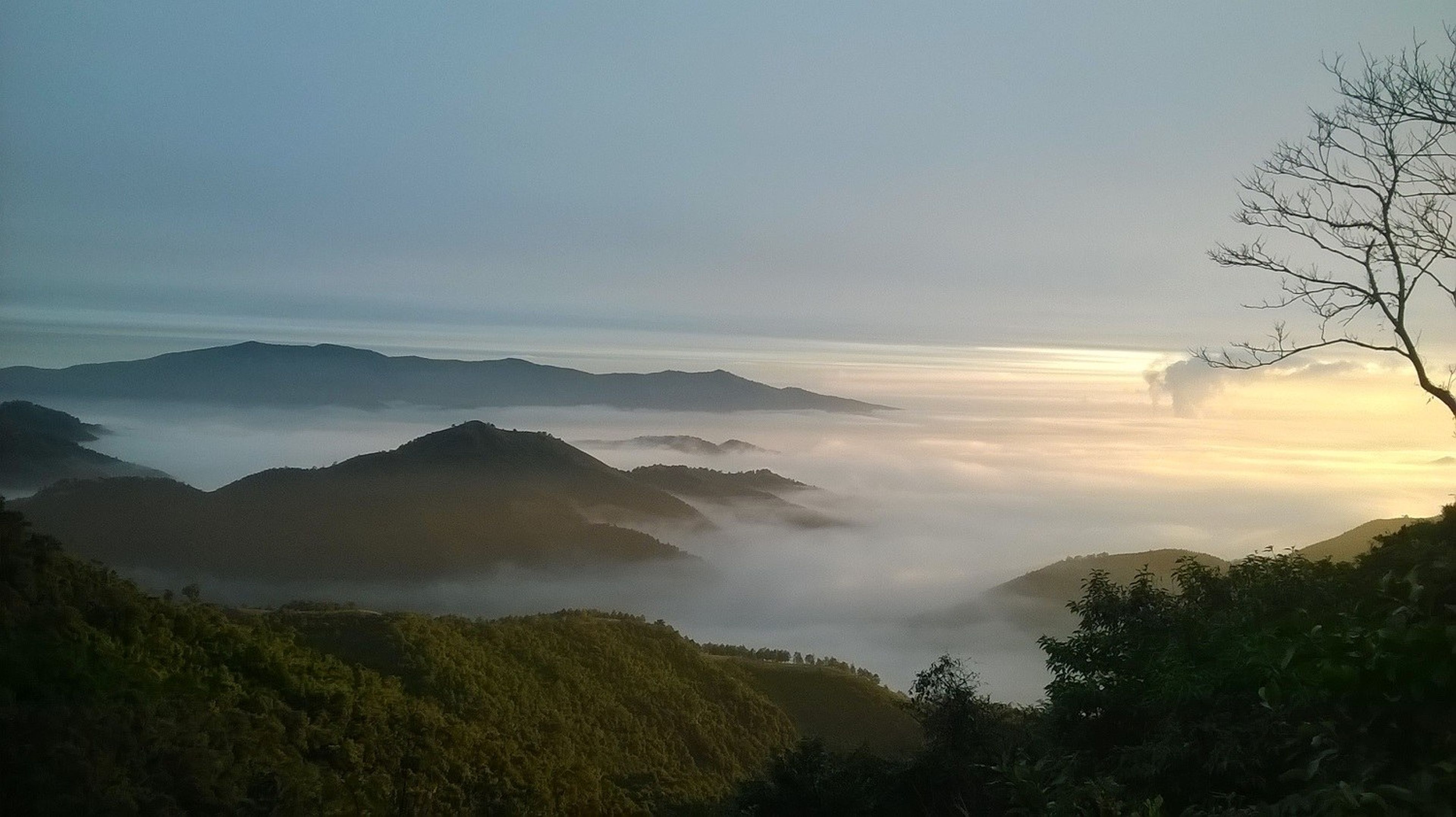
A sea of clouds above Ho Thien Pagoda. Photo: Gio Vo Uu
Read more: Get up to speed with this A-to-Z guide to visiting Yen Tu Pagoda during your trip to Ha Long
2 Getting there
Today, Ho Thien Pagoda in Dong Trieu is located in Phu Ninh Hamlet, Binh Khe Commune, Dong Trieu Town, Quang Ninh Province. The pagoda was built on Tru Phong Mountain in the Yen Tu range, between Long Dong (also known as Lan Pagoda) and Ngoa Van. Quynh Lam Pagoda lies in front of it, and the site sits at an elevation of 500m - 800m above sea level. High mountains surround it to the north, east, and west, while low, rolling hills to the south open up views of the winding Cam River below, creating a truly poetic and majestic landscape. For specific directions, visitors can consult the Google Maps link below.
3 Exploring Ho Thien Pagoda
3.1 A long history
According to legend, Ho Thien Pagoda in Dong Trieu was built during the Tran Dynasty, and King Tran Nhan Tong visited to stroll here after becoming a monk. Records in the Tam To Thuc Luc, the stele at Quynh Lam Pagoda, and especially the Vien Thong stupa stele confirm that Phap Loa had the Ho Thien hermitage built. Remains from Ho Thien's Tran Dynasty period are found mainly underground. Archaeological surveys here have uncovered numerous artifacts from the Tran Dynasty, including bricks, roof tiles, and stupa components...
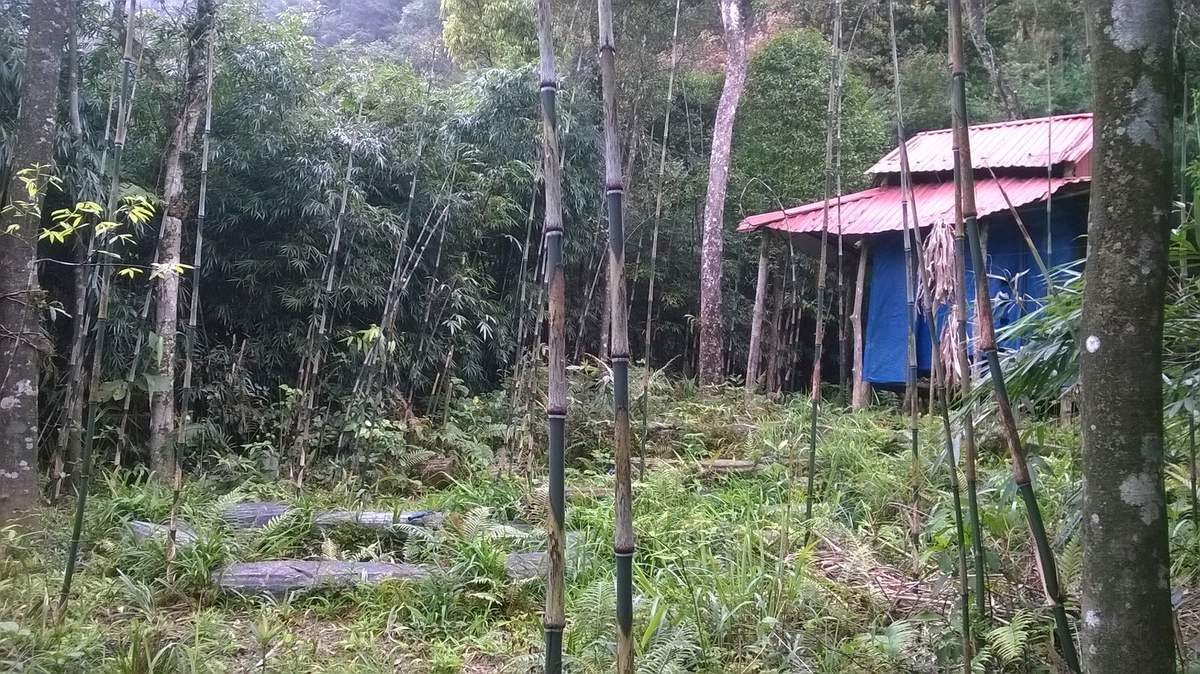
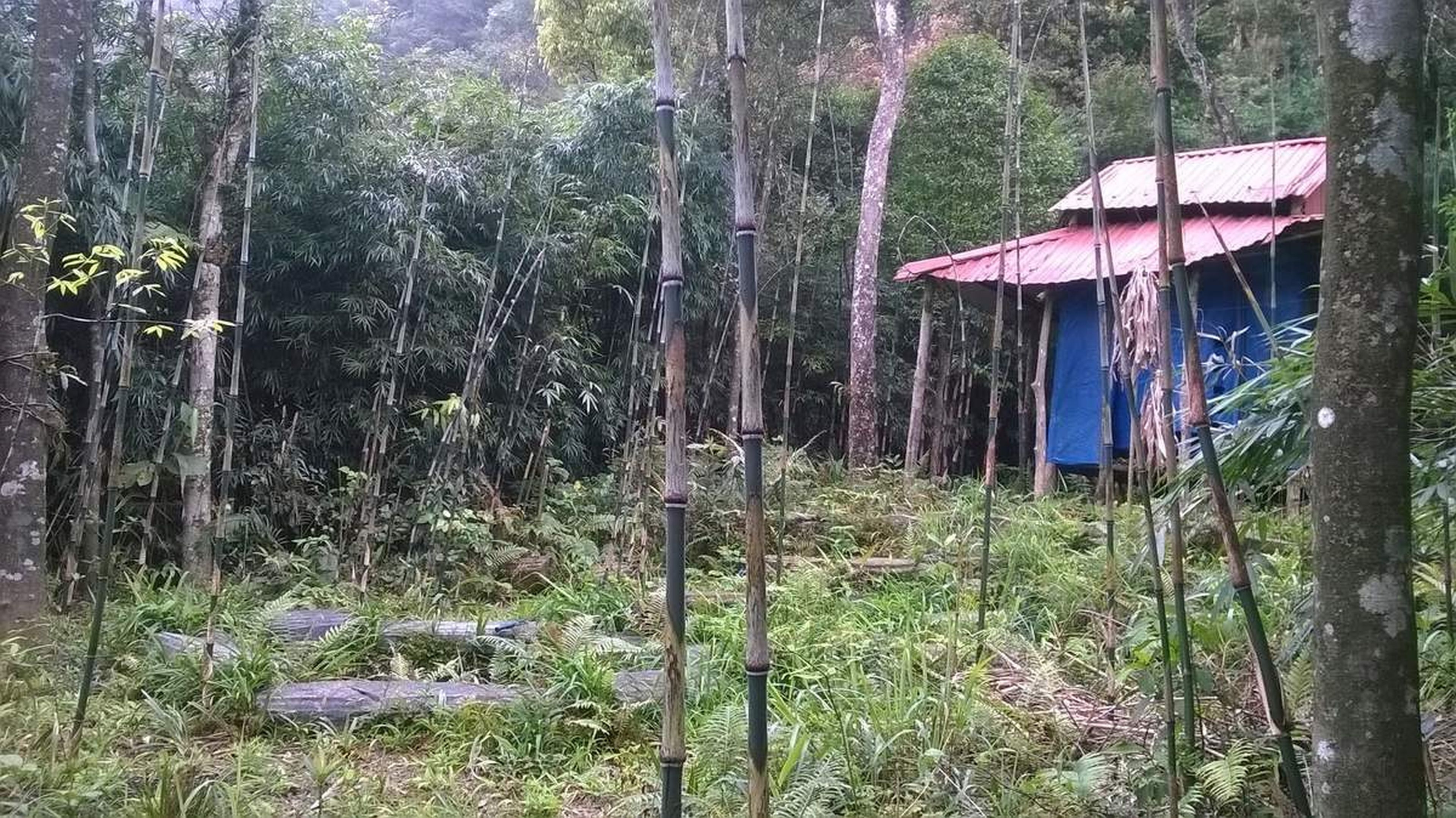
Ham Rong Hermitage. Photo: Gio Vo Uu
These artifacts confirm that Ho Thien Pagoda in Dong Trieu was built during the Tran Dynasty, as historical records suggest. They also indicate that a terracotta stupa with a hexagonal or octagonal ground plan was built under the Tran. Surveys have also established that, in addition to the pagoda, stupa garden, and stele house, Ho Thien had a large meditation retreat complex on the high mountain behind the pagoda. Ham Long Hermitage was the highest of them all.
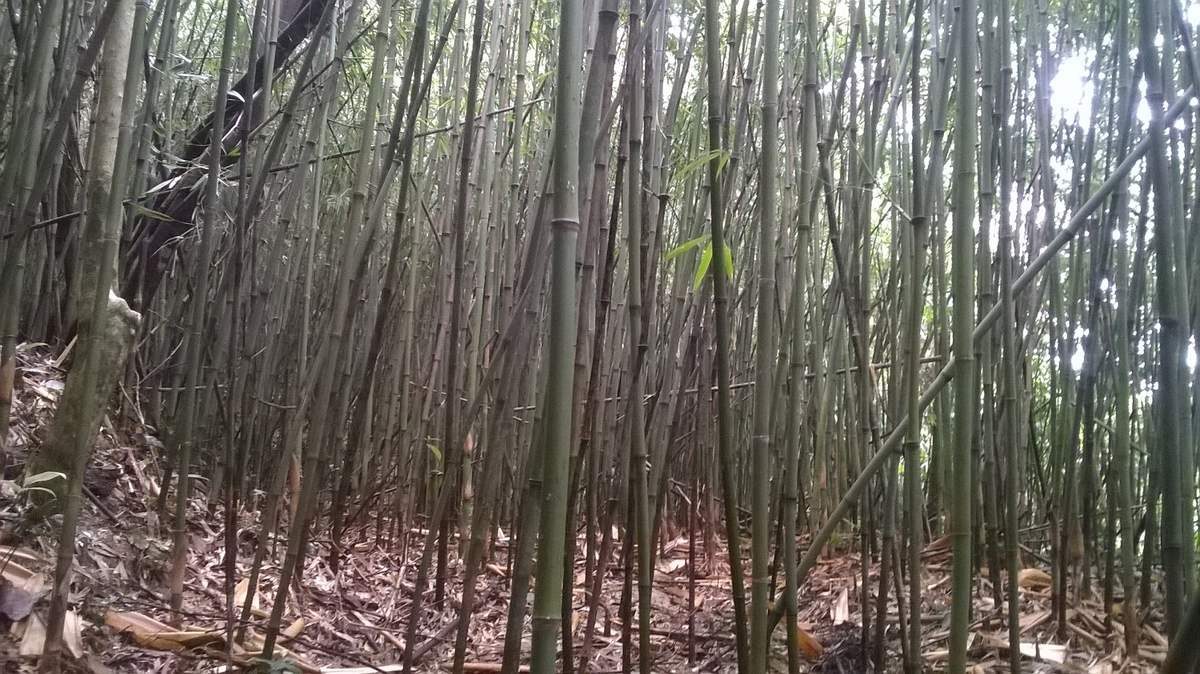
Hermitage garden. Photo: Gio Vo Uu
According to legend, during the Tran Dynasty, senior monks who successfully completed their courses at Quynh Lam Monastery moved to Ho Thien to continue their studies. Each rock shelter was a place of study for one monk. Most of the pagoda remains visible today date from the Later Le period. The monuments and architectural traces still above ground were largely built or restored during the Vinh Huu era. New structures built during this major restoration included the main pagoda, monks' quarters, ancestral hall, stupa garden, and stele house.
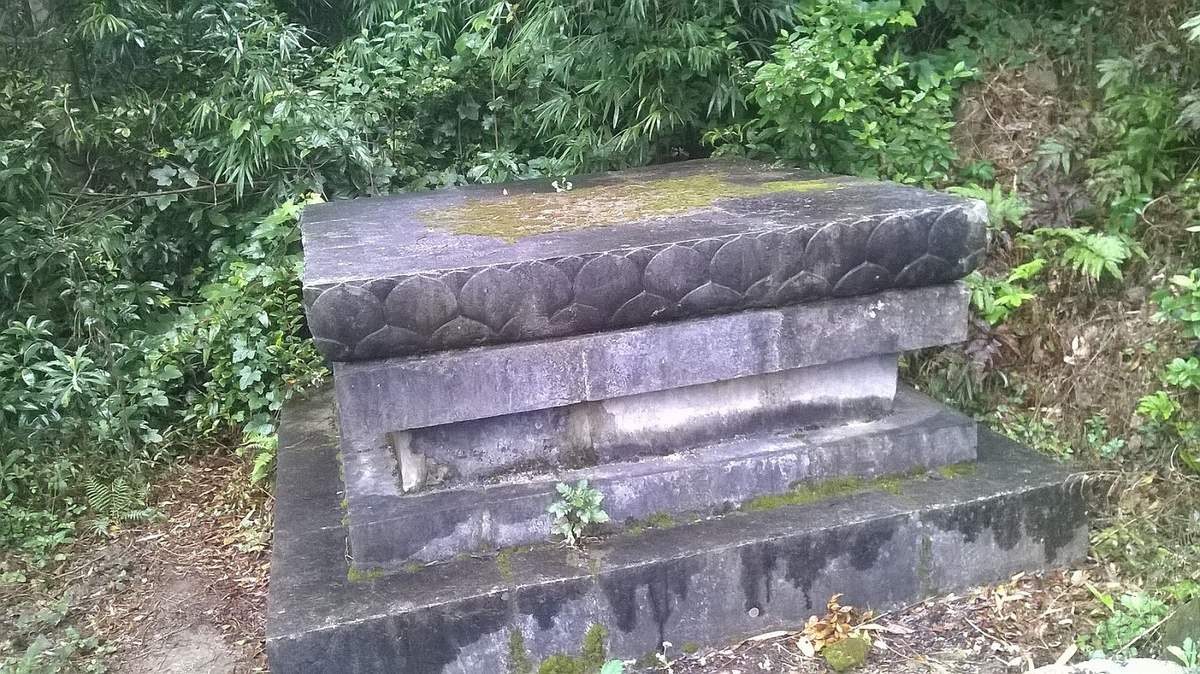
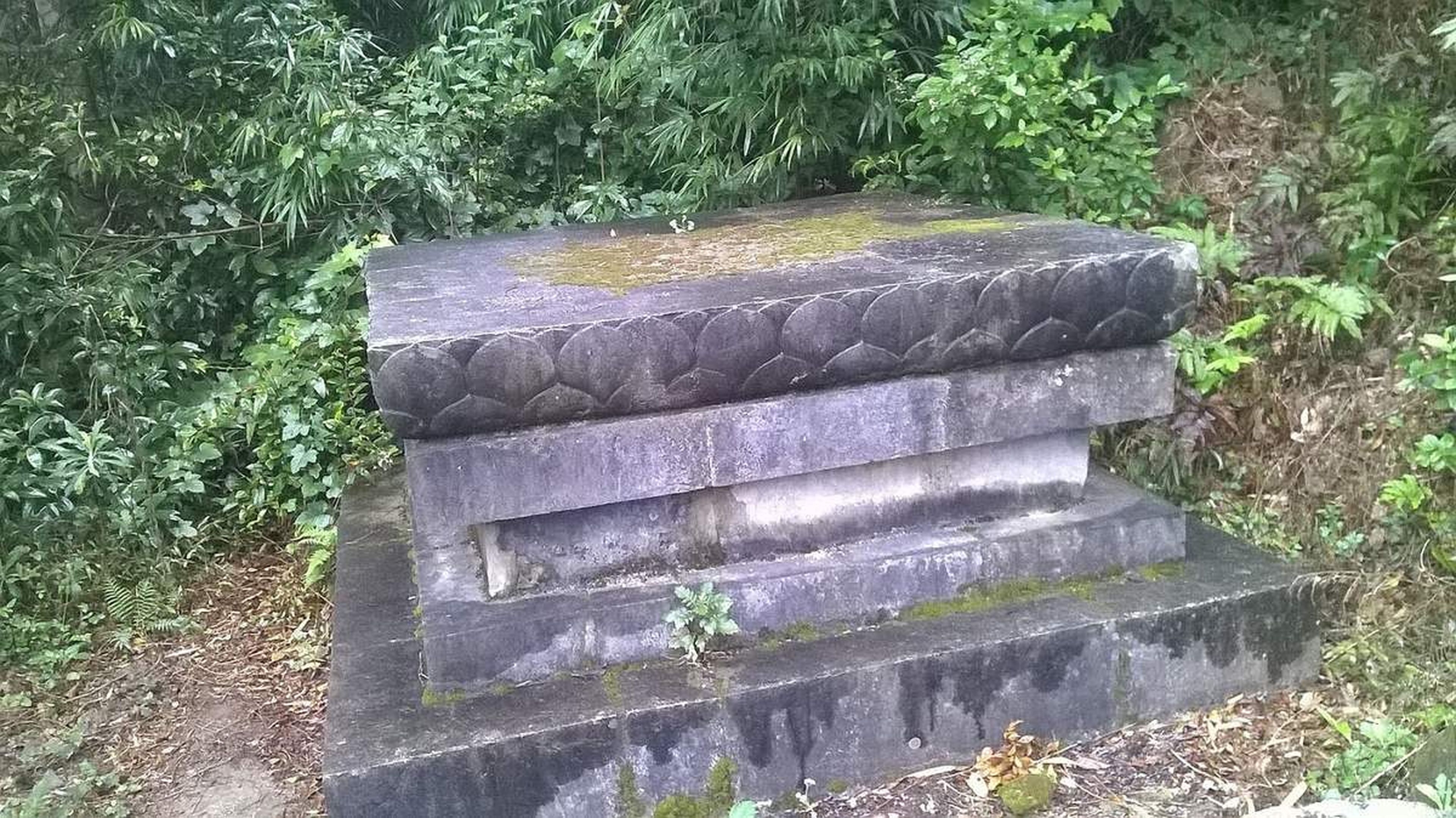
Lotus-shaped stupa base. Photo: Gio Vo Uu
3.2 Structures at Ho Thien Pagoda in Dong Trieu
- Main pagoda complex:
Built on a fairly spacious site at an elevation of 580m above sea level, the main pagoda alone covers an area of more than 700m2. The pagoda is laid out in the shape of the Chinese character 工 and comprises three connected structures: the Front Hall, Incense Hall, and Main Sanctuary. The Front Hall stands at the front and has a rectangular plan, with five bays and six rows of columns. The central bay is 4,4m wide, while the bays on either side are 3,9m wide. The Incense Hall, covering 147m2, stands between the Front Hall and the Main Sanctuary. The Main Sanctuary is built directly against the rocky mountainside and covers 202,5m2. It has five bays and six rows of columns, with four columns in each row.
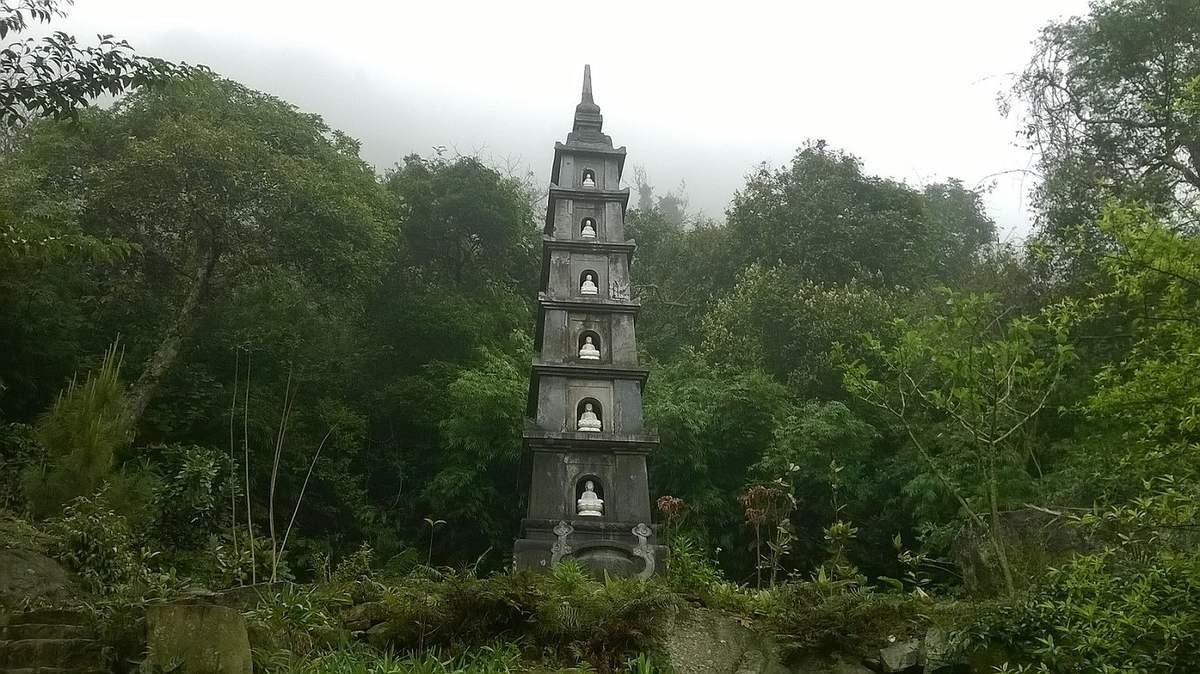
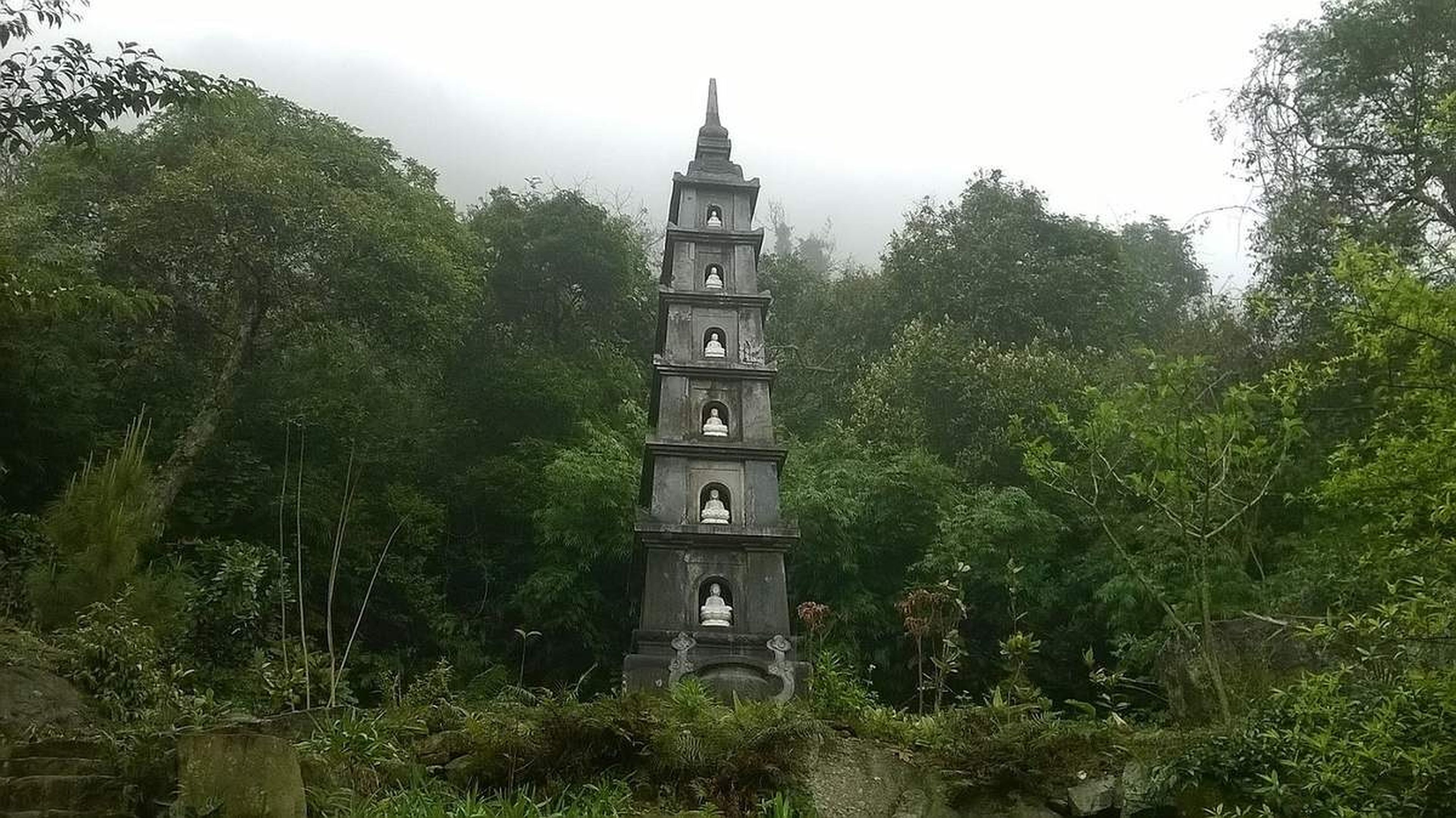
Seven-tier stone stupa. Photo: Gio Vo Uu
- Stupa garden:
On the high mountainside behind Ho Thien Pagoda in Dong Trieu, to the north, traces of six stupas remain. One is relatively intact, one had collapsed and has recently been reassembled, and the others have fallen into ruin. Two stone stupas, identified as Stupa No. 1 and Stupa No. 6, both bear traces dating from the Tran Dynasty.
There are also four stupas made of stone and brick, identified as Stupas No. 2 through No. 5. They share a common feature: stone was used for the foundations and bases, while the shafts and roofs were constructed entirely from various types of brick, mostly rectangular bricks.
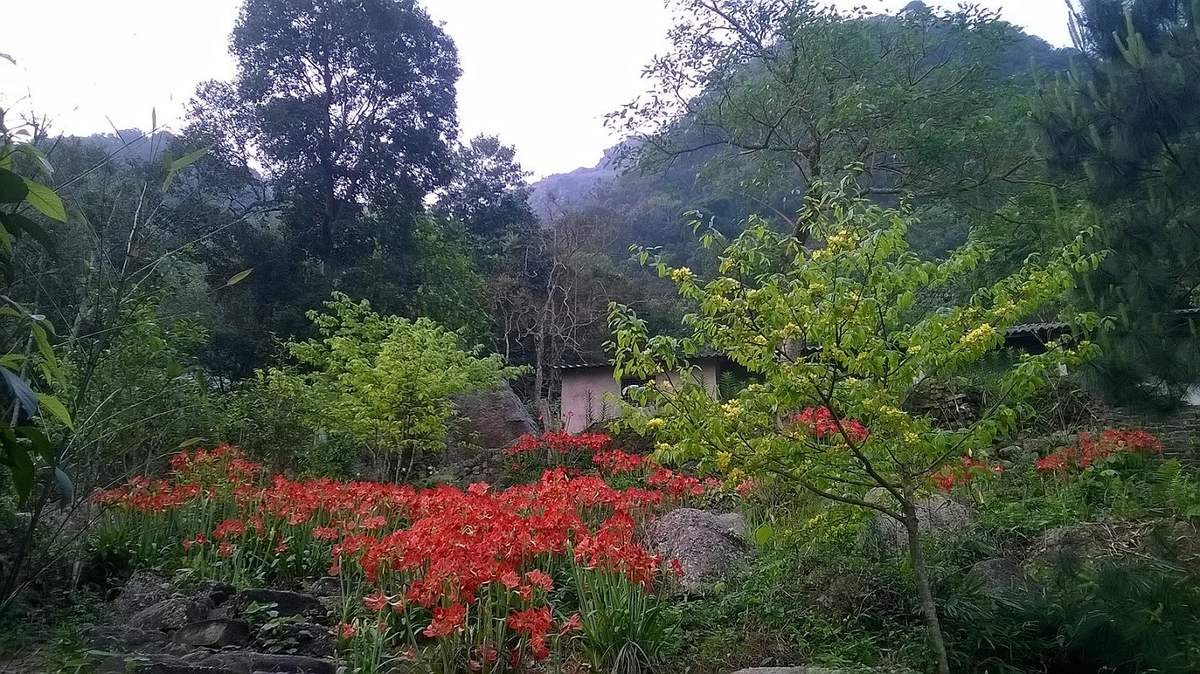
Nuns' quarters
- Monks' quarters:
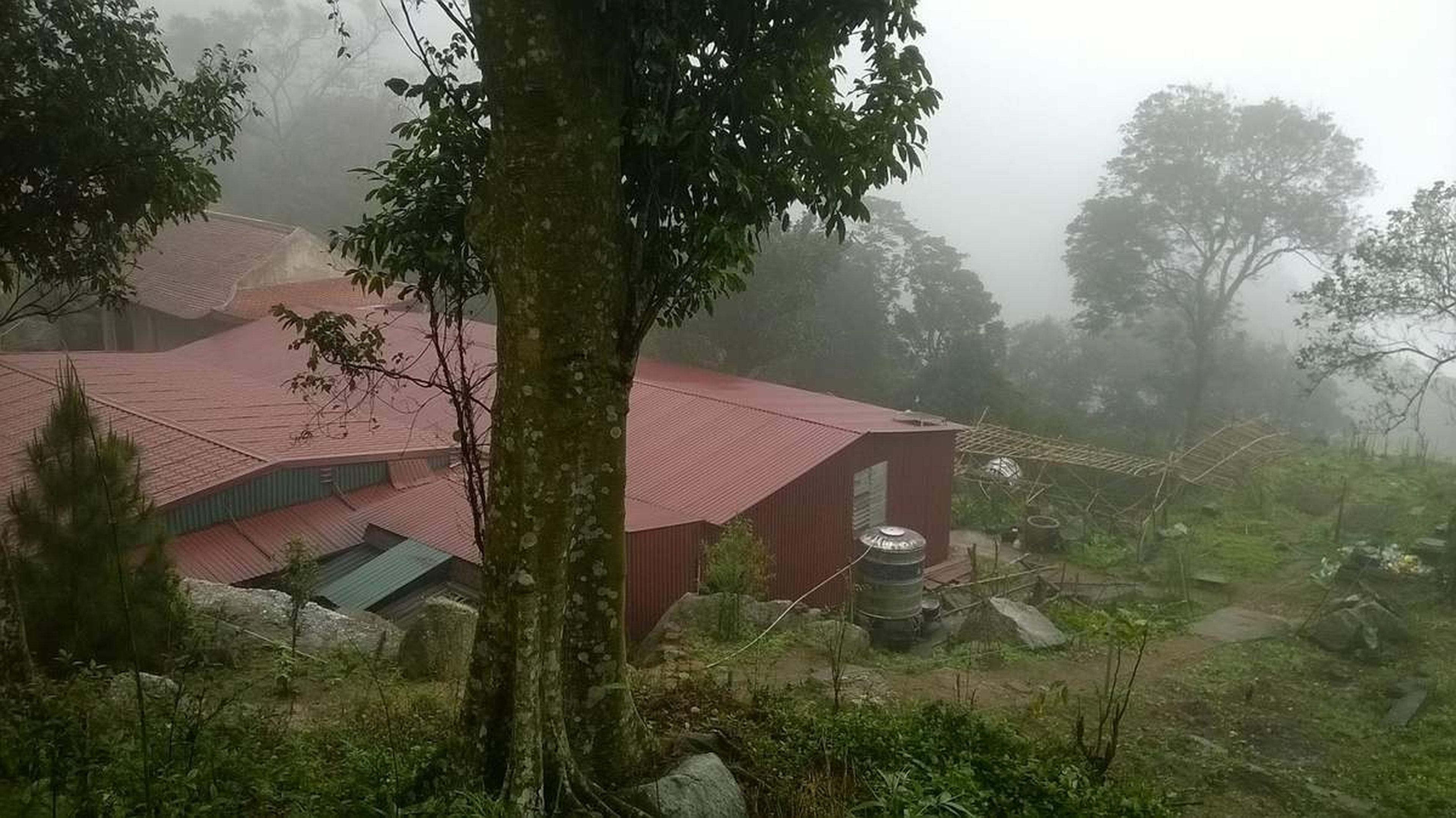
This is where monks and Buddhists live, carry out their daily activities, and study. The monks' quarters cover around 400m2 and stand immediately east of the pagoda, on relatively level ground about 1.5m below the pagoda's foundations. They face south, with the mountain rising behind them to the north.
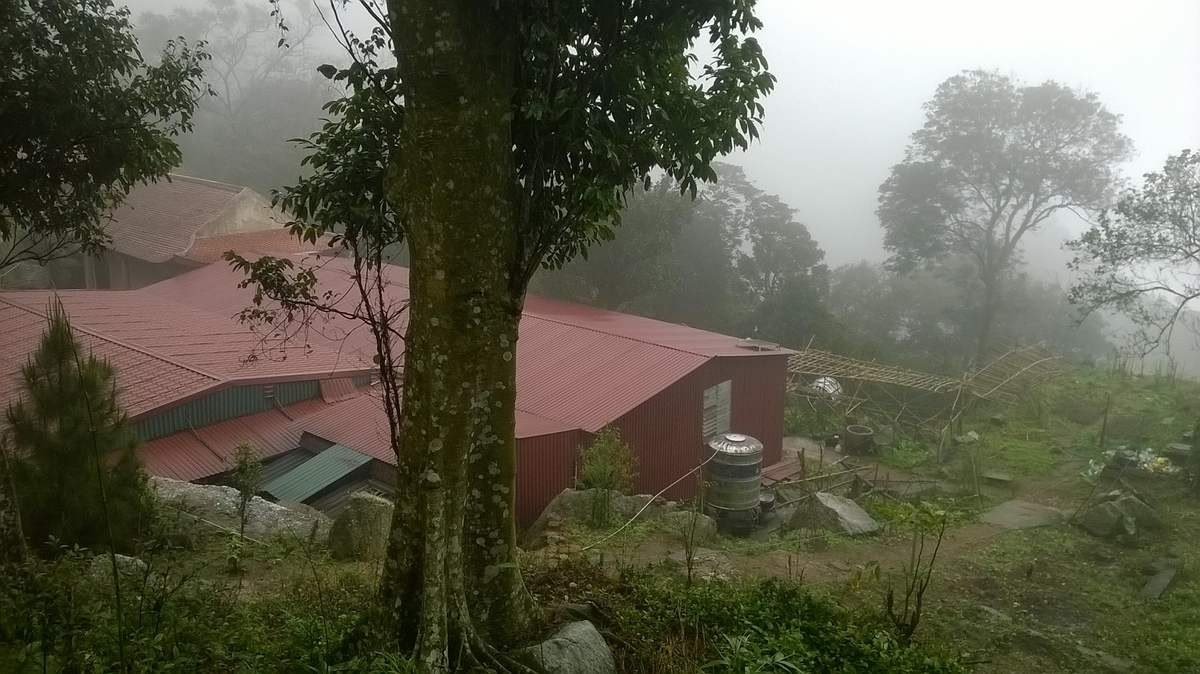
Central area of Ho Thien Pagoda. Photo: Gio Vo Uu
- Ancestral hall:
Located north of the monks' quarters at Ho Thien Pagoda in Dong Trieu, the ancestral hall sits about 6m higher than the monks' quarters and adjoins the stupa garden to the east. The grounds cover around 180m2, and traces remain of a rectangular architectural footprint measuring approximately 130m2. In addition to architectural remains, experts have found many lotus-bud roof tiles dating from the Later Le period. These tiles have low, broad petals and no fastening hooks, and are made from ordinary reddish-brown clay.
Two statues carved from single blocks of stone were also excavated here, each consisting of a figure and a base. The first statue depicts a figure seated in meditation on a lotus throne, wearing a kasaya robe. A bow-shaped clasp fastens the robe across the chest, a distinctive feature of the Truc Lam sect. The left hand holds a rosary, while the hands rest one atop the other in the lap; a swastika symbol appears at the center of the chest. The statue has lost its head and lotus base and now measures 32cm high, 23cm across the shoulders, and 34cm across the knees.
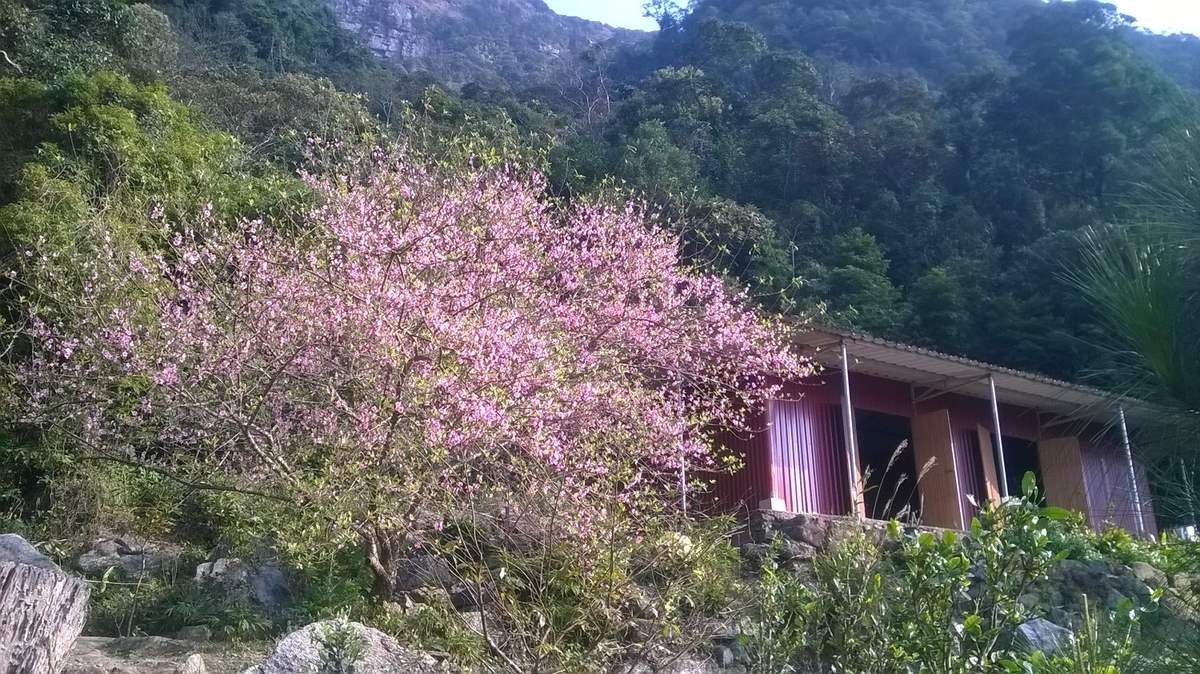
Main sanctuary of Ho Thien Pagoda in Dong Trieu
The second statue depicts a figure seated in meditation, with hands intertwined and palms facing upward. Its head is missing, and the left arm and chest are partly broken. Based on the clothing motifs and meditative posture, the statues can be identified as two of the three patriarchs of Truc Lam. The second statue specifically represents the first patriarch, Tran Nhan Tong. The terrain, the characteristics of the site's remains and artifacts, and the statues found here confirm that this was the ancestral hall, where the three Truc Lam patriarchs were worshipped: Điều Ngự Phật Hoàng Tran Nhan Tong, Phap Loa, and Huyen Quang.
- Stele house:
Located about 150m east of the central area, this site served as Ho Thien Pagoda's main complex and place of worship from 2005 – 2010. The stele house was built of blue stone and assembled from six slabs, each 1,97m high and 0,55m wide. Notably, the back of each stone slab incorporated into the wall is carved in relief with a Sanskrit character inside a cross-shaped frame. Together, the characters form a Tantric Buddhist mantra known as the “Great Six-Syllable Mantra,” pronounced OM MANI PADME HUM.
The presence of this Tantric mantra in the stele house, along with the lotus base carved with the eight trigrams and 28 constellations, demonstrates the blending of Buddhist sects and the interaction of Buddhism, Taoism, and Confucianism in the 18th century. It also reflects the worldly engagement and adaptability of Truc Lam Zen.
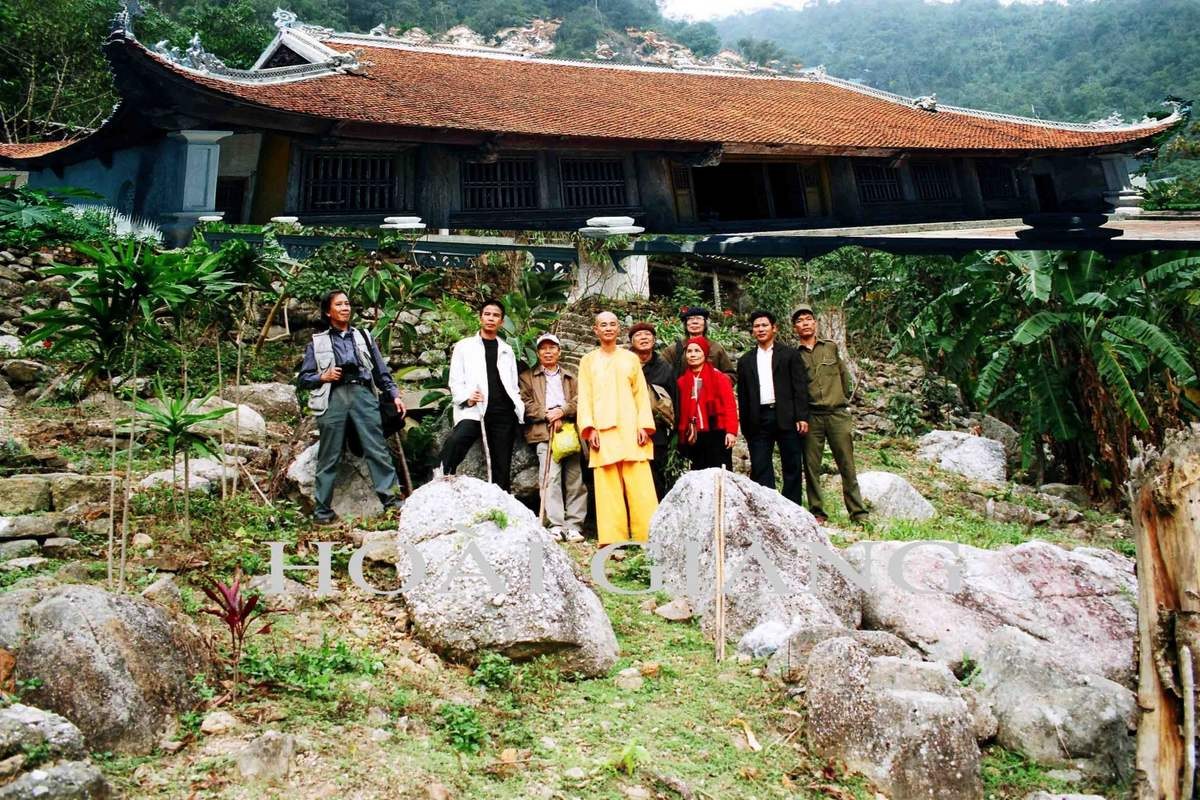
Visitors exploring the pagoda and paying their respects
- Meditation hermitages:
At Ho Thien Pagoda in Dong Trieu, these were places where monks meditated. The Ho Thien meditation hermitages were reserved for senior monks practicing meditation. Located on the mountain behind the pagoda, the complex has three hermitages (retreats). Ham Long Hermitage is the highest and largest of them.
There are also two smaller meditation retreats beneath rock overhangs, each with a rectangular stone placed underneath for meditation. The abbot of Ho Thien Pagoda in Dong Trieu currently uses one of these two rock shelters as a place for his own practice.
Ho Thien was once a major center of Truc Lam and part of a vast pagoda-and-stupa complex. Alongside the well-known Yen Tu Pagoda in Quang Ninh, this site is well worth a visit to appreciate its beauty and the cultural and architectural legacy of the Tran Dynasty that remains here.