
Not all the most rewarding spiritual experiences in Nha Trang City are found in large-scale pagodas or historical relics situated along bustling downtown streets. Sometimes, the most authentic and vibrant cultural values are quietly preserved beneath rustic communal house roofs, in fishing community mausoleums tucked away behind small coastal alleys that very few visiting tourists know by name. The Truong Tay communal house - mausoleum historical site, located in Vinh Nguyen Ward, is precisely a destination that offers such an authentic and profound glimpse into the spiritual life of coastal residents in the land of Agarwood.
Every year, the management board and the elders at Truong Tay communal house - mausoleum organize the grand Cau Ngu (fish-praying) festival and village communal house worship following solemn, strict rituals passed down through generations. This series of events encompasses many important consecutive spiritual rites: from the ceremony honoring the forebears and predecessors who reclaimed the land and established the fishing guild, to the Nghinh Ong procession at sea, the procession of the Goddess's spirit to the mausoleum, the performance of ba trao singing, to the official sacrificial ceremony for Ong Nam Hai (the Whale God) and the tong na ritual (driving away bad luck). These historical records attest to one certainty: Truong Tay communal house - mausoleum is not a lifeless architectural structure sitting silently for casual sightseers. It is a vibrant community space, a spiritual sanctuary where coastal villagers practice their faith and preserve the memory of their ancestors faithfully through every festival season.
Nghinh Ong — The Ritual of Welcoming the Guardian Spirit from the Ocean
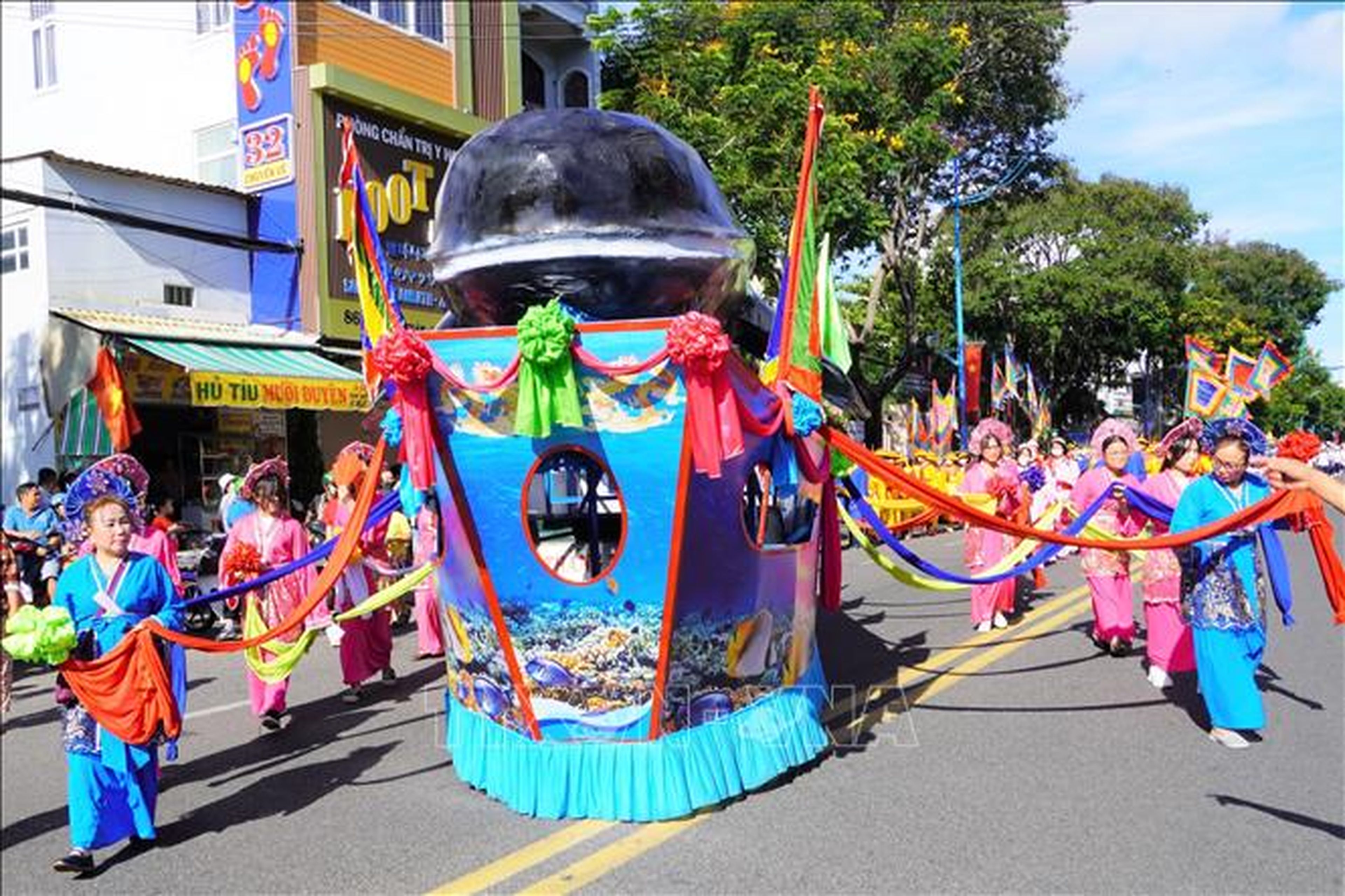
Throughout the entire festival series at Truong Tay, the Nghinh Ong procession is always the part that stirs the most emotions and leaves the strongest visual impression on onlookers. To the fishing community, Ong Nam Hai is not merely a figure in abstract religious beliefs; He is a sacred presence, a real guardian deity amidst the vast ocean, who has sheltered their vessels countless times across the threshold of life and death in violent storms. Therefore, the Nghinh Ong ceremony carries a sacred significance: it is a welcoming, a deep expression of gratitude, and a heartfelt prayer for the peace and safety of the entire fishing community.
As the ceremonial procession begins moving from the sea inland, the surrounding atmosphere seems enveloped in solemnity. Every step of the ritual team, every beat of the ceremonial drums, and every ceremonial flag fluttering in the sea breeze carry an extraordinarily reverent rhythm. If you have the chance to stand and observe, you must constantly remind yourself of one core truth: the fishing villagers are by no means "performing" or posing to look good for tourists' lenses. They are fulfilling a sacred spiritual duty to their ancestors and deities with their heartfelt, visceral devotion. This perspective will help you exercise self-restraint in your behavior: do not jostle, do not run around seeking photo angles, and do not turn a solemn ritual space into a stage for your personal photo shoot.
The Harmonious Fusion of Communal House and Whale Temple Architecture in Coastal Village Culture
A remarkable anthropological feature of the Truong Tay heritage site is the coexistence of both the Dinh (communal house) and the Lang (whale temple) within the same spiritual living space. The village communal house is where the village tutelary deities and ancestral pioneers—historical figures credited with clearing the land, founding the village, and embodying the Vietnamese ethos of "remembering the source when drinking water"—are venerated. Meanwhile, Lang Ong (the Whale Temple) is dedicated to worshipping the Whale God and marine deities, closely tied to the distinct livelihoods and beliefs of coastal dwellers. When these two elements stand side by side and intertwine during a festival season, observers can witness the most comprehensive and complete panorama of how a fishing community organizes its spiritual life: gratitude to terrestrial ancestral roots, reverence and prayers for peace in the open sea, and tight-knit solidarity among community members.
What makes the Truong Tay communal house and whale temple even more fascinating and noteworthy is its geographical location. This space sits right in the heart of modern, urbanized Nha Trang, surrounded by bustling thoroughfares, high-rise buildings, and the frantic pace of tourism. Yet beneath that sleek urban veneer, the spiritual undercurrent of the coastal village has never been broken or lost. It still moves quietly alongside the metropolis, adeptly adapting to the new rhythm of life while resolutely preserving core values and the ancestral traditions' most momentous festivals.
Practical Guidance for Visitors Seeking a Deeper Understanding
If your goal is to attend and fully experience the atmosphere of the Cau Ngu Festival at Truong Tay, the first thing you need to do is proactively keep track of the lunar calendar and updates from the relic management board, as the opening date is usually not fixed on the solar calendar from year to year. When visiting, you should arrive at the venue early in the morning and choose viewing spots on the outer edges along the palanquin procession route or beside the communal house courtyard veranda, avoiding standing right in the middle of the main walkway used by the ceremonial committee. Regarding attire, modest, discreet clothing in elegant colors is always the best choice.
Suggested itinerary combining the exploration of Southern Nha Trang's maritime culture:
-
5:30 - 7:00: Observe the early morning rhythm at the fishing port in Cua Be - Vinh Truong.
-
7:30 - 9:00: Move on to visit Truong Tay communal house - mausoleum (Vinh Nguyen).
-
9:30 - 11:30: Visit the Nha Trang Institute of Oceanography Museum to learn about marine science and sea life.
When taking photos or filming within the communal house - mausoleum grounds, always remember that the beauty of spiritual imagery lies in distance and propriety. Use wide-angle shots to capture the solemn ambiance of the ancient communal house roof, the synchronized movements of the ho ba trao performance troupe, or the vibrant colors of the ceremonial flags under the golden sunshine. Absolutely avoid thrusting your camera close to the faces of people who are devoutly offering incense and praying. This article on Truong Tay communal house - mausoleum in the Spirituality section serves as a valuable guide, helping readers discover another facet of Nha Trang's beauty: the beauty of a city that cherishes the memories of its fishing villages and preserves prayers of peace for seafaring vessels amidst the bustling pace of modern life.