
Not all of the most meaningful spiritual experiences in Nha Trang are found at large-scale pagodas or historical sites along the bustling central thoroughfares. Sometimes, the most authentic and vibrant cultural values are quietly preserved beneath the roofs of modest communal houses and in the whale temples of fishing villages, tucked away behind small lanes along the coast whose names are known to very few passing visitors. The Trường Tây Communal House and Whale Temple historical site, located in Vĩnh Nguyên Ward, offers precisely such an authentic and profound glimpse into the faith and daily life of the coastal residents of the land of Trầm.
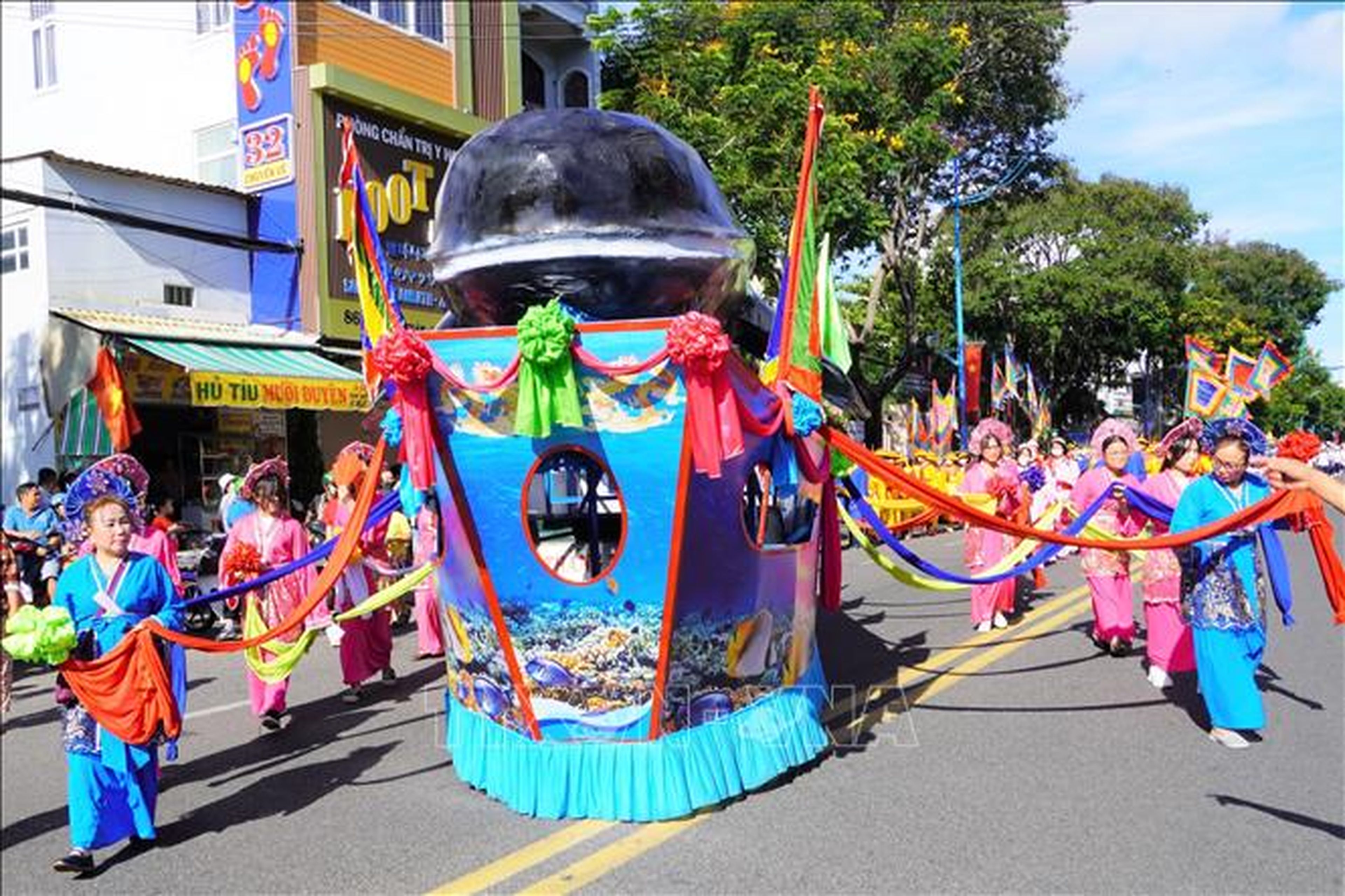
Every year, the management board and village elders at Trường Tây Communal House and Whale Temple organize the great Cầu ngư Festival and the village communal-house worship ceremony according to a solemn procedure passed down through many generations. This series of events includes many important spiritual rites held in succession: the ceremony honoring the tiền hiền and hậu hiền, in remembrance of those who cleared and established the fishing village; the procession to welcome Ông from the open sea; the procession bringing Bà’s spirit back to the temple; the performance of hò bá trạo; the official worship ceremony for Ông Nam Hải; and the lễ tống na, which bids farewell to misfortune. These documentary details clearly demonstrate one thing: Trường Tây Communal House and Whale Temple is not a lifeless architectural structure sitting still to receive sightseeing visitors. It is a vibrant community space, a spiritual sanctuary where the fishing-village residents regularly practice their faith and preserve the memories of their ancestors through each festival season.
Welcoming Ông — The Ritual of Receiving the Guardian Deity from the Ocean
Of the entire series of ceremonies at Trường Tây, the procession to welcome Ông is always the part that evokes the strongest emotions and makes the most powerful visual impression on observers. For the fishing-village residents, Ông Nam Hải is not merely an abstract figure in a religious legend; He is a sacred presence, a real guardian deity amid the vast ocean, one who has protected their boats time and again as they crossed the line between life and death during major storms. For this reason, the Ông-welcoming ceremony carries a sacred meaning: it is a welcome, an expression of profound gratitude, and a sincere prayer for the safety of the entire fishing village.
When the ceremonial procession begins moving from the sea toward the shore, the surrounding space seems to be enveloped in a solemn atmosphere. Every step taken by the ritual team, every beat of the ceremonial drums, and every festival flag fluttering in the sea breeze carries a strangely formal rhythm. If you have the opportunity to observe, you should keep one essential point in mind: the coastal residents are not “performing” or deliberately beautifying the ceremony to attract tourists’ cameras. They are carrying out a sacred spiritual duty to their ancestors and deities with all the heartfelt devotion of their kin. This perspective will help you restrain your own behavior: do not jostle, do not run around looking for a place to take photos, and do not turn the solemn ceremonial space into a stage for your personal portraits.
The Harmonious Combination of the Communal House and Whale Temple in Coastal Village Culture
One culturally and anthropologically distinctive feature of the Trường Tây historical site is the simultaneous presence of both a communal-house structure and a whale-temple structure within the same spiritual community space. The village communal house is where the village guardian deities, the tiền hiền, and the hậu hiền are worshipped — historical figures who helped clear and develop the land and establish the settlements, representing the Vietnamese ethic of “drinking water, remember its source.” The Whale Temple, meanwhile, is where Ông fish and the deities of the sea are worshipped, closely connected to the livelihood and distinctive beliefs of coastal residents. When these two elements stand side by side and blend together in a single festival season, visitors can see the fullest and most complete picture of how a fishing village organizes its spiritual life: gratitude toward the origins and ancestors on land, reverence and prayers for safety before the distant open sea, and the strong bonds connecting members of the community.
What makes Trường Tây Communal House and Whale Temple even more fascinating and worthy of attention is its geographical location. This space lies in the heart of a modern, urbanized Nha Trang, surrounded by busy roads, high-rise buildings, and the hurried rhythm of tourism. Yet beneath that polished urban exterior, the spiritual lifeblood of the coastal village has never been severed or disappeared. It continues to move quietly alongside the city, skillfully adapting to the new pace of life while firmly preserving its core values and the most important grand festival days handed down by its forebears.
Practical Guidance for Visitors Who Want to Explore More Deeply
If your goal is to fully attend and observe the atmosphere of the Cầu ngư Festival at Trường Tây, the first thing you need to do is proactively follow the lunar calendar and information from the site’s management board, because the opening day is not usually fixed according to the Gregorian calendar from year to year. When visiting, you should arrive at the site early in the morning and choose observation spots along the outer edge of the procession route or beside the communal-house courtyard, avoiding standing directly in the middle of the main path used by the ceremonial party. As for clothing, polite, modest outfits in subdued colors are always the best choice.
Suggested Itinerary for Exploring the Culture of Southern Nha Trang’s Coast:
-
5:30 - 7:00: Observe the early-morning rhythm of the fishing port at Cửa Bé - Vĩnh Trường.
-
7:30 - 9:00: Travel to Trường Tây Communal House and Whale Temple (Vĩnh Nguyên) for a visit.
-
9:30 - 11:30: Visit the Nha Trang Institute of Oceanography to learn about marine science and sea creatures.
When taking photographs or filming in the communal-house and whale-temple space, always remember that the beauty of spiritual photographs lies in distance and propriety. Use wide-angle shots to capture the solemn setting of the old communal-house roof, the uniform movements of the hò bá trạo formation, or the vivid colors of the festival flags beneath the golden sunlight. Absolutely avoid bringing the camera close to the faces of people who are reverently offering incense and praying. This article about Trường Tây Communal House and Whale Temple in the Spirituality section will be a valuable guide, helping readers discover another beauty of Nha Trang: the beauty of a city that respects the memories of fishing villages and preserves prayers for the safety of boats venturing into the open sea amid the noise of modern life.