1The Legend Behind the Origins of the Tra Co Festival
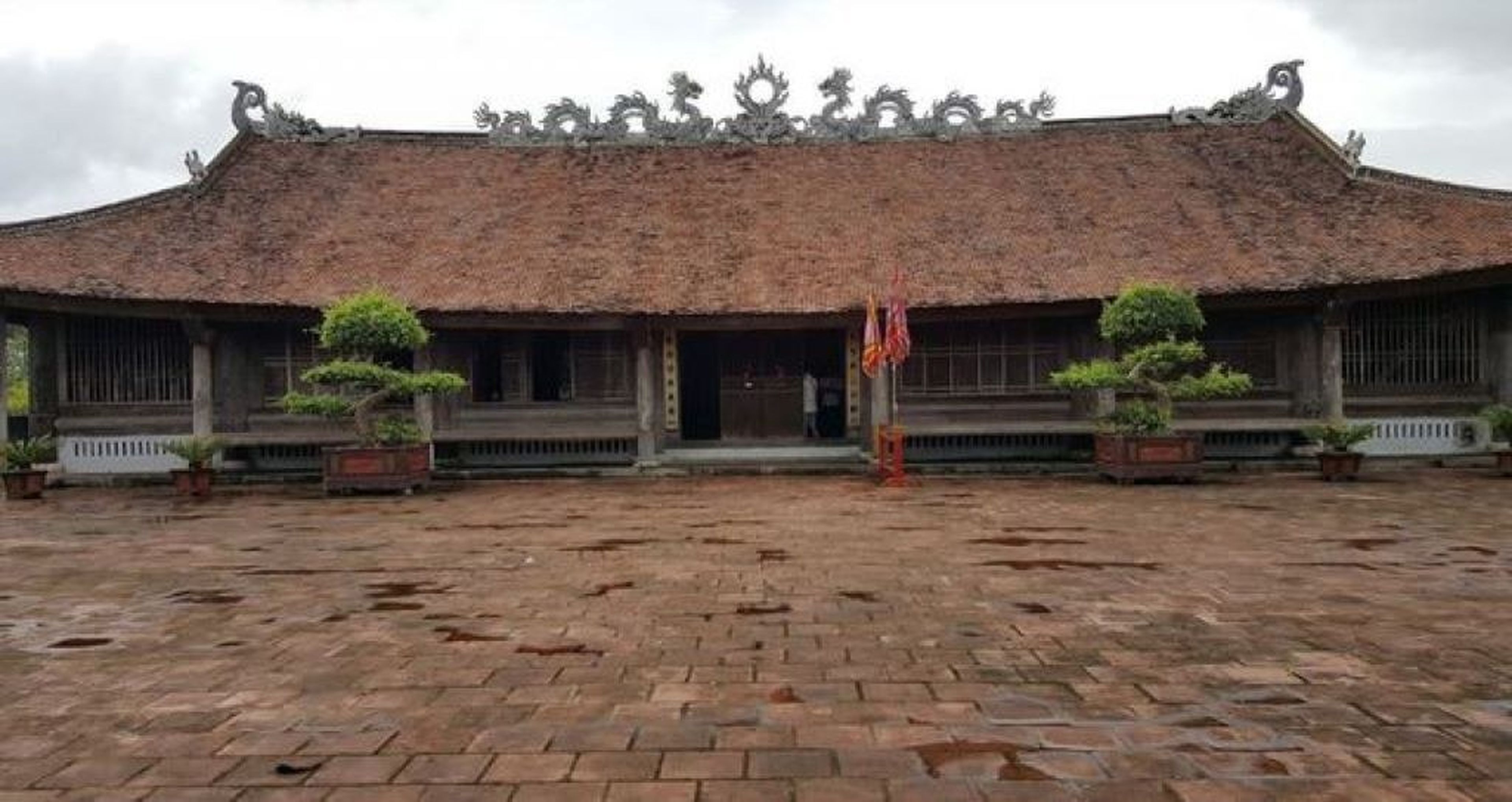
Tra Co Communal House, located in the Nam Tho area, Tra Co Ward, Mong Cai City, Quang Ninh Province, was built during the Later Le Dynasty. Having endured many ups and downs throughout history, the communal house still stands tall and imposing, like a marker of sovereignty and a marker of Vietnamese culture in the border region.
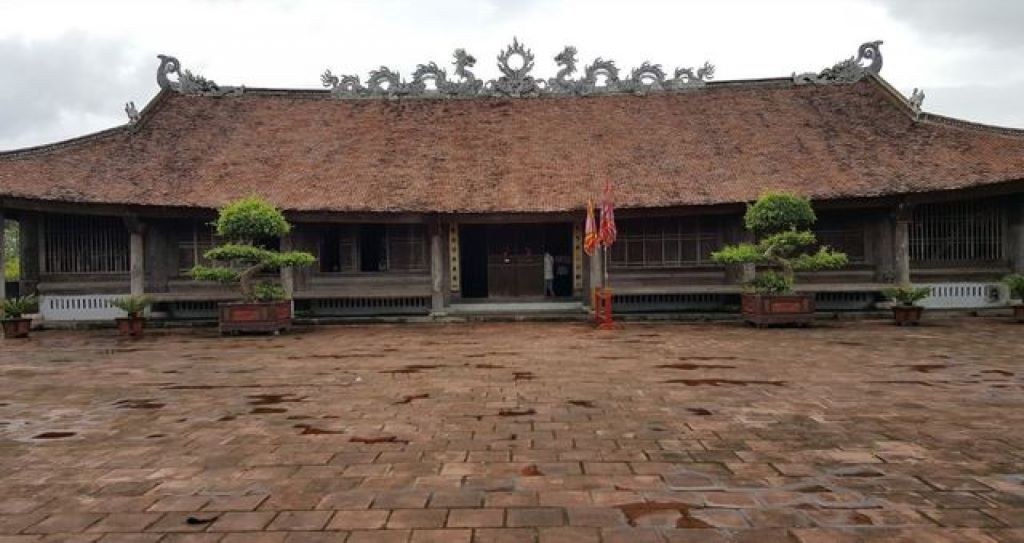
Tra Co Communal House - One of the oldest landmarks in Vietnam
According to historical records, Tra Co Communal House is associated with the legend “The People of Tra Co, Descendants of Do Son.” According to the legend, in 1461, fishing families from Do Son (in present-day Hai Phong) often traveled with their entire families to earn a living in many distant coastal areas, including the estuary region that is now Tra Co, Mong Cai. During a storm, twelve families drifted to a deserted peninsula covered only with mangrove and reeds. Unable to endure the hardship, six families returned to their old homeland, while the remaining six were determined to stay and build a new settlement. At first, there were only six simple houses, but over time they grew into a prosperous village. Like many other rural communities, Tra Co Communal House was built through the contributions of the local people’s labor and resources. Later, local residents returned to their old homeland to request incense from the village guardian deities to worship at the communal house (Khong Lo, Giac Hai, Nhan Minh, Huyen Quoc, and Quang Trach). In addition, the communal house is also dedicated to six founding pioneers who reclaimed and established the ancient Tra Co area.
Since then, Tra Co Communal House has undergone several major restorations, the most recent of which took place in 2012. The present communal house stands on a plot of more than 1000m2, faces south, and features a traditional Vietnamese “đinh”-shaped layout, comprising 05 bays and 02 side compartments in the worship hall and 03 bays in the rear sanctuary, with a traditional wooden architectural structure. The entire building was constructed with interconnected wooden frames joined by mortise-and-tenon joints. The communal house is a grand ancient structure with tiled roofs and four upturned corners, resembling a boat cutting through the waves and heading out to sea. Particularly notable are the sturdy, refined, and vivid carvings on the trusses. The rich themes include dragons coiling through water, phoenixes in flight, and tigers stalking prey beside flowering branches… Each carving is a distinctive work of art. It is regarded as one of the grandest communal houses, with unique architecture, in the Red River Delta region.
The communal house also preserves many valuable artifacts, including: 03 bronze incense burners, 2 red-lacquered and gilded wooden cranes standing on tortoise heads, 8 wooden imperial thrones from the Nguyen Dynasty, and 12 royal decrees made of paper…
See also: The more-than-700-year-old Cua Ong Temple historical site in Quang Ninh
2The Main Activities of the Tra Co Festival
2.1 When the Tra Co Festival Takes Place
Every year, from the 1st to the 3rd day of the 6th lunar month, the people of Tra Co hold a communal house festival to commemorate the merits of the village guardian deity. Tra Co village communal house is not only a place for spiritual activities but also a unique architectural work and a marker of spiritual culture at the Fatherland’s northeastern frontier. After being interrupted for a period due to war, the Tra Co Festival was revived in 1993 and remains a cultural highlight and a source of pride for local people to this day.
This traditional festival still preserves unique customs characteristic of the Red River wet-rice civilization, with strict regulations governing procedures, especially the selection of the person to serve as the “Ong Dam” and the care of the pig prepared for the ritual, which everyone reverently calls “Ong Voi.”
2.2 Activities Held as Part of the Festival
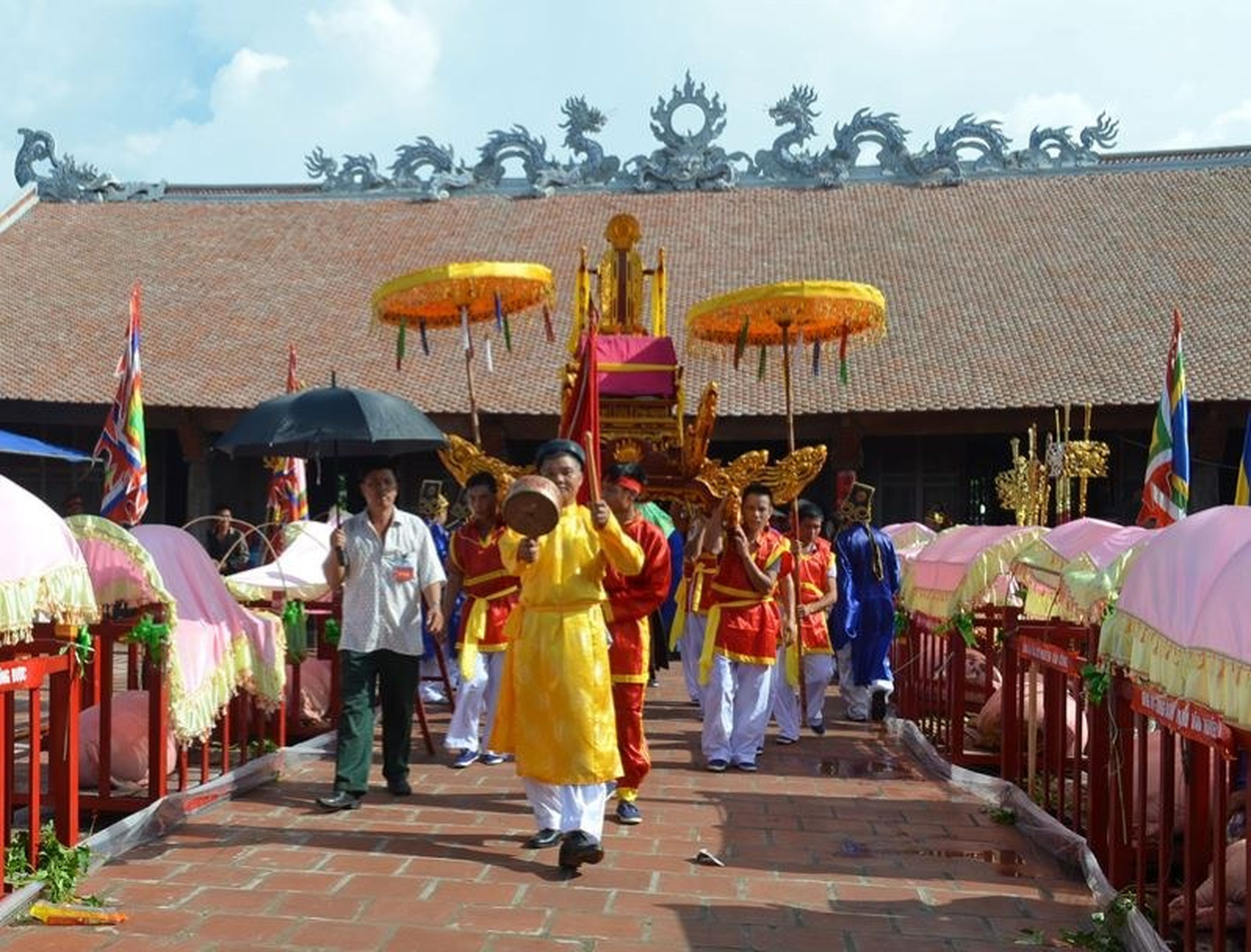
Usually, before the main festival, on the 25th day of the 5th lunar month, a boat procession travels from Tra Co to the ancestral homeland of Do Son. On the 30th day of the 5th lunar month, the boats return from Do Son to Tra Co. On the 1st day of the 6th lunar month, the festival begins with the procession of the King out to the sea, also known as the procession of the King to the shrine. The procession features an armed unit carrying weapons, sacred flags, a traditional octet orchestra, and ceremonial objects, followed by flag bearers and palanquin carriers. The flag bearers must be strong, young, good-looking, and virtuous, and are selected at the end of the previous year’s festival.
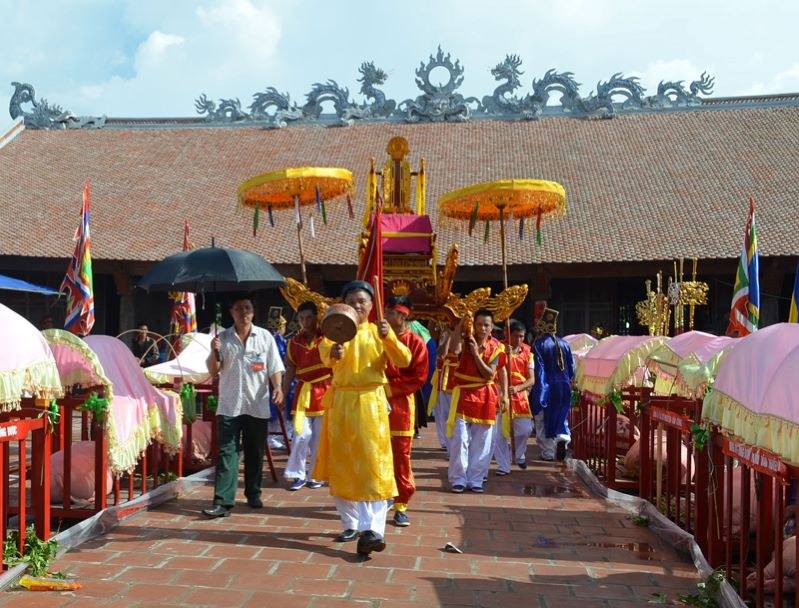
The King procession opens the festival
After the procession comes a competition featuring livestock and agricultural products, represented mainly by contests for pigs, which people call Ong Voi. The Ong Voi are carefully raised and looked after by the cai dam and villagers for many months before the festival begins. Another distinctive feature of the Tra Co Festival is the feast-making and cooking competition; anyone who cooks well becomes known throughout the village.
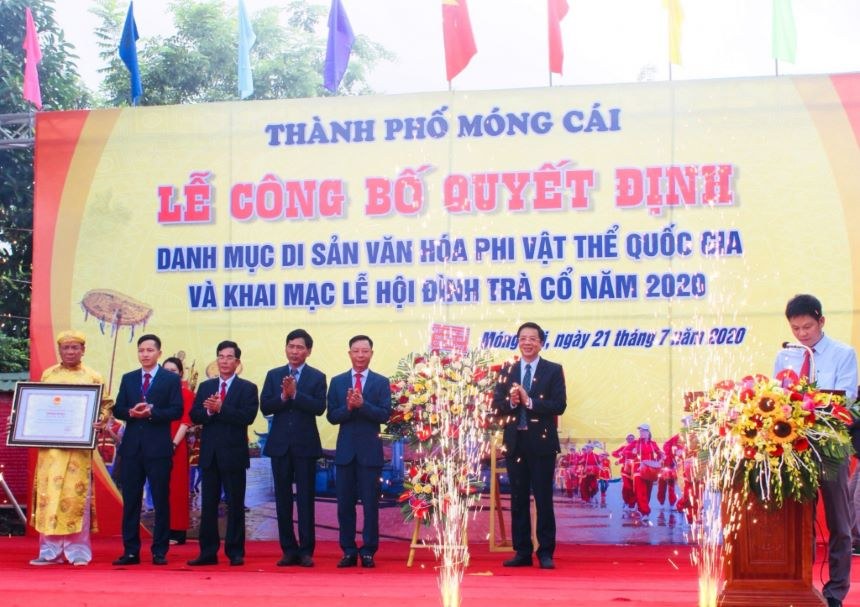
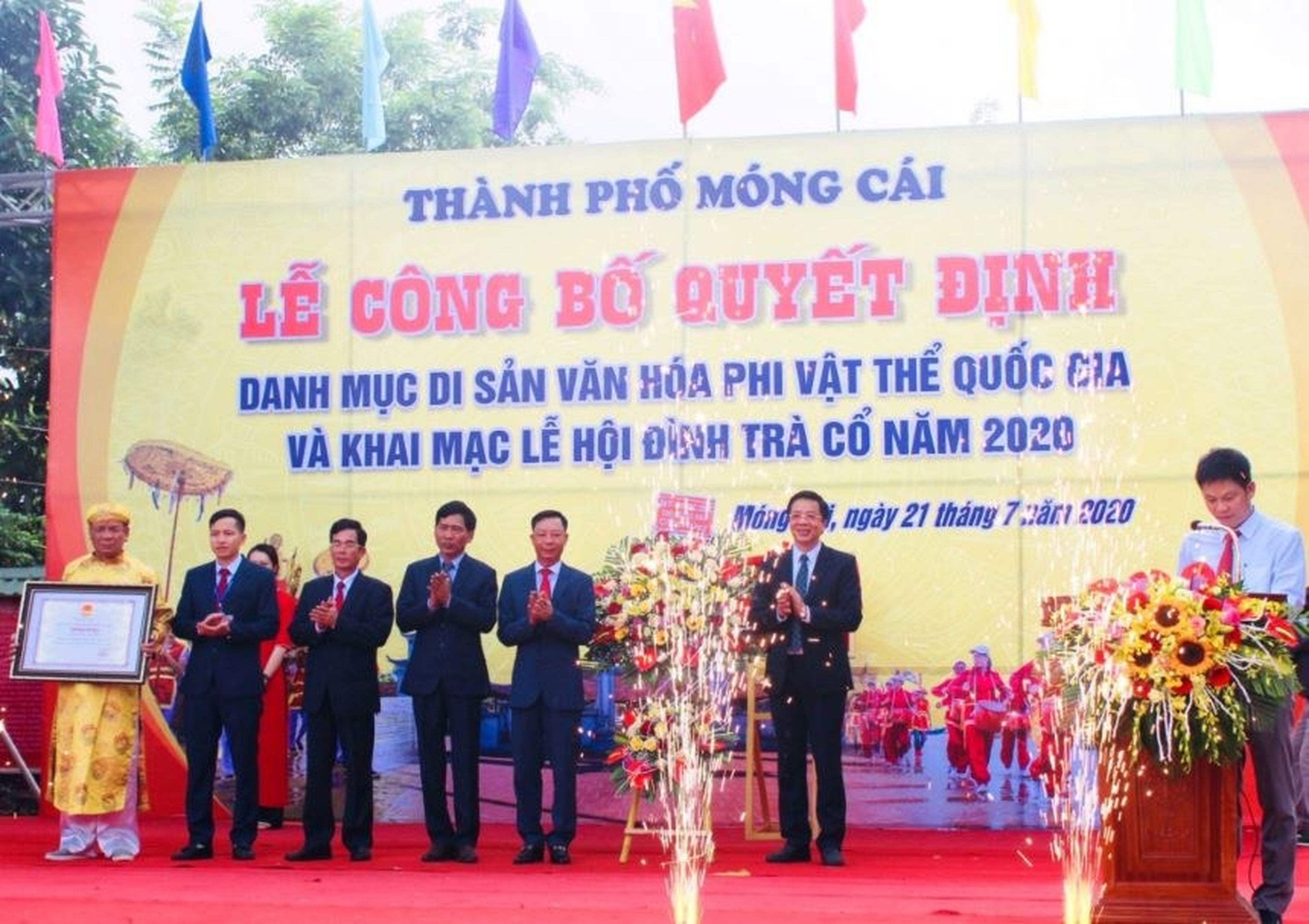
The Tra Co Festival was honored as a National Intangible Cultural Heritage in 2020
The 6th day marks the end of the festival, when there is also a flower dance performance. On this day, people pray to heaven, earth, and the deities for abundant catches of fish and shrimp, prosperous trade, thriving livestock and crops, and a warm and happy life.
2.3 The “Ong Voi” Competition Is the Highlight of the Tra Co Festival
The “Ong Voi” competition is a contest among 12 pigs raised and cared for by 12 “cai dam,” representing the 12 founding pioneers credited with discovering ancient Tra Co. According to old custom, before the festival begins, Tra Co village gathers to select 12 people, called “cai dam,” to prepare to raise pigs for the following year’s festival.
The “cai dam” must be middle-aged, healthy, industrious, virtuous, and lead a wholesome lifestyle, with a harmonious family and no mourning obligations. Those selected by the village as “cai dam” feel greatly honored and proud. According to the beliefs of old, any family that successfully fulfills the duties of “cai dam” will receive blessings, enjoy good health, and prosper in their work and business.
From the beginning of the year, each “cai dam” raises one pig. Once brought home, the pig is no longer called a pig but is called “Ong Voi,” regarded as a sacred animal of the household and the village. “Ong Voi” is carefully looked after, eating and sleeping in a separate, clean pen; when it is hot, a fan is provided, and it sleeps under a mosquito net.
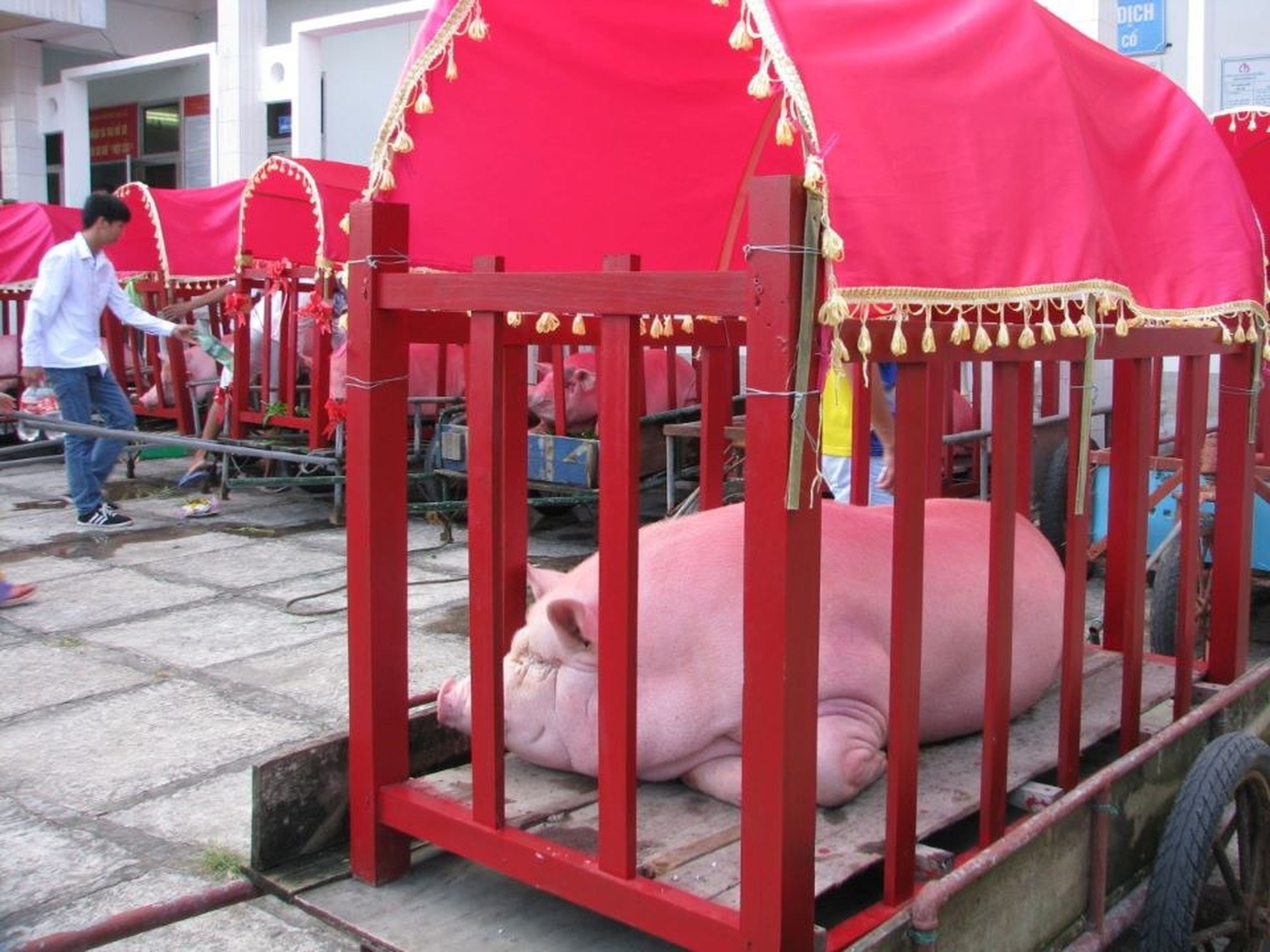
On the afternoon of the 30th day of the 5th lunar month, after the ancestral worship ceremony, the “Ong Voi” are bathed and cleaned by the “cai dam” and placed in red-painted cages with canopies and curtains. The 12 “Ong Voi” are then escorted by the “cai dam” to the communal house courtyard and arranged in two rows to pay homage to the deity. The “Ong Voi” are arranged in order, with the Chief “cai dam” at the front right and the Deputy “cai dam” at the front left. Six Ong Voi stand on each side in a vertical line in front of the communal house to pay homage to the deity.
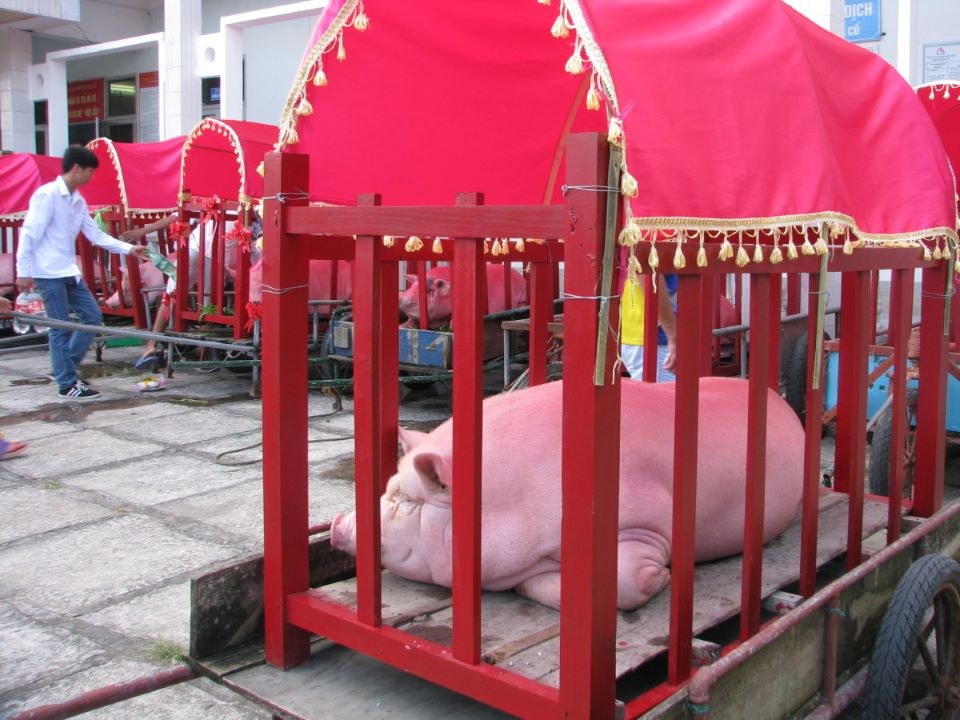
The “Ong Voi” are carefully cared for in preparation for the Tra Co Festival
According to custom, the “Ong Voi” must pay homage to the deity at the communal house for one night. The “cai dam” must remain on duty at the communal house and, together with the organizing committee, handle the offerings, rituals, and incense until the festival ends. Each man may serve as “cai dam” only once in his lifetime, so anyone selected feels honored and understands the responsibility from the very beginning.
After the ceremony reporting to the deity, the festival organizers conduct the judging. The “Ong Voi” with the longest body, largest and most beautiful neck, and greatest weight wins first prize. Immediately after judging, the “Ong Voi” return to being ordinary pigs, and the cai dam’s family may sell them to traders right at the communal house gate or take them home to slaughter for a feast for their relatives. The first-prize “Ong Voi” is kept for slaughter as an offering to the deity. The award ceremony for the cai dam whose “Ong Voi” wins the highest prize is held on the morning of the following main festival day.
In the ritual offering tray, besides the pig’s head, a tuft of hair from the “Ong Voi’s” shoulder is indispensable. After the worship ceremony, this tuft of hair is taken out and placed at the foot of the banyan tree beside the courtyard of Tra Co Communal House. This is a highly sacred and important ritual in the Tra Co communal house festival.
See also: Tra Co Beach - One of the most beautiful beaches in Ha Long
The Tra Co Festival not only expresses people’s gratitude to and remembrance of the village guardian deities, but also reflects local residents’ awareness and responsibility in participating in the protection and development of an increasingly prosperous and strong border. In addition to the Tra Co Festival, when visiting Quang Ninh, tourists can also take part in other equally fascinating activities, such as the Ba Vang Pagoda Festival, the Ha Long Carnaval Festival, and the Bach Dang Festival, which are rich in tradition and represent the beauty of Vietnamese national culture.