

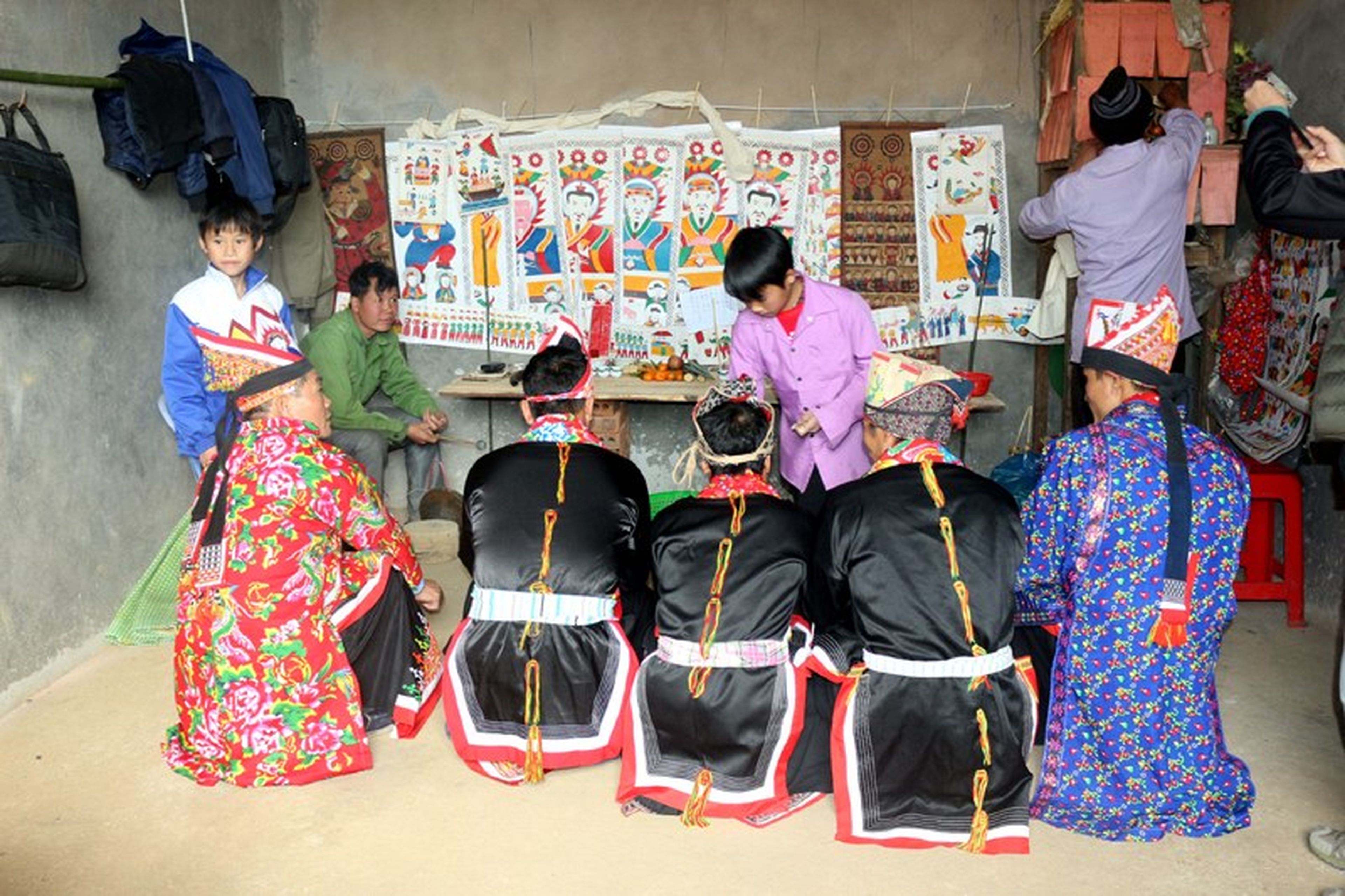
In the rhythm of modern life, cultural values can easily be forgotten. The traditional community house of the Dao people in Ba Chẽ helps preserve the long-standing cultural heritage of the Dao people in this mountainous district of Quảng Ninh.
The Unique Traditional Community House of the Dao People in Ba Chẽ, Quảng Ninh
Ba Chẽ is a mountainous locality inhabited by many ethnic minority groups. More than 40% of its population is Dao, including the Dao Thanh Y and Dao Thanh Phán branches, which over generations have continued to enrich the area’s cultural colors.
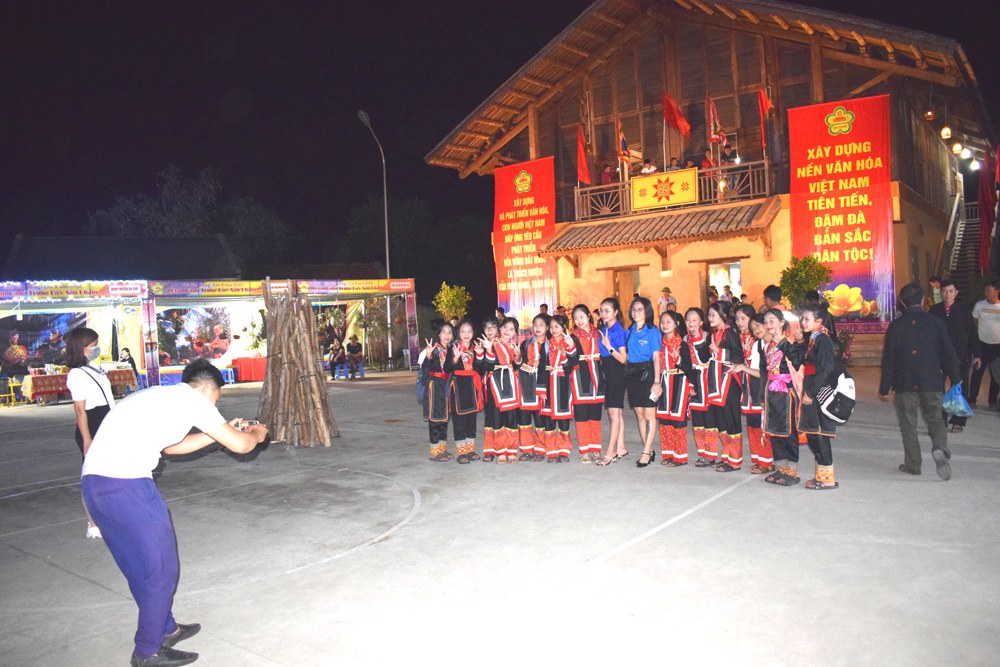
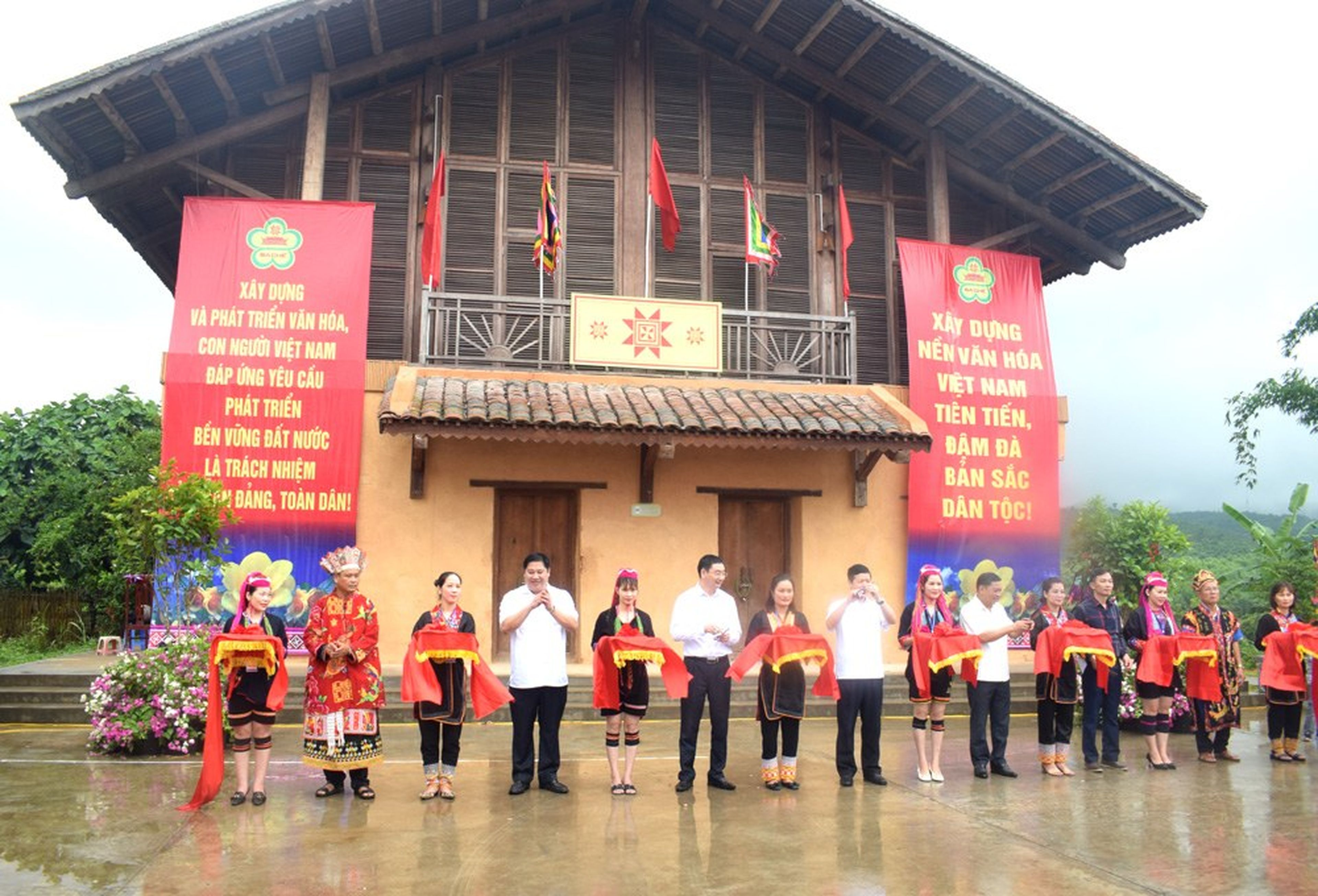
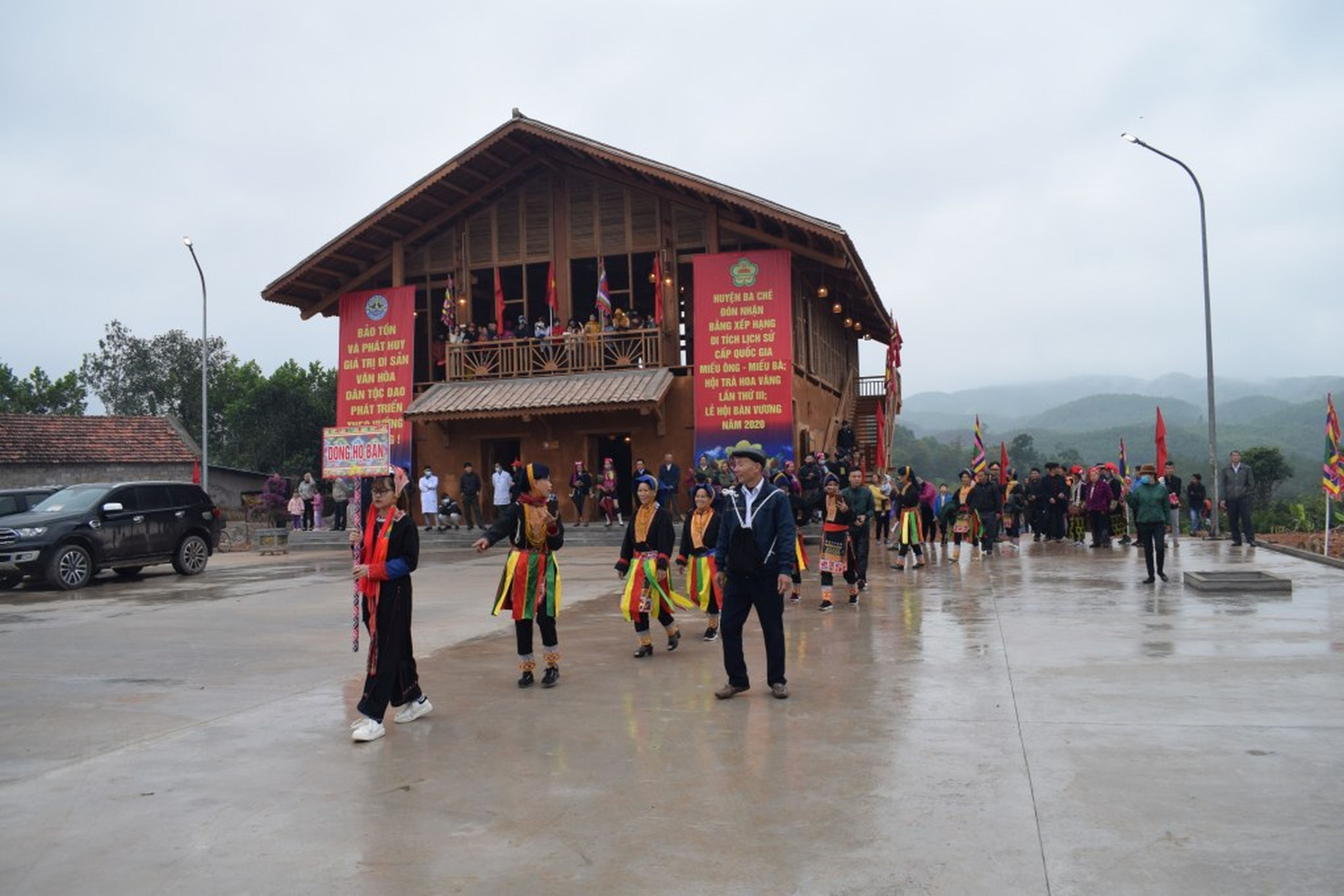
Traditional community house of the Dao people. Photo: Quảng Ninh Newspaper.
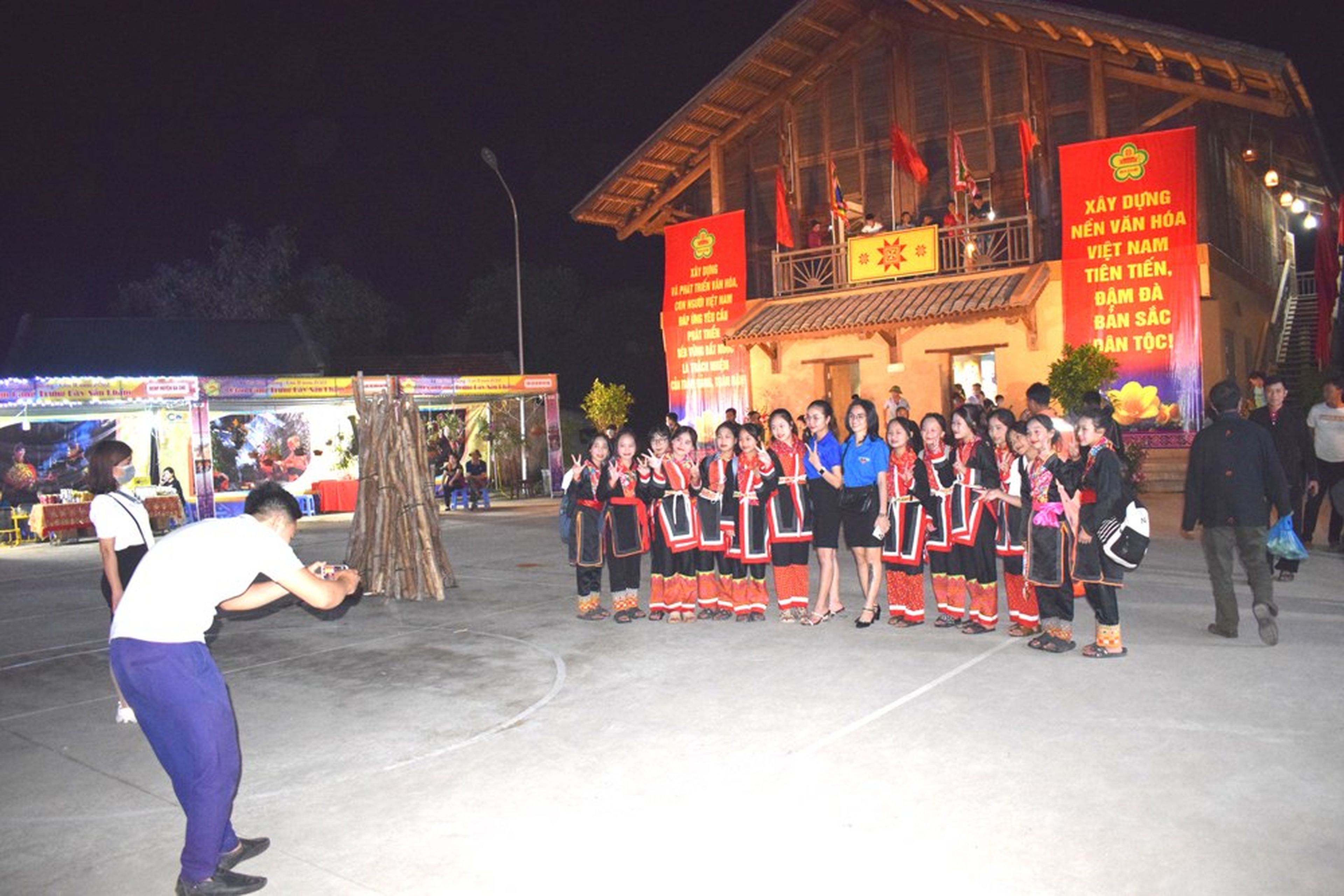
Traditional community house of the Dao people in Nam Hải Hamlet, Nam Sơn Commune, was inaugurated to continue the journey of rediscovering traditional cultural values in northeastern Quảng Ninh. It also aims to restore them and meet the local Dao community’s needs for worship and pilgrimage.
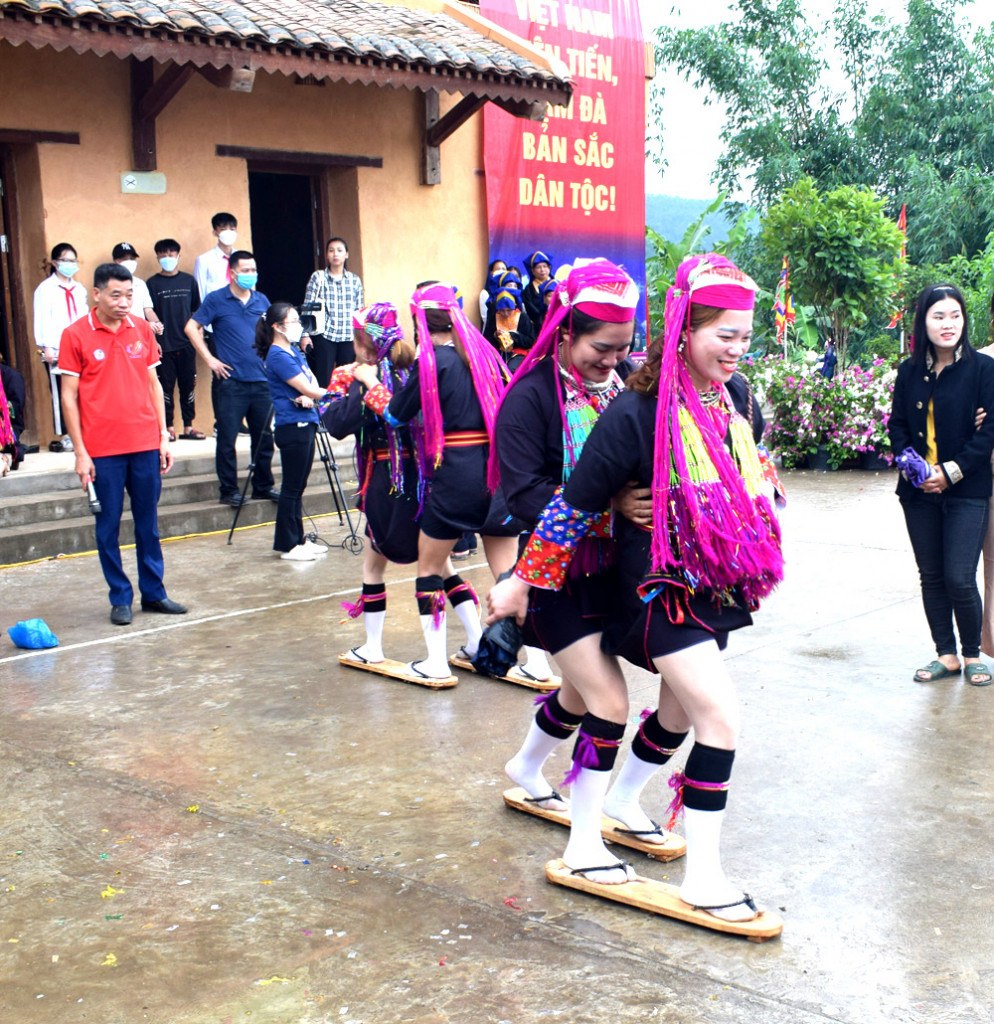
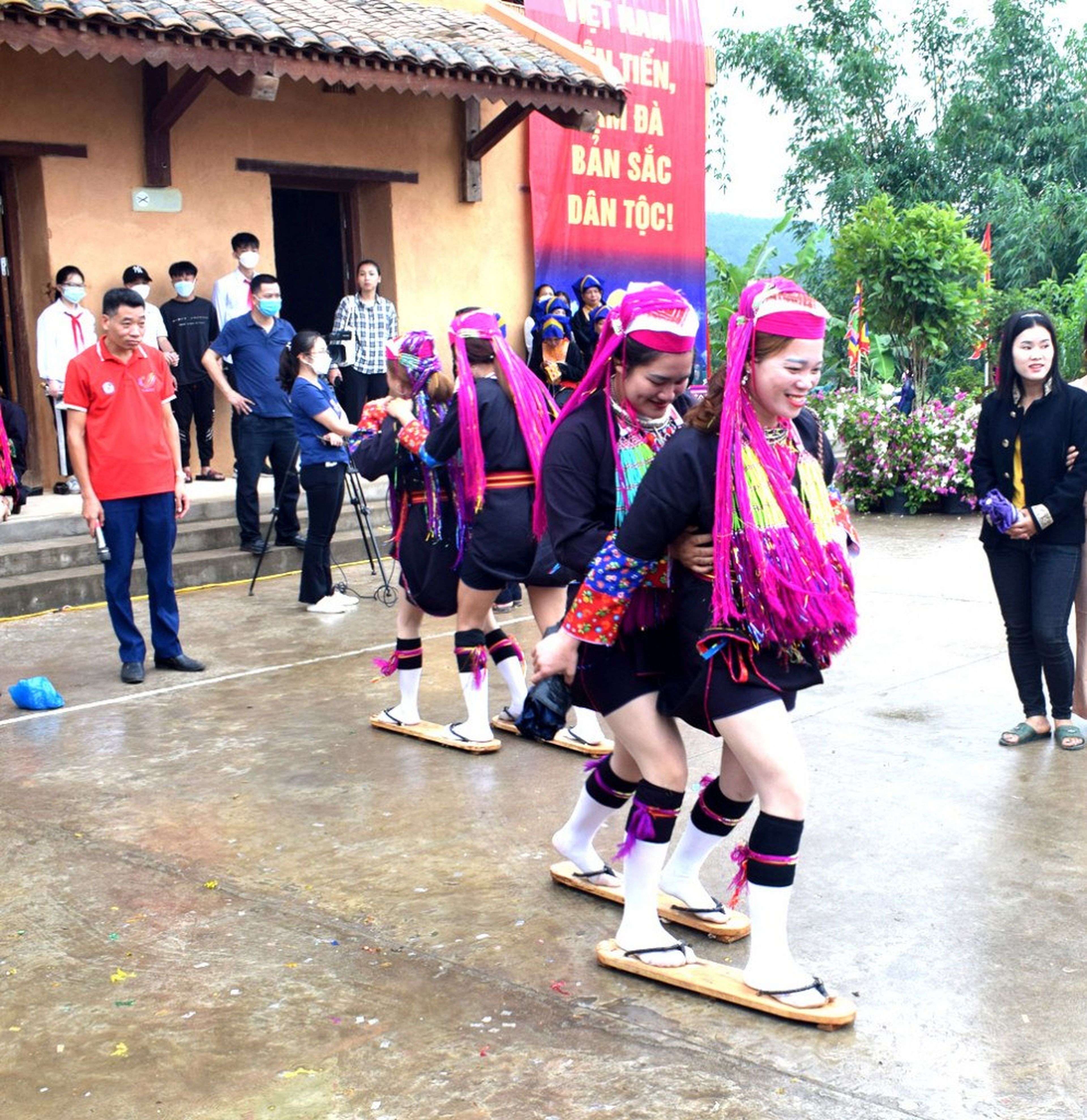
Enjoying activities at the traditional house. Photo: Quảng Ninh Newspaper.
The structure was built in the traditional half-stilt, half-ground style, with a total area of more than 1,600 square meters. This cultural space was developed from the ideas of Dao elders, who have worked to preserve their ethnic identity amid the rapid and profound changes of modern society.
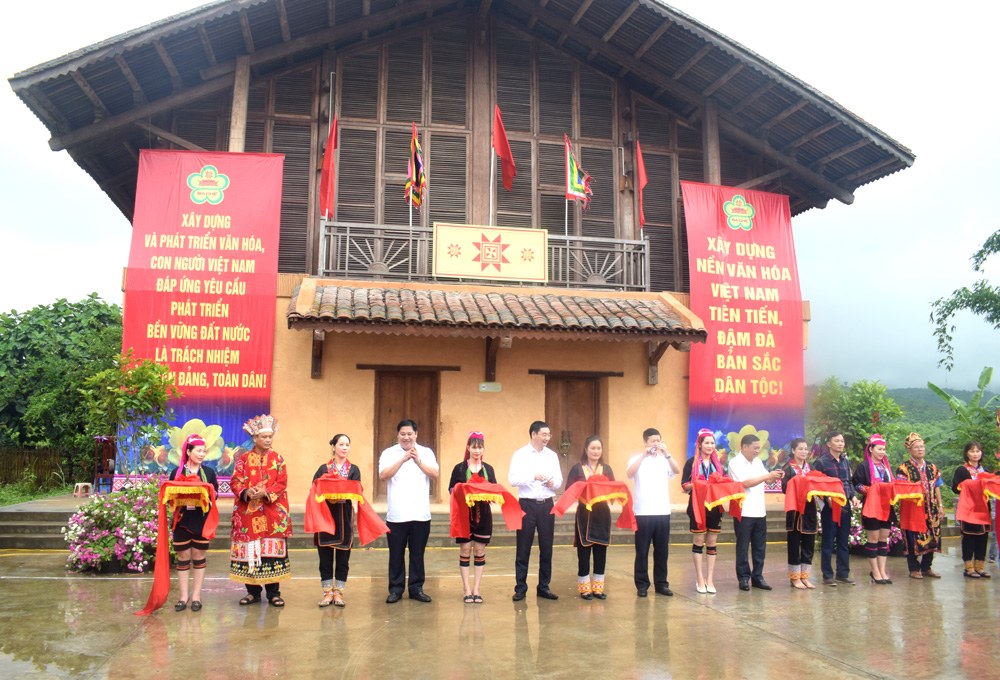
Photo: Quảng Ninh Newspaper.
Traditional community house of the Dao people has two floors. The first floor divides the exhibition space into two separate areas for the Dao Thanh Y and Dao Thanh Phán. Each area contains hundreds of artifacts that richly recreate customs, tools, and implements used in production and daily life.
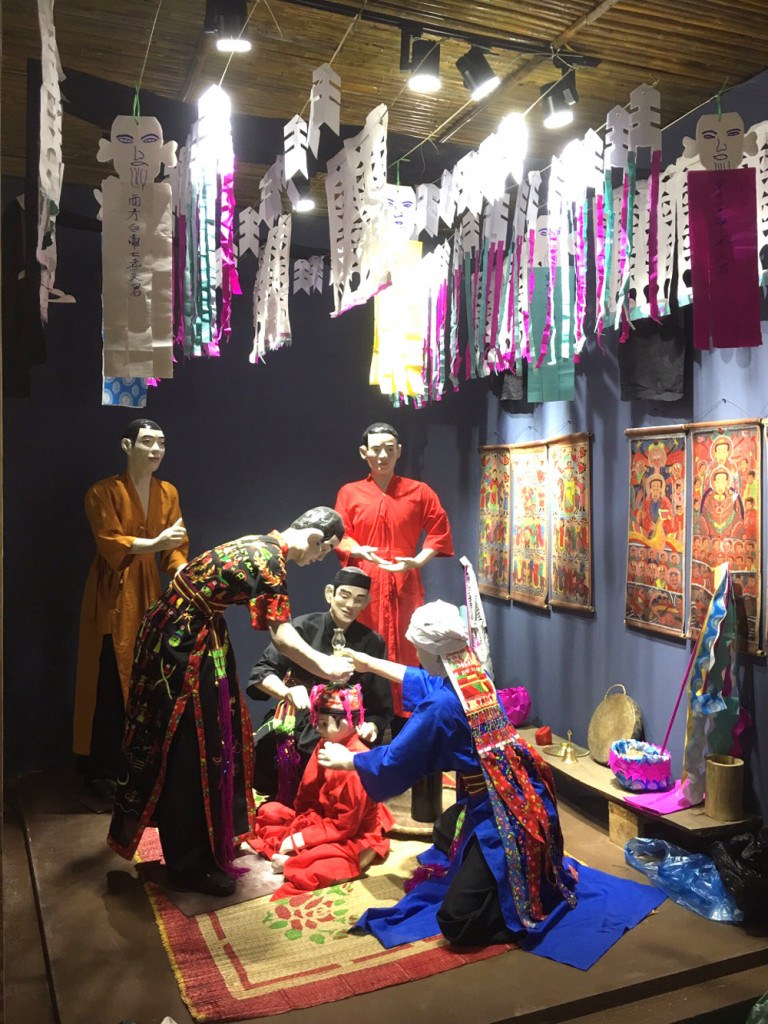
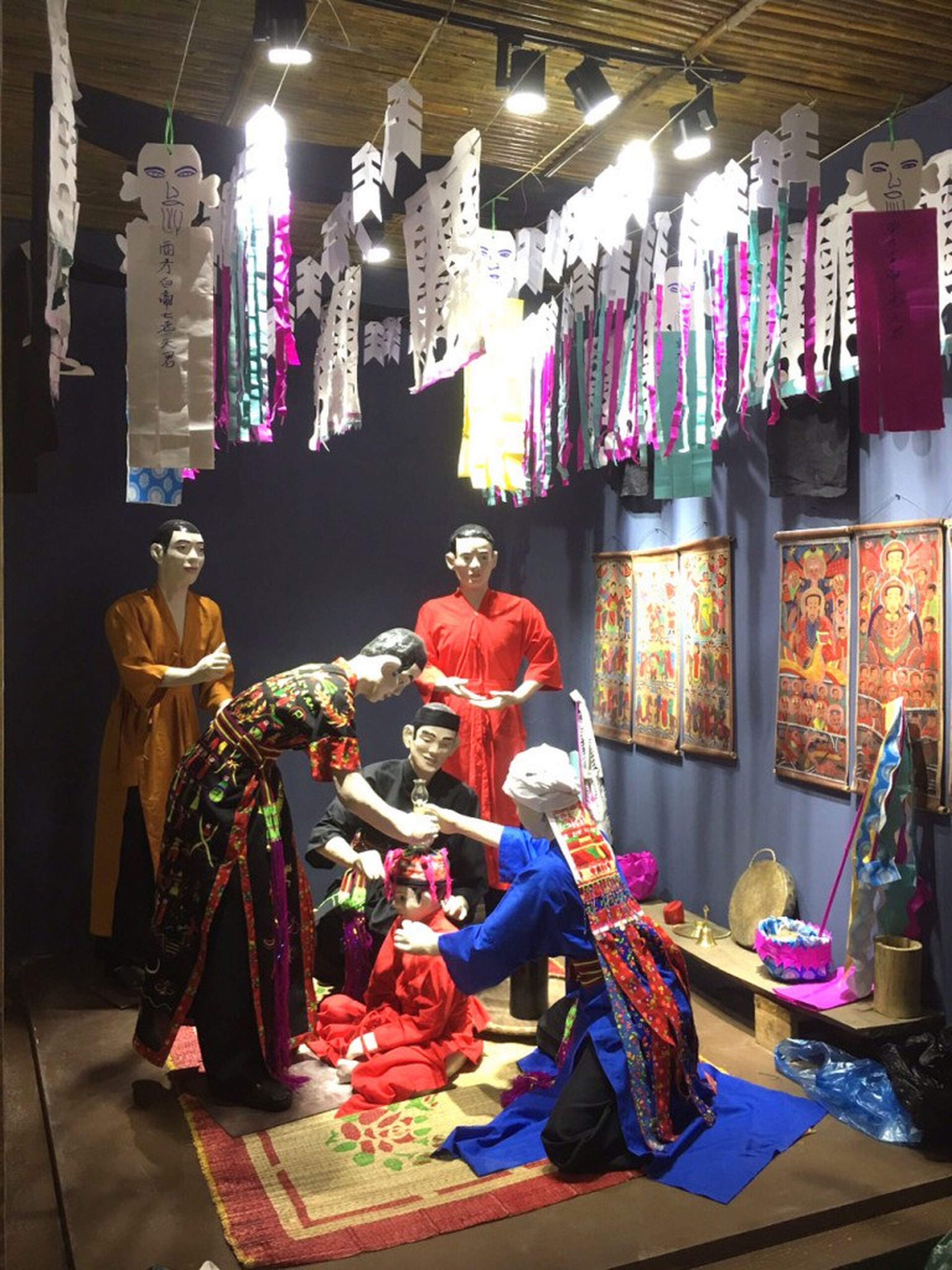
Reenactment of the cấp sắc ceremony. Photo: Quảng Ninh Newspaper.
All the artifacts have been faithfully reconstructed from real-life examples or even brought from Dao communities across Ba Chẽ District. These include traditional Dao costumes, vivid and sophisticated works of art that convey concepts of the universe and human life through embroidered and printed patterns.
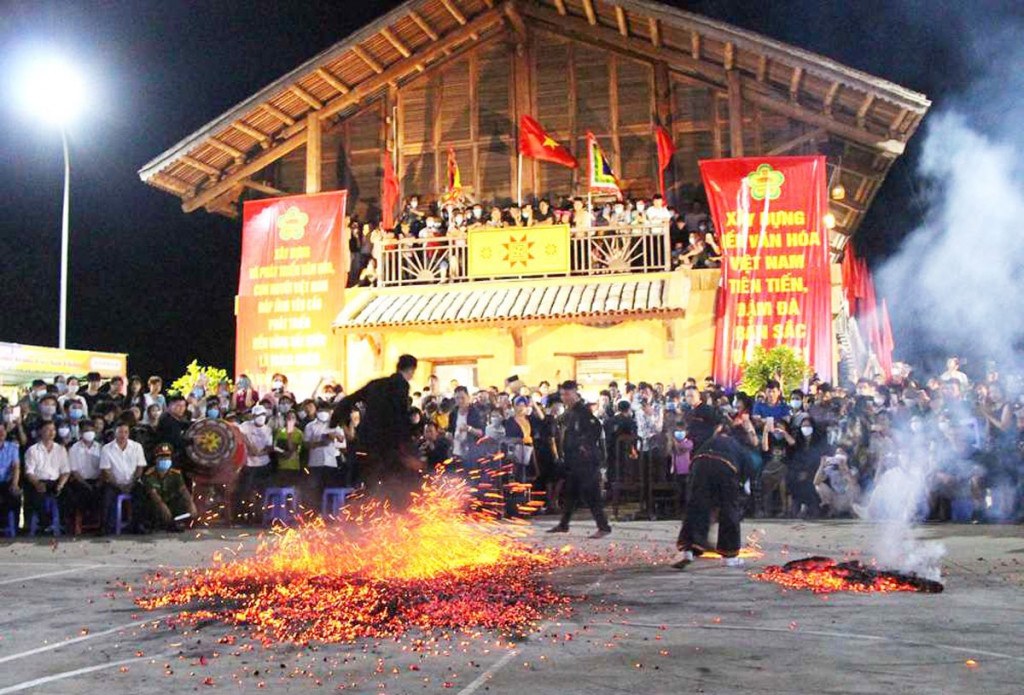
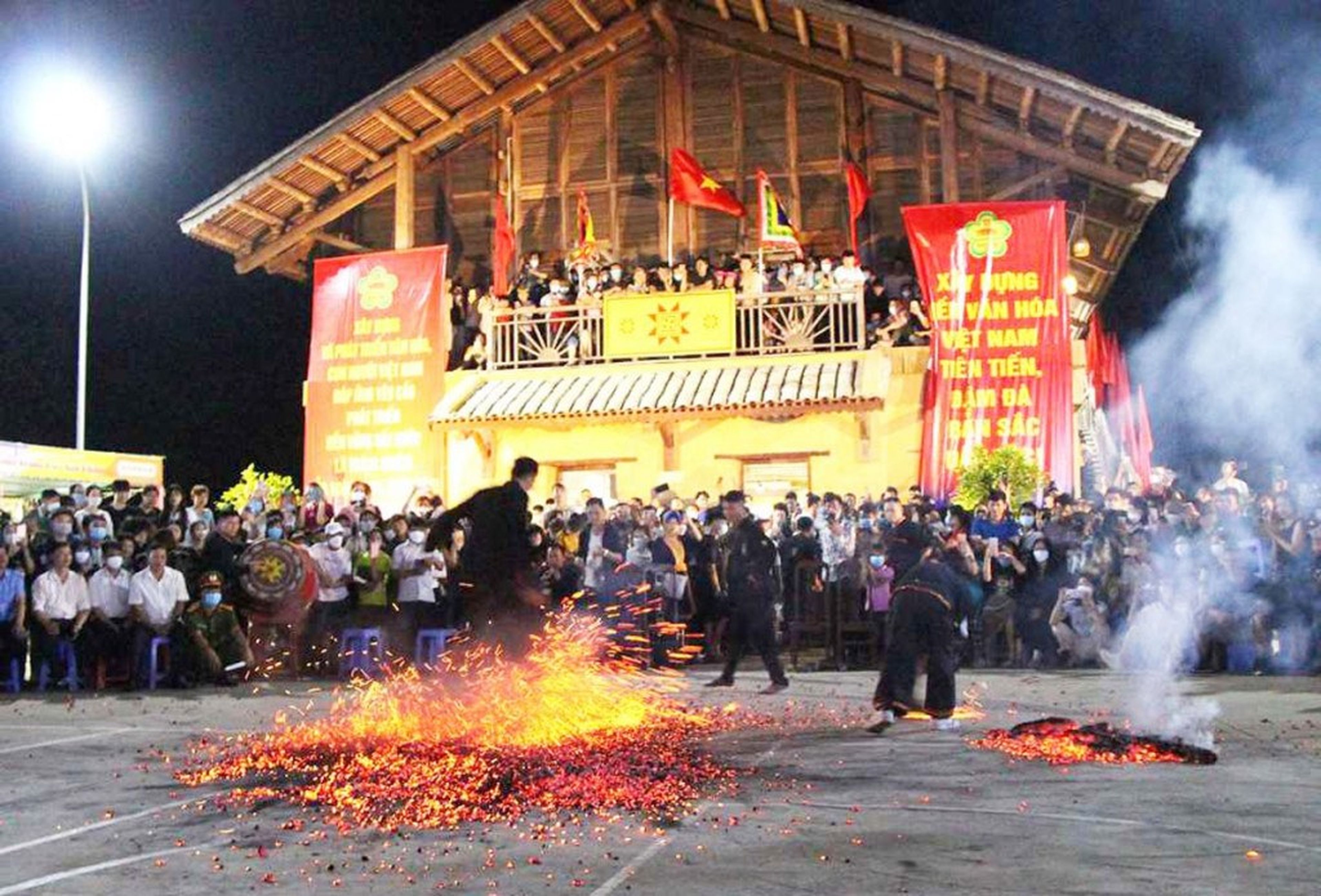
Reenactment of the fire-dancing ritual. Photo: Dân tộc Newspaper.
Every Dao person has their own distinctive clothing, embroidered and woven with great intricacy. Grandmothers and mothers teach their children embroidery from an early age. Dao young women make their own finest outfits to wear on their wedding days and during festival seasons, because clothing is an important element in creating the Dao’s unique identity.
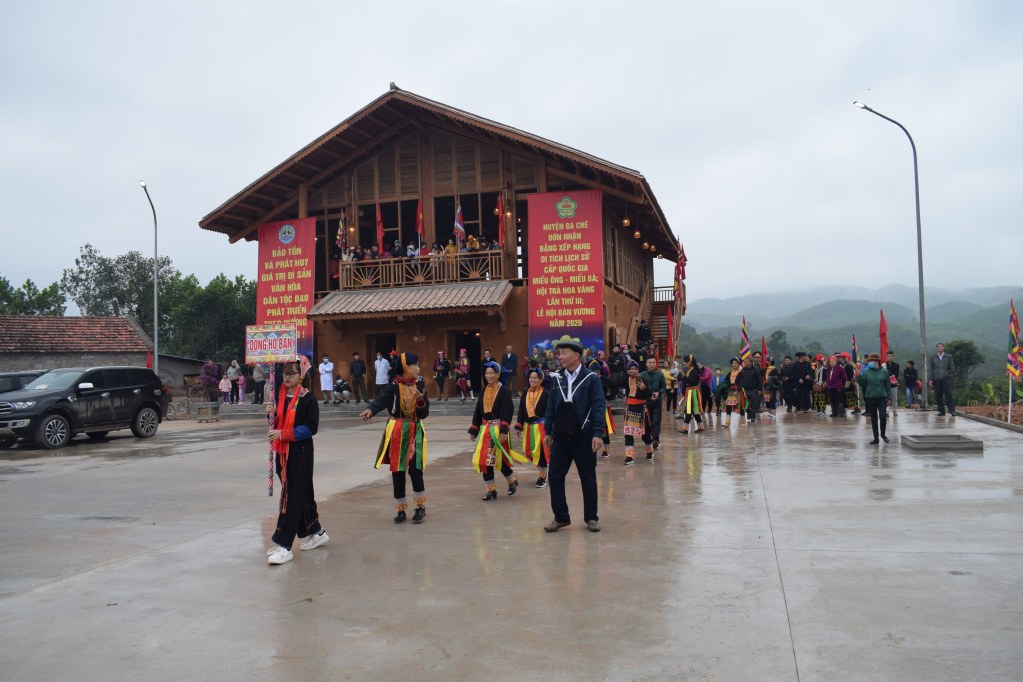
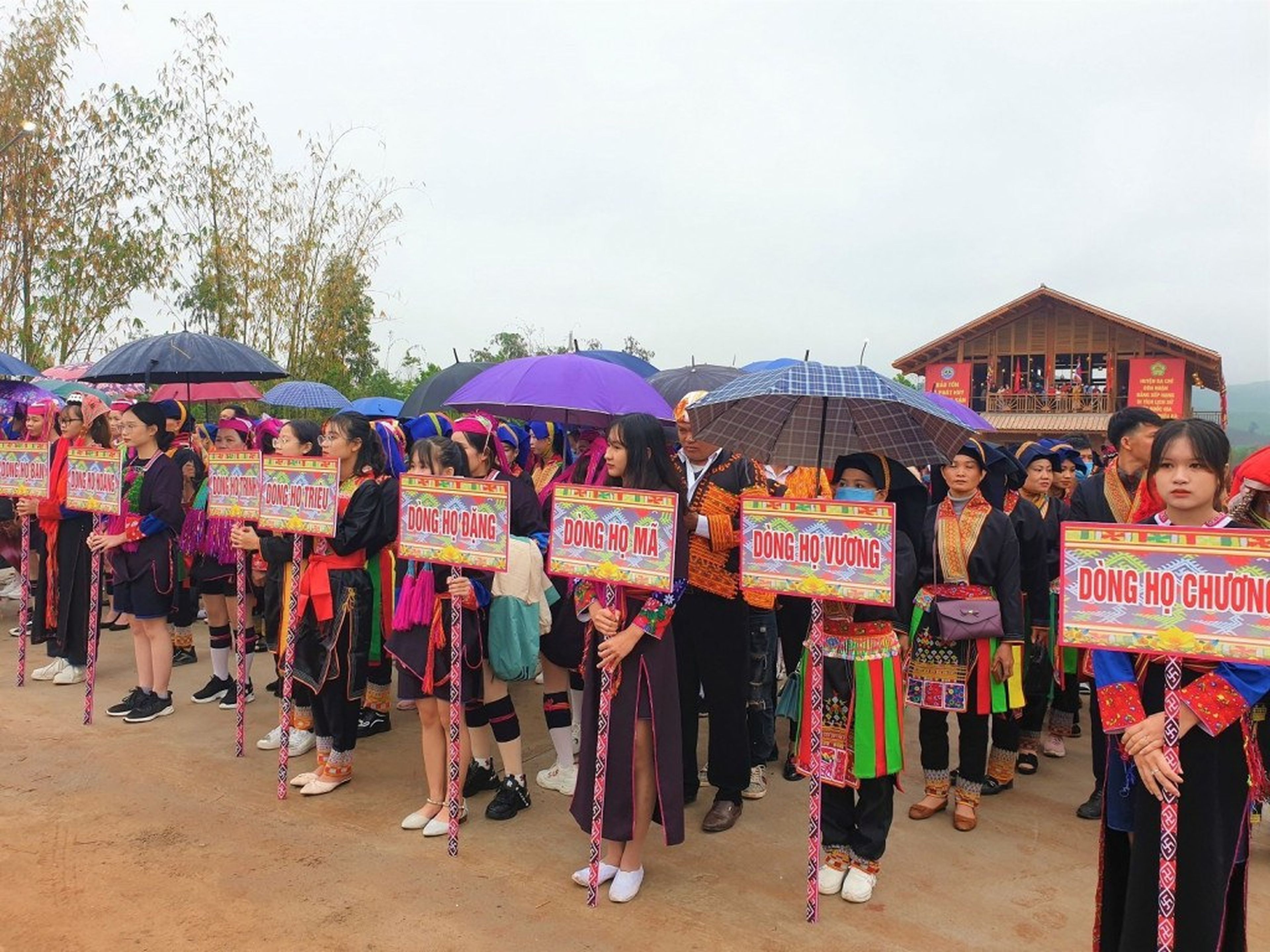
Bàn Vương Festival. Photo: Quảng Ninh Newspaper.
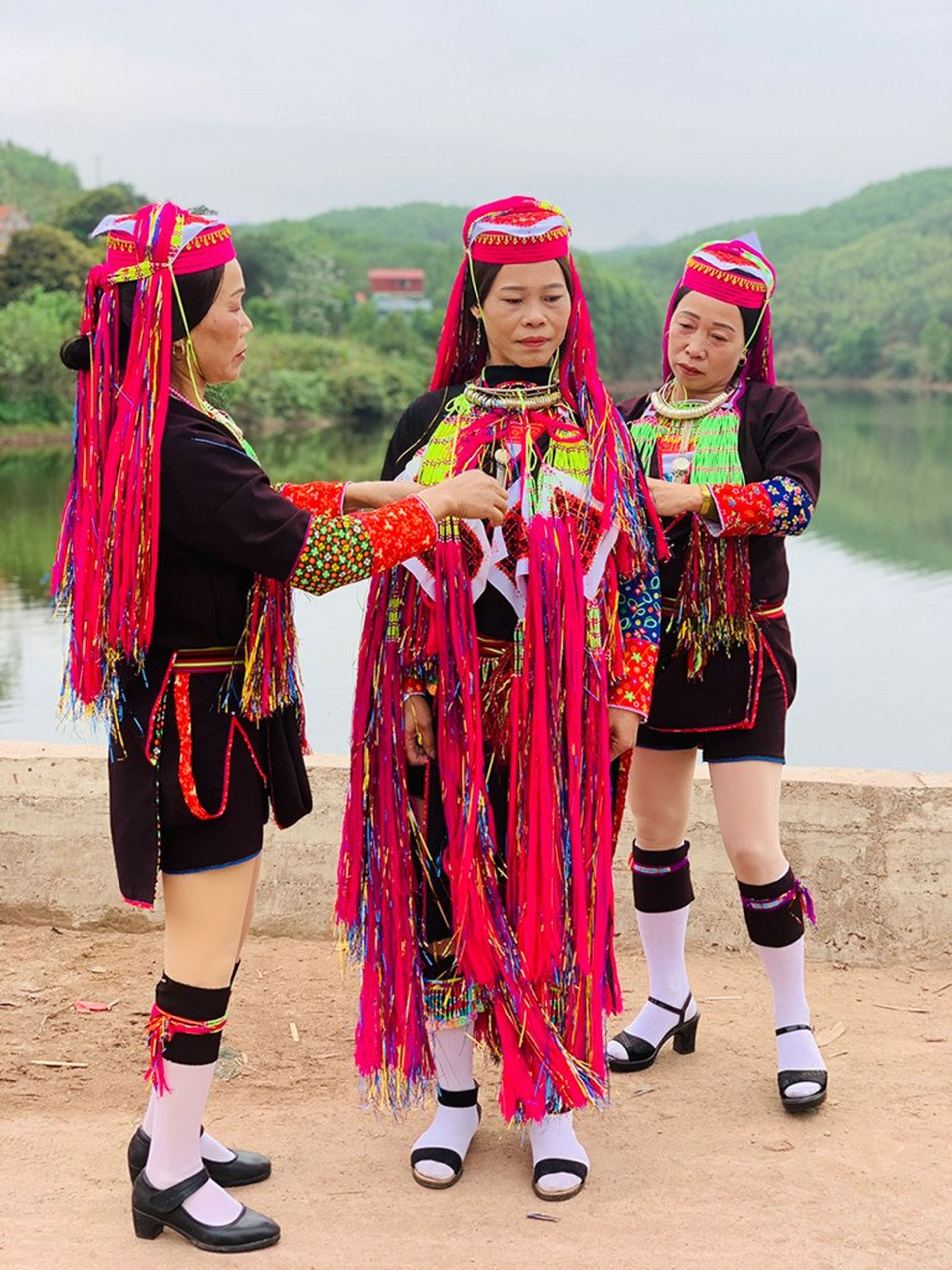
The components of Dao Thanh Y women’s clothing include a bodice, blouse, trousers, headscarf, belt, leggings, pink tassels, and bead clusters. In Ba Chẽ, the clothing has been preserved relatively intact, with all its constituent parts.
Another area displays images and artifacts related to the cấp sắc ceremony, the most important ritual in Dao culture, marking a Dao man’s coming of age.
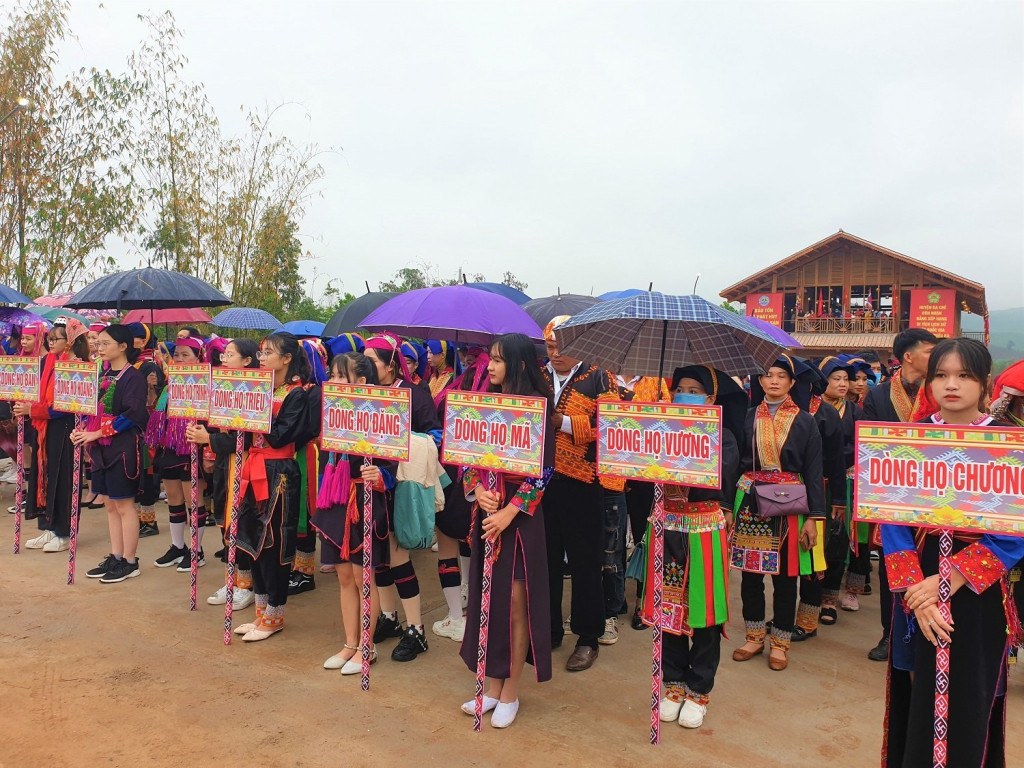
Bàn Vương Festival at the traditional community house of the Dao people. Photo: VOV.
During the cấp sắc ceremony, the initiate is given a ritual name. After undergoing this ceremony, a man is recognized as a descendant of Bàn Vương, granted the authority to become a ritual master, assigned spirit soldiers, and permitted to worship his ancestors.
The cấp sắc ceremony is a highly distinctive ritual in Dao culture. It embodies profound educational concepts and philosophies about human life, guiding descendants toward truth, goodness, and beauty.
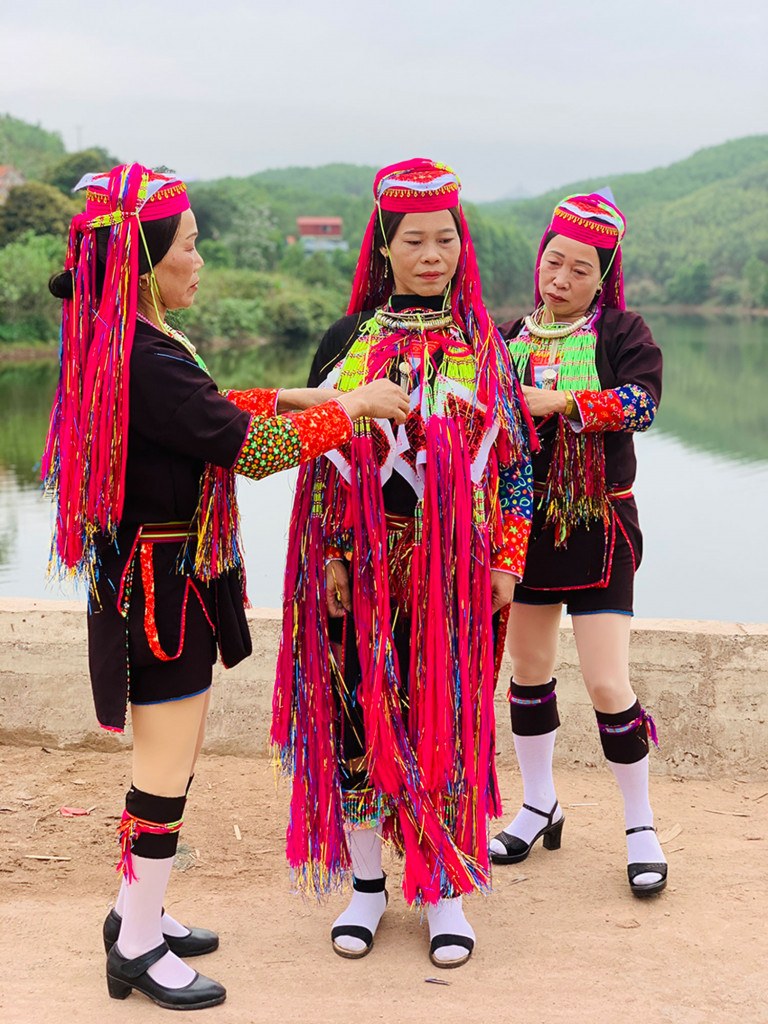
Dao Thanh Y clothing. Photo: Quảng Ninh Newspaper.
Dao culture in Ba Chẽ is expressed not only through clothing and rituals but also deeply in daily life, particularly through implements passed down over many generations. Like many other ethnic minorities, the hearth is used not only for cooking food but also plays an important role in spiritual culture.
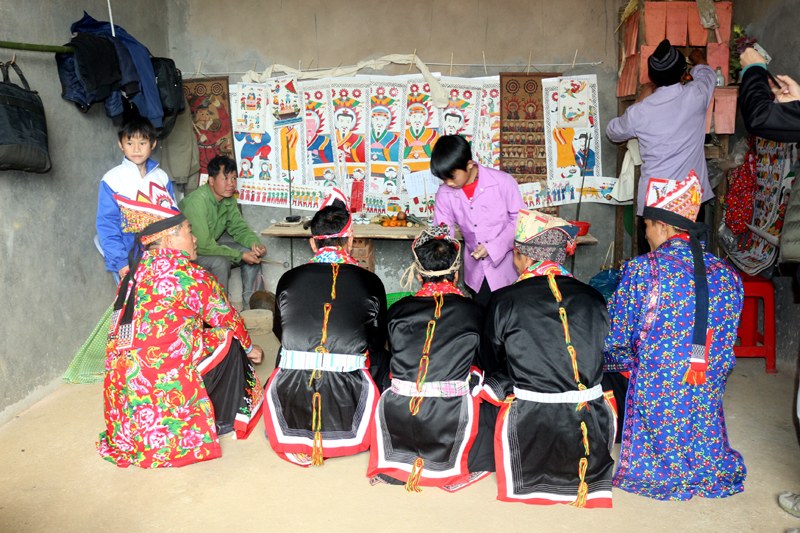
The cấp sắc ceremony of the Dao people in Quảng Ninh. Photo: Quảng Ninh Newspaper
Every artifact displayed at the traditional community house of the Dao people carries its own story, embodying the distinctive features of the Dao people as they blend into the cultural flow of fellow ethnic groups living harmoniously in the northeastern region of the Fatherland.
These cultural materials partly reflect the formation and development of the Dao community in Ba Chẽ, provide many valuable historical lessons, and inspire patriotism and ethnic pride among generations of Dao people.