
1 A brief introduction to Trà Cổ Parish Church
Address: Móng Cái 1 Ward, Quảng Ninh Province (formerly Móng Cái City)
Whenever I have the chance to visit Móng Cái, besides strolling along the romantic Trà Cổ Beach, I always set aside a quiet moment to visit Trà Cổ Church, also known as Chàng Lộ Church. Located in Móng Cái 1 Ward, Quảng Ninh Province, this church is not only a place of religious activities but also, in my view, a magnificent ancient architectural masterpiece steeped in history.
Located at the very first stroke on the map of the Fatherland, the structure stands out amid the vast sea and sky with its impressive Western Gothic style. Having withstood many historical upheavals, Trà Cổ Church still stands majestically today. In my opinion, the sacred beauty and ancient atmosphere here have made the church a destination no less appealing than the other famous attractions of Quảng Ninh, the land of coal.
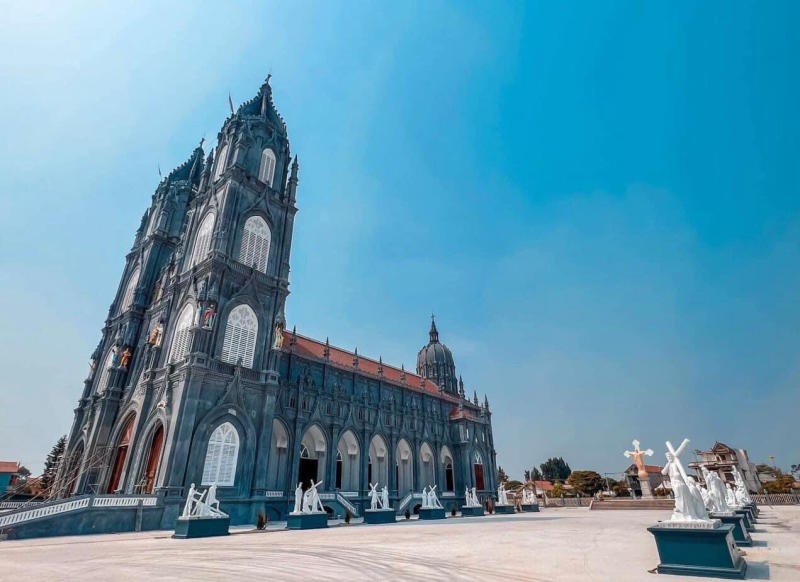
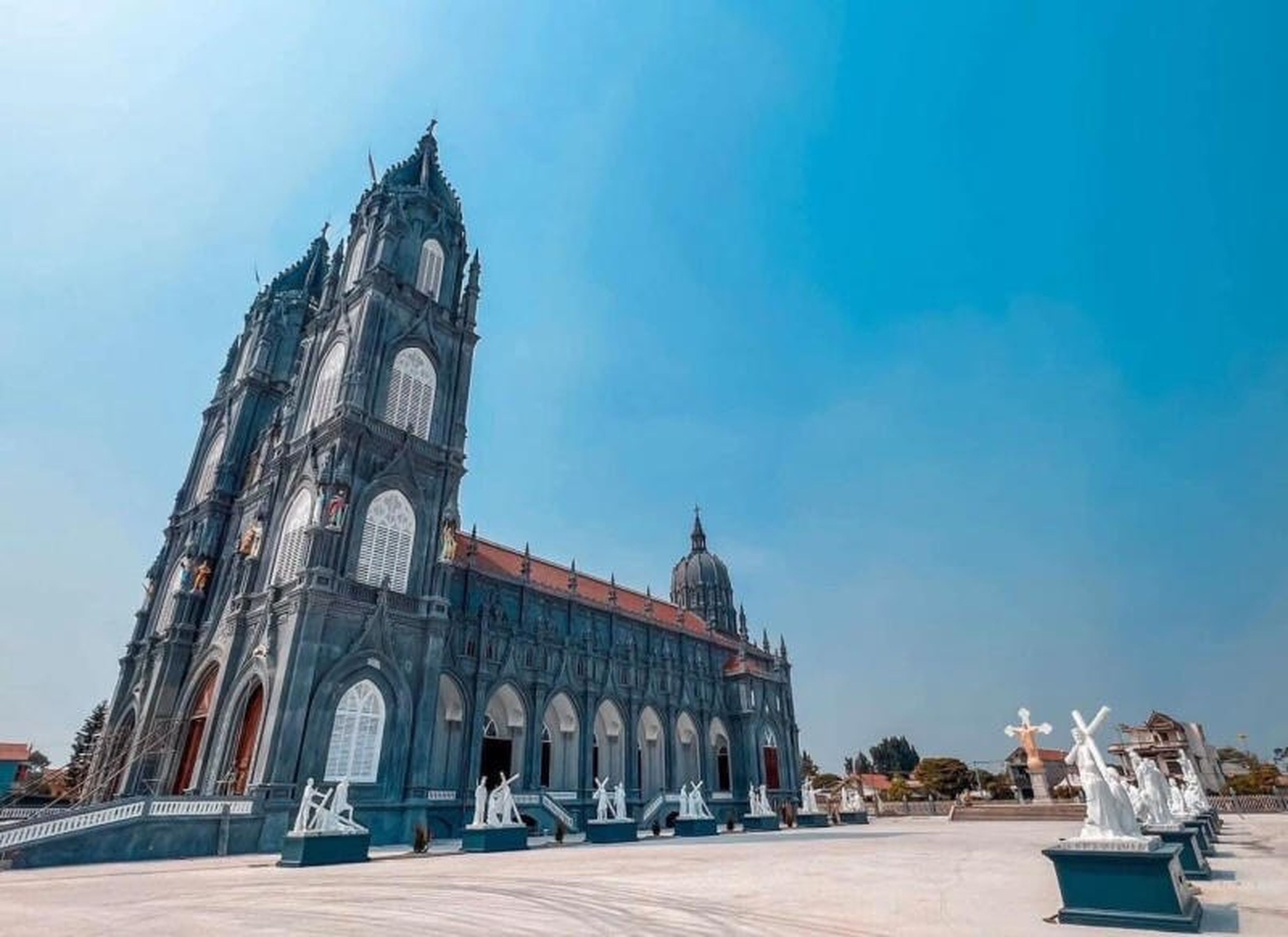
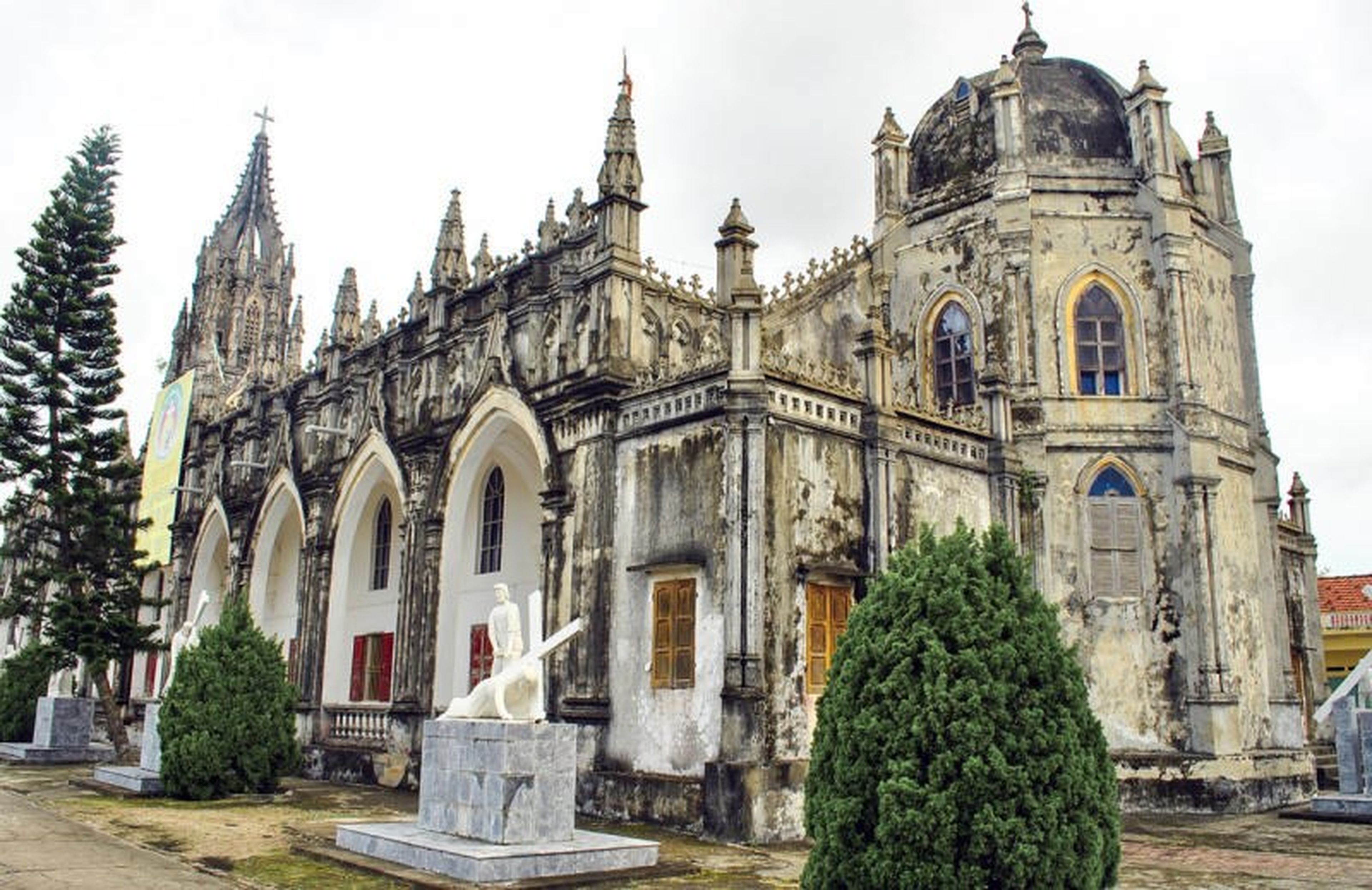
Trà Cổ Church is one of the region’s typical Catholic architectural works. Photo: DU LỊCH - Lao Động Newspaper
2 How to get to Trà Cổ Parish Church
To make your journey to Trà Cổ Church smooth, you can consider a few transportation options that I have compiled below:
- By air: Take a flight to Vân Đồn International Airport, then continue by taxi or rent a motorbike and head straight to Móng Cái along a fairly convenient route.
- By road and coach: From Hanoi or nearby provinces, you can take a limousine or high-quality coach along the Hanoi – Hải Phòng – Móng Cái expressway route. Once you reach central Móng Cái, you only need to take a bus or taxi for a short distance to get there.
- By private vehicle: Those who enjoy road trips like me can drive a car or motorbike. The modern coastal expressway makes the driving journey more convenient.
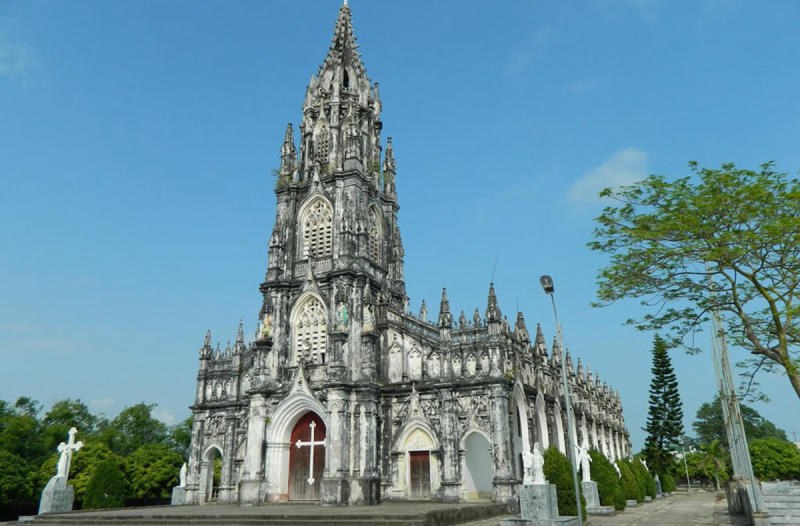
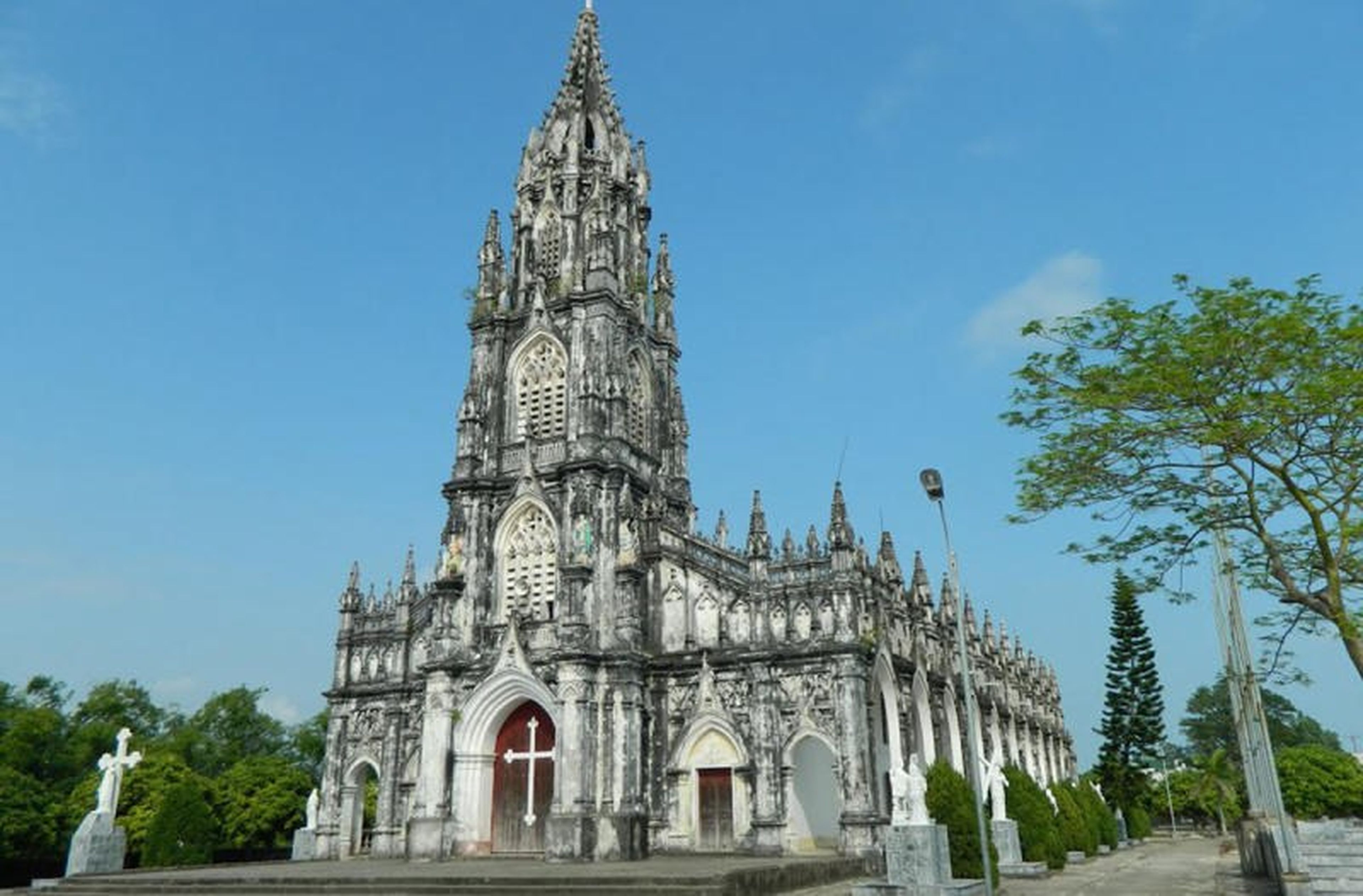
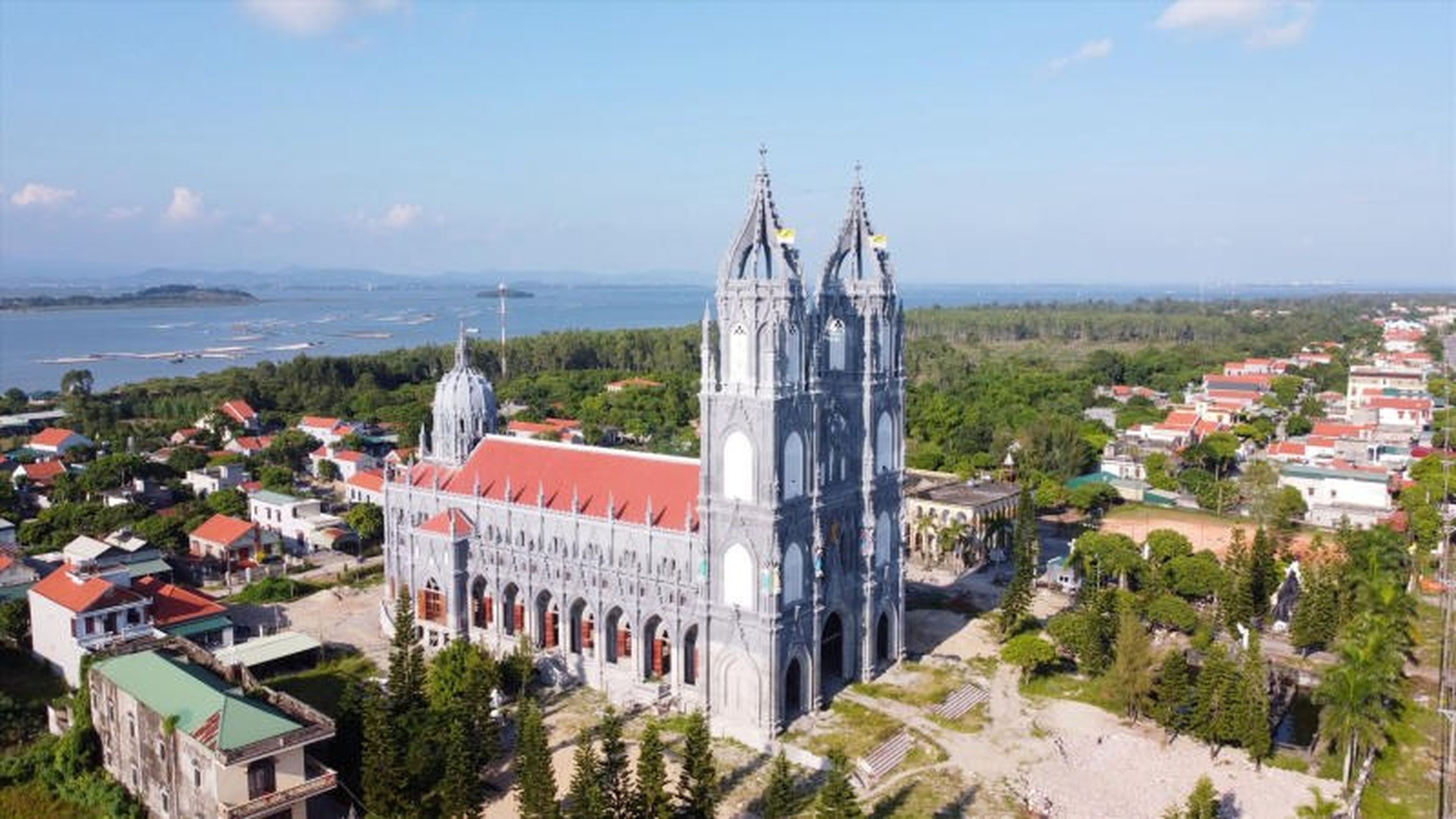
After completing the journey, you will arrive at the imposing and dignified Trà Cổ Church. Photo: DulichToday
3 The construction history of Trà Cổ Church
The history of Trà Cổ Church is closely linked to the formation of Trà Cổ Parish. Among the first people to settle on Trà Cổ Island were many Catholics, who established small Catholic communities.
In the beginning, maintaining their faith was difficult. However, in 1861-1862, when uprisings and religious persecutions became severe, many Catholic families fled to the island, causing the number of parishioners to increase considerably.
In 1857, Elder Priest Cấp brought parishioners from Trúc Sơn to Trà Cổ Village, established the parish, and is considered its first priest. He divided the parish into five original congregations, which later expanded to seven, creating a united community that regularly gathered in Trà Cổ Parish to celebrate major feast days.
In 1913, when Father Tràng Nghiêm took charge of the parish, he began constructing a new church in Western architectural style. Just one year later, the new Trà Cổ Church was officially completed on an impressive scale: 130m long, 30m wide and 30m high. Its main highlight was the walls, built from limestone, crushed seashells and crushed freshwater mussel shells.
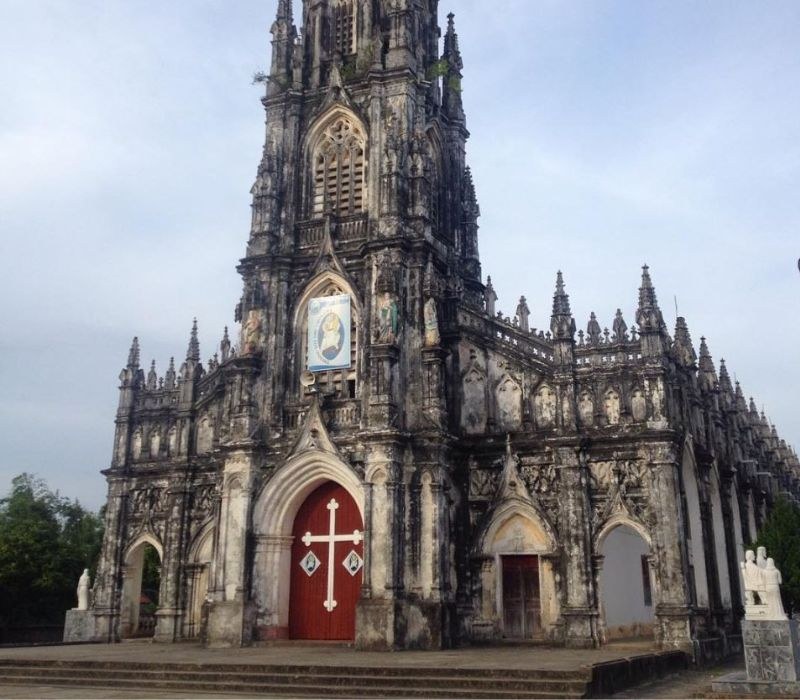
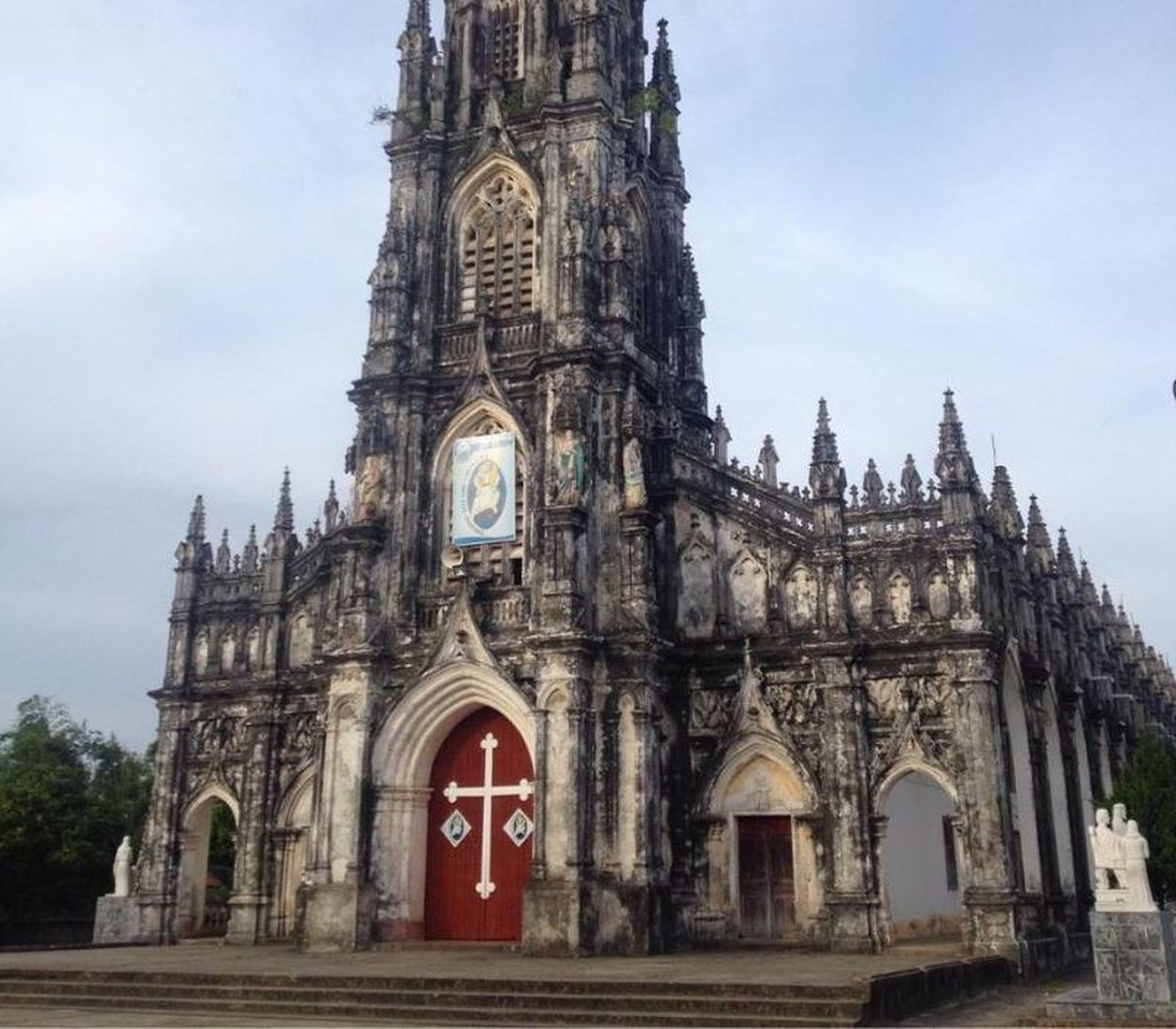
Trà Cổ Parish Church underwent many renovations before acquiring its current grand architecture. Illustrative photo: Lao Động Newspaper
From 1918 to 2018, the church underwent numerous additions and renovations. Most notably, the bell tower was built by Father Gracia Tràng Thiện in 1918, reaching a height of 90m. During the 1979 border war, the church was severely damaged by bombs and artillery. At that time, parishioners joined hands to rebuild the house of God in 1995.
In 2018, the old church was demolished and a new house of God was built on the original foundations. The new Trà Cổ Church retains its distinctive Gothic architecture with exquisite decorative details. Today, the church is a magnificent architectural symbol, contributing to the richness of the cultural and religious life of Móng Cái.
4 Exploring the architecture of Trà Cổ Church
Trà Cổ Church is a typical example of Western Gothic architecture introduced to Vietnam, with an ancient and solemn beauty. Its distinctive architectural features include pointed arches, a soaring bell tower and exquisite bas-reliefs. Hundreds of bas-reliefs on the walls depict events from the Bible in vivid detail.
4.1 The “secret” of its building materials: A century-old wall of seashells and mussel shells
Standing in front of Trà Cổ Church, what intrigued and impressed me most was the foundation and brick walls. In the past, builders skillfully combined limestone with tens of thousands of crushed and calcified seashells and mussel shells.
This special natural mortar not only helped the structure withstand salt-laden air and sea winds for more than a century, but, on closer inspection, you can also see rough textures imbued with a distinctly maritime character.
This is one of the large-scale religious architectural works that still preserves the historical and cultural spirit of the past from the 19th century. Gothic architecture has left many distinctive marks in Vietnam, and Trà Cổ Church is one of the representative works, attracting many visitors who come to admire and learn about it.
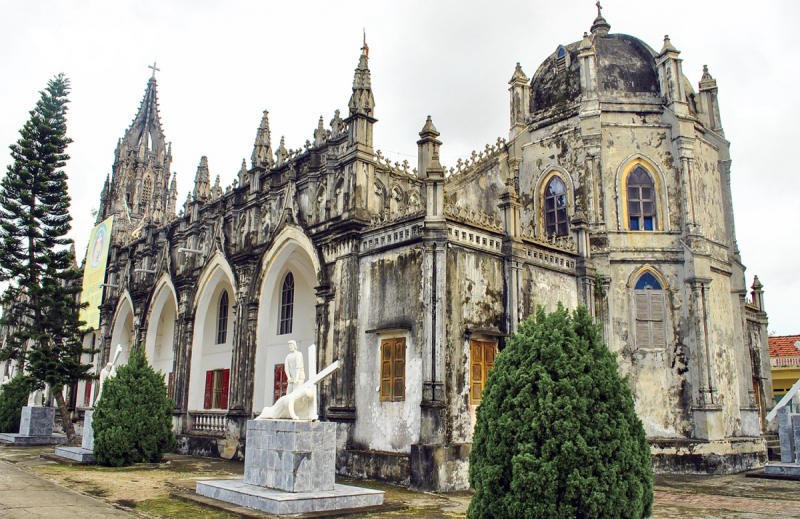
The church’s architecture leaves a strong impression. Photo: VOV
4.2 The interior of the church: An interplay of light and color
If the exterior of the church is adorned with the grandeur of pointed arches and a towering bell tower, then upon entering the church, I was truly captivated by its enchanting interior.
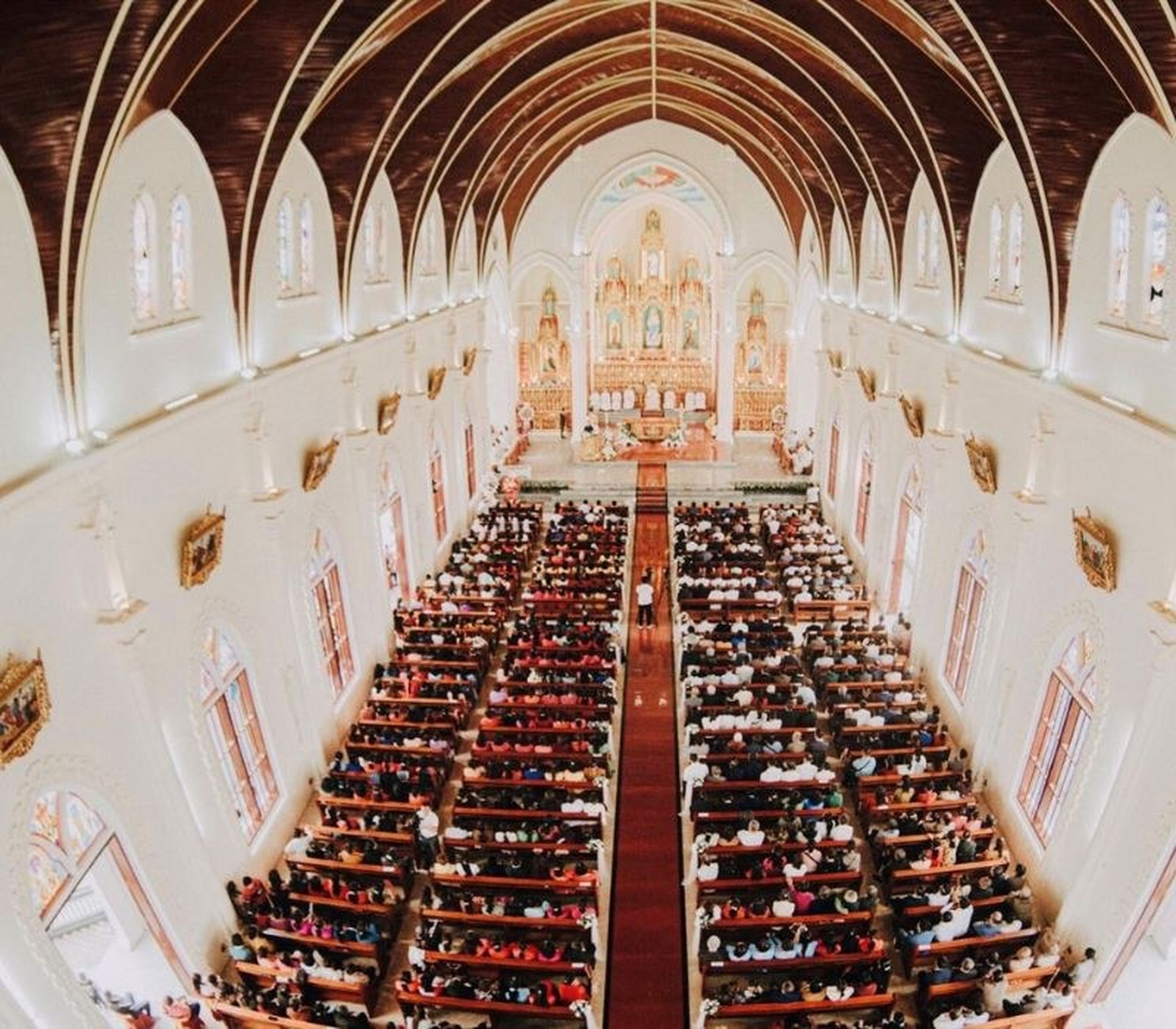
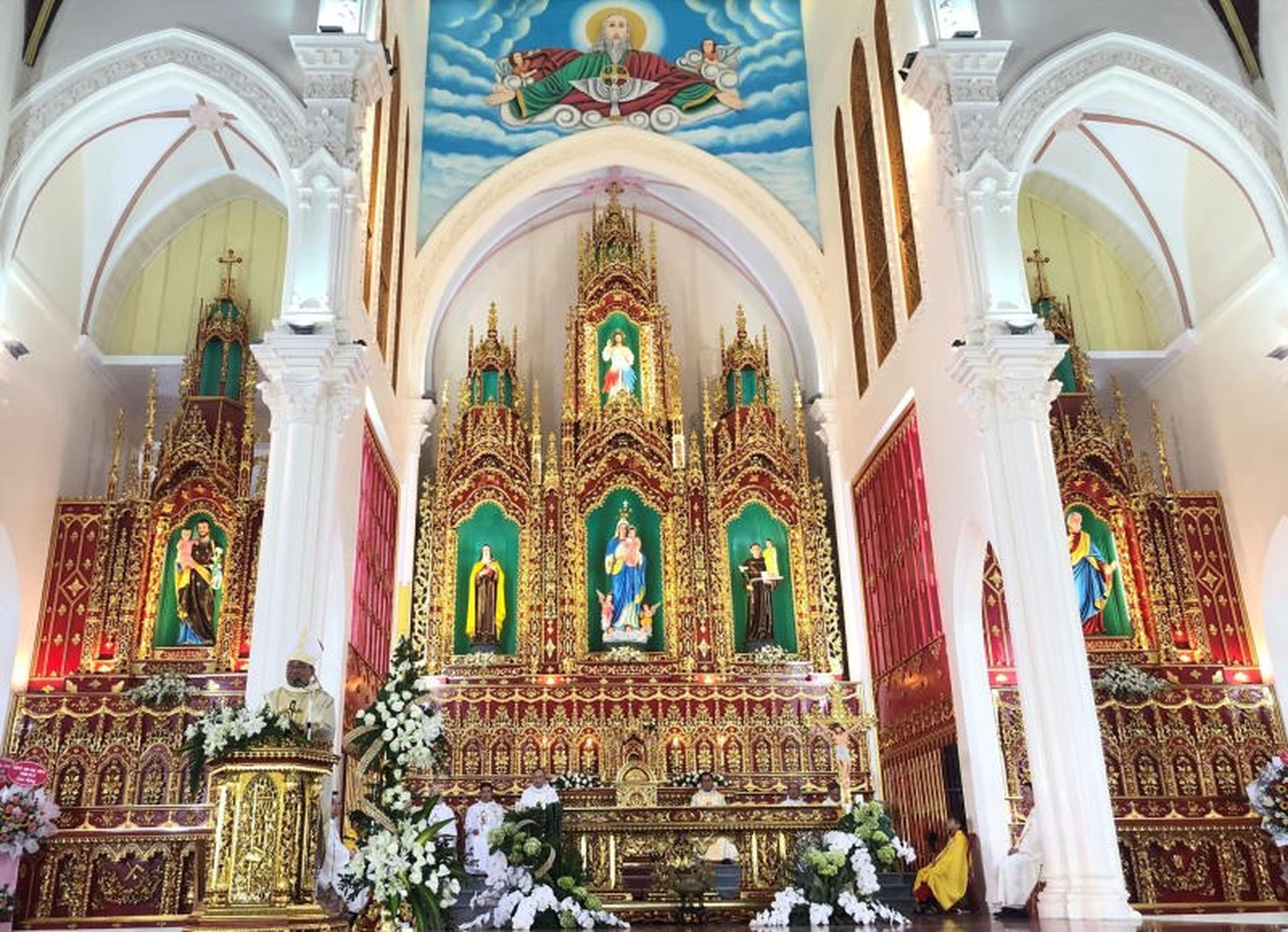
The arched windows are fitted with vibrant stained glass, welcoming the full glow of natural sunlight. Whenever rays of sunshine stream through, the stone floor and wooden pews shimmer with vivid patches of color, creating an airy, sacred space that rises heavenward toward the Heavenly Homeland.
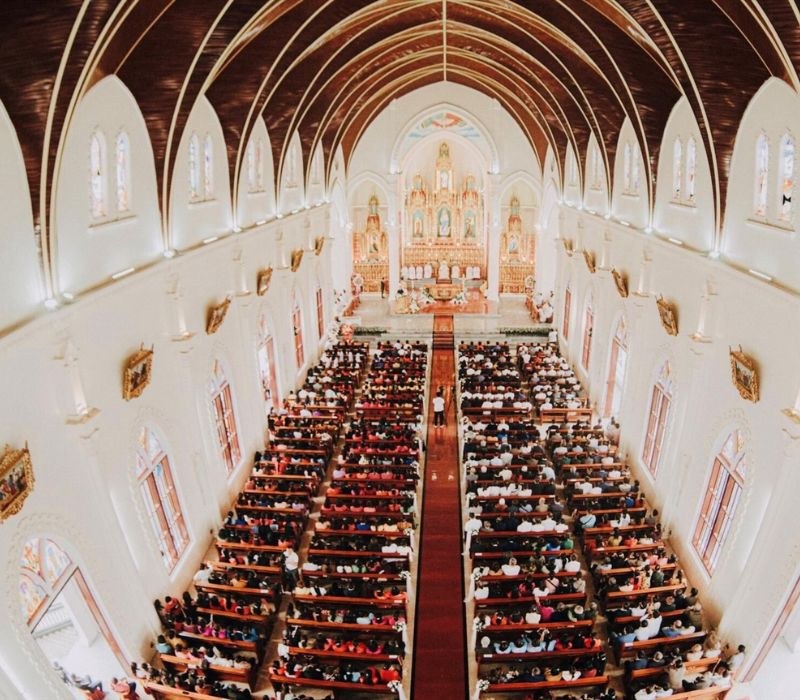
The church interior, with colorful windows welcoming the full glow of natural light. Photo: Lao Động Newspaper
5 Experiences not to miss when visiting Trà Cổ Church
5.1 Attend Mass at Trà Cổ Church
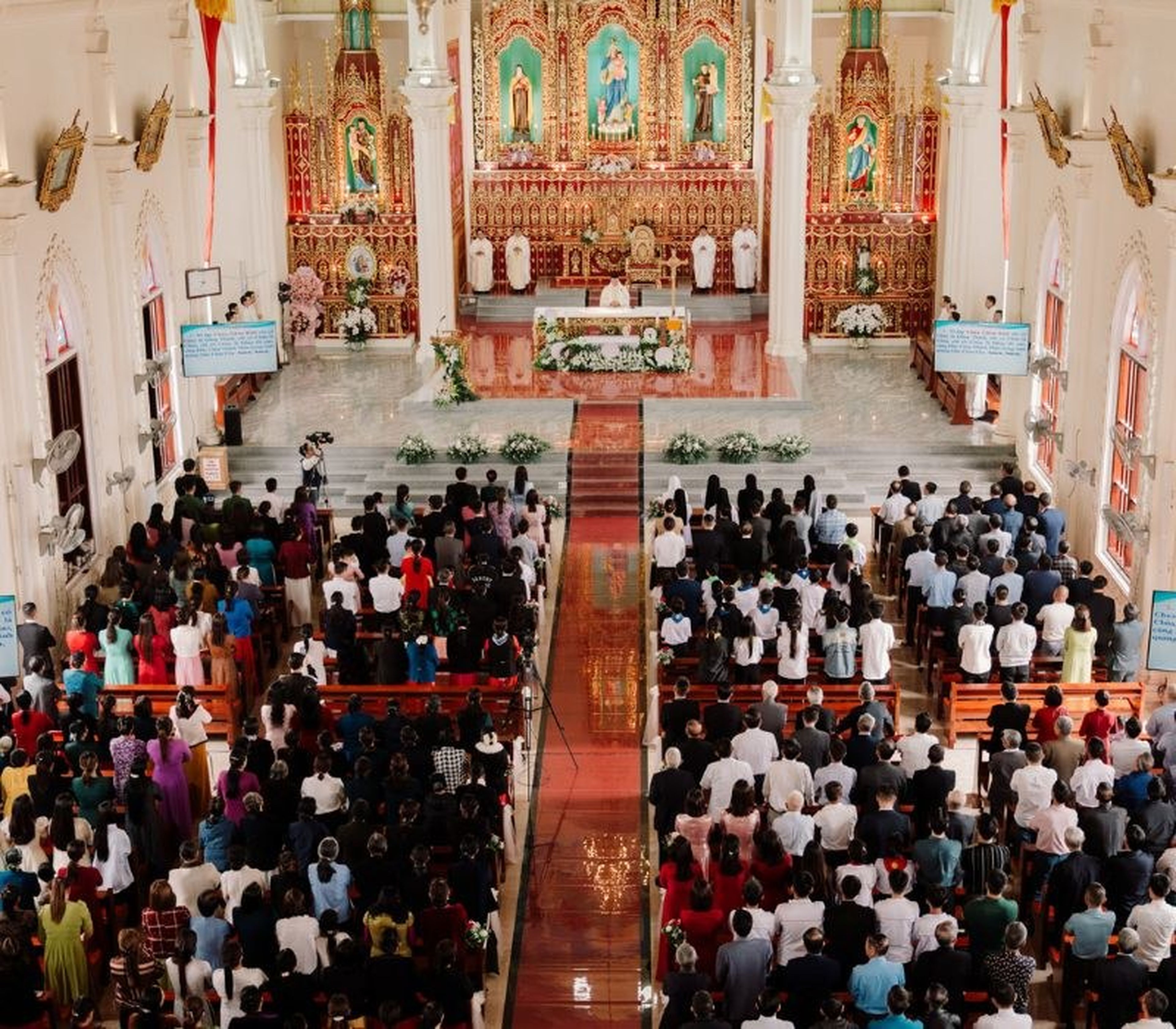
When you step inside the church, you will feel its sacredness and tranquility. This is where local parishioners and fishermen attend services on Sundays or major feast days to pray for peace. Taking part in Mass will give you deeper insight into the religious life and culture of the Catholic community here.
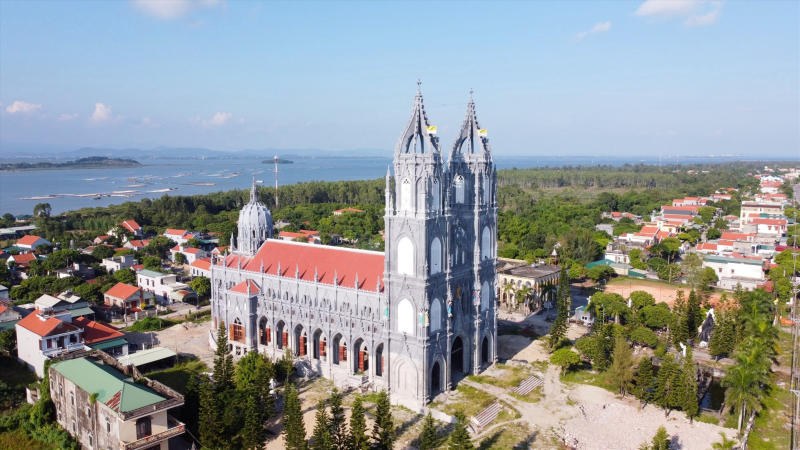
Trà Cổ Church is also a famous spiritual tourism destination, attracting large numbers of visitors from near and far. Photo: Móng Cái News
5.2 Admire the impressive architecture
If you have the opportunity to visit Trà Cổ Church, MIA.vn suggests setting aside time to explore its impressive Gothic architecture, especially the arched windows, large bas-reliefs depicting Biblical stories and soaring bell tower.
The church also preserves many decorative artworks, including paintings and stained-glass works depicting the Holy Trinity, the Virgin Mary and the Saints, which are well worth admiring.
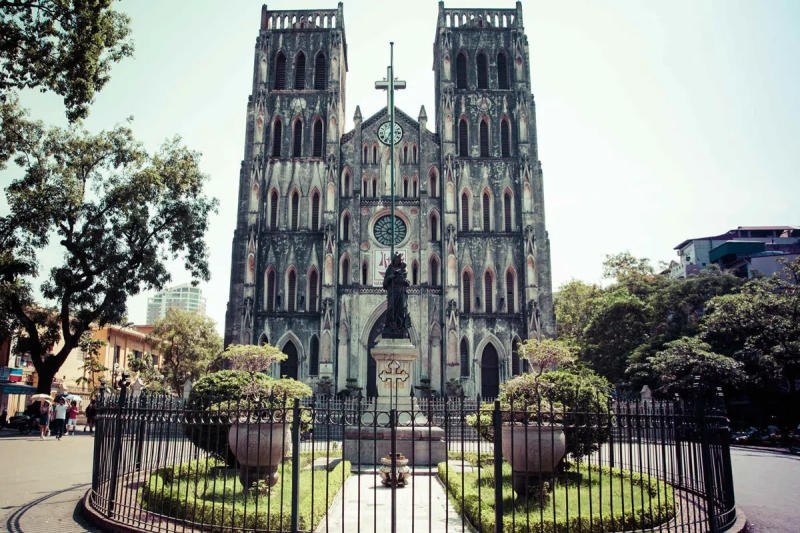
Trà Cổ Church is also a “paradise” for check-ins among photography enthusiasts. Photo: Kiến Việt
6 Updated liturgical schedule and Mass times at Trà Cổ Church
To conveniently arrange your time to visit or attend Mass with parishioners, you should save the fixed Mass times that I have researched below:
- Weekdays (Monday – Saturday): Mass is held in the morning, at around 05:00, or in the late afternoon or evening, at around 18:00 – 19:00 depending on the season.
- Sunday: There are usually 2 to 3 Masses, including a children’s morning Mass at 06:00 and an afternoon or evening Mass for the entire community at 16:30 or 18:00.
A small note from me: Mass times may be adjusted flexibly on major feast days such as Christmas, Easter or the parish patronal feast. If you only wish to sightsee and take photos outside, you should visit during the intervals between Masses so as not to disturb the shared prayer space.
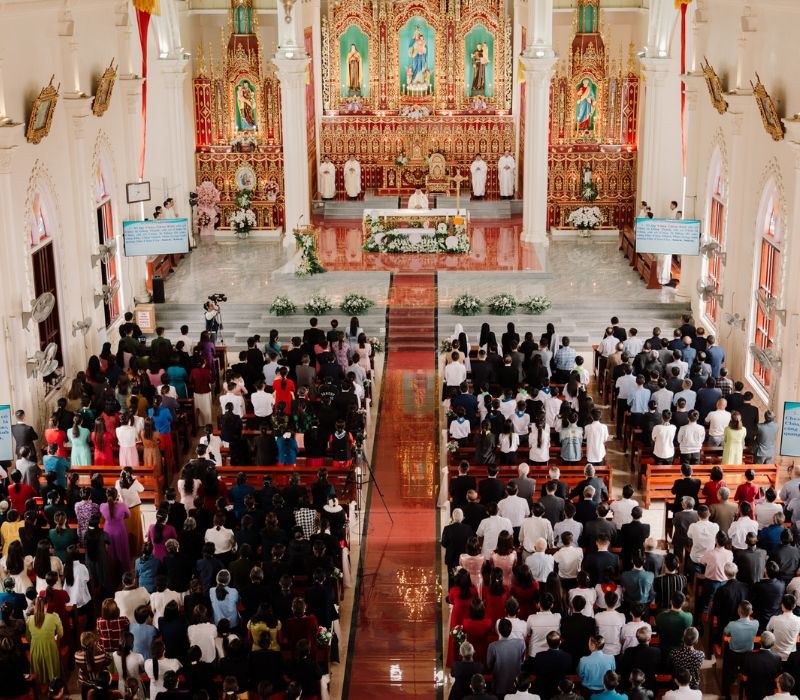
Visitors can check the parish Mass schedule to attend services. Illustrative photo: Hải Phòng Diocese
7 My suggested one-day itinerary for a complete Trà Cổ exploration
If you only have one full day in the borderland of Móng Cái, here is the optimal itinerary I followed to experience its nature, culture and architecture:
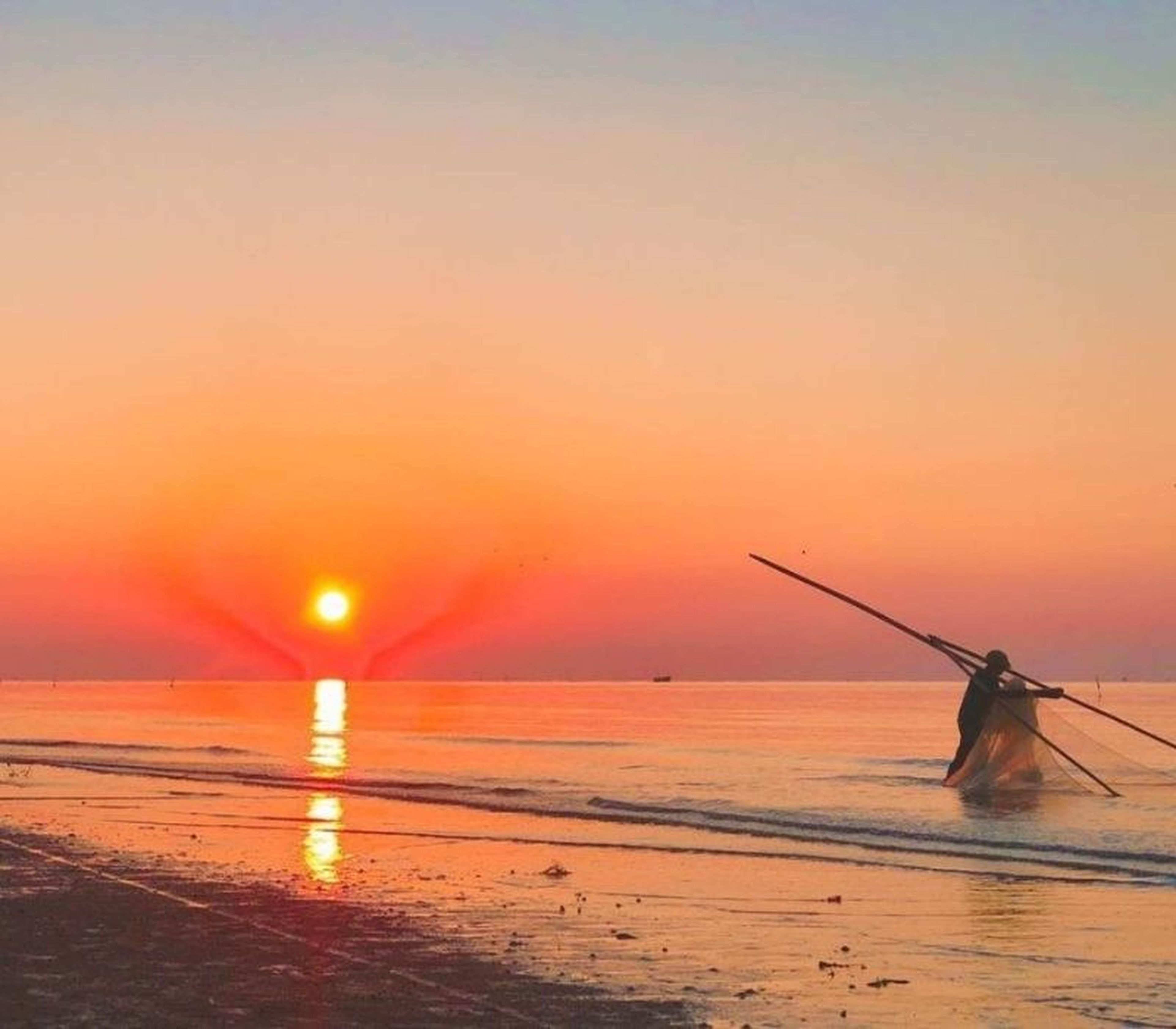
- Morning (05:30 – 11:30): Watch the brilliant sunrise over the smooth, flat sands of Trà Cổ Beach. After having breakfast with a steaming bowl of cù kỳ noodle soup, head to Trà Cổ Church to admire its Gothic architecture as the early sunlight begins to appear. This time is relatively quiet and suitable for taking photos.
- Noon (11:30 – 13:30): Enjoy fresh seafood such as Trà Cổ crabs or salt-roasted mantis shrimp at restaurants along the coast.
- Afternoon (14:00 – 17:30): Continue your journey to Sa Vĩ Cape, the first stroke on the map of the Fatherland, to take commemorative photos at the Sa Vĩ Border Propaganda Information Complex. On the way back to the center, you can stop at Móng Cái Border Gate Market to buy souvenirs.
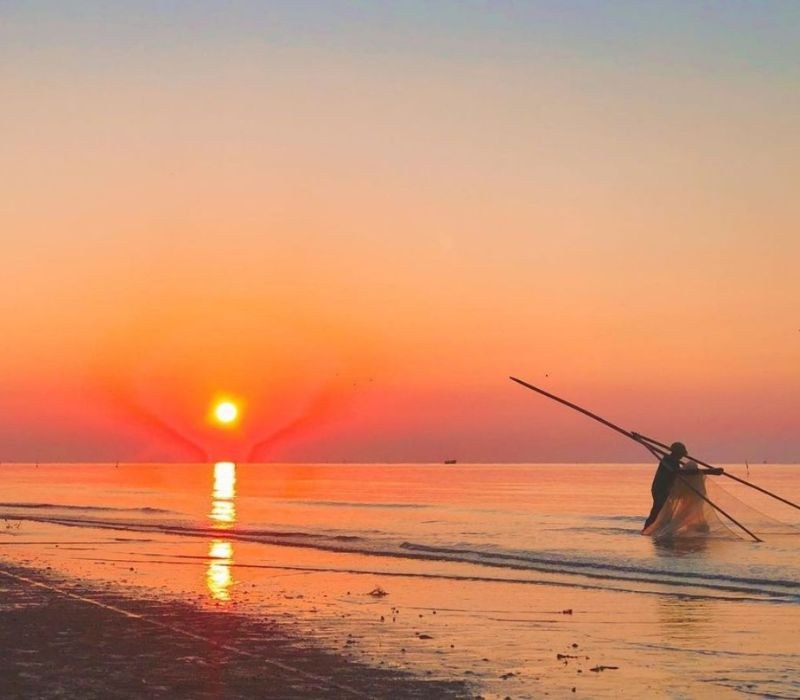
You can combine your visit with Trà Cổ Beach for a trip filled with more experiences. Illustrative photo: VNExpress
8 Tips for visiting Trà Cổ Church
To enjoy a complete visit to Trà Cổ Church, you should keep a few things in mind:
- You should visit the church early in the morning or at dusk. The gentle early-morning sunlight will help you take beautiful photos, while the sunset bathing the church in golden light creates an impressive and peaceful scene.
- Choose polite and modest clothing.
- Maintain order and cleanliness. Do not litter, joke around or speak loudly on the church grounds.
- Be respectful when attending Mass. Limit phone use, talking or taking photos to avoid distracting those around you.
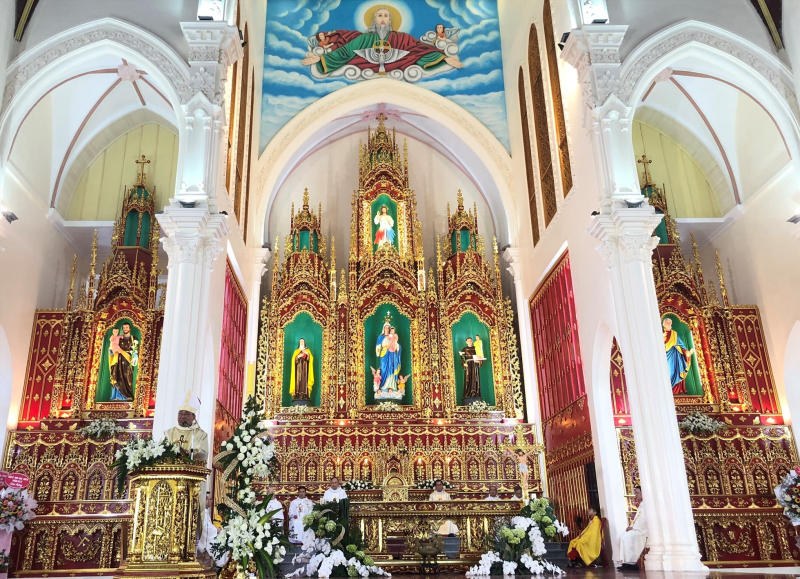
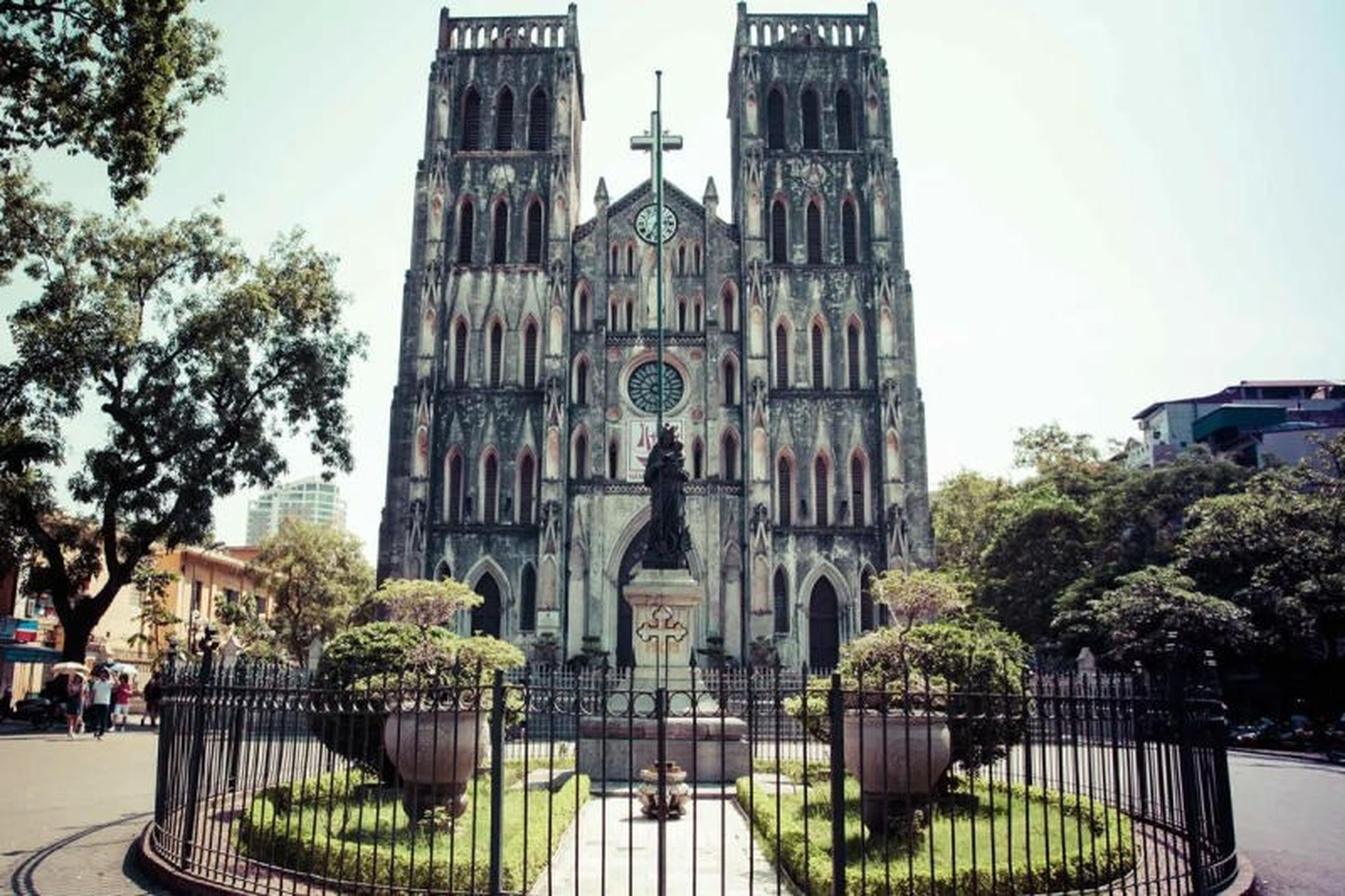
Some things to note when visiting the church. Photo: DU LỊCH - Lao Động Newspaper
Móng Cái’s Trà Cổ Church is a must-visit destination for those who love ancient architectural works and want to learn about religious life in Vietnam. With its solemn beauty, unique Gothic architecture and location beside the sea, Trà Cổ Church is not only a place of religious activities but also an attractive sightseeing destination, enriching journeys of discovery in Móng Cái, Quảng Ninh. Pack your backpack and go!