1 Introduction to Mong Cai Border Gate
Address: Hoa Lac Ward, Mong Cai City, Quang Ninh Province
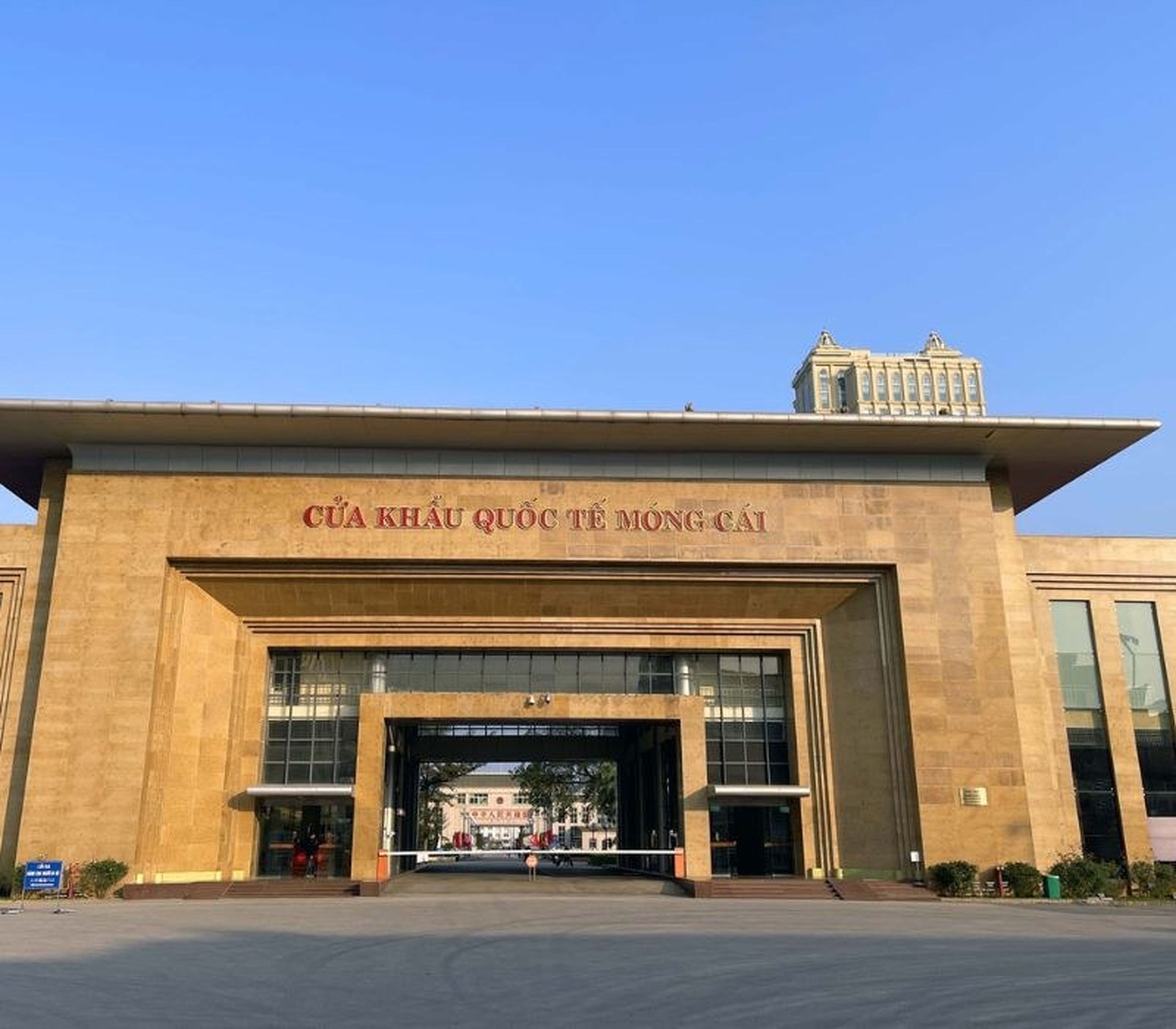
Mong Cai City, Quang Ninh is an appealing destination, home to the poetic Trà Cổ Beach and the vibrant, bustling trading activities of the border area. Mong Cai Border Gate (in Chinese, 芒街口岸 - mángjiē kǒuàn) is one of Vietnam’s most important international trading points, as well as a truly unique tourist destination.
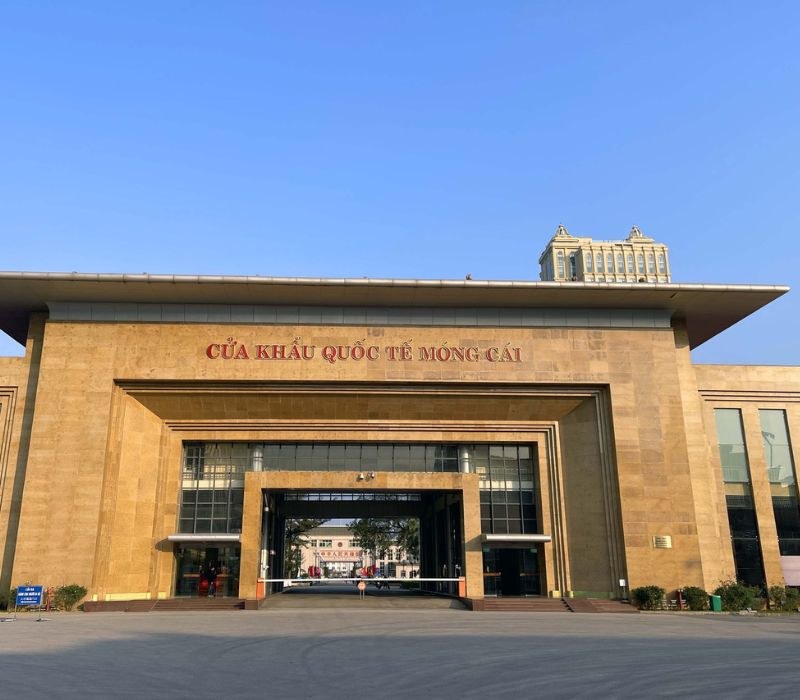
Mong Cai Border Gate is one of Vietnam’s most important international trading points. Illustrative photo: VinWonders
This place offers rare experiences, where Vietnamese and Chinese culture, cuisine, and economies converge to create a multicolored picture that sparks curiosity and a desire to explore. If you are looking for a trip combining historical sightseeing, carefree shopping, or a same-day overseas experience, Mong Cai Border Gate is the perfect choice.
2 How to Get to Mong Cai Border Gate
From Hanoi and neighboring provinces, you can travel to Mong Cai Border Gate by various means of transport, such as:
Coach:
Travelers can easily catch high-quality sleeper buses from My Dinh Bus Station (Hanoi), with a journey of approximately 6 - 7 hours. Bus companies usually run directly to Mong Cai Bus Station. From there, you only need to take a taxi or motorbike taxi for about 5−10 minutes to reach the border gate area and the central markets. This is an ideal choice for those who want to rest throughout the journey without worrying about driving.
Private vehicles (cars, motorbikes):
You can take the modern Hanoi - Hai Phong Expressway, then turn onto the new Ha Long - Van Don - Mong Cai Expressway. If traveling by motorbike, you can follow National Highway 5 or 1A, turn onto National Highway 10 toward Uong Bi, then continue along National Highway 18 to Mong Cai.
3 What makes the experience at Mong Cai Border Gate so appealing?
Besides being a trading hub, Mong Cai Border Gate is also a tourist destination steeped in history and culture, offering experiences that cannot be found anywhere else.
3.1 Check in at Landmark 1369 and Historic Bac Luan Bridge
This is certainly an unmissable experience, carrying sacred significance and marking national sovereignty at the country’s frontier. Travelers can check in at Landmark 1369 (also known as Marker A1), the first marker installed along the Vietnam–China land border. Made of granite, the landmark stands prominently on the riverbank and has become a powerful symbol of national sovereignty. Standing beside the marker and looking across the river at another city creates a very special feeling—both proud and exciting.

Travelers can check in at Landmark 1369 (also known as Marker A1), the first marker installed along the Vietnam–China land border. Illustrative photo: VinWonders
Alongside the landmark is historic Bac Luan Bridge. This friendship bridge connects Mong Cai Border Gate (Vietnam) and Bac Luan Border Gate (China). It is also a wonderful place to observe the nonstop flow of economic activity, from busy convoys of trucks carrying goods to lines of people completing immigration procedures. This is an ideal spot for souvenir photos, capturing the moment of “one step, two countries.”
3.2 Explore “Shopping Paradise” at the Mong Cai Border Gate Markets
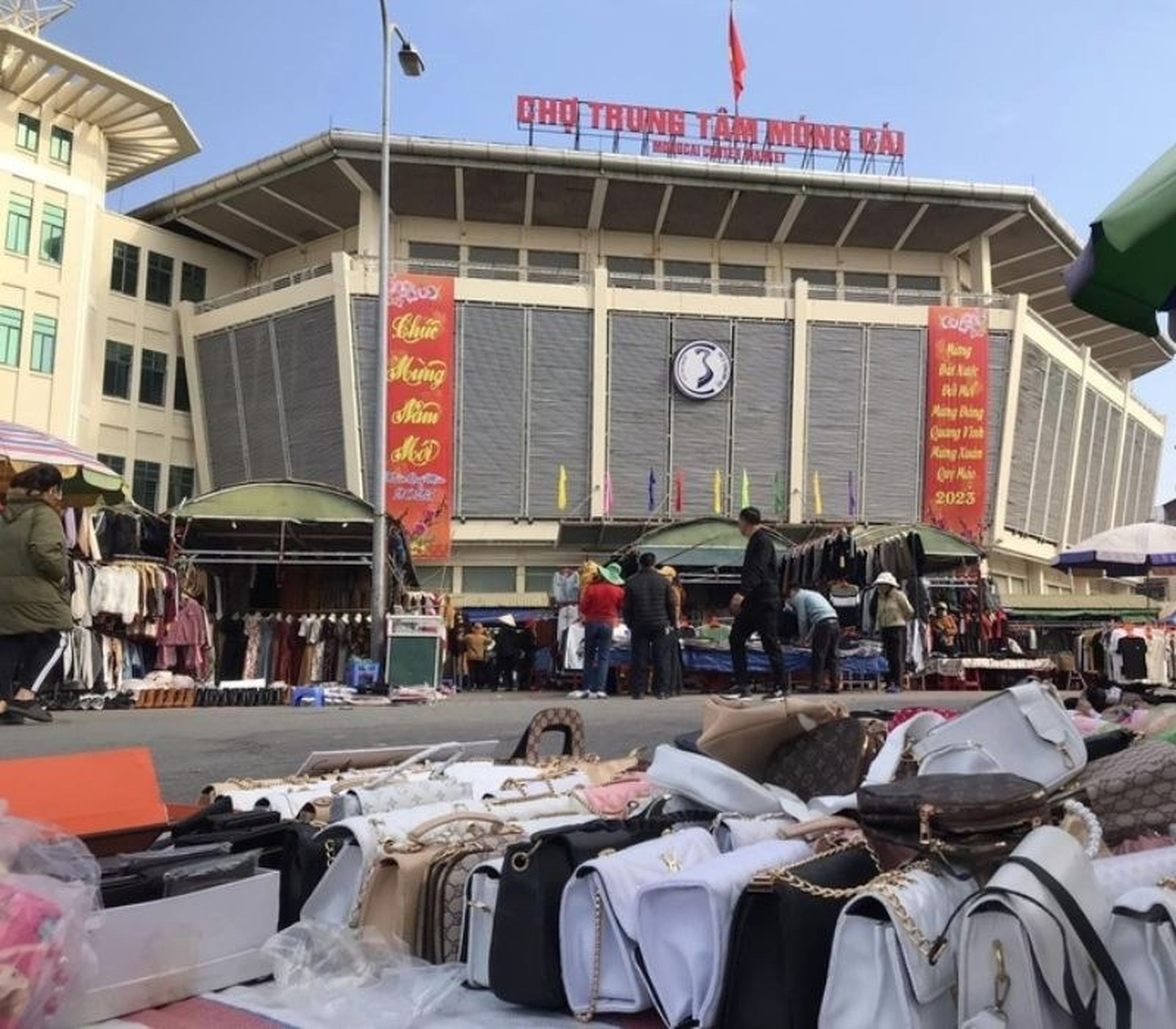
Mentioning Mong Cai Border Gate without mentioning shopping would be a major omission. The border market area is considered a “shopping paradise” not only for local residents but also for visitors, thanks to its wide range of imported goods from China.
The market area is divided into 3 main sections, each selling different characteristic products.
Mong Cai Market 1:
This market is located right near Ka Long Bridge. Here, travelers can easily find fashion items, accessories, handbags, and shoes in designs updated according to the latest Chinese trends, at affordable prices.
Mong Cai Market 2:
This market mainly specializes in wholesale goods such as clothing, fabrics, household items, and children’s toys. It is usually busier and attracts small traders from other provinces who come to source goods. If you plan to buy in large quantities, this is the best place to negotiate prices.
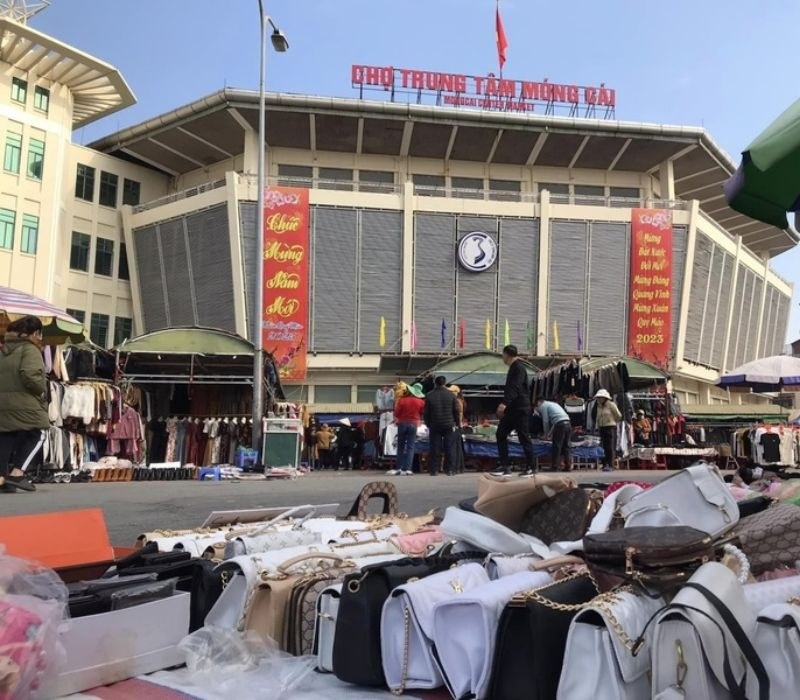
The border market area is considered a “shopping paradise” with a diverse range of goods. Illustrative photo: Giaydatino
Mong Cai Market 3:
This destination is popular because the market mainly sells snacks, confectionery, dried goods, and local specialties. Prices at Market 3 are usually lower than at the other two markets. The goods here are highly varied and mainly imported from China, including clothing, electronics, and household items. In particular, locally produced Chinese candies and snacks with unique flavors are very popular as gifts.
3.3 Experience Crossing the Border into Dongxing (China) in One Day
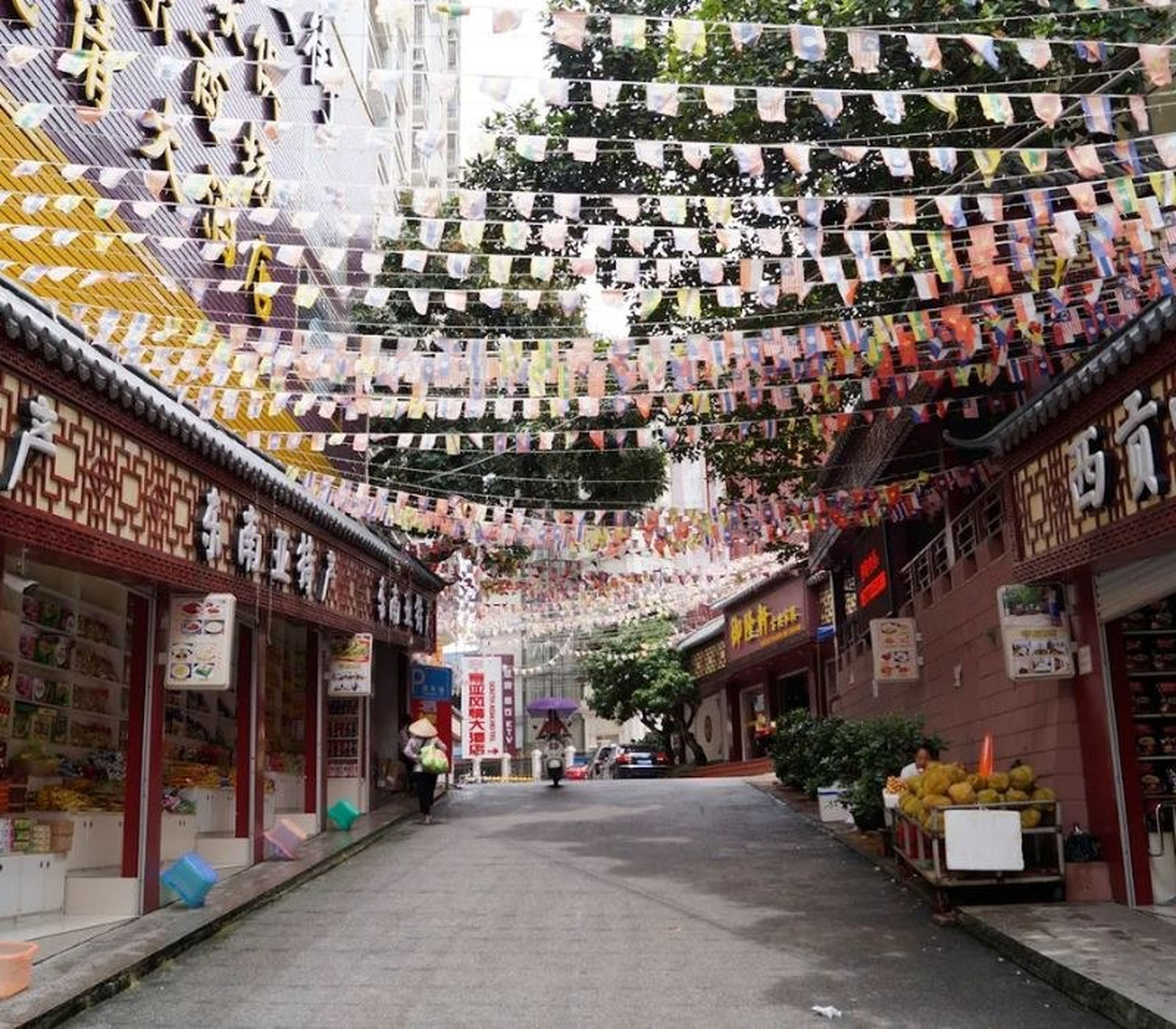
One of the most unique and appealing activities when visiting Mong Cai Border Gate is crossing the border into Dongxing, China, for the day. This is a rare “two countries - one destination” trip, allowing you to explore a foreign city without traveling too far.
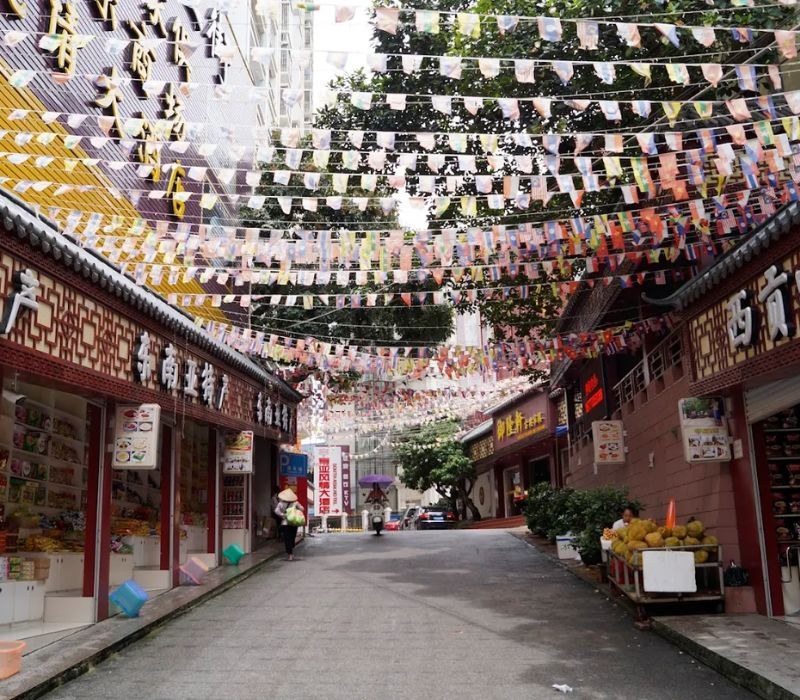
One of the most unique and appealing activities when visiting Mong Cai Border Gate is crossing the border into Dongxing. Illustrative photo: Xuan Hung Nguyen
Regarding the procedures, travelers have two main options: using a passport (with a valid Chinese visa) or a border pass (for border crossing). Travelers who wish to use a border pass must have household registration in Quang Ninh or Mong Cai to complete the procedures individually.
However, citizens from other localities are required to travel in groups of at least three people or join a tour organized by designated travel companies. The maximum stay permitted with a border pass is 3 days and 2 nights. The procedure is relatively simple and quick, usually taking about 30 minutes to 1 hour, depending on the number of travelers.
Once in Dongxing, you will notice interesting differences in architecture and pace of life. You can rent an electric vehicle to tour the city, visit shopping streets and parks, and enjoy distinctive Guangxi street snacks. This experience offers a novel feeling of going abroad, adding another memorable highlight to your trip.
4 What to Eat in Mong Cai? A Review of Notable Cuisine near the Border Gate
Mong Cai cuisine is a refined combination of the flavors of Quang Ninh’s sea and islands and the clear influence of Chinese culinary culture. Here, you absolutely must try fresh seafood and distinctive fusion dishes.
4.1 Delicious Fresh Seafood You Cannot Miss
When visiting Mong Cai, you cannot miss the seafood caught directly from the waters of Trà Cổ. Bề bề (mantis shrimp) is one of the most popular seafood dishes, with firm, chewy meat and a richer sweetness than ordinary shrimp. It can be prepared in many ways, but the most common are fragrant salt-roasted mantis shrimp and light, sweet mantis shrimp noodle soup.
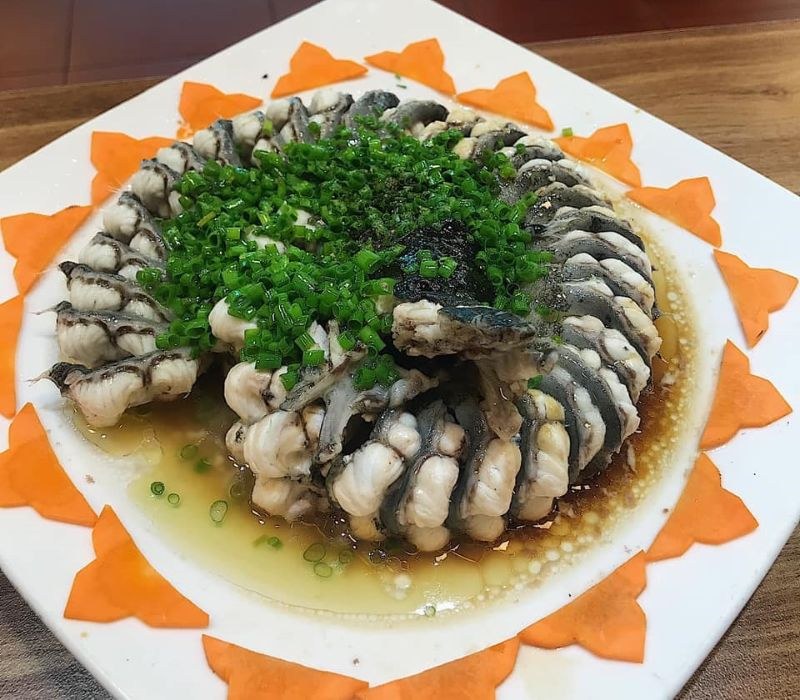
When visiting Mong Cai, you cannot miss the seafood caught directly from the waters of Trà Cổ. Illustrative photo: Lao Dong Newspaper
Meanwhile, Trà Cổ blue crabs are famous for being caught in the wild. They have thin shells, generous meat, a delicious aroma, and high nutritional value. They are usually steamed to preserve their original flavor or prepared in hot pot, making them indispensable at seafood feasts.
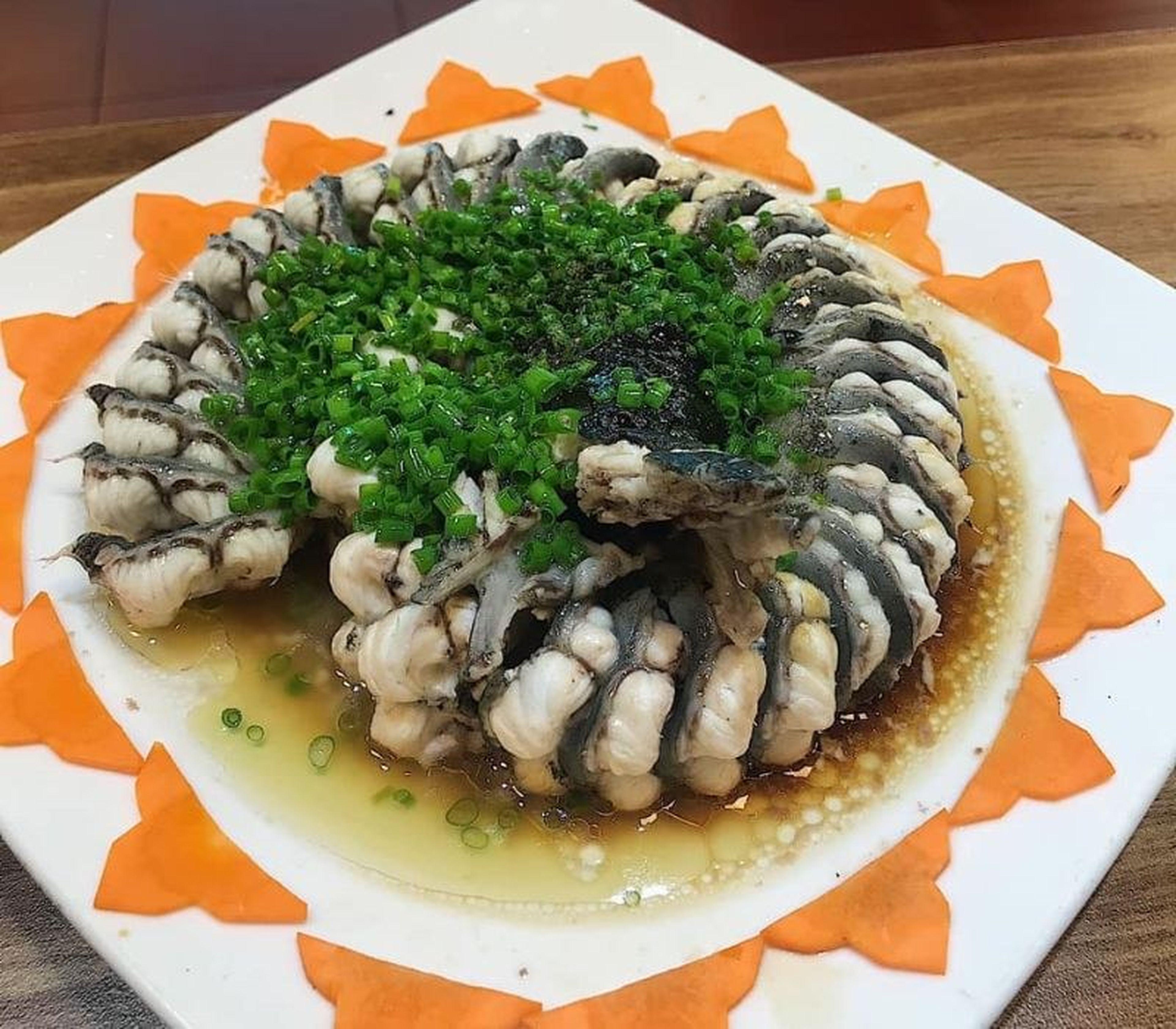
Eel is another specialty of the Mong Cai coast, famous for soy sauce-steamed eel with distinctive Chinese flavors. The meat is thick, rich, and low in bones. When steamed with soy sauce, ginger, and scallions, it becomes an extremely appealing dish suitable for the whole family.
Most notable of all is sá sùng (also known as sea worms). This rare seafood is a famous Mong Cai specialty with high economic value. Fresh sá sùng can be stir-fried with garlic or deep-fried, while dried sá sùng is used to make pho broth, simmer soups, or roasted and eaten directly. Dried sá sùng gives broth a naturally sweet, rich flavor without the need for any additional seasoning, making it an elegant and unique gift.
4.2 Dishes Showcasing Vietnamese–Chinese Cultural Fusion
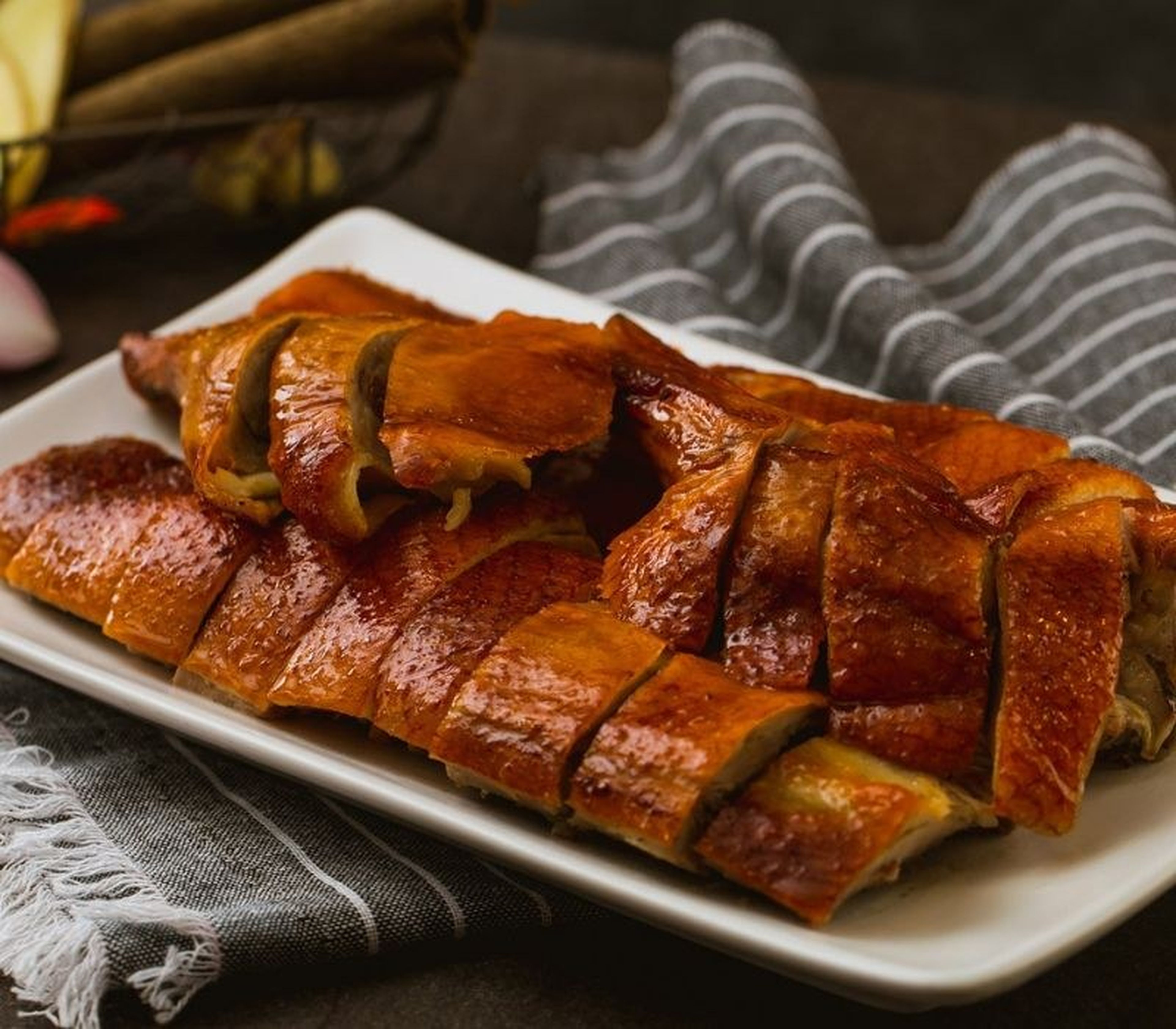
Besides seafood, Mong Cai also delights diners with dishes that reflect the blending of two culinary cultures. Peking-style / Cantonese roast duck is deeply influenced by China but has become extremely familiar and popular in Mong Cai.
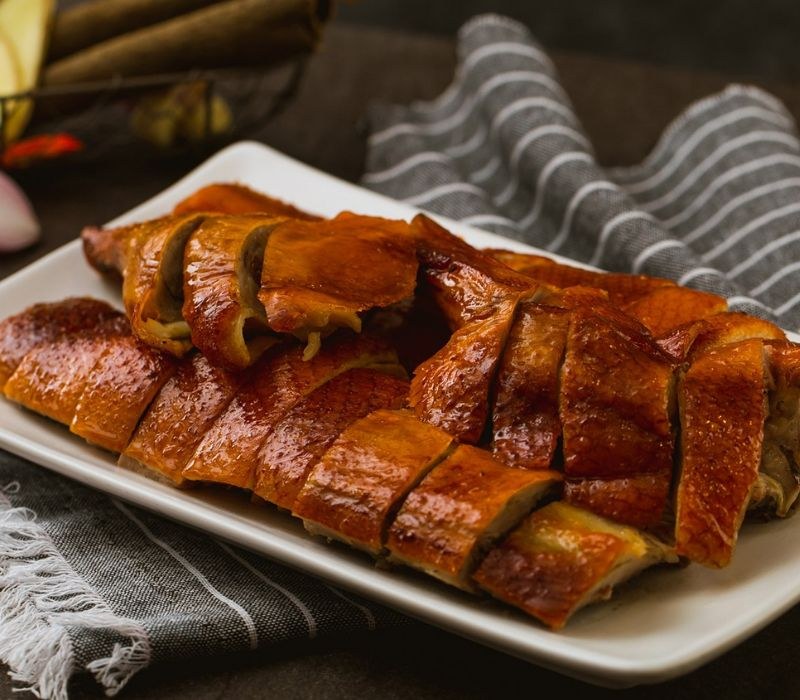
Peking-style / Cantonese roast duck is a favorite among many diners. Illustrative photo: VinWonders
The duck is selected for its large, plump size, then roasted until the skin is crisp and mahogany-colored while the meat remains tender and fragrant. It is usually served with a special dipping sauce and pho noodles or rice vermicelli. The roast duck here has a distinctive flavor that is richer than traditional roast duck from northern Vietnam.
Another unique snack is “fusion” bánh đúc. This dish is an interesting combination of Vietnamese and Chinese styles. The hot, soft bánh đúc is served with minced meat, dried shrimp, wood ear mushrooms, and sweet-and-sour dipping sauce. It is a rustic, inexpensive dish with a memorable flavor, ideal for warming your stomach during the trip.
5 Essential Tips for a Complete Mong Cai Border Gate Trip
To make your exploration of Mong Cai Border Gate perfect, you should prepare some practical knowledge about timing, accommodation, and shopping.
5.1 When Should You Visit Mong Cai Border Gate?
Mong Cai can welcome visitors year-round, but the ideal time to combine sightseeing at the border gate and markets with swimming is summer (May - August). The weather is sunny and pleasant, making it suitable for enjoying the cool waters of poetic Trà Cổ Beach. However, keep in mind that this is the peak tourist season, so service and accommodation prices may increase.
If you love culture, you should visit during festival season (March - June in the lunar calendar), especially during the Trà Cổ Communal House Festival (from the 30th day of the 5th lunar month to the 1st day of the 6th lunar month). This is one of the largest traditional festivals in the area, featuring many unique rituals and folk activities. Autumn (September - October) is also an ideal time to try squid fishing in the waters of Trà Cổ, or simply enjoy a shopping and culinary trip without enduring the oppressive summer heat.
5.2 What to Buy as Gifts in Mong Cai?
Buying gifts in Mong Cai is an essential part of the trip. Travelers often prioritize specialties from the coastal region and unique products from the border markets.
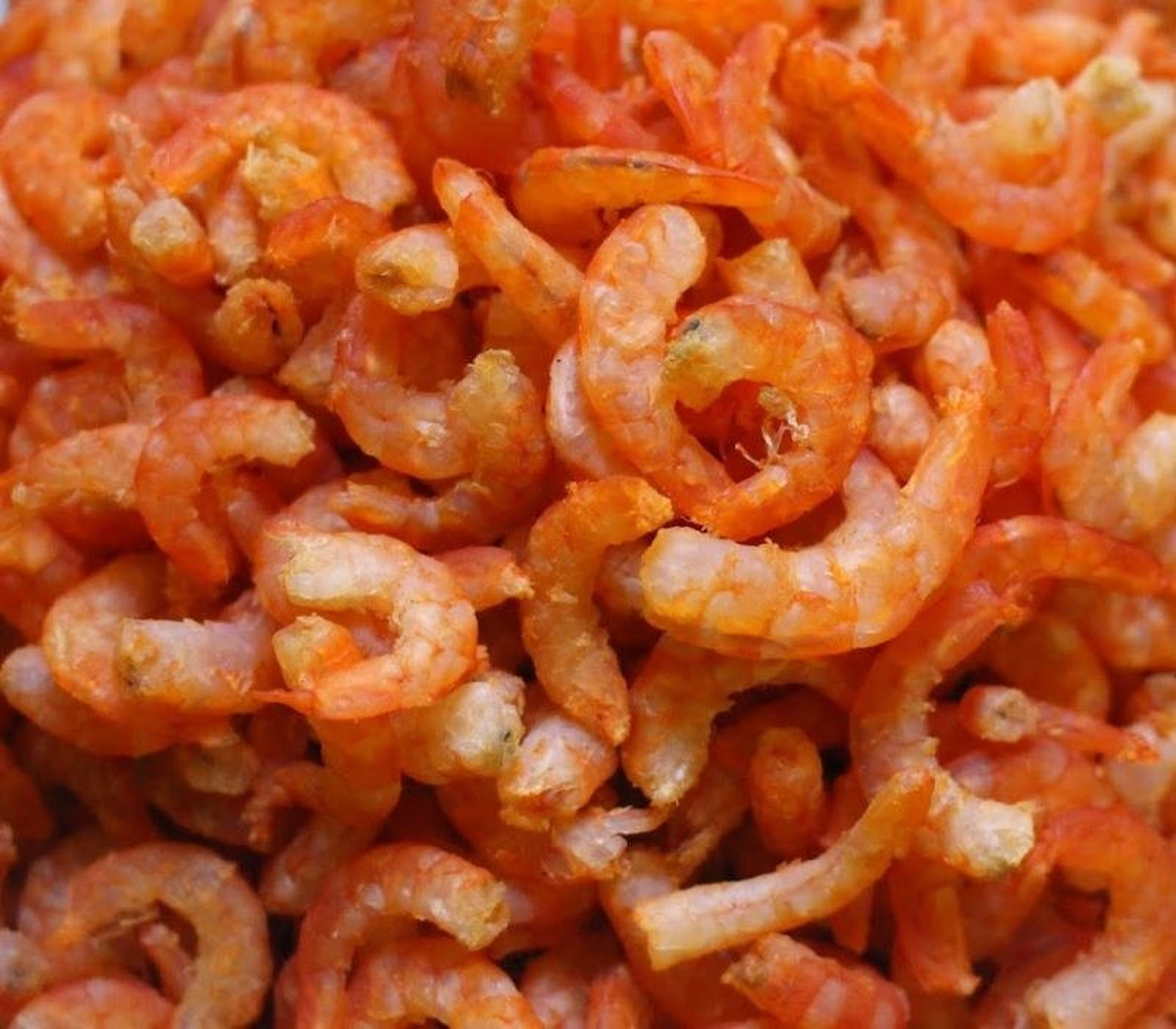
Dried seafood is always a top choice, especially dried squid (thick and sweet meat) and dried sá sùng (a premium gift). You should also consider Mong Cai shrimp floss, a famous specialty with a fresh, rich shrimp flavor that is easy to eat and suitable for many people.
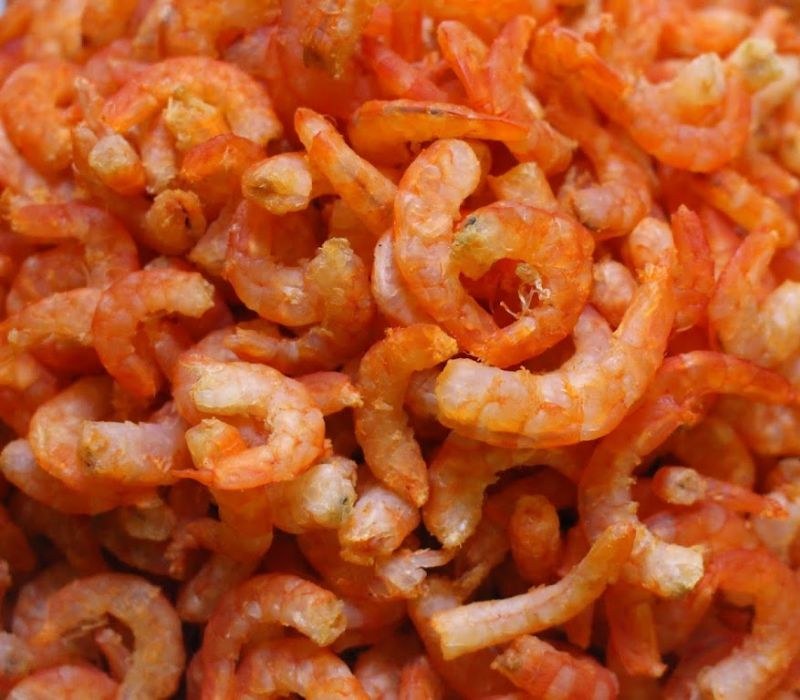
Dried seafood is worth considering if you are looking for gifts for family and friends. Illustrative photo: KKDay
These products are not only easy to store but also carry the distinctive flavor of this frontier region. Travelers can buy them at Mong Cai Market 3 or reputable specialty shops along the streets near the border gate.
Mong Cai Border Gate is a colorful tourist destination that harmoniously combines history, economics, and experience. With these detailed tips, what are you waiting for? Start planning your trip to explore Mong Cai Border Gate today! Grab your backpack and go.