1 Overview of Cua Ong Temple
Cua Ong Temple is a special national relic located in Cua Ong Ward, Cam Pha City, Quang Ninh Province. It was originally dedicated to Hung Nhuong Dai Vuong Tran Quoc Tang (the third son of Tran Hung Dao), who rendered great service in defending the northeastern border region. Additionally, the temple worships many prominent figures of the Tran Dynasty (Tran Quoc Tuan, Tran Anh Tong, Tran Khanh Du, Pham Ngu Lao, Yet Kieu…) and is also the venue for the annual Cua Ong Temple Festival.
- Address: Cua Ong Ward (former Cam Pha City), Quang Ninh Province
- Festival: 3rd day of the 2nd lunar month
- Established: Tran Dynasty
Before honoring Prince Hung Nhuong, the temple was called Hoang Tiet Che Shrine, worshiping Hoang Can, a local figure who rendered great service in fighting bandits and was conferred the title “Kham Sai Dong Dao Tiet Che” by royal courts.
Cua Ong Temple is considered a symbol of resistance against foreign invaders for the people of the northeastern border region. Photo: Truong Giang/VOV-Dong Bac
See more: Tuan Chau Island - Discover the sparkling gem of Ha Long Bay
2 Directions to the Temple
Cua Ong Temple is located on the hill of Area 9A, Cua Ong Ward, Cam Pha City, Quang Ninh Province. From Ha Long City, travel along National Highway 18 to the northeast for about 30km, then turn right and go about 300 meters further to reach Cua Ong Temple. This is also one of the three most famous temples in Quang Ninh Province, blessed by nature with a prime location where mountains, ancient forests, and the sea meet.
Specifically, if traveling from Hanoi, you have the following two options:
- Coach/Bus: You can take the Hanoi – Cam Pha route by coach with fares ranging from 80,000 - 300,000 VND/one-way. After arriving in Cam Pha, you can hire a motorbike taxi or a taxi to Cua Ong Temple.
- Private car or motorbike (total distance of about 200km): From the capital center, follow Nguyen Khoai Street, pass National Highway 1A at Linh Nam, then take National Highway 5B / Expressway 04, follow National Highway 10 and National Highway 18. Upon reaching Ly Thuong Kiet Street in Cam Pha City, drive straight ahead to arrive at the temple.
3 Exploring Cua Ong Temple
3.1 Over 700 Years of History
According to historical records, Cua Ong Temple in Quang Ninh was established and has existed for over 700 years, undergoing numerous major restorations before attaining its current appearance. When first erected, the temple was merely a small thatched hut made of thatch, bamboo, and reed... Around 1907 – 1916, Cua Ong Temple was renovated. In 1916, Thuong Temple (Upper Temple), Trung Temple (Middle Temple), Ha Temple (Lower Temple), and a pagoda were built.
In subsequent years, the temple continued to be restored and embellished. In 2014, the master plan for the relic site covering up to 18.125ha was approved. Later, Trung Temple was reconstructed and completed in 2017.
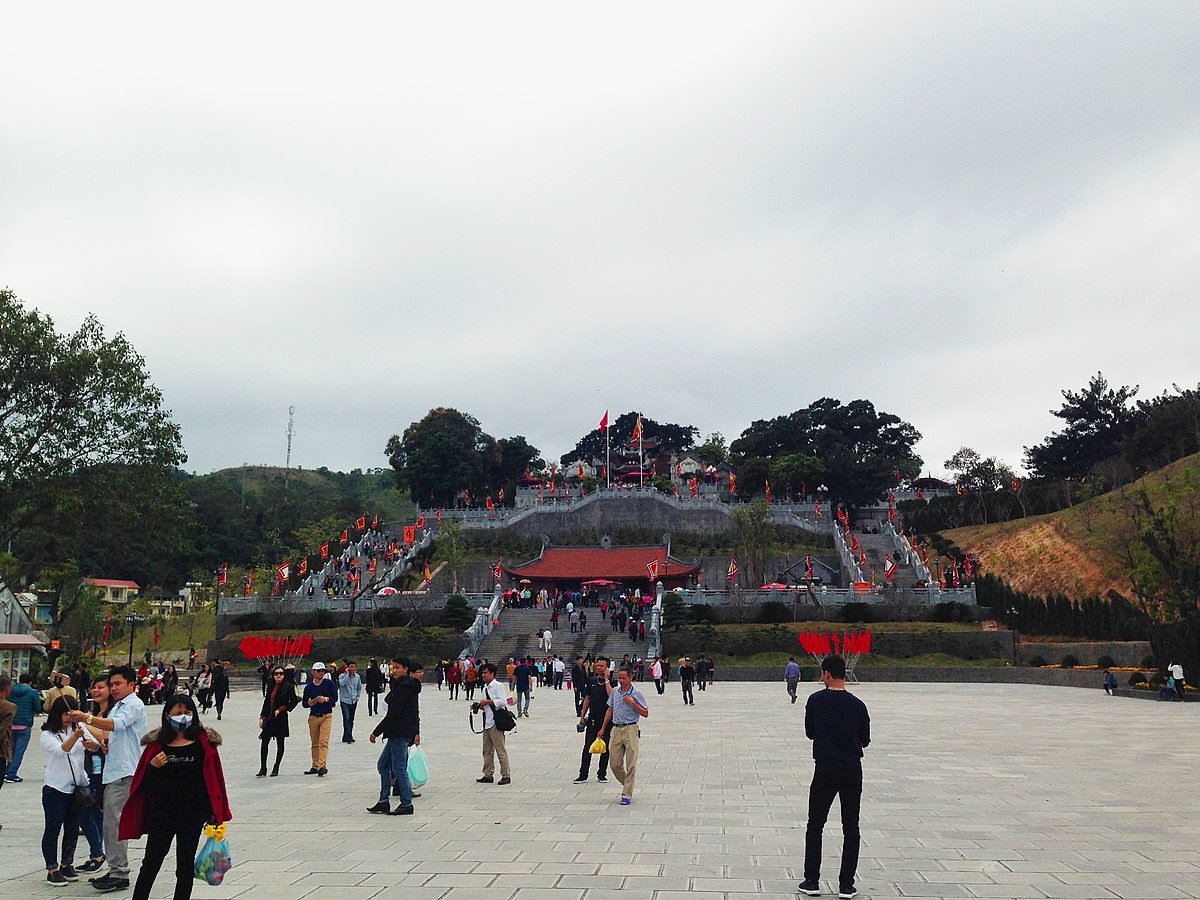
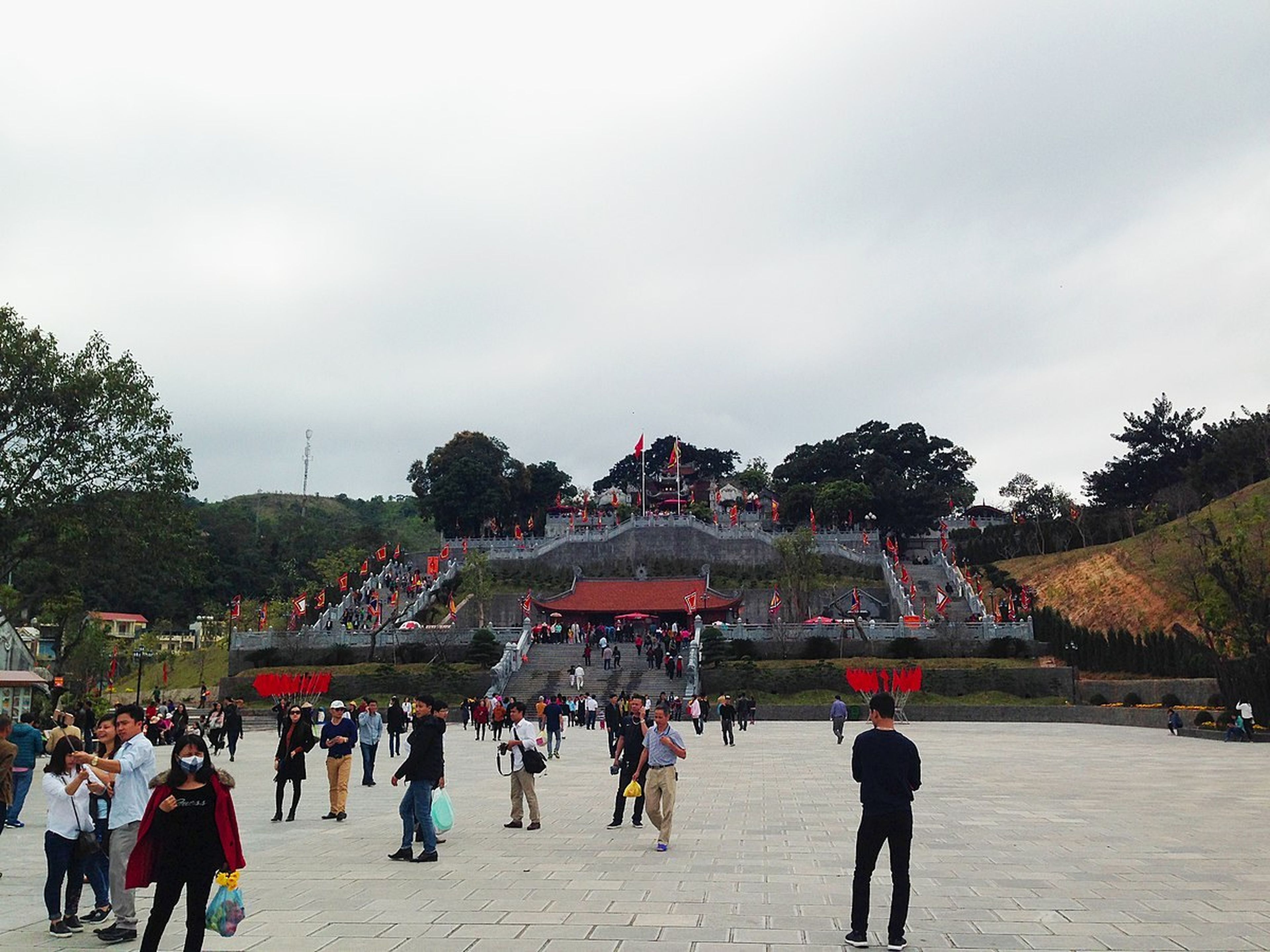
View from the main courtyard looking up at Trung Temple and Thuong Temple on the hill. Photo: Hoangkid
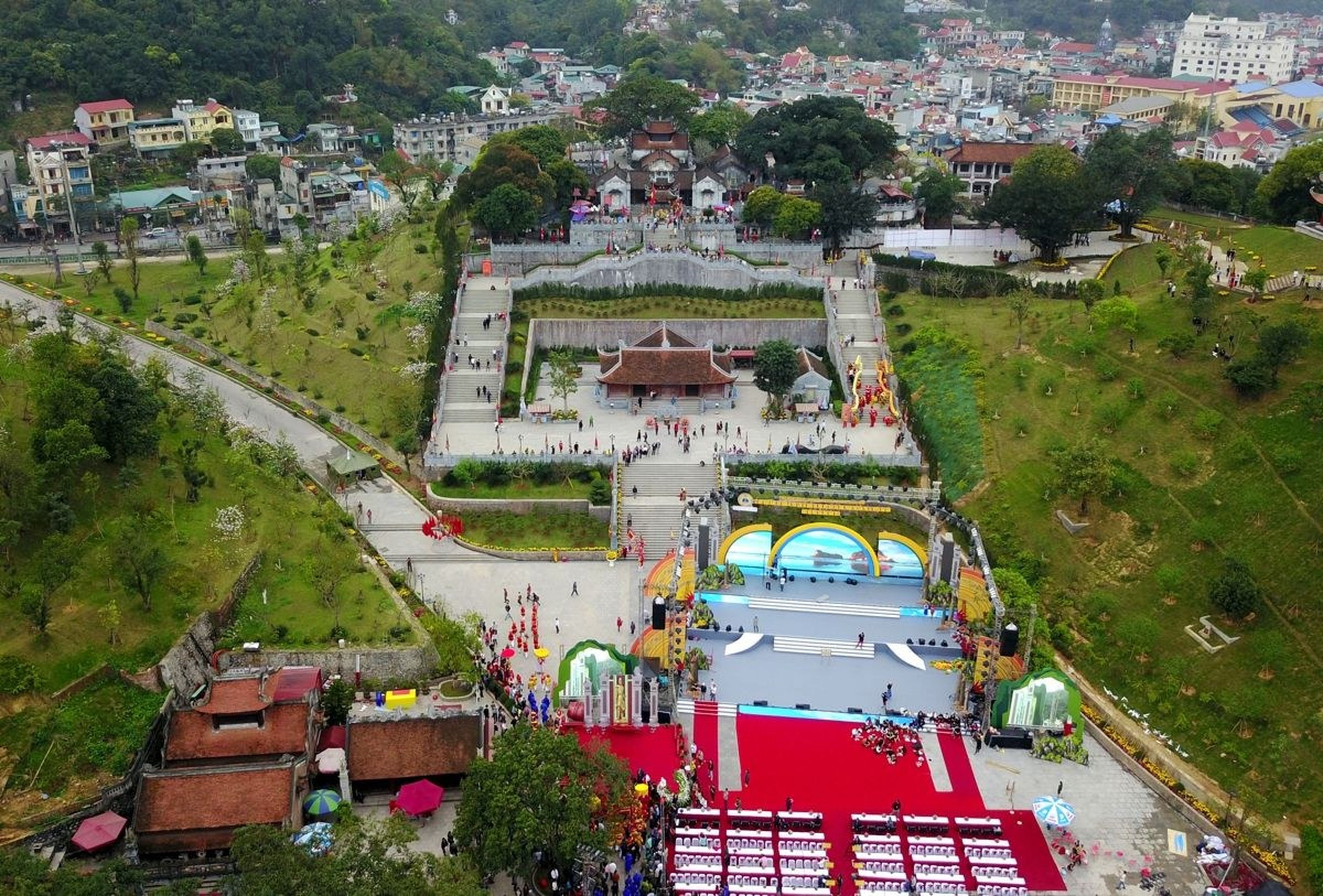
3.2 Architecture and Layout of Cua Ong Temple Relic
Initially, the temple was dedicated solely to Duc Ong Tran Quoc Tang, but later, with the addition of shrines and pagodas, many other revered figures were enshrined. These include:
- Ha Temple (Lower Temple): Consists of Mau Temple and Trung Thien Long Mau Temple.
- Trung Temple (Middle Temple): Worships Imperial Commissioner of the Eastern Route Hoang Can, the Mountain God, and the Water God.
- Thuong Temple (Upper Temple): Consists of the Upper Temple, Quan Chanh Shrine, Quan Chau Shrine, the pagoda, and the mausoleum of Tran Quoc Tang.
- Cap Tien Temple: Worships a noble lady – the daughter of Tran Quoc Tang (also known as “Co Be Cua Suot”), Quan Chanh, human deities, Buddha, the Jade Emperor, Nam Tao, Bac Dau, and Tien Thien Thanh Mau.
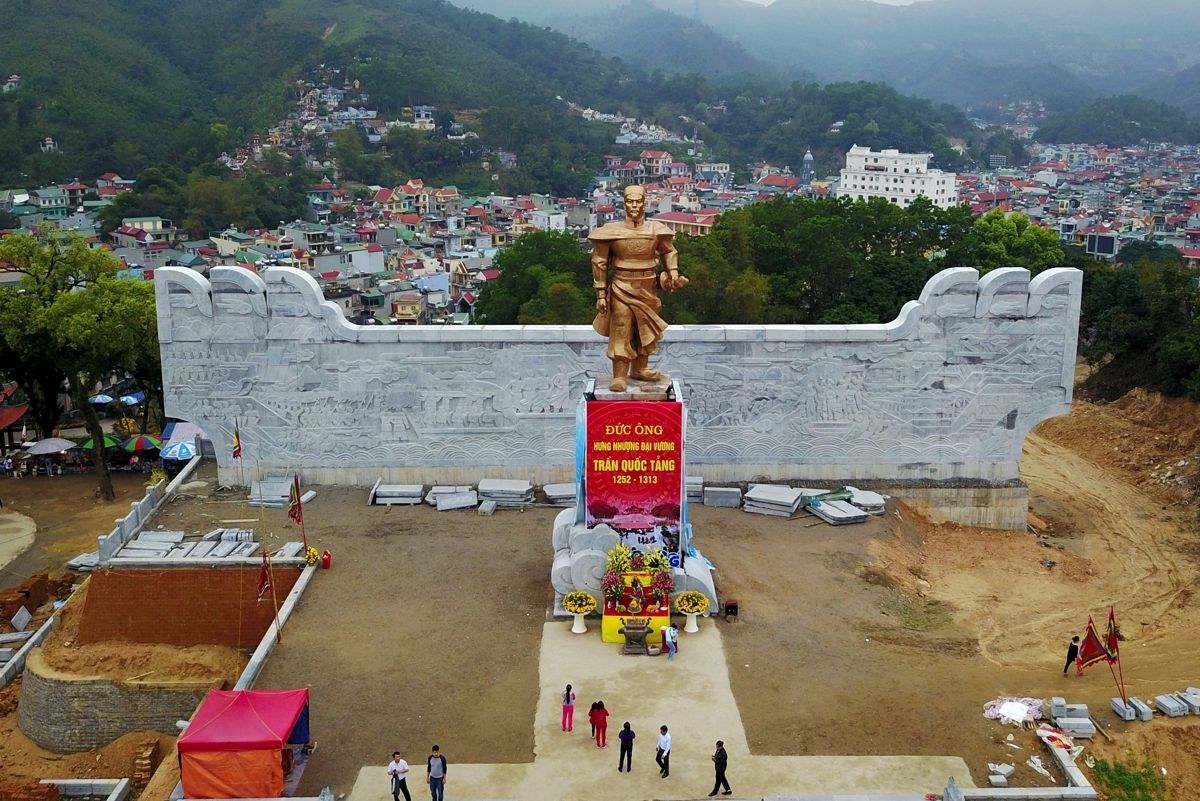
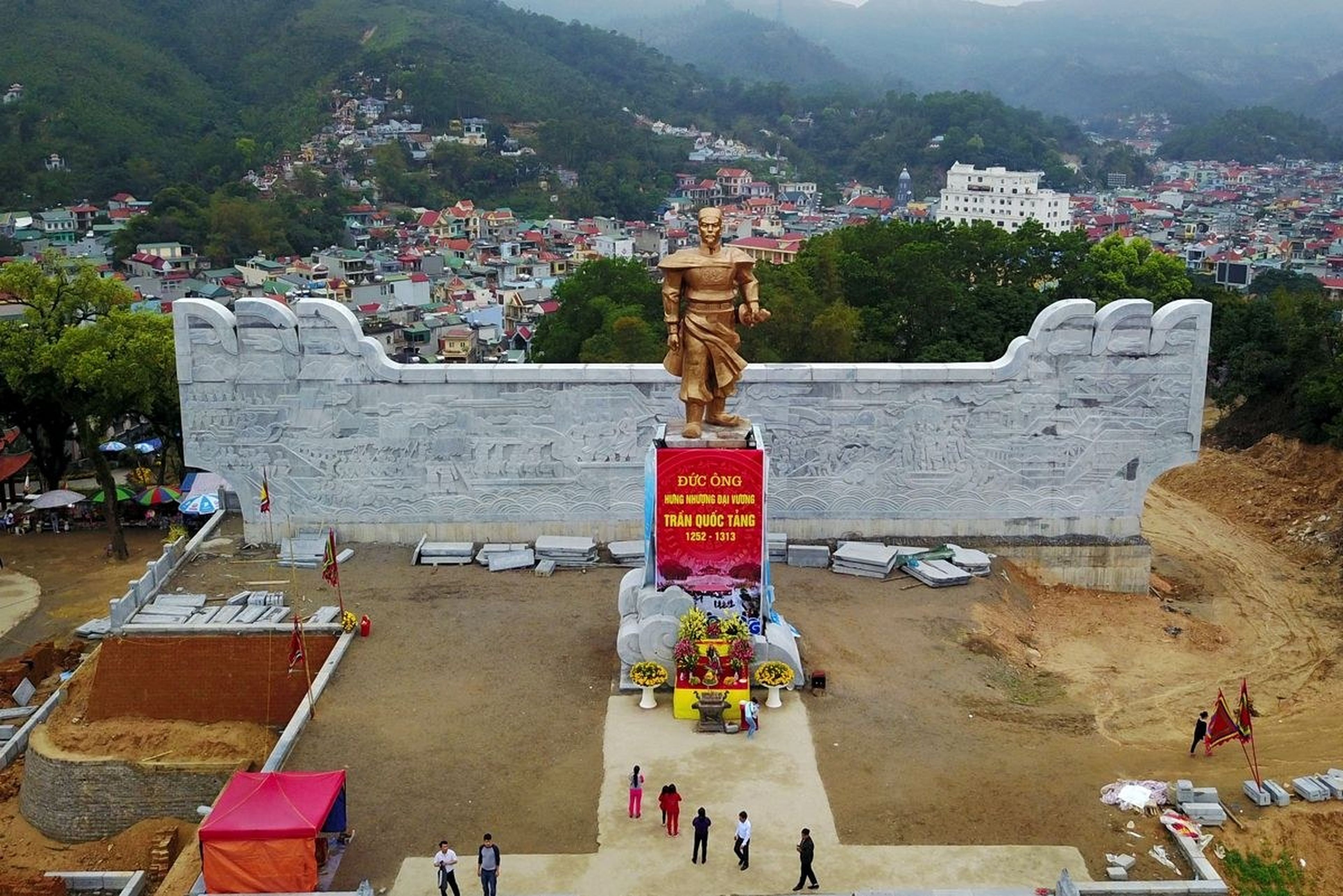
Temple dedicated to Hung Nhuong Dai Vuong Tran Quoc Tang. Photo: Truong Giang/VOV-Dong Bac
4 Key Highlights of Cua Ong Temple
4.1 Sacred 700-Year History
Cua Ong Temple in Quang Ninh is highly revered and frequently visited for worship by locals. It honors Hung Nhuong Dai Vuong Tran Quoc Tang, who rendered great service in repelling the Yuan-Mongol invaders in the 13th century. Despite the passage of centuries, sacred and heroic legends about the temple continue to be passed down through generations.
4.2 The Temple with the Most Beautiful Architecture in Quang Ninh
Cua Ong Temple is often acclaimed as having the most beautiful architecture in Quang Ninh, both unique and mystical, fully embodying the feng shui sacred beasts: Green Dragon on the left, White Tiger on the right, Vermilion Bird in front, and Black Tortoise at the back. The temple was constructed from materials such as cast stone, Bat Trang bricks, terracotta pointed-toe tiles, and molasses-mixed mortar... The architecture is primarily decorated according to legends of the Four Sacred Beasts: Dragon, Qilin, Tortoise, and Phoenix... Inside Cua Ong Temple, durable and sturdy hardwoods such as ironwood, rosewood, and mahogany were used. The building frames are carved with bas-reliefs, parallel sentences, and magnificent gilded red lacquer patterns.
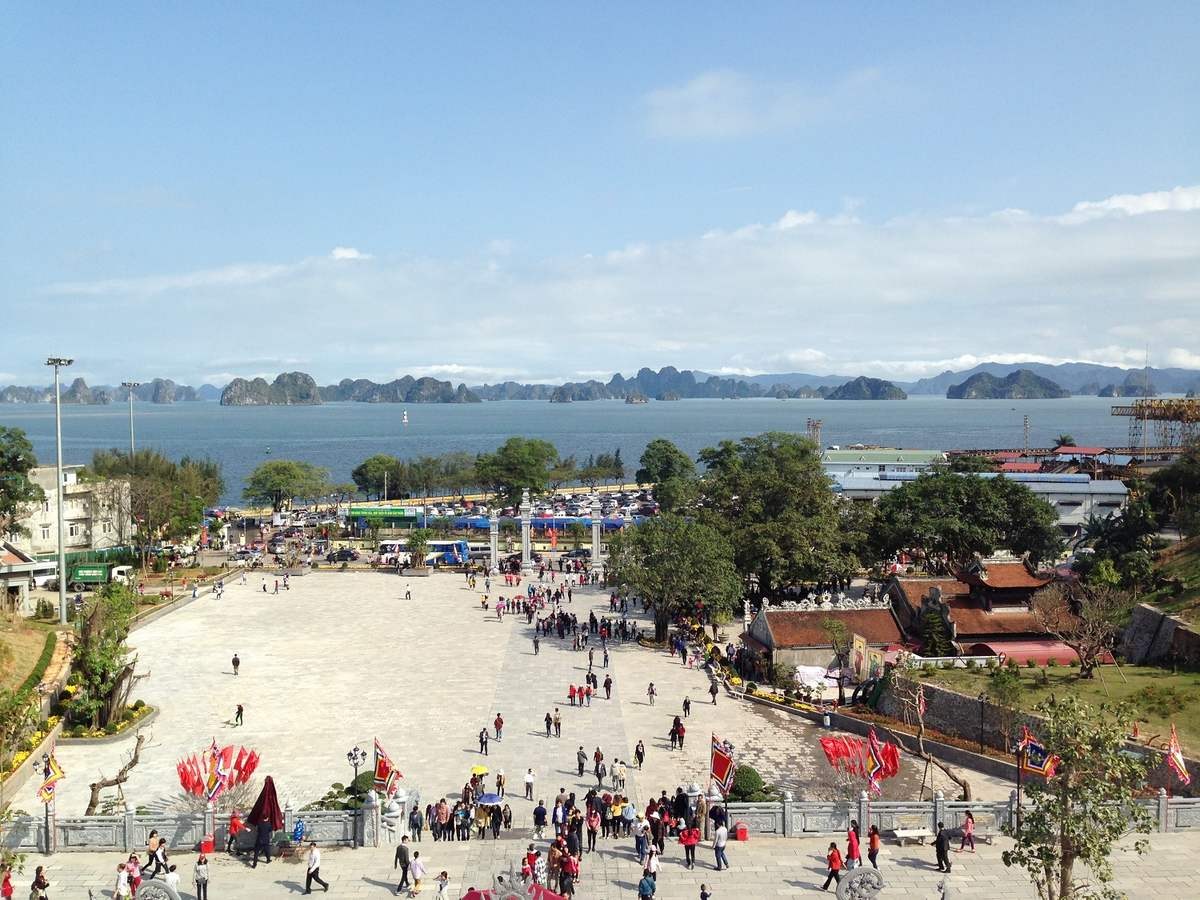
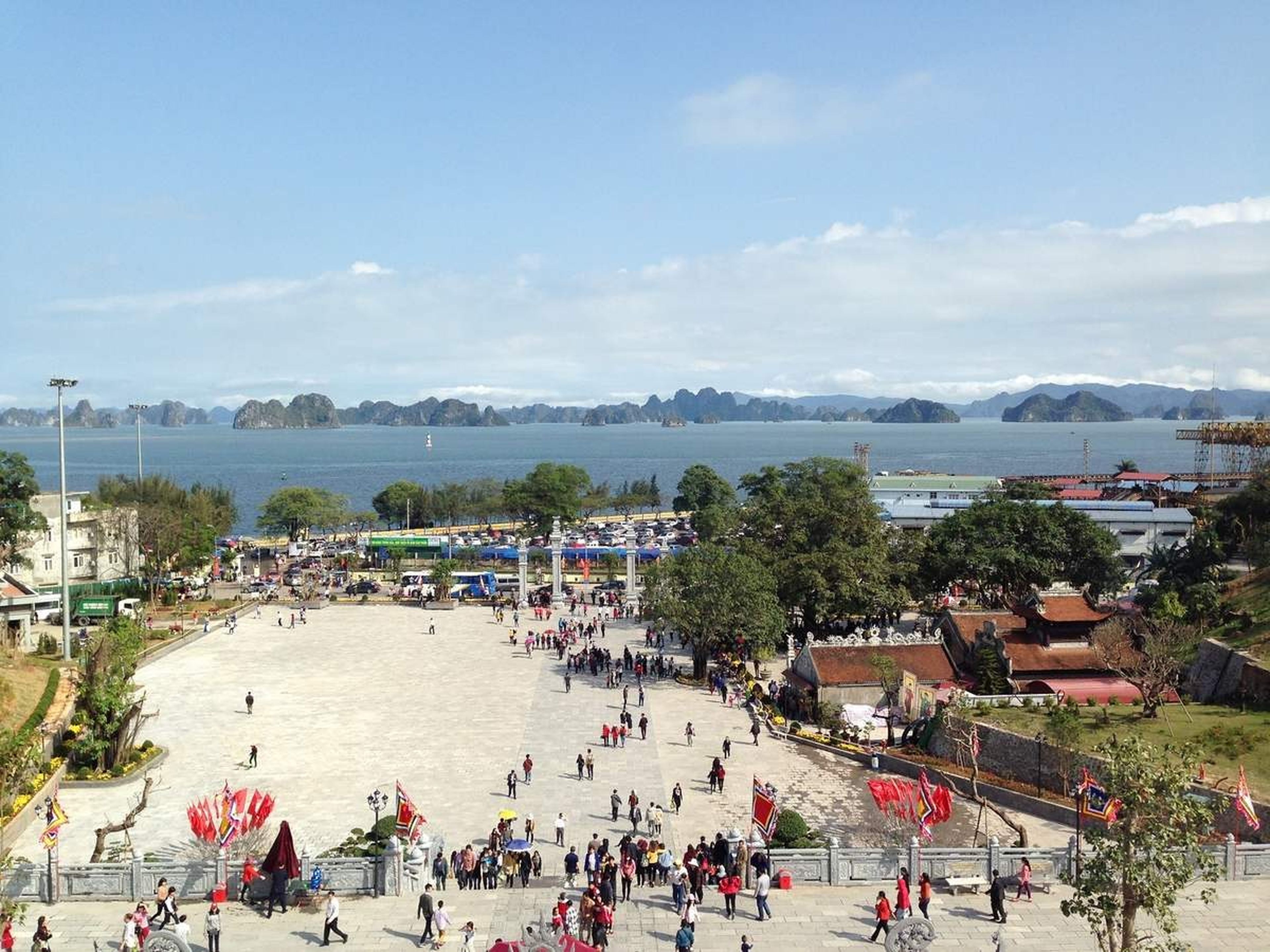
View of Bai Tu Long Bay from Thuong Temple. Photo: Hoangkid
4.3 A Cultural and Spiritual Destination for the People
With its centuries-old history, Cua Ong Temple preserves numerous cultural and historical values, significantly contributing to the preservation and promotion of national cultural identity, community cohesion, and the development of spiritual culture. For generations, this place has been a focal point for community cultural activities and the spiritual life of local residents. Alongside Yen Tu Pagoda, Trinh Pagoda, and Ho Thien Pagoda - Dong Trieu, Cua Ong Temple is an equally attractive tourist destination in Quang Ninh.
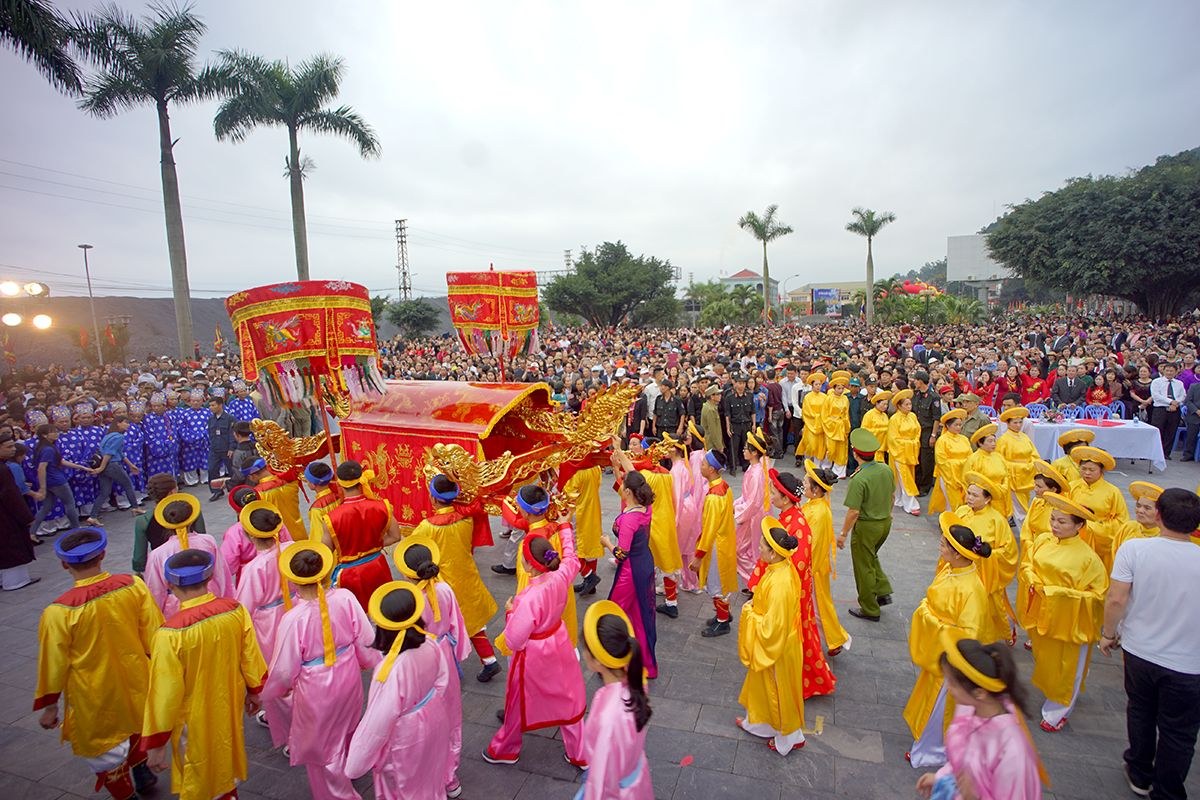
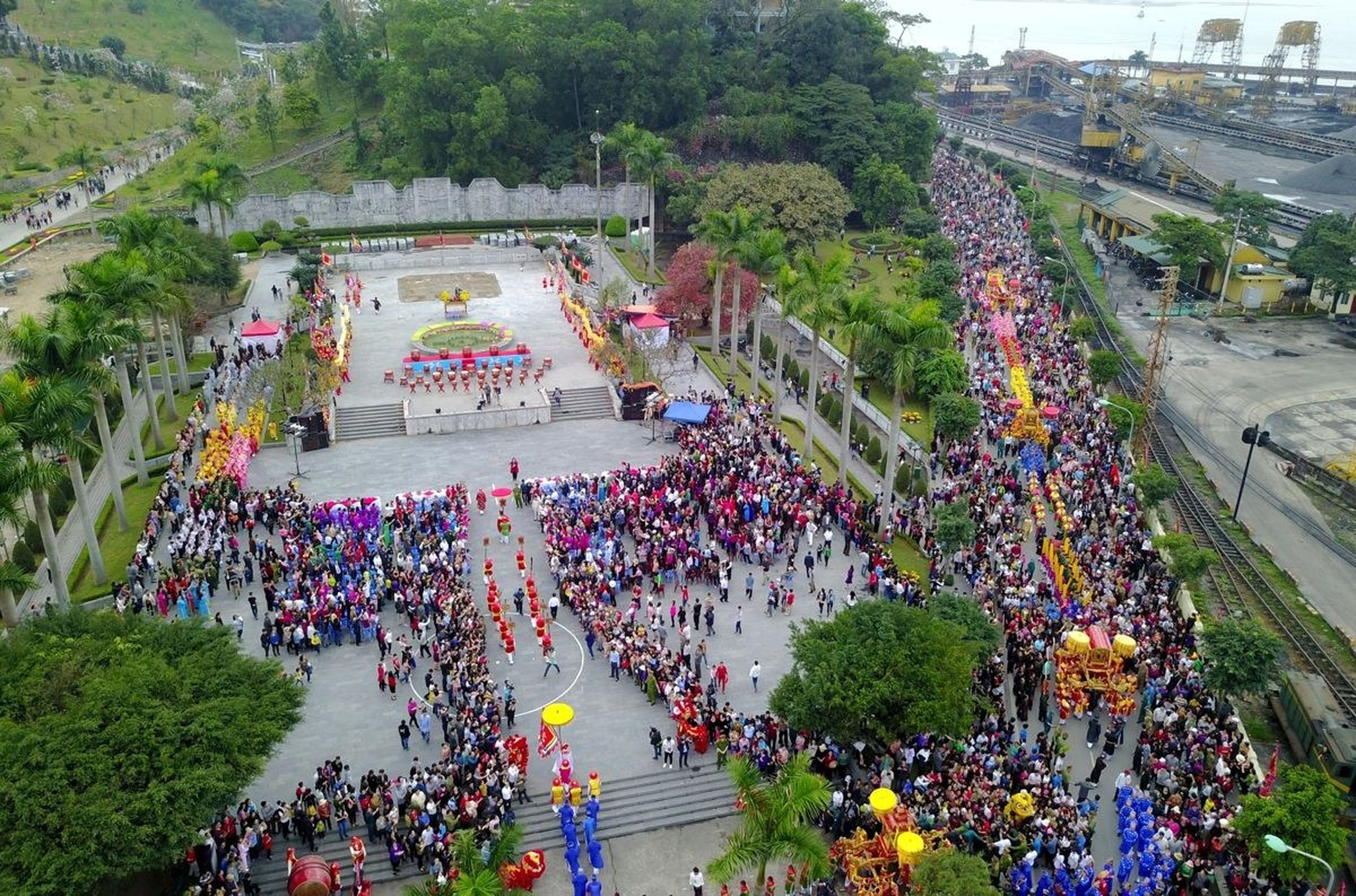
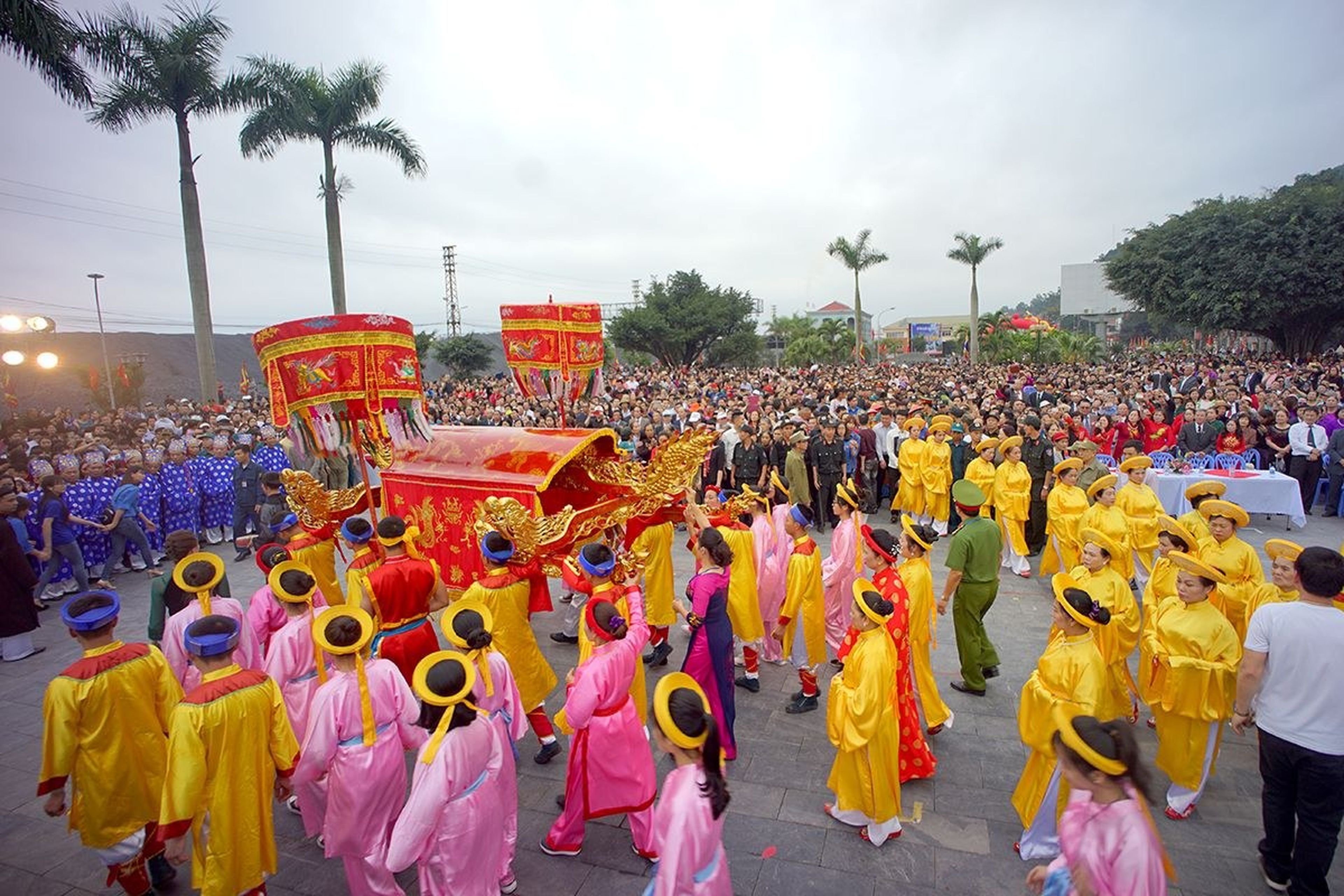
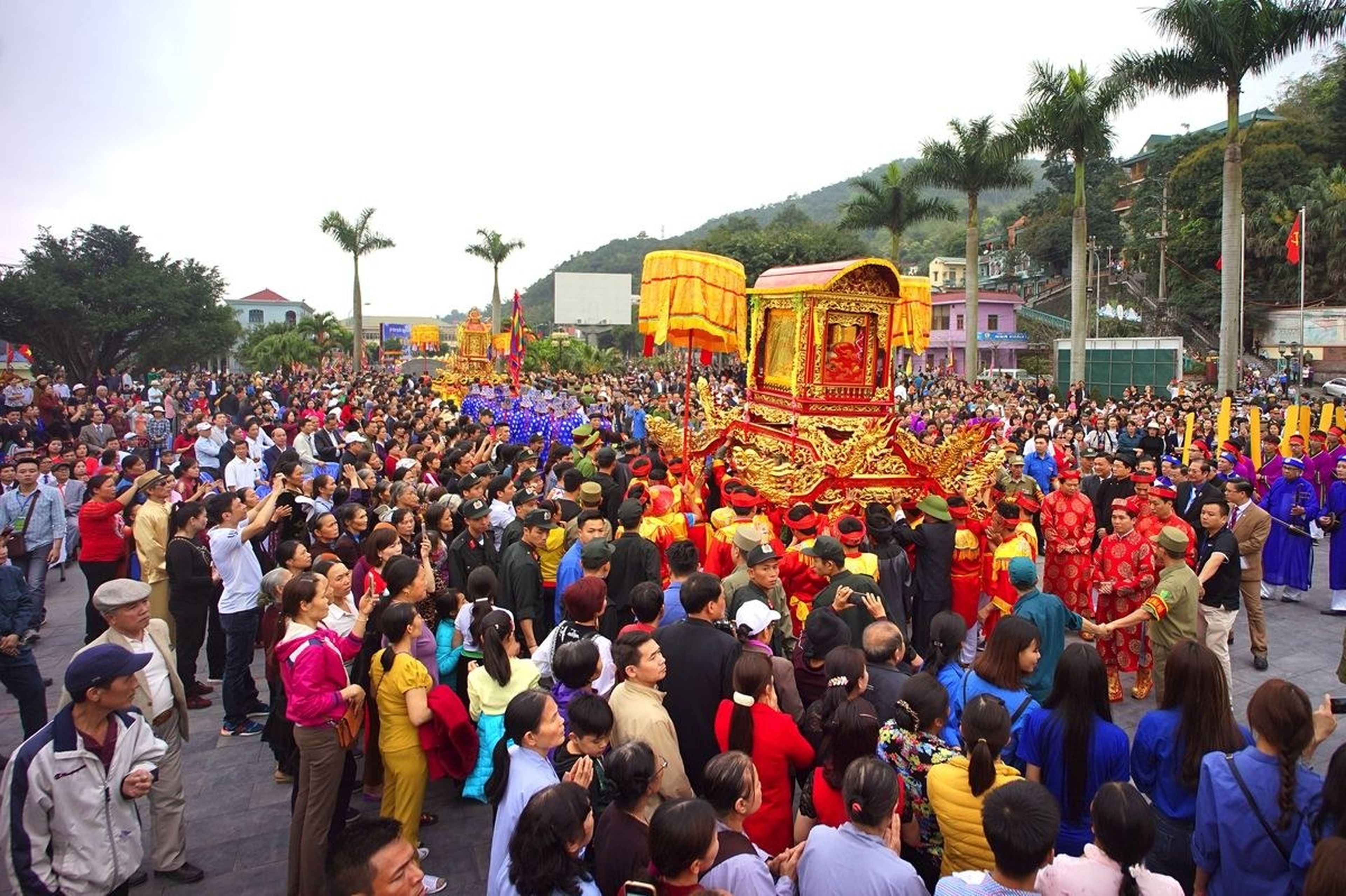
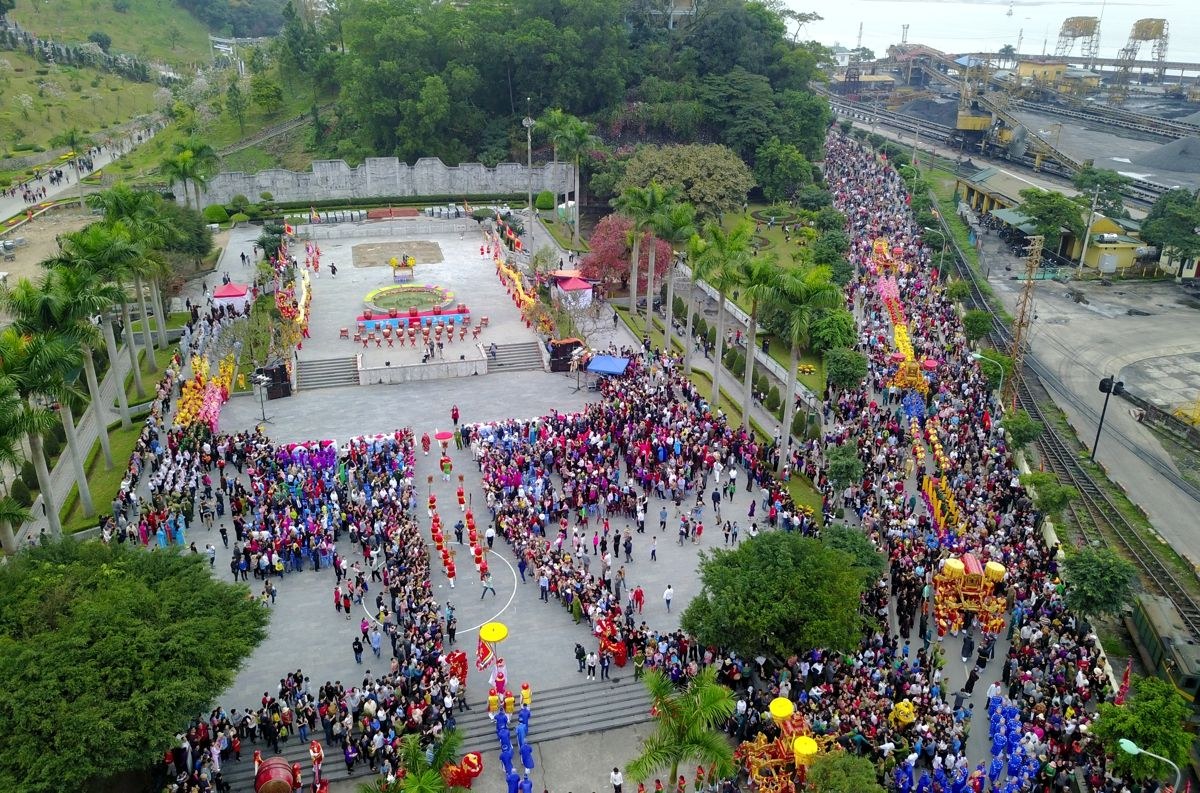
Cua Ong Temple Festival, a major event in the Northeast region. Photo: Truong Giang/VOV-Dong Bac
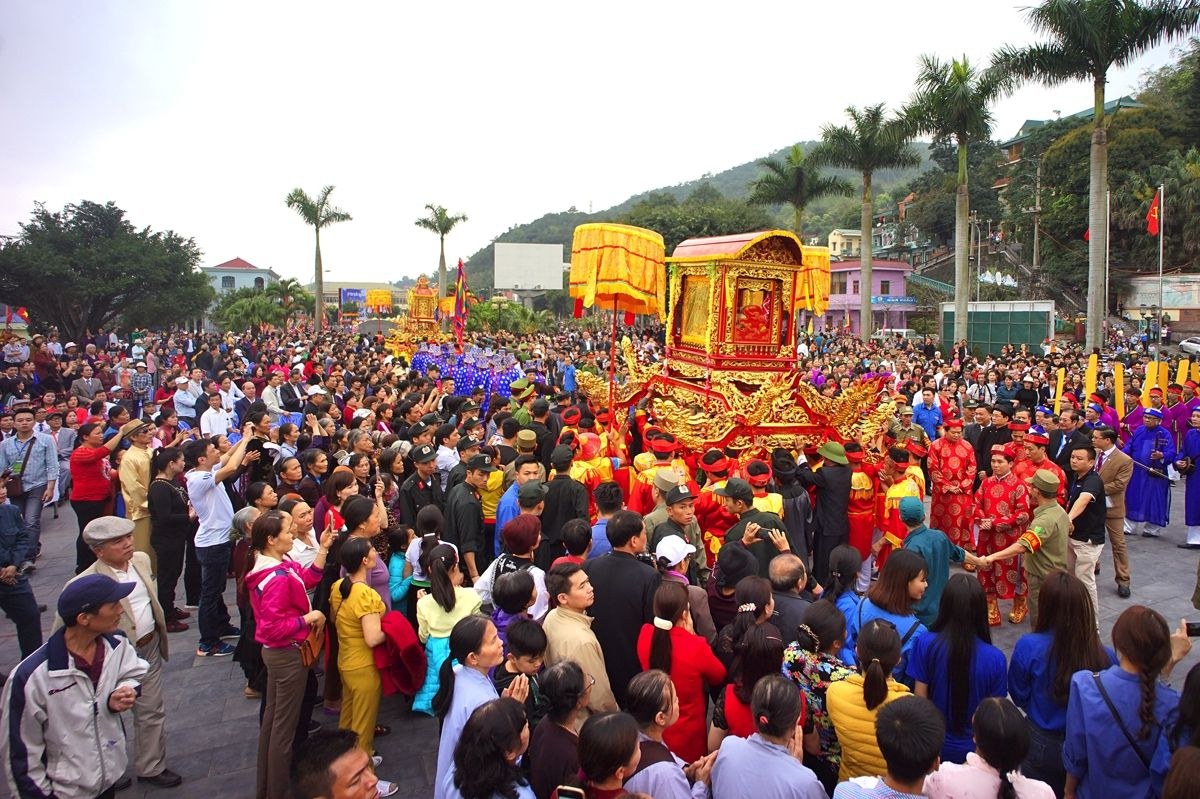
The opening is the Duc Ong Procession Ceremony, attracting a large number of participants. Photo: Truong Giang/VOV-Dong Bac
4.4 Venue for Major Festivals Throughout the Year
Since the 19th century, the Cua Ong Temple Festival has been renowned for its large-scale celebrations. You can visit this temple during the first 3 months of the year and experience a series of captivating events such as:
- Main Cua Ong Temple Festival: Takes place from the 2nd day of the 1st lunar month through the end of the 3rd lunar month.
- Requiem ceremony, prayer ritual at the temple gate, and incense offering with Duc Ong procession: Consists of 2 main parts: ritual ceremonies and the palanquin procession carrying Tran Quoc Tang's ancestral tablet.
- Ceremony of returning Duc Ong to the sanctuary: Lasts through the end of the 3rd lunar month; on this occasion, you will have the opportunity to take part in many folk games such as blindfolded drum beating, stick pushing, tug of war, to tom diem card game, rice cooking contests, betel leaf quids making...
To ensure a complete and enjoyable trip exploring Cua Ong Temple, you should choose suitable accommodation and take note of several important tips before departing.
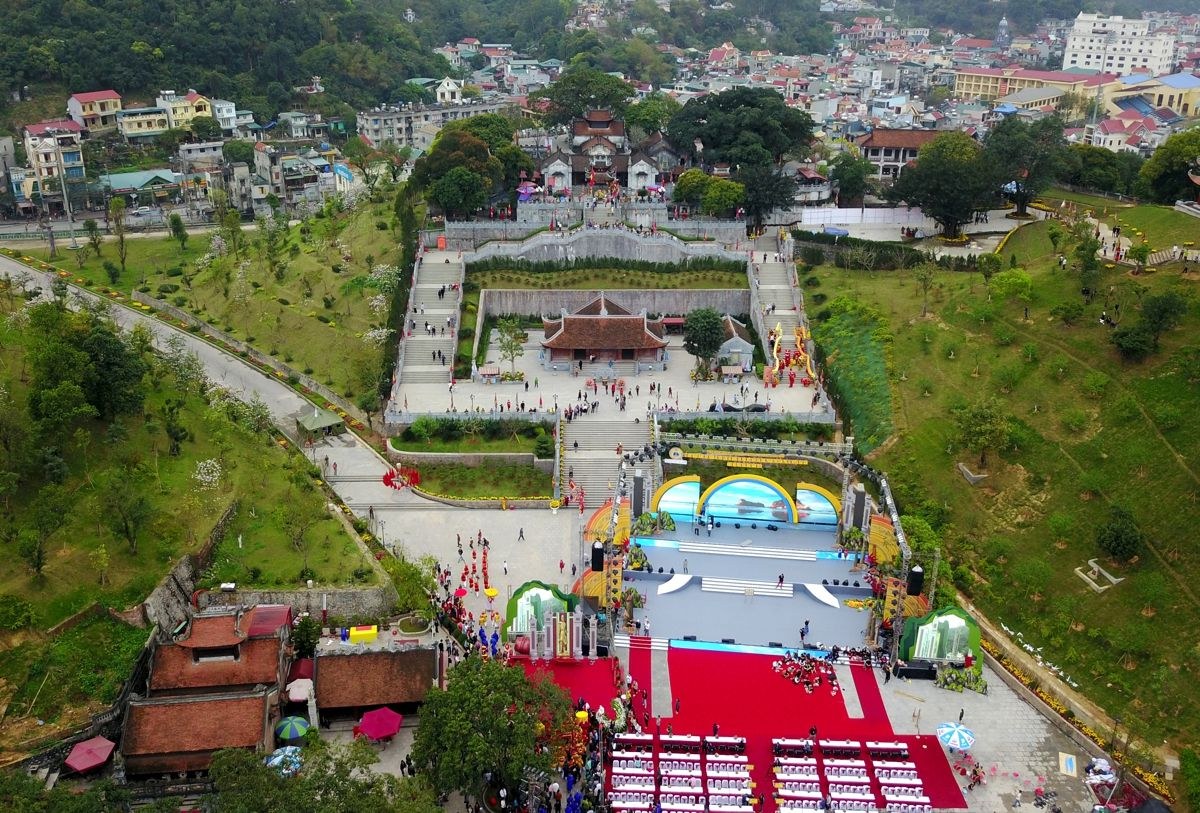
The expansive relic grounds serve as a famous spiritual and community cultural hub in Quang Ninh. Photo: Truong Giang/VOV-Dong Bac
5 Important Notes When Visiting Cua Ong Temple for Worship
5.1 Best Time to Visit Cua Ong Temple
Cua Ong Temple in Quang Ninh is always open to welcome locals as well as domestic and international tourists for sightseeing and worship. Even on New Year's Eve, the temple remains open for visitors. However, the most recommended time to visit is during the beginning of the new year, when the weather is cool, pleasant, and less rainy. Moreover, this is also when a series of distinctive festivals take place as mentioned above.
5.2 Offerings to Prepare
The Cua Ong Temple complex includes both temples and a pagoda, so if you wish to offer incense at all altars, you should prepare vegetarian offerings, savory offerings, and raw offerings. Suitable offerings include: Vegetarian offerings (incense, flowers, sweets, fruits, and votive paper money – all bought in odd numbers); savory offerings for the Ban Cong Dong / Community Altar (chicken, pork, Vietnamese pork rolls (gio, cha)... well-cooked and neatly arranged); raw offerings (salt, rice, raw eggs, and votive papers).
Worship relies primarily on sincerity; furthermore, since Cua Ong Temple receives large crowds of visitors, burning votive paper should be limited. Preparing offerings does not need to be overly elaborate to avoid waste. Avoid scattering small banknotes at the altars; instead, place donations into the donation boxes to preserve aesthetic decorum.
5.3 Etiquette When Visiting the Temple and Pagoda
- Dress modestly and respectfully, suitable for a sacred place.
- Walk gently and speak softly so as not to disturb the solemn atmosphere.
- Do not touch artifacts or structures indiscriminately to avoid damaging the relics.
It can be said that Cua Ong Temple is a serene sanctuary that travelers, especially those visiting Ha Long Bay, Quang Ninh, should experience at least once.