Currently, the historical relic of Hung Hoc communal house worships two tutelary gods: Venerable Huyen Quang Ly Dao Tai and Dong Hai ban tho Vu Hoang Dao; classified as a National Relic, it is the pride of the people of Quang Yen.
Quang Ninh tourism, exploring the historical relic of Hung Hoc communal house
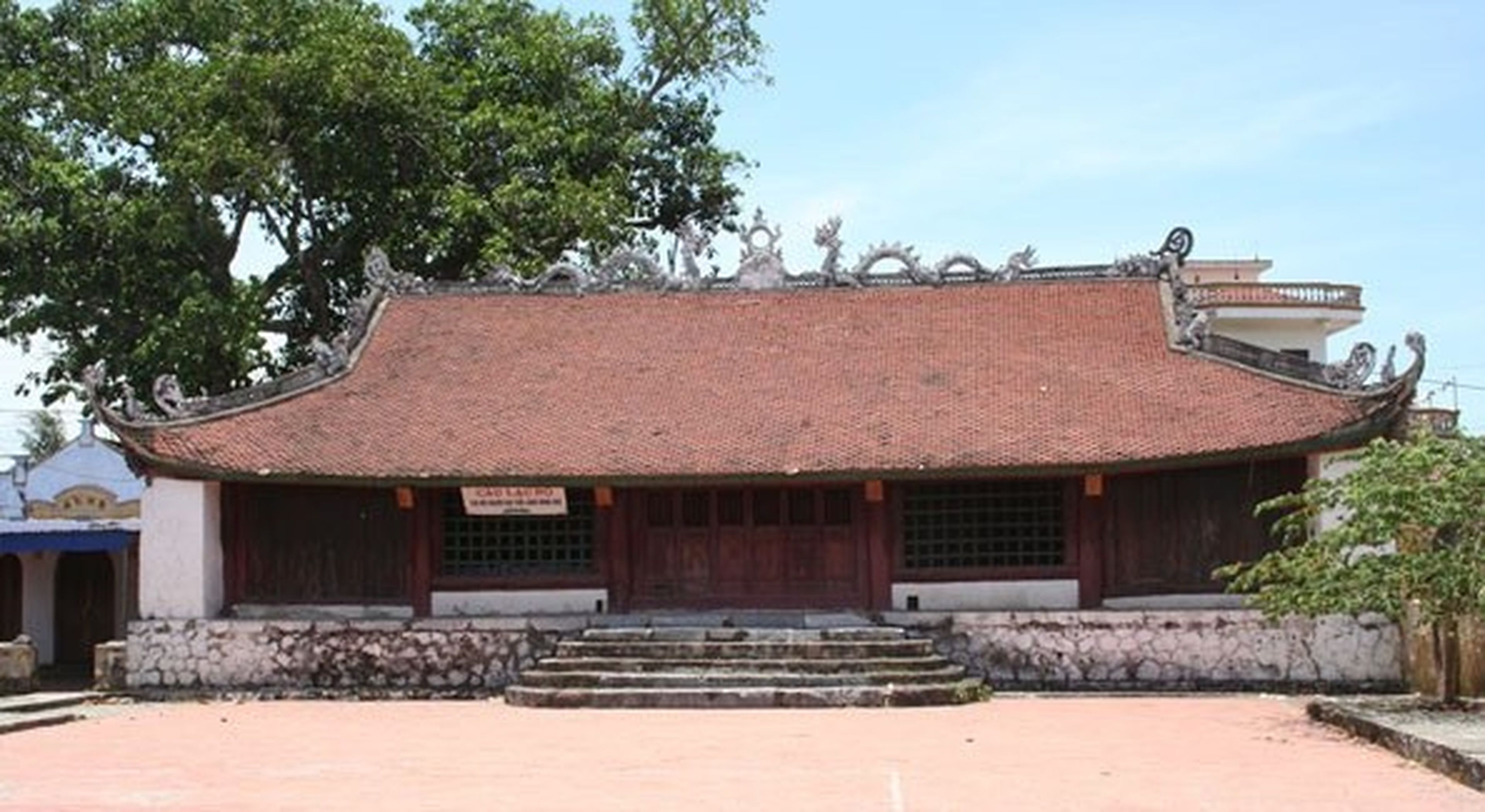
Hung Hoc communal house is located in Dinh hamlet, Hung Hoc village, Quang Yen town; the people named the communal house after Hung Hoc village. Hung Hoc village underwent multiple name changes: when first established, it was called Huyen Quang village; later, due to naming taboo, it was changed to Ta Quan village, then Quan village, Huong village, and later Hung Hoc village.
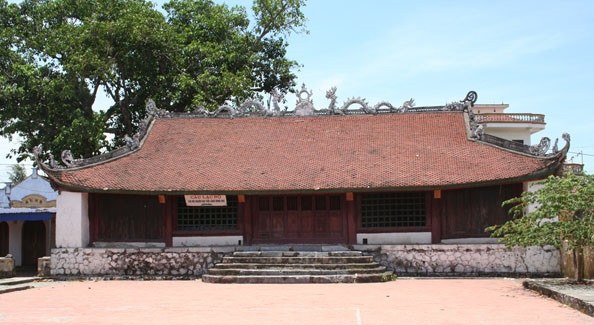
Hung Hoc communal house. Photo: Quang Ninh Newspaper.
Hung Hoc communal house was built around the late 18th century. Today, the communal house has undergone multiple restorations and possesses quite unique architectural and artistic features. Originally, the communal house was built near Hung Hoc pagoda; not until the reign of King Thieu Tri in 1841 was it built at its current location.
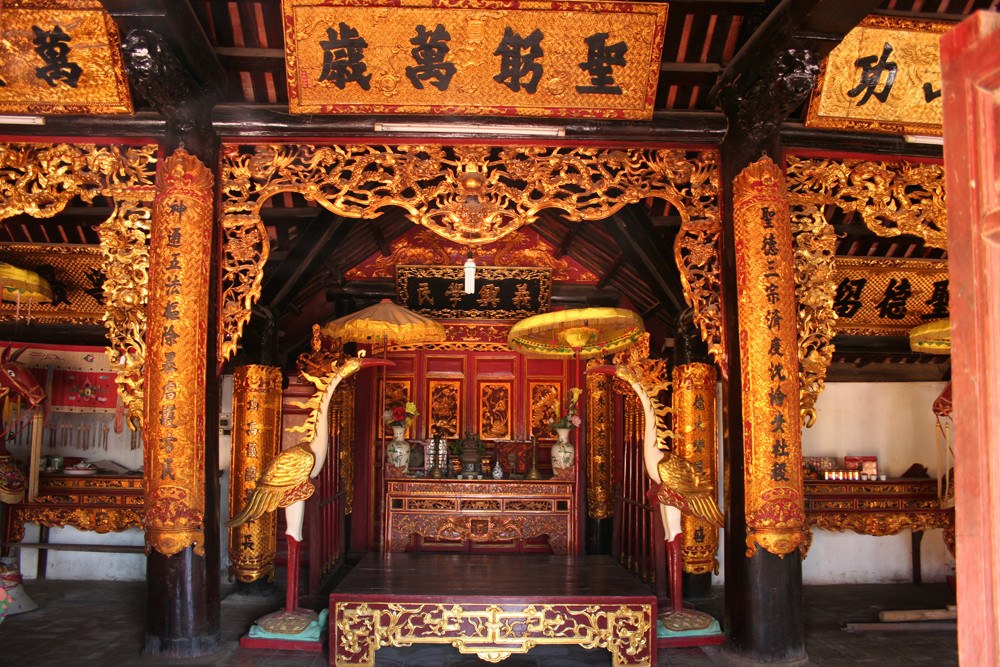
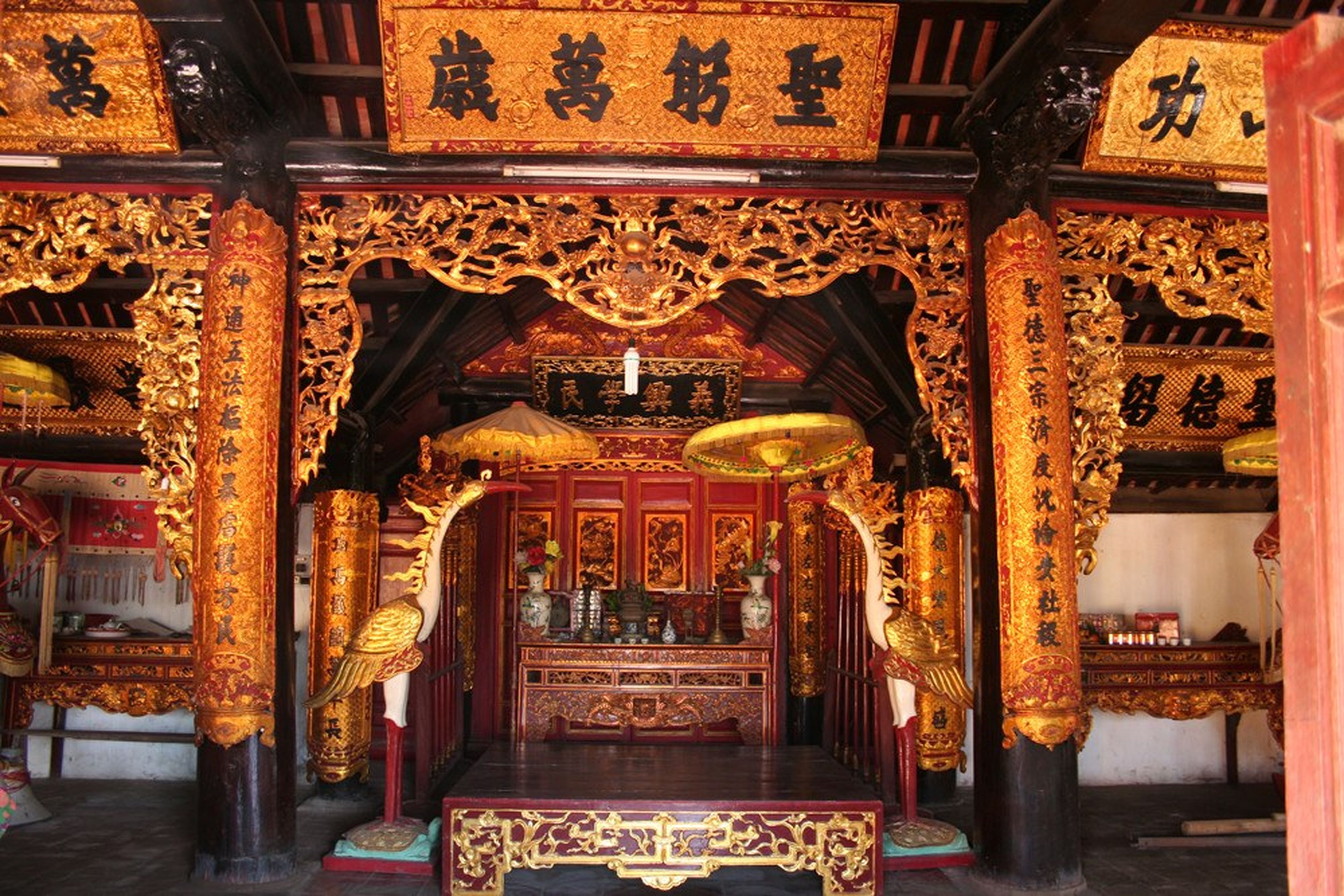
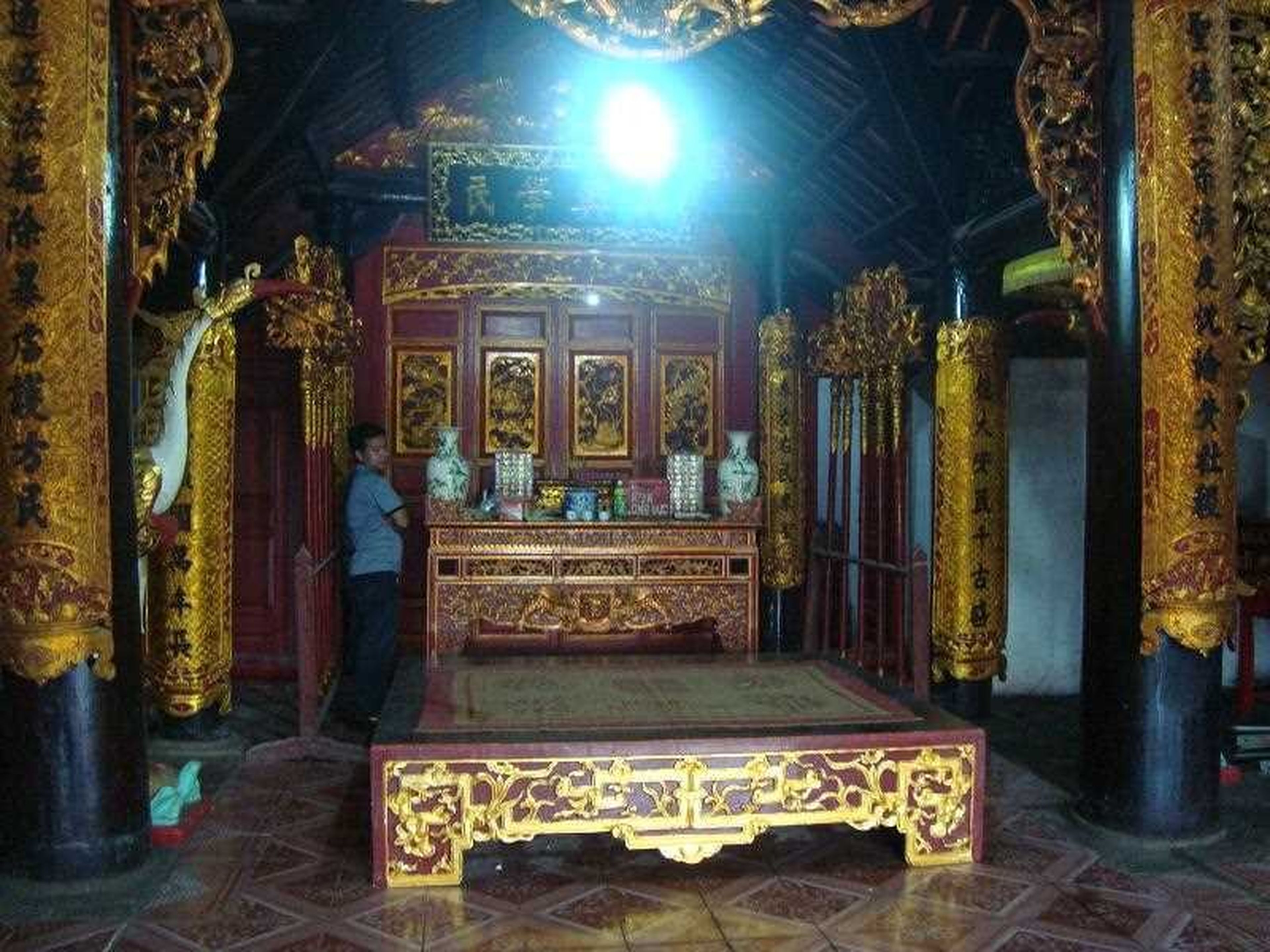
The inner sanctuary of Hung Hoc communal house. Photo: Quang Ninh Newspaper.
The communal house was restored in 1875, 1935, and 1994, yet it still retains the typical architectural and sculptural form of Vietnamese village communal houses, with structural panels, beam heads, cantilever ends, tiered purlin braces, and bearing blocks supporting the purlins, all artistically carved with exquisite bas-reliefs featuring traditional motifs of the Four Sacred Beasts and stylized flowers and leaves in the artistic style of the Le dynasty.
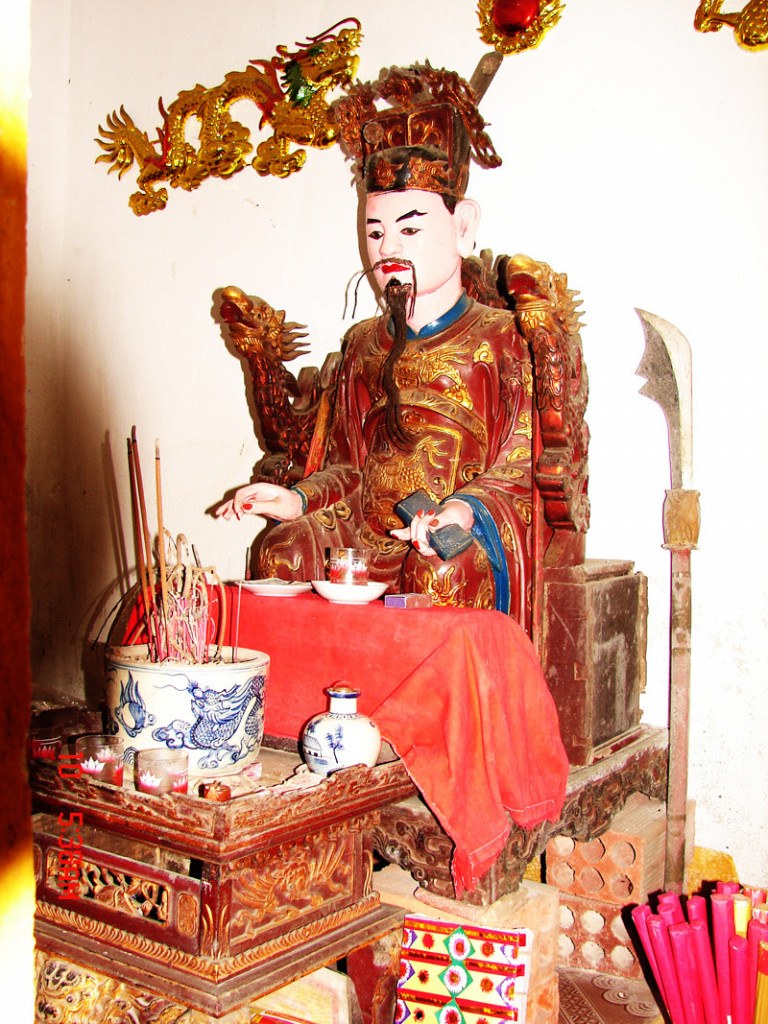
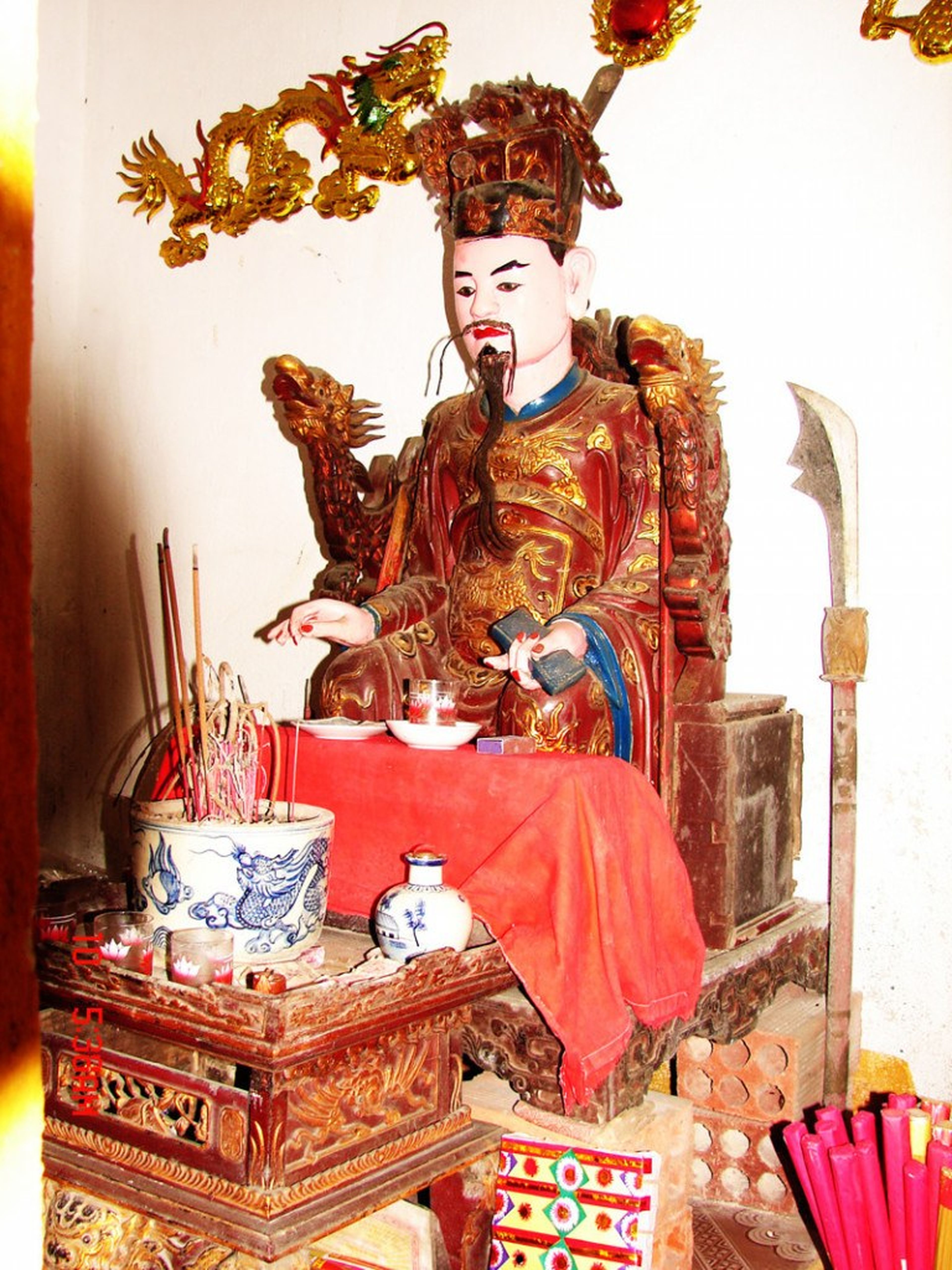
Tutelary god Vu Hoang Dao. Photo: Quang Ninh Newspaper.
The communal house still preserves many valuable artifacts, such as six royal decrees of conferment from the reign of King Tu Duc to that of King Khai Dinh, stelae, parallel sentences, horizontal lacquered boards, village conventions, etc. In addition, a number of antique ritual objects of ancient value are preserved fairly intact at the communal house.
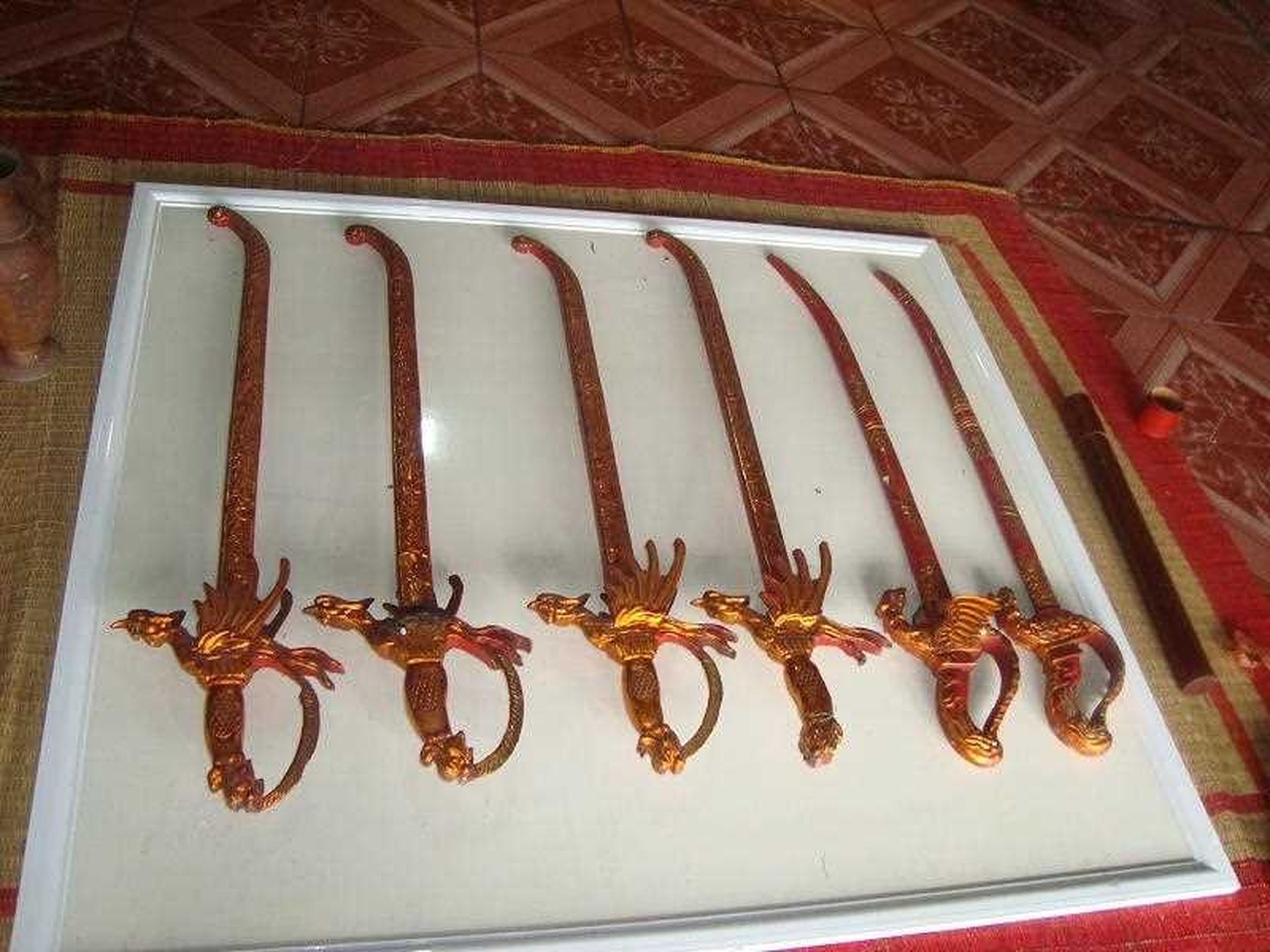
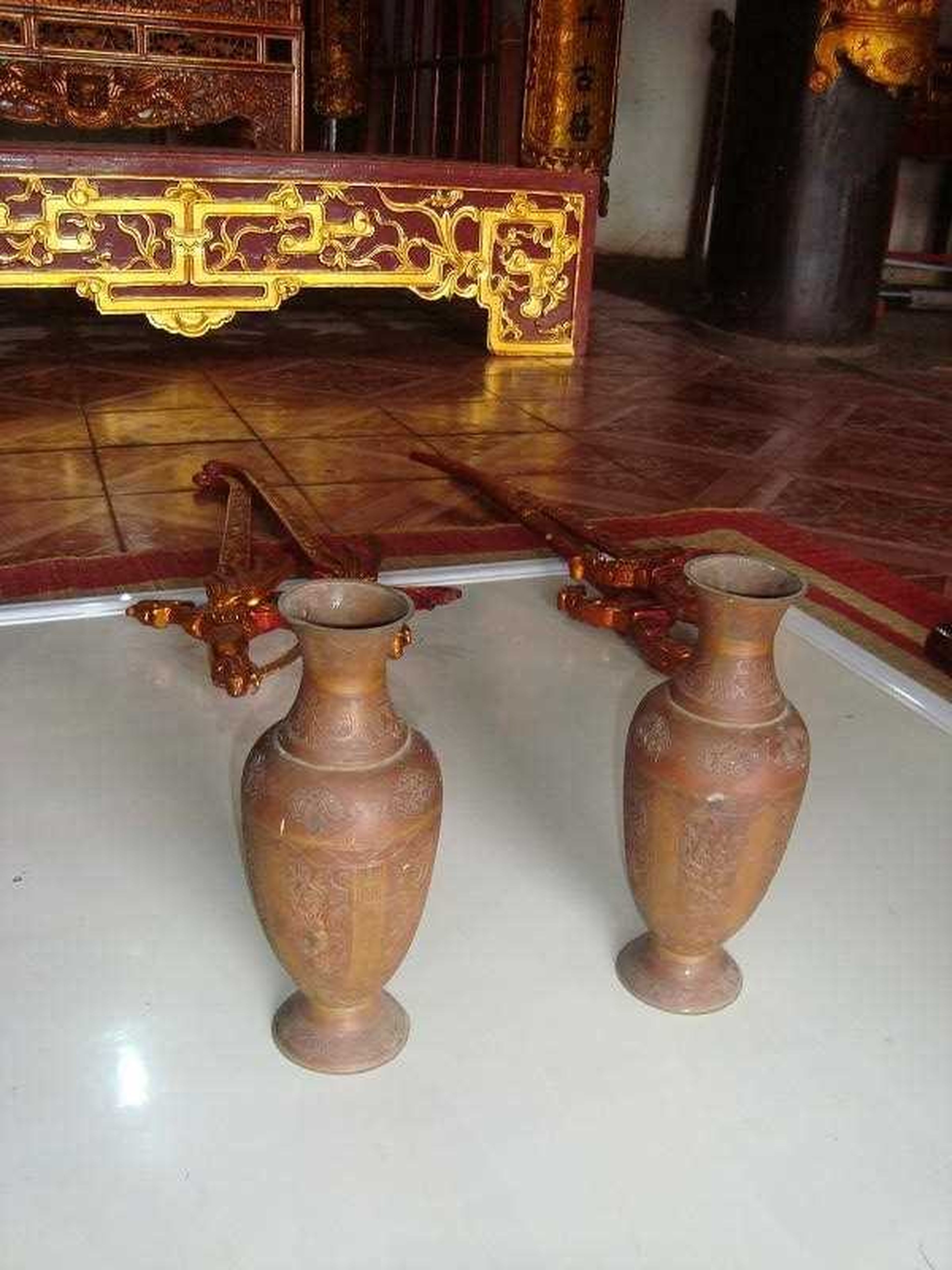
Among them are a set of six wooden swords with gold-gilded red-lacquered wooden scabbards, three wooden ancestral tablets, a wooden congratulatory text board, and two bronze vases embossed with the four sacred creatures, dragons, and phoenixes.
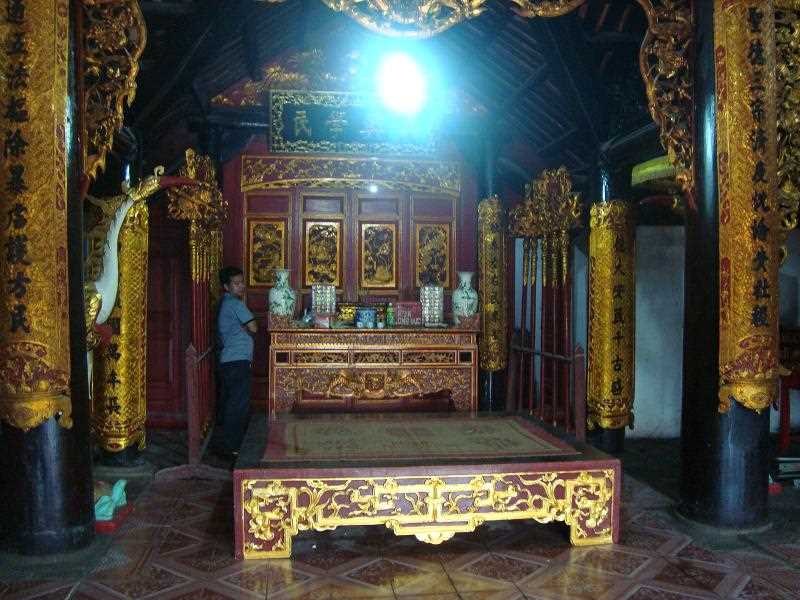
Photo: quangninh.org.vn.
According to legend, when building the communal house, the villagers requested the relics of Venerable Huyen Quang Ly Dao Tai, the third patriarch of the Truc Lam Yen Tu Zen sect at Con Son pagoda, to build a stupa in the village pagoda grounds, took his incense ashes to worship at the village communal house, and petitioned the king to confer upon him the title of village tutelary god.
Additionally, inside Hung Hoc communal house , the deity Pham Ba Linh—namely Pham Nhan, a defeated Yuan invading general—is also worshipped. Legend has it that when the villagers suffered an epidemic, they received a dream revelation from the deity demanding worship so that the disease would end.
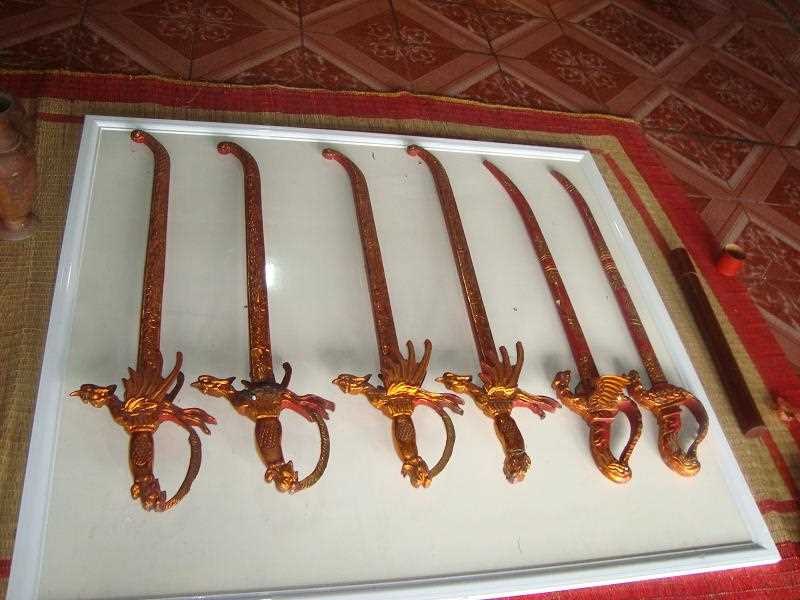
Set of wooden swords. Photo: quangninh.org.vn.
The villagers then built a shrine to worship the deity right next to the shrine of Venerable Huyen Quang Ly Dao Tai, with the meaning of using Buddhist teachings to reform the deity into blessing and protecting the villagers.
Meanwhile, the local tutelary god Vu Hoang Dao was the fifth-generation ancestor of the Vu clan in Hung Hoc village and once served as a student of the Imperial Academy (Quoc Tu Giam) during the Le dynasty. Around the late 15th and early 16th centuries, he helped the people reclaim land, founded Hung Hoc village, and became one of the 19 founding pioneers of the region.
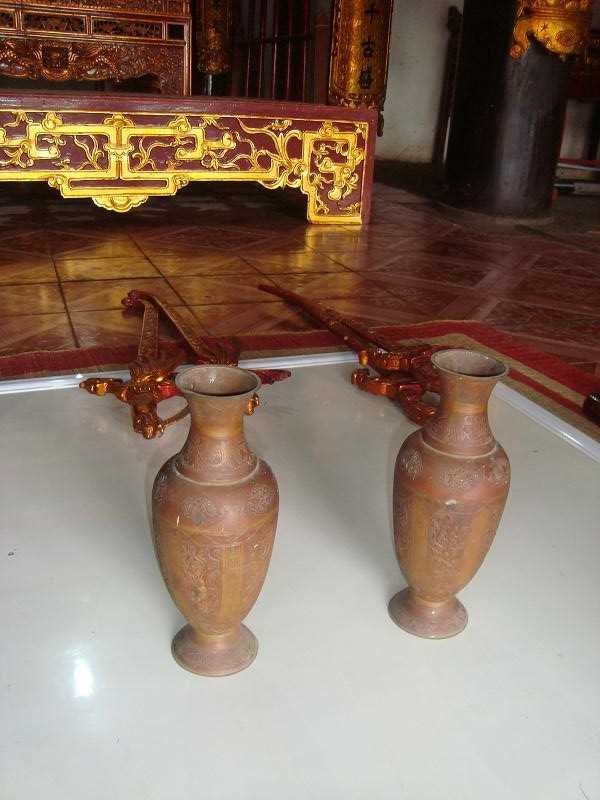
A pair of bronze vases. Photo: quangninh.org.vn.
On the stele of the Vu clan placed at the ancestral hall, his divine title is also clearly recorded as Thien Hoang Thuy Te Vu Hoang Dao Ton Than. Upon his passing, he manifested as Dong Hai God, a marine deity who protects people navigating rivers and seas and wards off epidemics for the people.
The land reclamation and settlement achievements of tutelary god Vu Hoang Dao are clearly reflected in the parallel verses at Hung Hoc Communal House. To commemorate his contributions, the villagers of Hung Hoc carved a statue and built a shrine called Chinh Phu Shrine. The deity was bestowed by King Khai Dinh the title of Dong Hai God, a local tutelary god of Middle Rank (Trung dang than), endowed with sharp intellect and distinguished appearance.
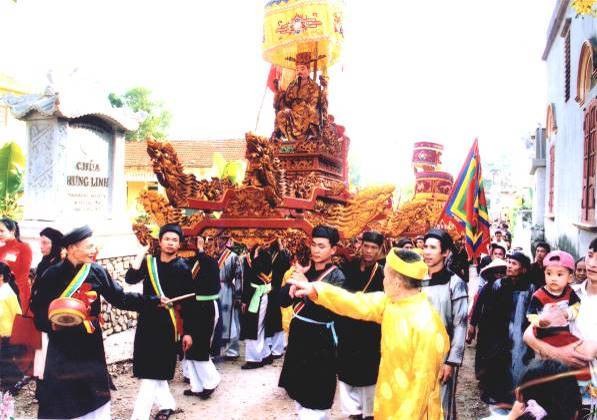
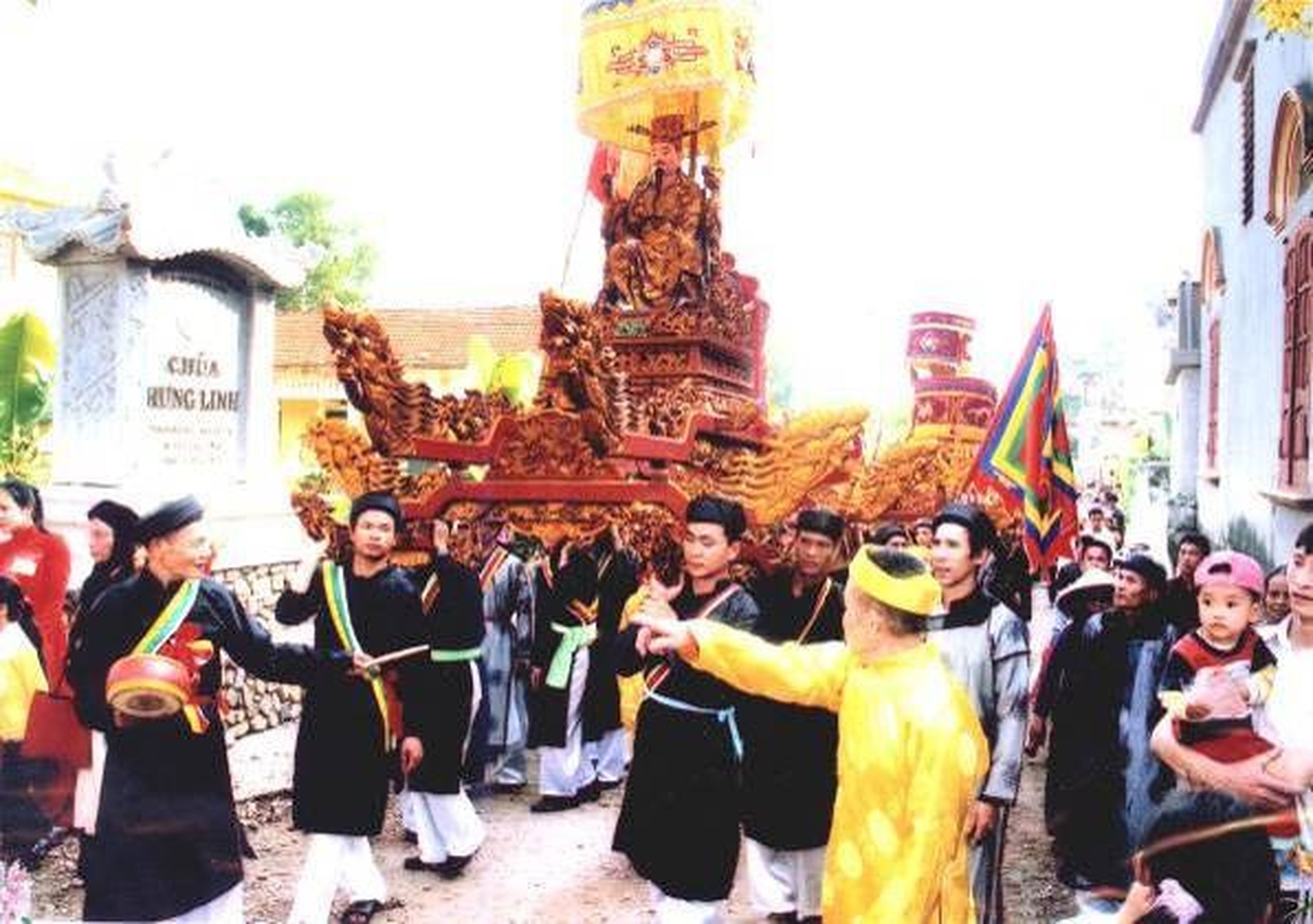
The Dai Ky Phuc Festival of Hung Hoc Communal House. Photo: Quang Ninh Newspaper.
To reach the communal house, visitors travel by road from Ha Long City along the Ha Long – Hai Phong Expressway to the Hoang Tan – Tan An interchange, drive about 6 km, turn into the center of Quang Yen Town, and then cross the Song Chanh Bridge for about 2 km to arrive at the Hung Hoc Communal House historical relic.