

Nestled between two cliffs in Ha Long Bay, Ho Dong Tien Cave stands out not only for its scenic beauty but also for its immense scientific, geological, and geomorphological research value. It is a favorite cave among many researchers.
Ho Dong Tien Cave – A Fairyland in the Heart of Ha Long Bay Heritage
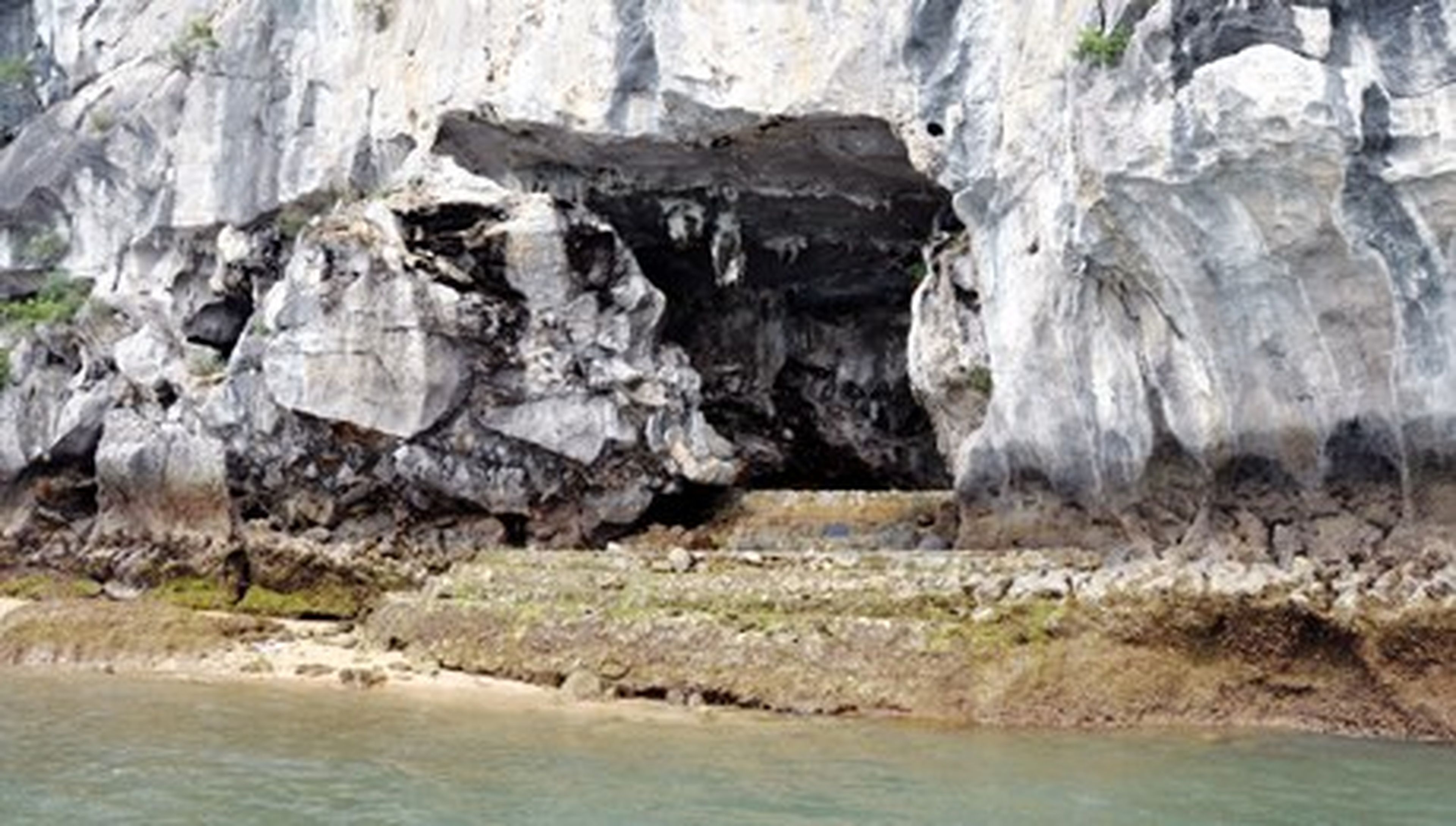
Ho Dong Tien Cave lies just above sea level, with its entrance reinforced to prevent flooding. To explore the cave, visitors embark on a journey through three chambers. The passages between the chambers are extremely narrow, allowing only one person to pass through at a time, and the cave grows darker the deeper one goes.
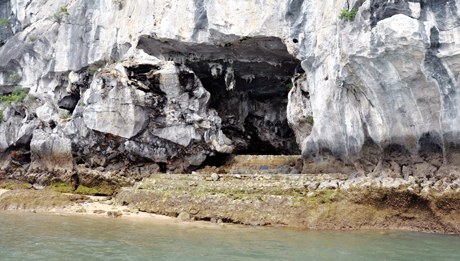
Outside the cave entrance. Photo: Quang Ninh Newspaper.
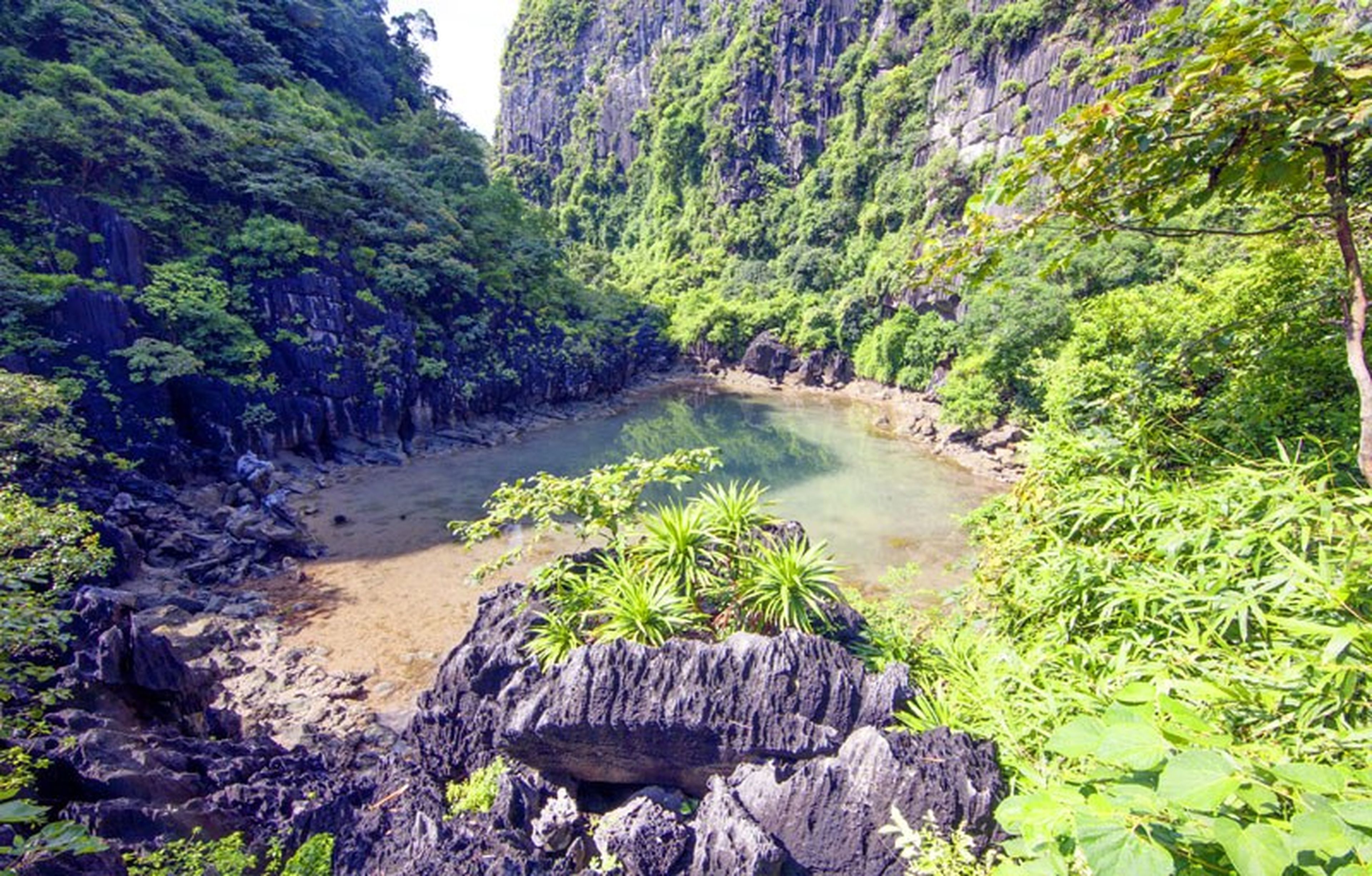
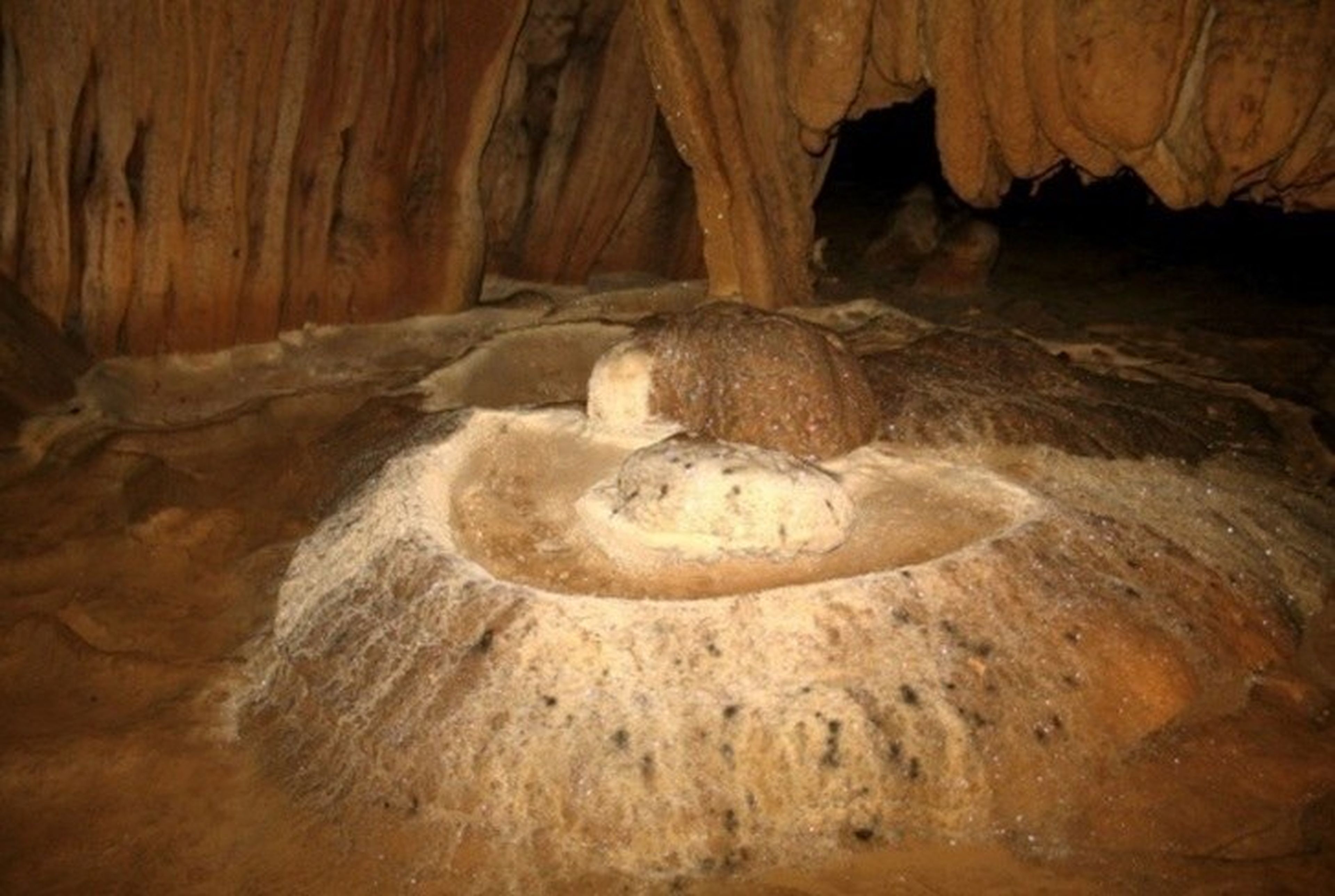
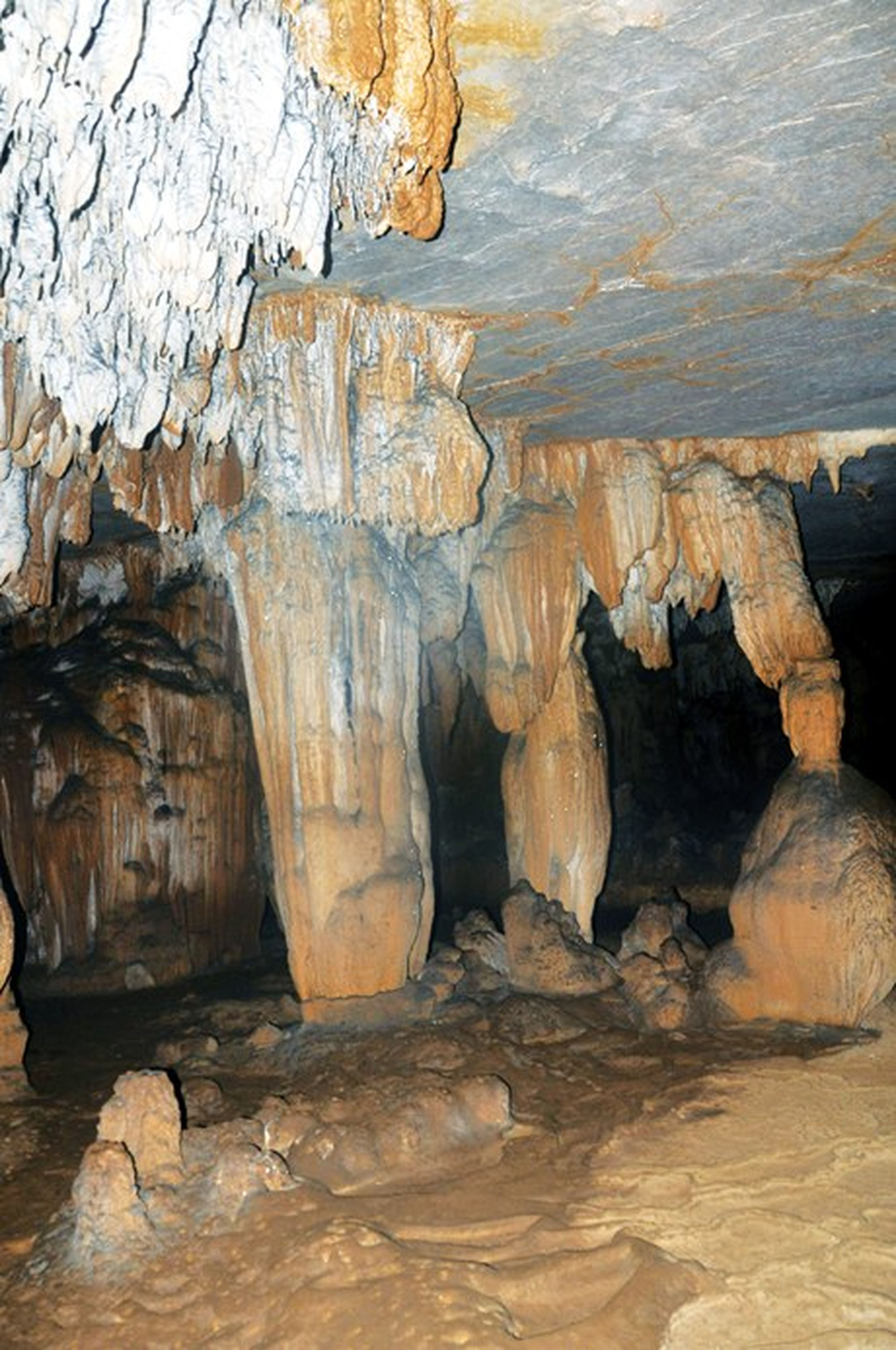
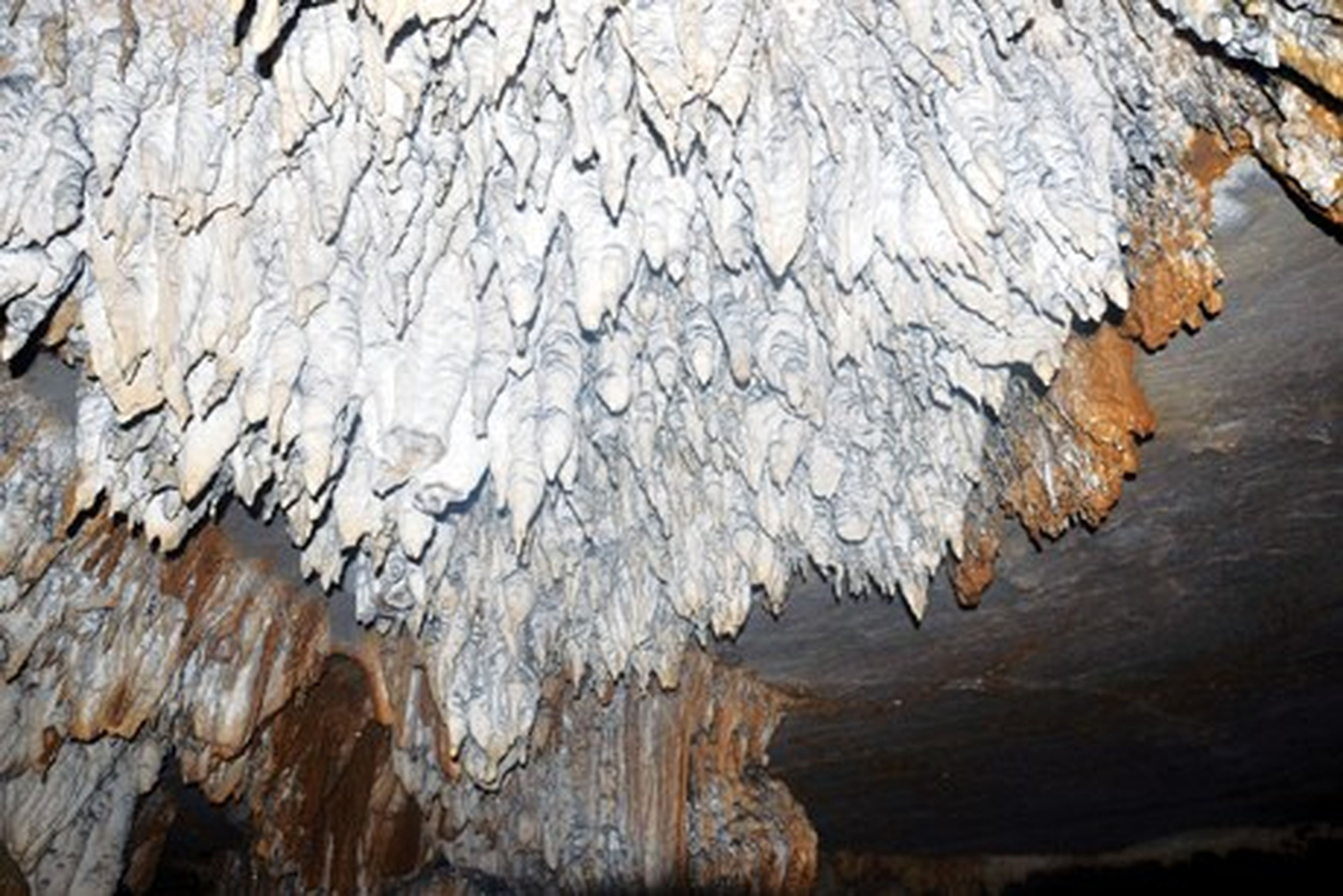
From the second chamber of the cave, there are two openings leading to an enclosed marine lake (áng) surrounded by limestone mountains. The limestone mountains harbor diverse flora and fauna. In addition to its scientific significance in geology, geomorphology, and biodiversity, the cave boasts a uniquely distinct beauty. The stalactites inside have had little exposure to light, making them glisten brilliantly when illuminated by flashlights.
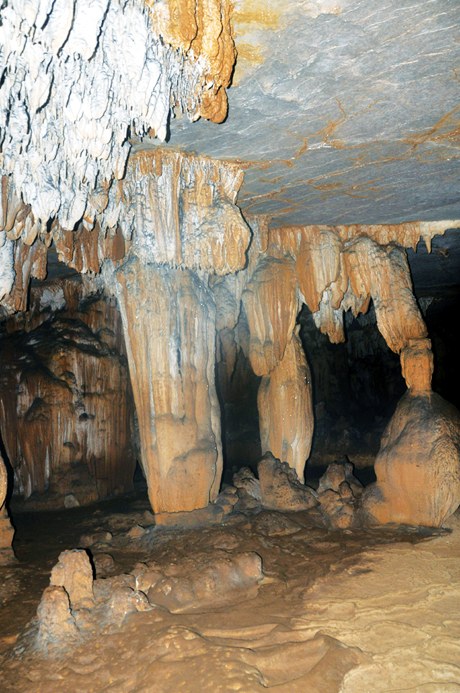
Numerous stalactite columns rising up. Photo: Quang Ninh Newspaper.
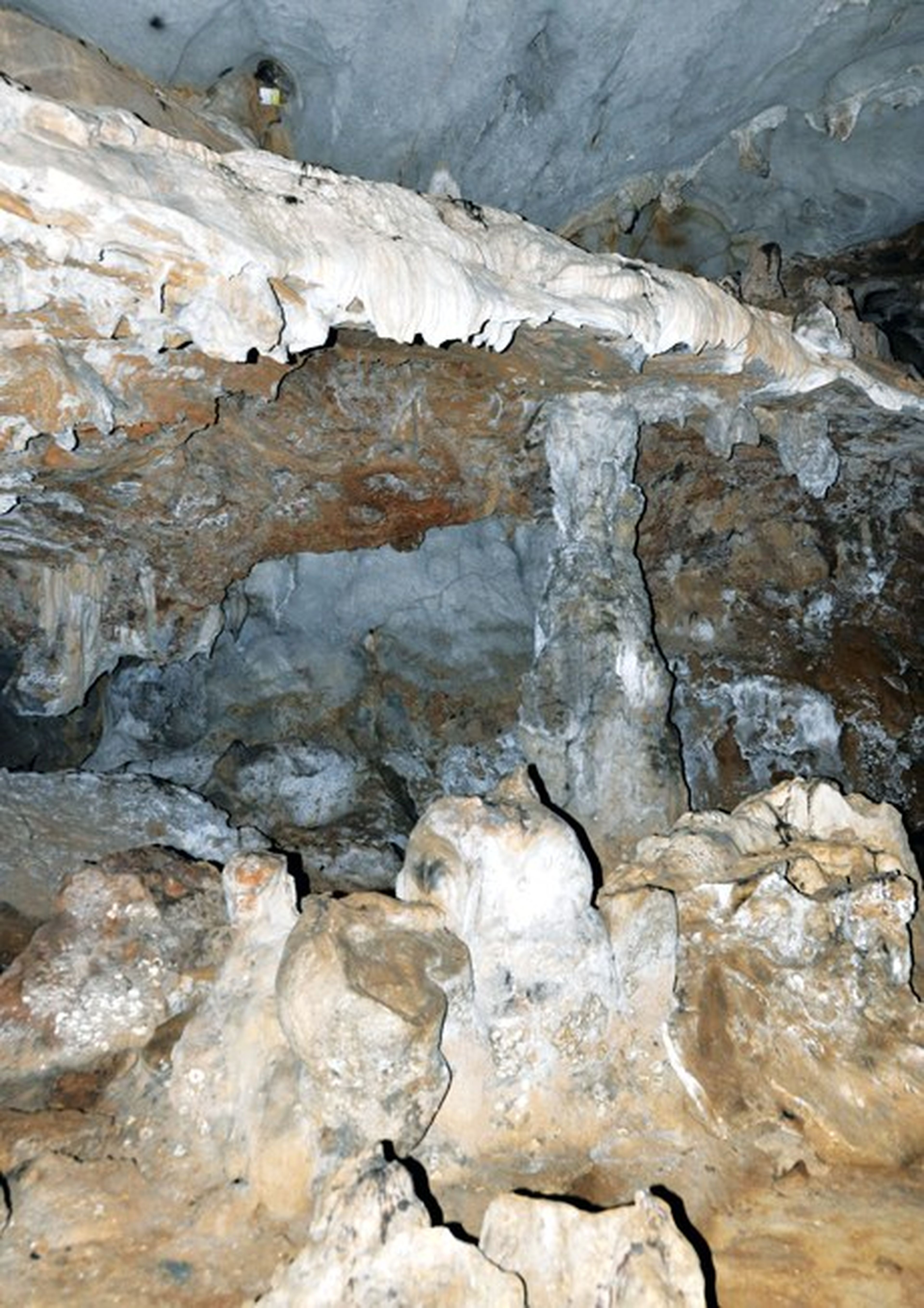
The stalactites in Ho Dong Tien Cave were formed across various historical epochs and continue to evolve. On the walls, remnants of multiple ancient cave floors resembling lofts can still be seen, formed through millions of years of erosion by underground water streams.
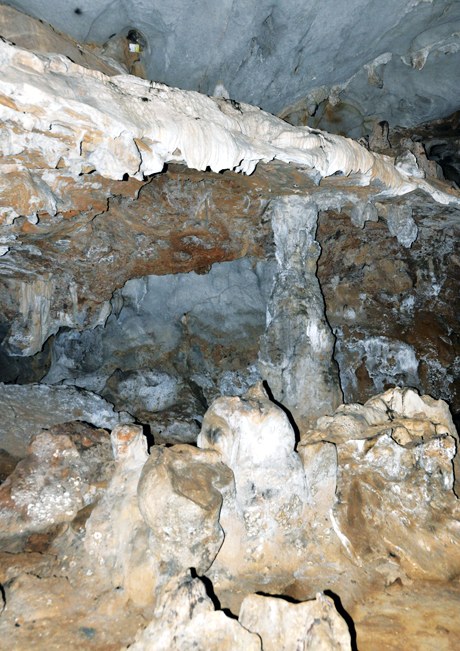
Multiple loft-like ledges inside the cave. Photo: Quang Ninh Newspaper.
However, many parts of the cave floor remain filled with sediments and are yet to be explored. It is precisely the continuous transformation of the speleothems that has drawn many geologists and archaeologists here for research.
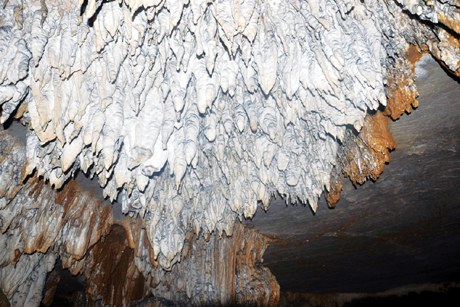
Glistening stalactites. Photo: Quang Ninh Newspaper.
These stalactite columns form the main chambers. Some sections of the passage are very tight, low, and narrow, requiring visitors to stoop down to pass through. Inside the cave, the air is humid and dimly lit, requiring flashlights to navigate. The ground is also quite slippery, so visitors are often advised to wear appropriate footwear when touring the site.
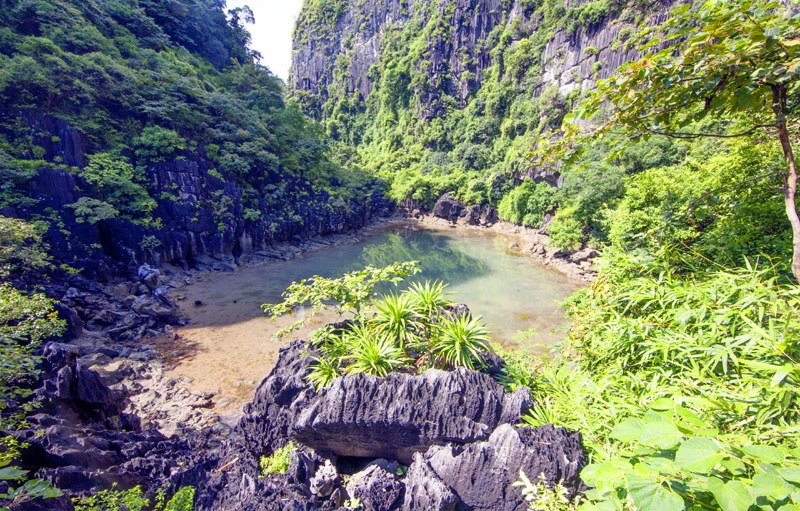
The lake inside the grotto. Photo: Quang Ninh Newspaper.
Inside the cave, numerous column-like stalactites hang down to touch the ground, suggesting that an older cave floor lies beneath, along with many stalagmites rising to support these columns. Half of the lower cave remains buried in sediment—an unexplored mystery.
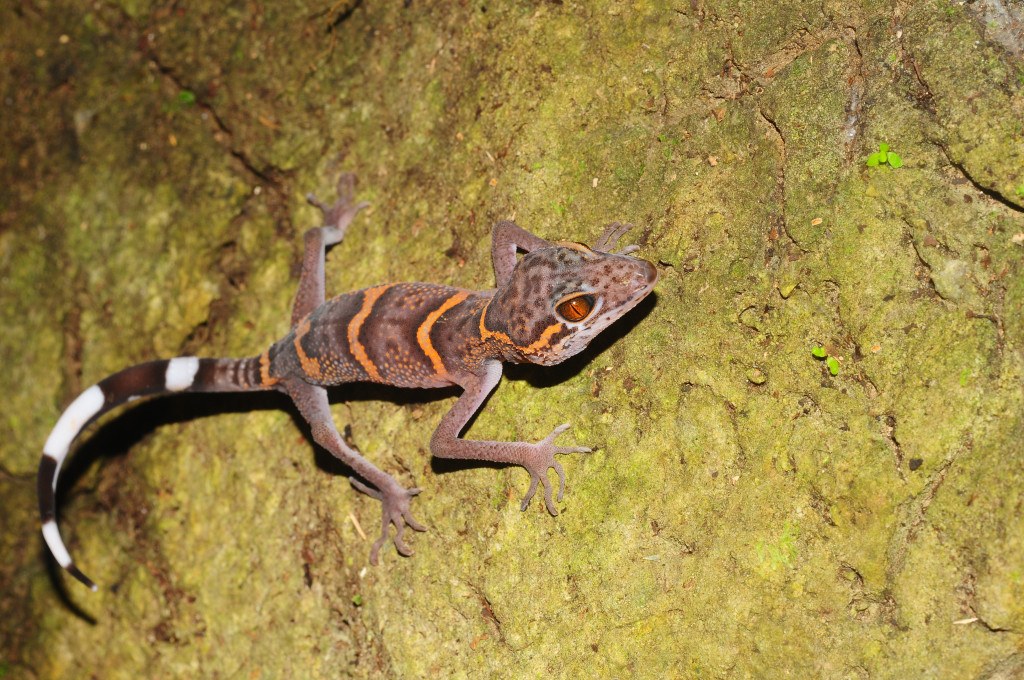
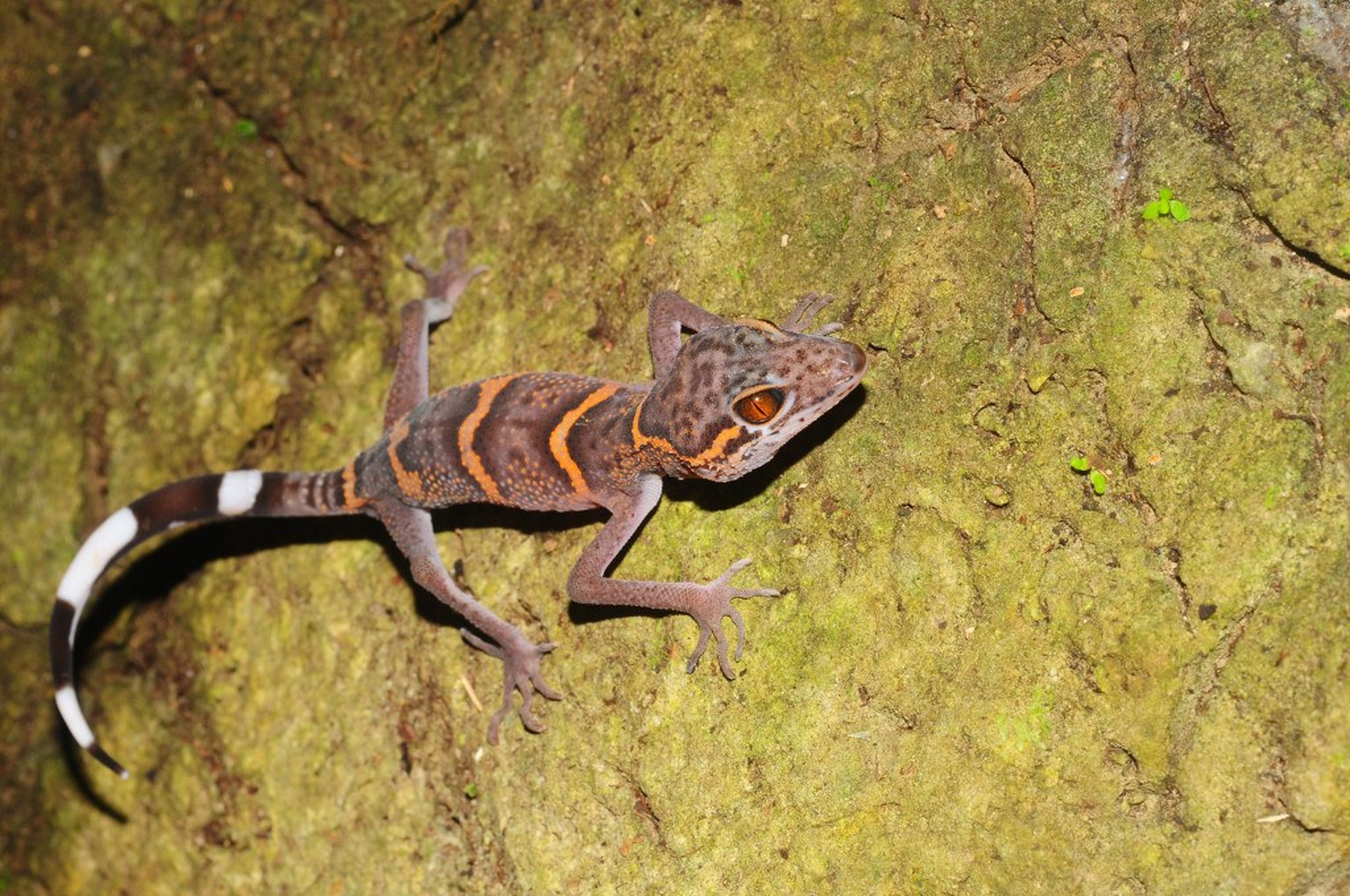
The rare Cat Ba leopard gecko, one of the species living in the cave. Photo: Quang Ninh Newspaper.
From the second chamber of Ho Dong Tien Cave, two openings lead out to a lake surrounded by limestone mountains. Lakes of this type are called "áng" (marine sinkholes/doline lakes). In essence, this is a karst doline with a submerged bottom.
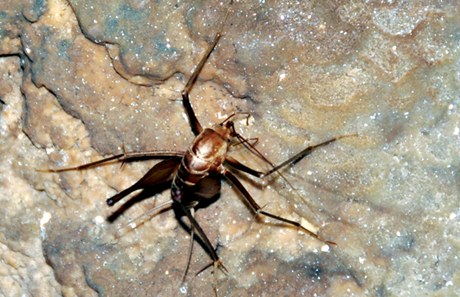
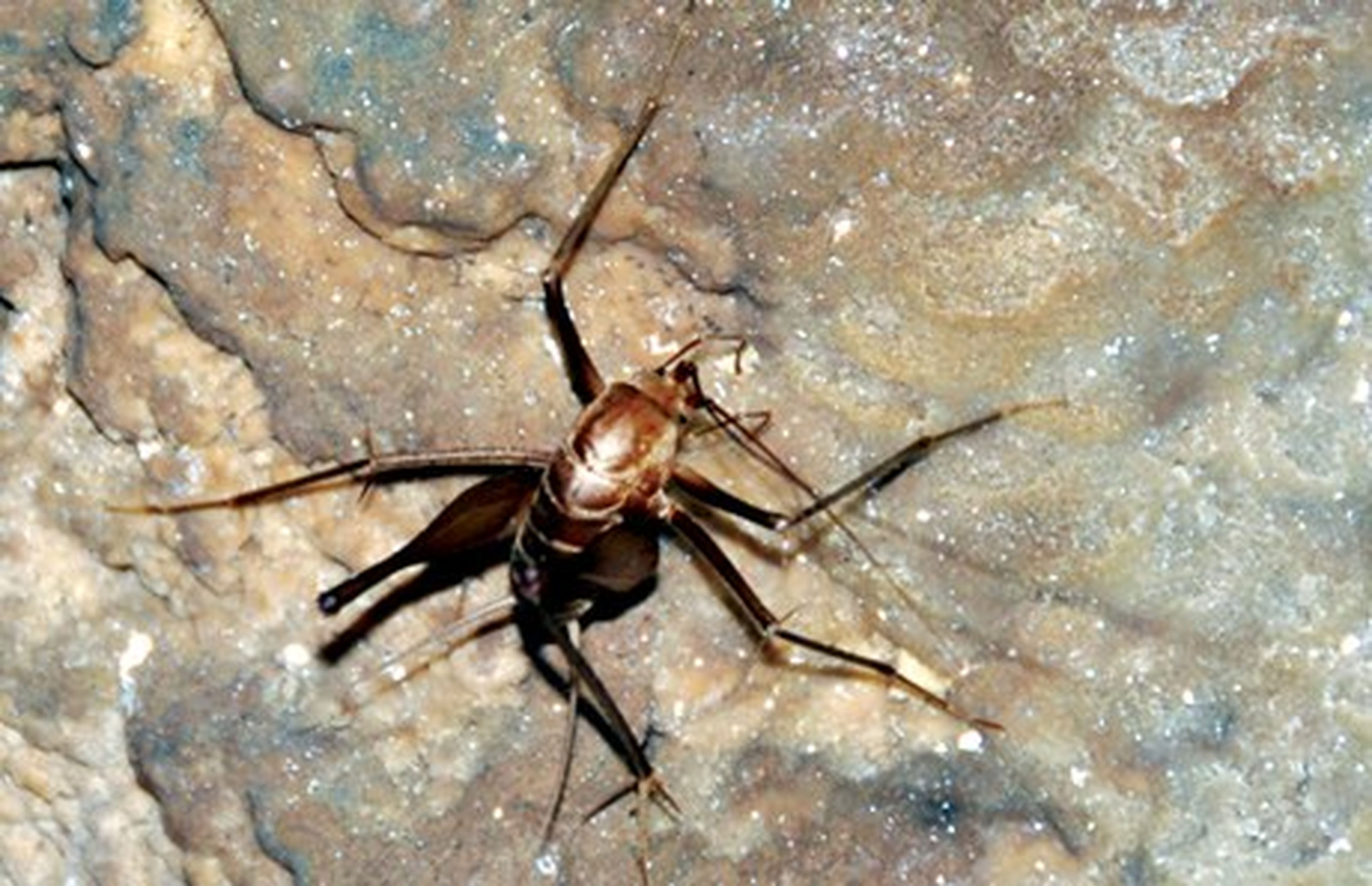
Cave cricket in Ho Dong Tien. Photo: Quang Ninh Newspaper.
It represents a special ecological environment, both isolated and connected with the sea through a system of underground caves and fissures in the limestone. Consequently, these marine lakes usually host a unique ecosystem with numerous endemic species.
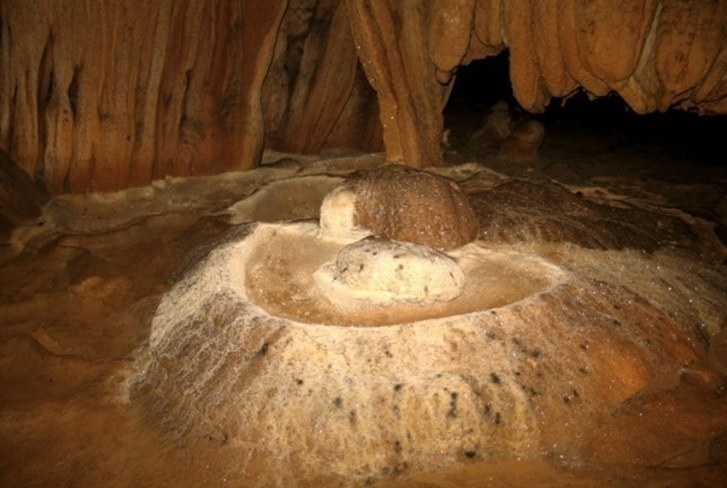
Photo: Ha Long Bay.
Legend has it that fairies once descended to earth to bathe in the lake and sleep on the stone slabs inside the cave, which gave rise to the name “Ho Dong Tien” (Fairy Lake Cave).
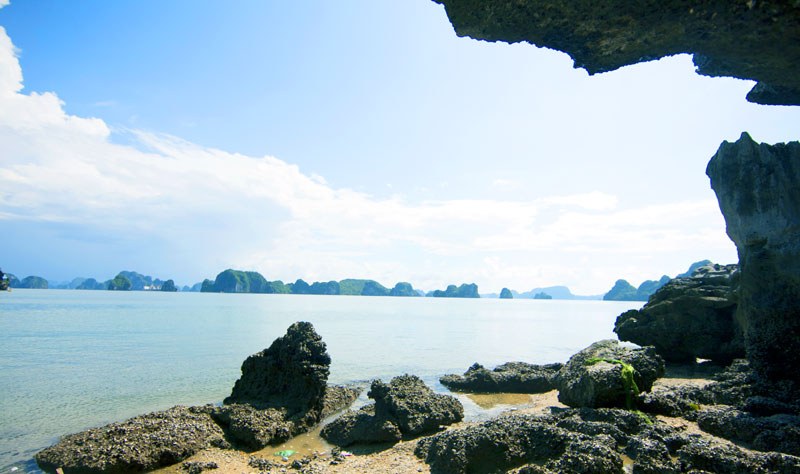
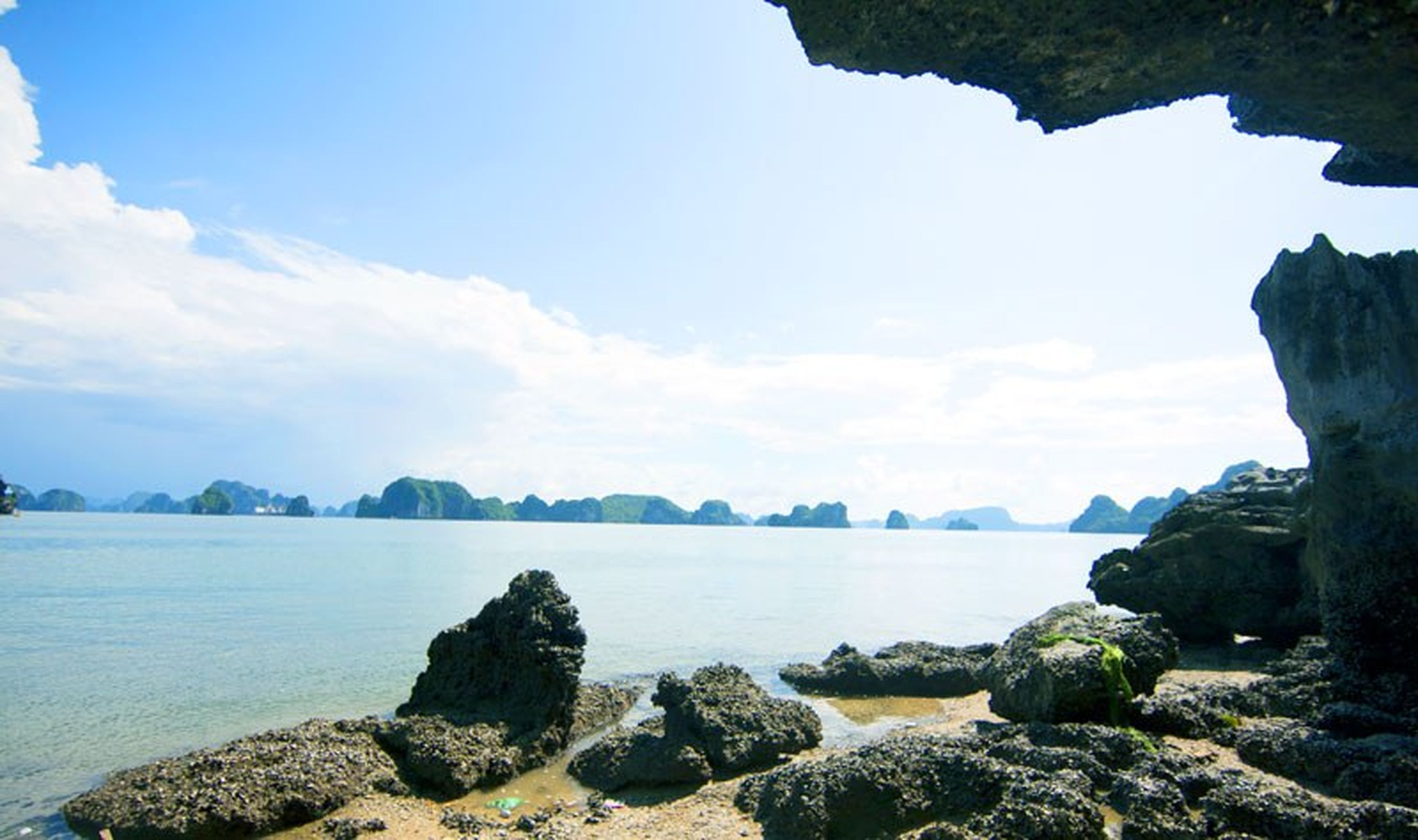
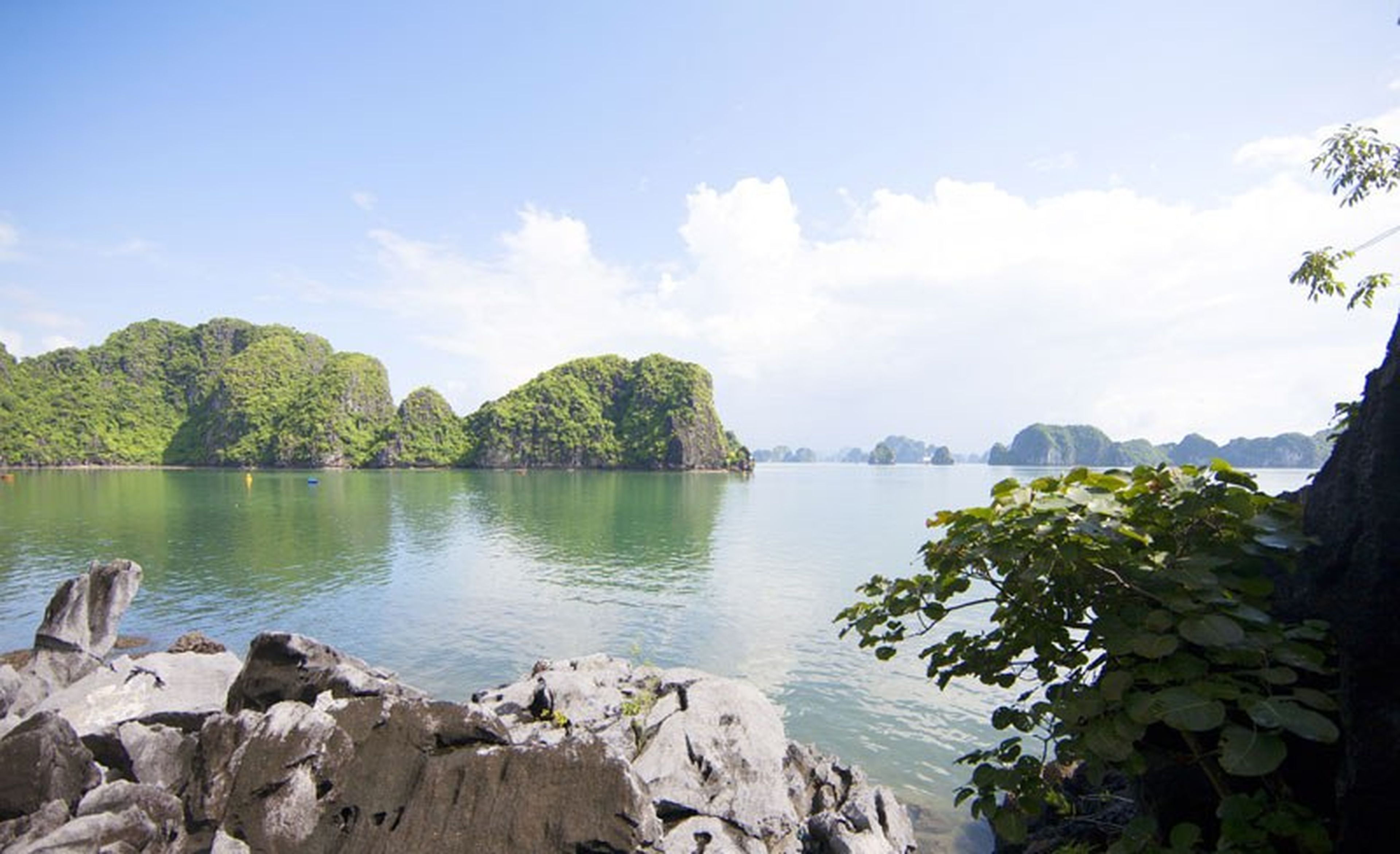
Landscape outside the cave. Photo: Quang Ninh Newspaper.
Ho Dong Tien Cave was once a favored retreat for those seeking seclusion from the outside world. In the 20th century, Vietnamese and Chinese pirates used the cave to conceal their treasures. In the 1950s, the Viet Minh utilized it as a hideout.
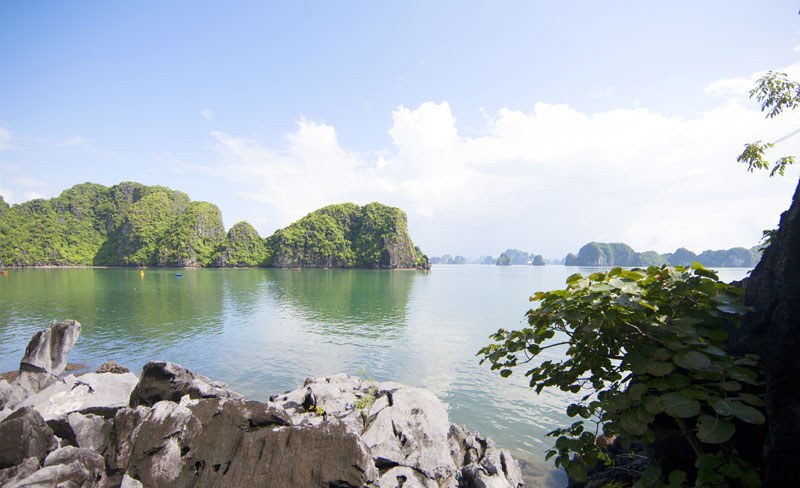
The cave entrance viewed from inside. Photo: Quang Ninh Newspaper.
The site offered all the essential conditions for concealment and defense: a source of fresh water, shelter from wind and rain, difficult access, concealment of activities from outside observation, and small, narrow tunnels that made breach or infiltration extremely difficult.