1Introduction to Trình Pagoda
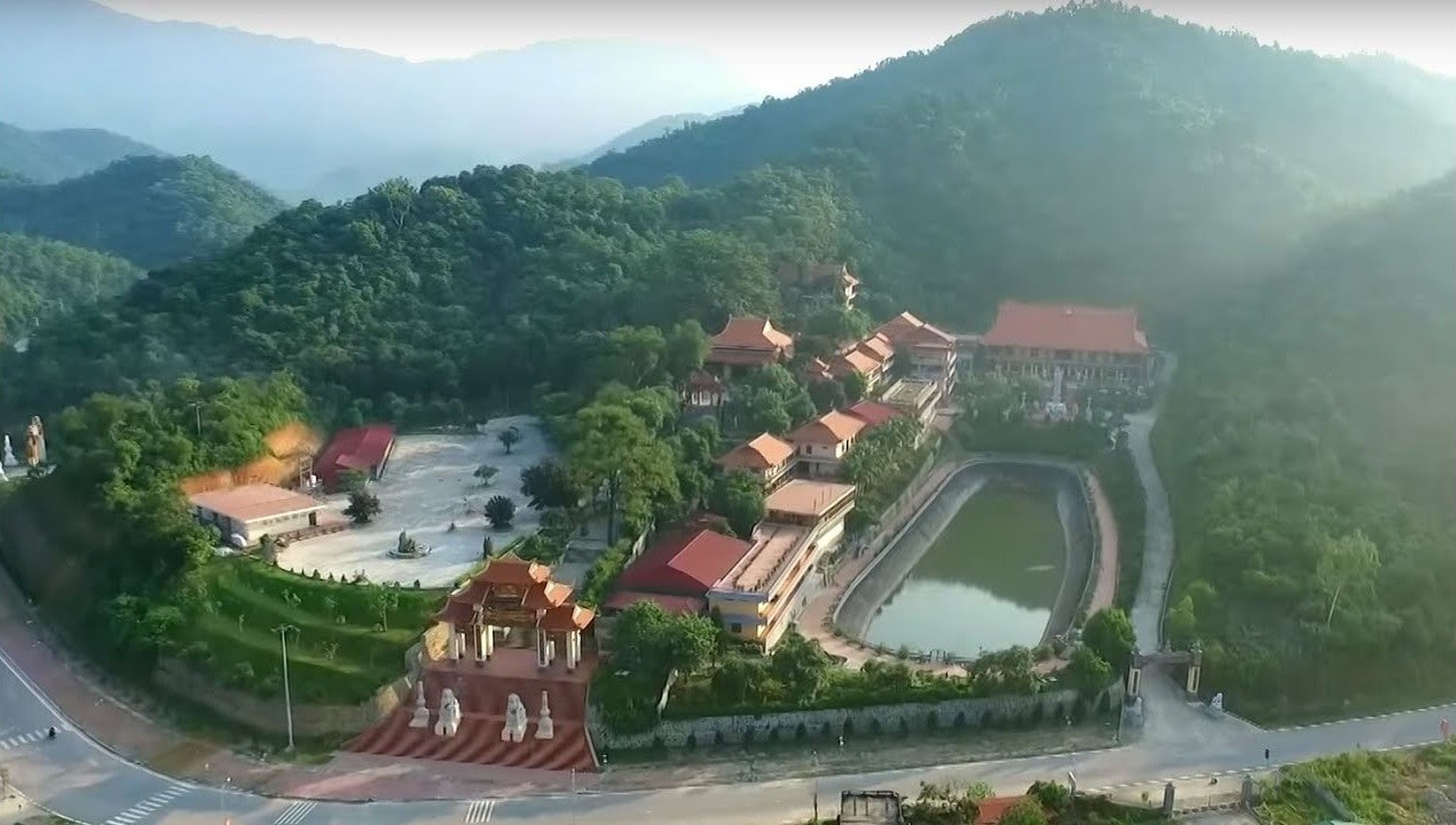
At the beginning of the pilgrimage to the sacred summit of Yên Tử, visitors will be immediately impressed by Trình Pagoda (also known as Bí Thượng Pagoda), the gateway to Yên Tử. The pagoda was built with considerable care, featuring unique architecture and a long history. In the past, King Trần Nhân Tông also stopped here to rest before continuing to Yên Tử Pagoda.
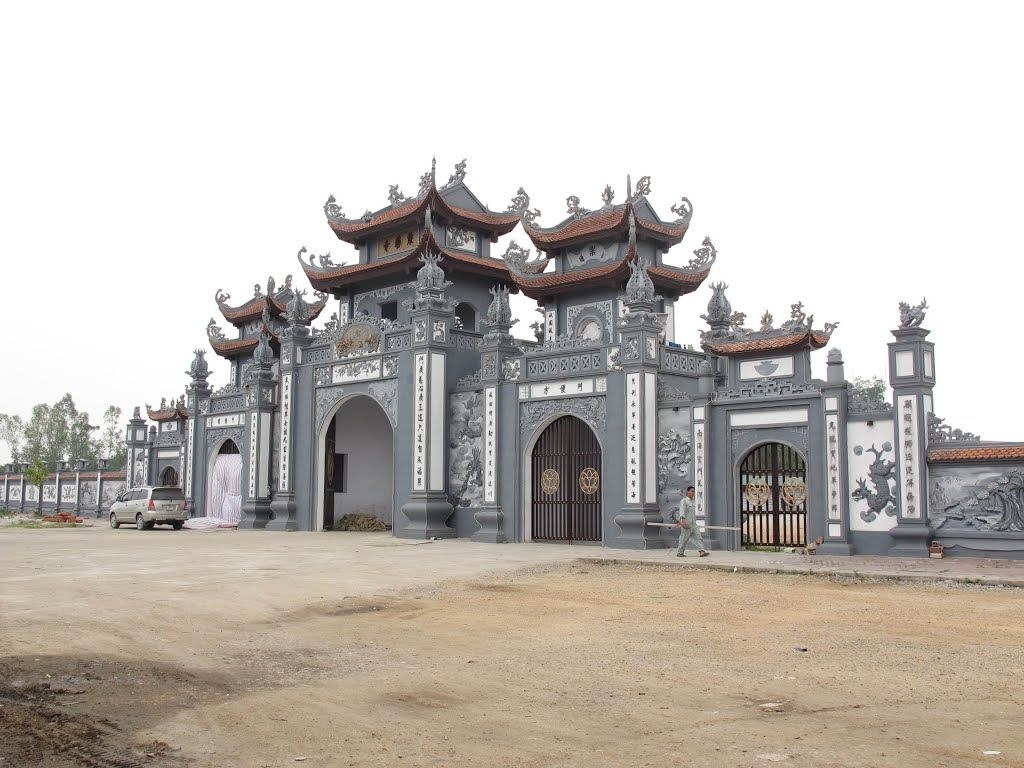
Trình Pagoda, where King Trần Nhân Tông once stopped to rest before continuing to Yên Tử
- Address: Bí Trung, Phương Đông, Uông Bí, Quảng Ninh
Read more: The most detailed guide to taking the Yên Tử cable car
2How to get to Trình Pagoda
First, before visiting Trình Pagoda, you will need to travel by long-distance transport such as a plane, coach, car, or motorbike… Trình Pagoda is located on a hillside in Bí Thượng Village, formerly part of Bí Giàng Canton, Yên Hưng District, Quảng Ninh Province; it is now in the Bí Thượng area, Phương Đông Ward, Uông Bí City, Quảng Ninh Province. Visitors wishing to visit the site can travel via National Highway 18, the Hạ Long–Hải Phòng Expressway, and the Nội Bài–Hạ Long Expressway/National Highway 18.
3Exploring Trình Pagoda
3.1 Trình Pagoda’s long history
Trình Pagoda was originally built during the Later Lê Dynasty and faced southwest. This was the birthplace of the Trúc Lâm Zen sect, founded by Điều Ngự Giác Hoàng Trần Nhân Tông on the basis of absorbing and inheriting the quintessence of Indian and Chinese Buddhism, creating an engaged Zen tradition imbued with Vietnamese national identity.
Yên Tử Trúc Lâm Zen teaches that the Buddha exists within one’s own Mind, not somewhere in a distant heavenly realm or in another lifetime. The Buddha is simply a Teacher who Shows the Way, not a deity who grants blessings or brings misfortune. If one lets the Mind become calm and clear, releases all delusions, greed, anger, and ignorance… and lives with a peaceful, pure original nature, wisdom and insight will arise, ignorance will be swept away, suffering will end, and one will attain enlightenment and become a Buddha.
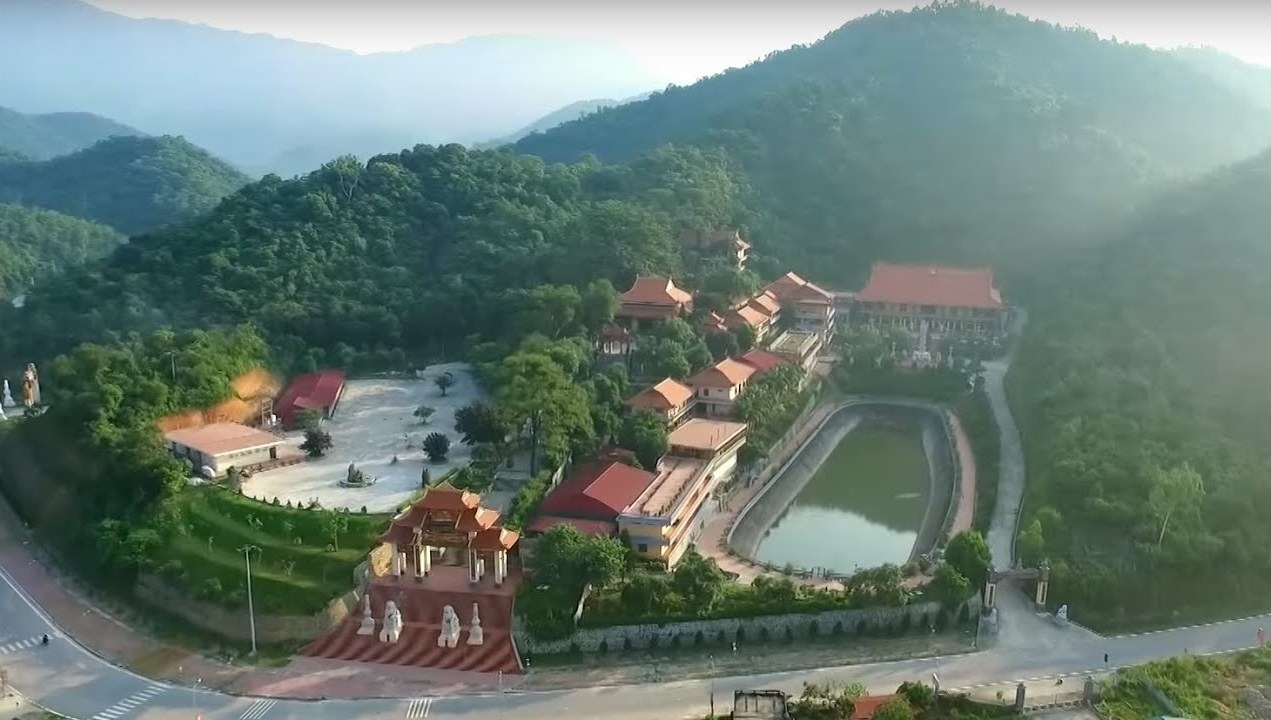
Trình Pagoda is the birthplace of Yên Tử Trúc Lâm Zen
The Buddha is none other than ourselves; there is no need to seek him somewhere far away outside. With this perspective, Trúc Lâm Zen truly takes people as its foundation, respecting and emphasizing human values. Practicing the Ten Wholesome Deeds, as advocated by the Trúc Lâm Zen sect, became a moral standard. Trúc Lâm Zen also soon became the ideological and moral foundation of a golden era during the Trần Dynasty.
Around the beginning of the 19th century, the pagoda was rebuilt on the foundation of the old one in the shape of the Chinese character “Nhất” (一), but on a smaller scale. At the beginning of the 20th century, the pagoda was damaged by fire. Thanks to the devotion of Buddhist followers from the Bùi family, it was rebuilt in the shape of the character “Đinh” (丁), wider than the previous foundation, consisting of three bays in the Front Hall and one bay in the Rear Sanctuary.
During the resistance war against the French colonialists, Trình Pagoda was almost completely destroyed, with only one ancient tower remaining. In 1993, thanks to the merit and contributions of local residents, the pagoda was rebuilt in the style of a single-story three-bay house, with reinforced-concrete beams and columns and traditional tiled roofing. Bí Thượng Pagoda was subsequently renovated and made more spacious in 1999.
At the beginning of the 1990s, a major road to the sacred Yên Tử mountain, approximately 14 kilometers long, was opened from the Dốc Đỏ intersection, connecting National Highway 18A through Cửa Ngăn to the Giải Oan Bus Station and linking to the pilgrimage route to Yên Tử. In 2006, thanks to state investment and the contributions of visitors from all over, Trình Pagoda was built and expanded on a large scale, becoming spacious and impressive as it is today. The pagoda also quickly became the place for the “pay respects on the way there, give thanks on the way back” ritual practiced by officials and Buddhists whenever they came to make a pilgrimage or admire Quảng Ninh’s sacred mountains.
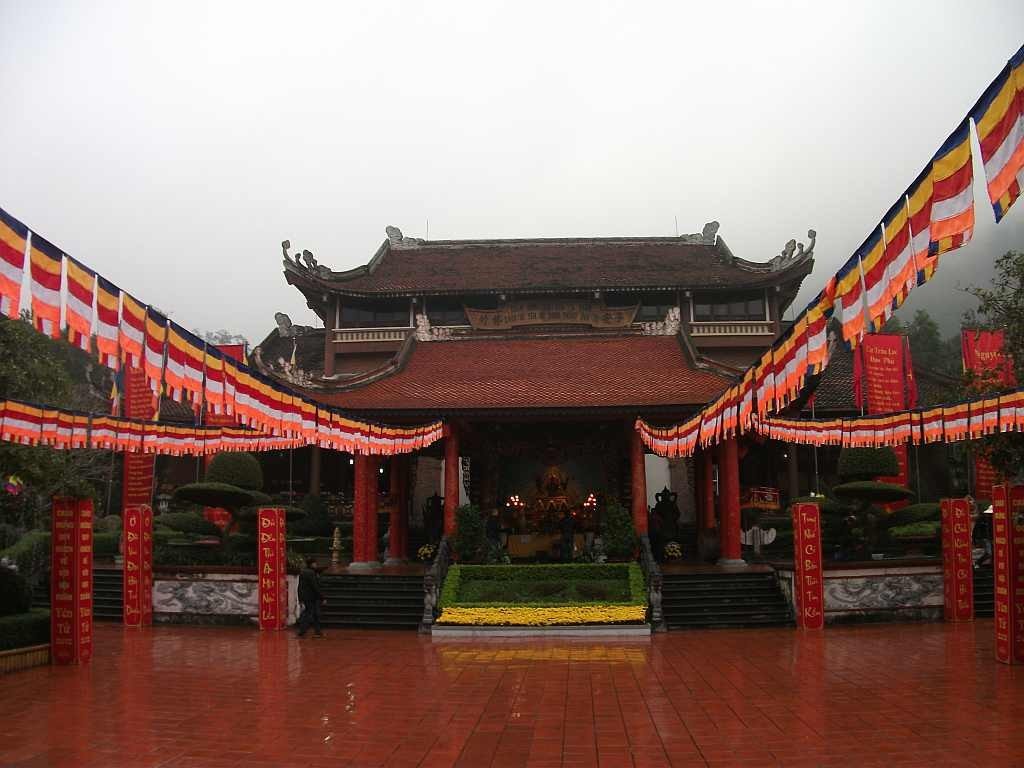
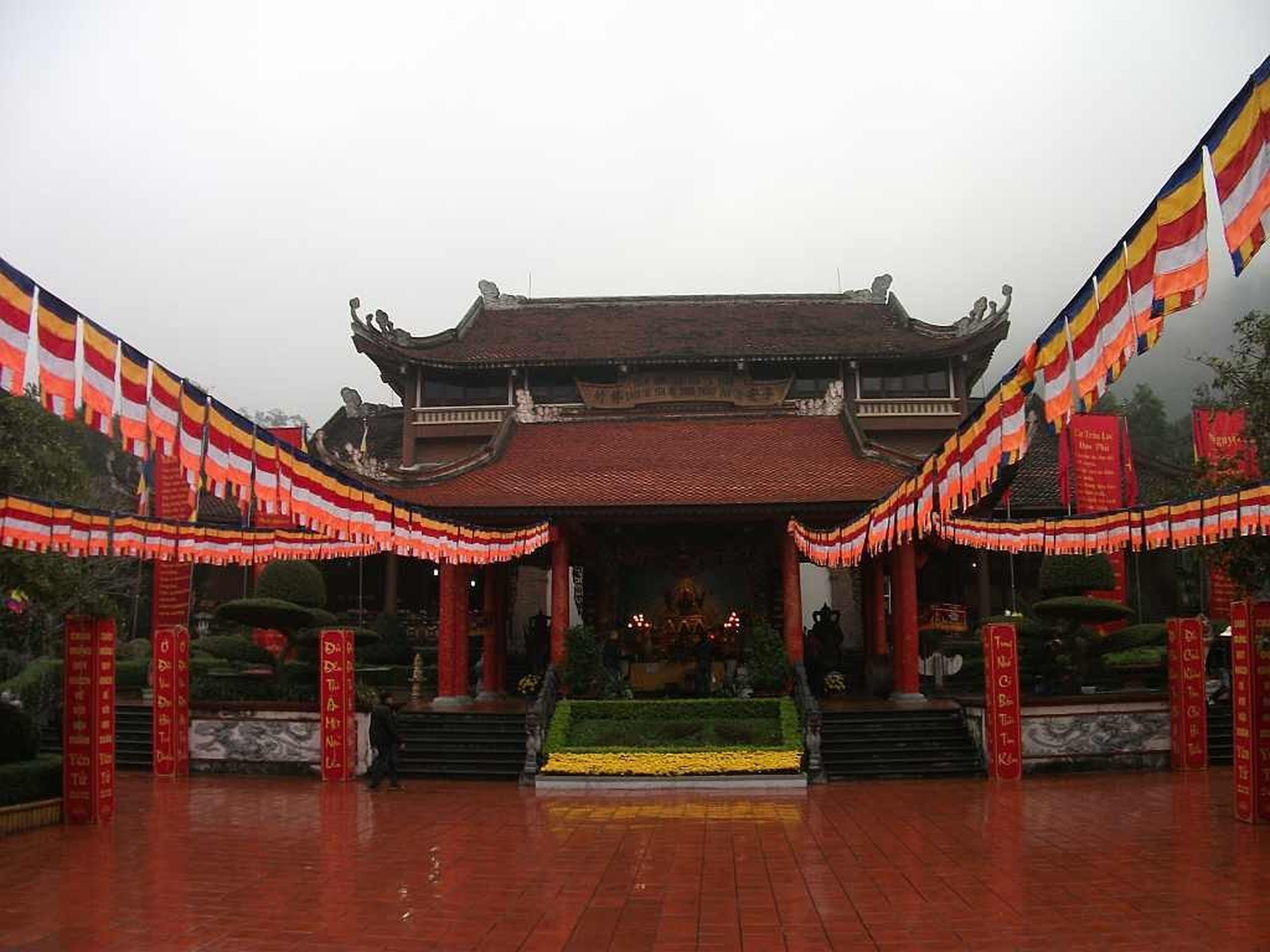
Trình Temple and Pagoda, where the “go to pay respects, return to report” ritual is practiced during early-year pilgrimages to worship the Buddha
Read more: The sacred shrine dedicated to Đức Ông Trần Quốc Nghiễn in Hạ Long
3.2 Exploring the architecture
The former Trình Pagoda was built in the shape of the character “Nhất” (一), measuring 4.4m from east to west and 5m from north to south. Its wooden-frame structure rested on stone bases and consisted of two main trusses and two auxiliary trusses. The two main trusses were 2.8m apart, while the auxiliary trusses were 0.8m from the main trusses. Today, the first architectural feature visitors can appreciate is the “inner Công (工), outer Quốc (国)” layout, comprising the Front Hall, the Main Sanctuary dedicated to the Buddha, the left and right side halls dedicated to the Eighteen Arhats, an Ancestor’s House dedicated to the Three Founders of Trúc Lâm, a Trần Dynasty worship hall, and an altar dedicated to the Three Holy Mothers and the Three Kings according to the nation’s traditional folk beliefs.
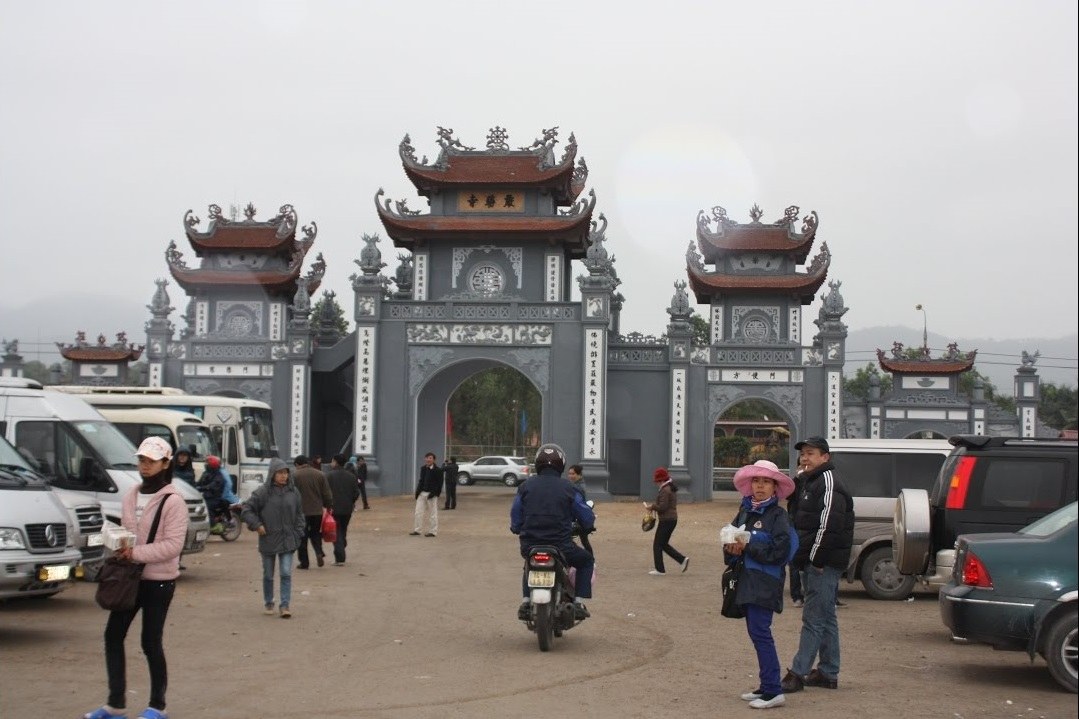
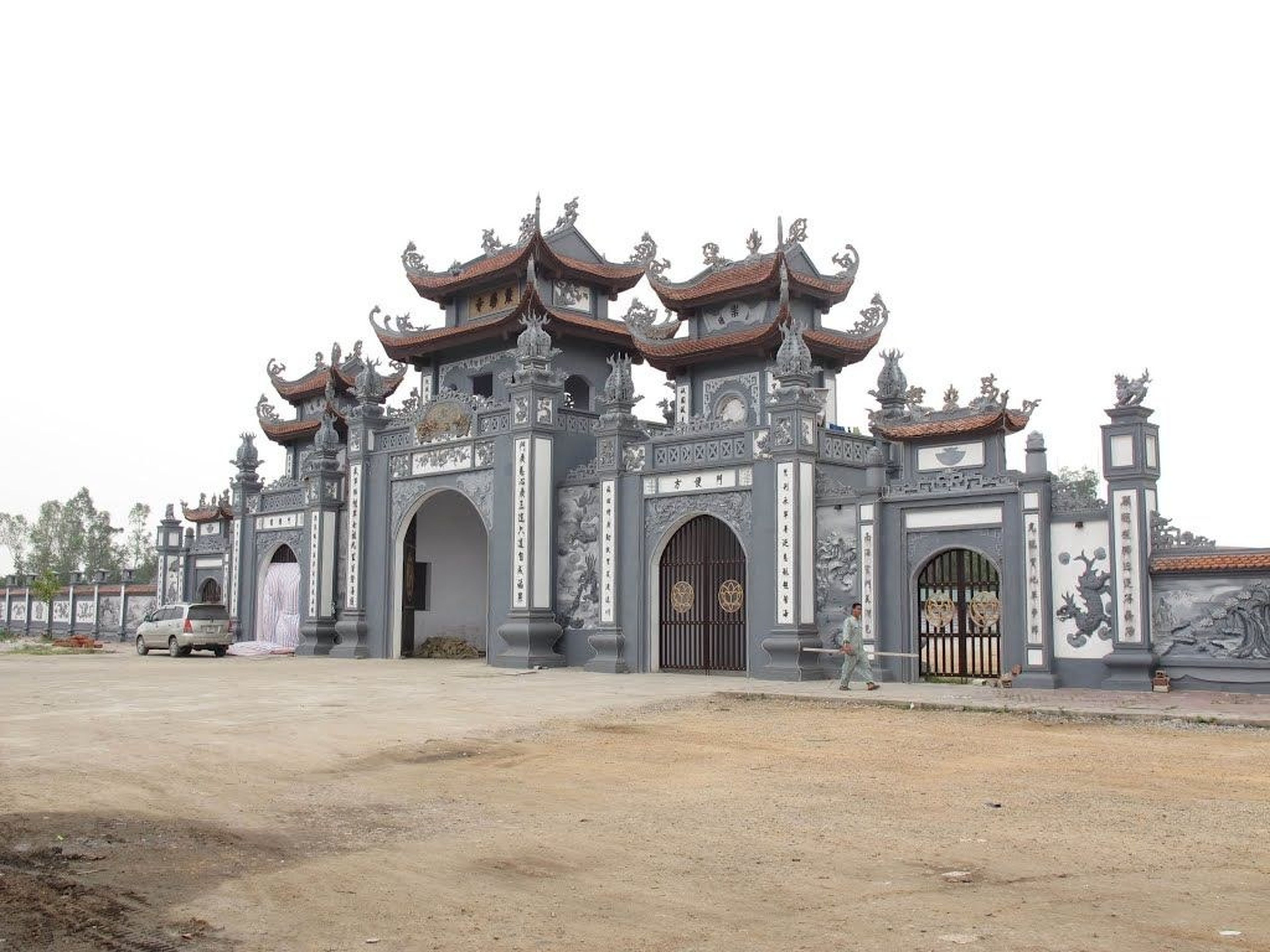
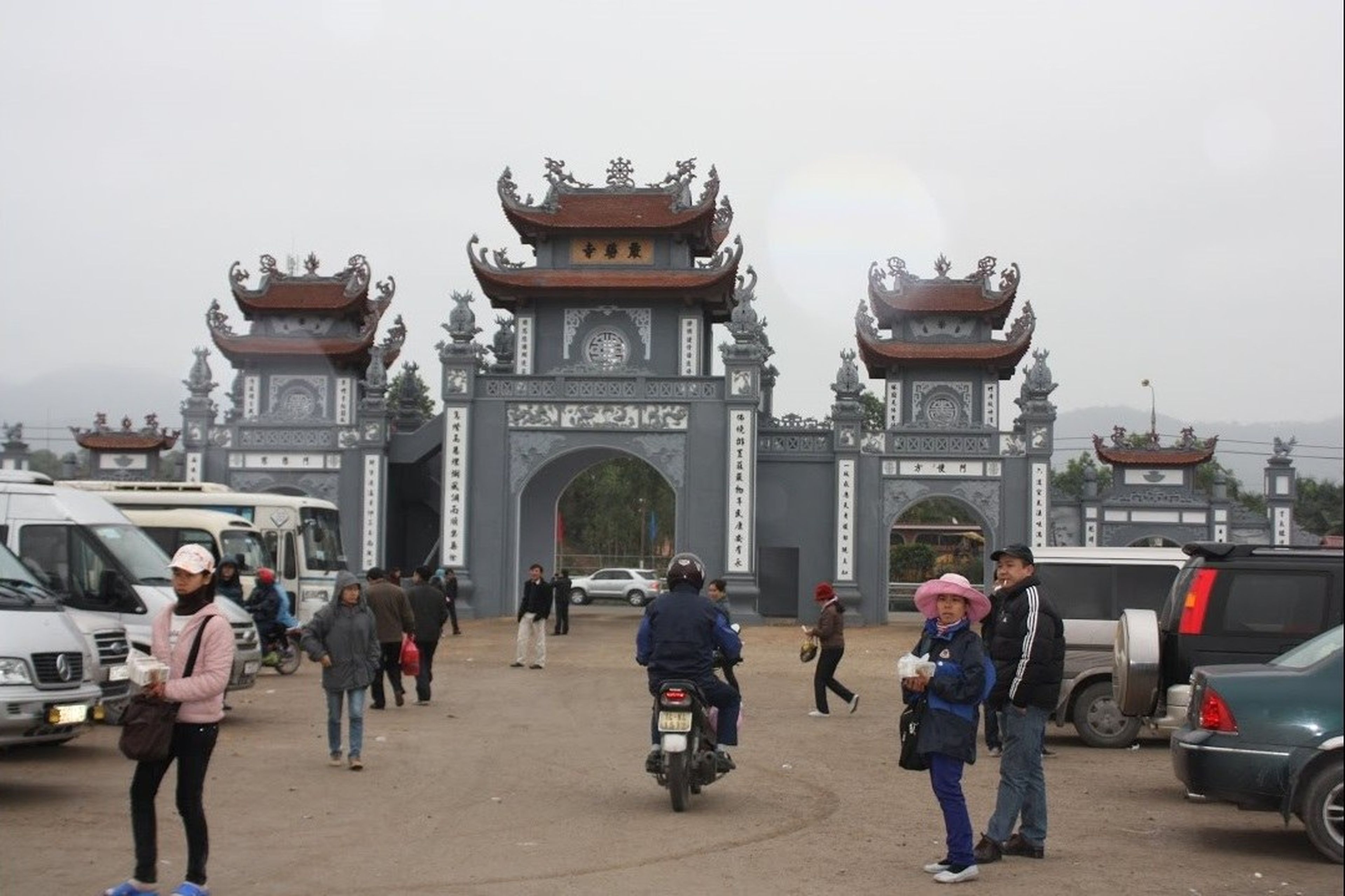
The entrance gate was rebuilt in a more spacious style, strongly reflecting classical Vietnamese architecture
All the statues were cast in bronze or carved from jackfruit and fragrant wood. Trình Pagoda is also roofed with curved tiles; along the ridge of the Front Hall is a row of Chanh-flower patterned bricks, with a raised horizontal plaque in the center bearing the three Chinese characters “Bí Thượng Tự” (Bí Thượng Pagoda). At both ends of the roof ridge are dragon heads emerging and biting the ridge, accompanied by waves and cloud motifs. The roof corners feature dragon heads curling upward in the shapes of waves and clouds.
In 2007, the provincial authorities built the permanent office of the Executive Board of the Quảng Ninh Provincial Buddhist Sangha beside the eastern grounds of the pagoda. In 2011, Tùng Lâm Development Joint Stock Company donated funds to build the imposing, spacious Trình Pagoda Gate, decorated with antique patterns that created a solemn and distinctive religious character for the gateway to Yên Tử.
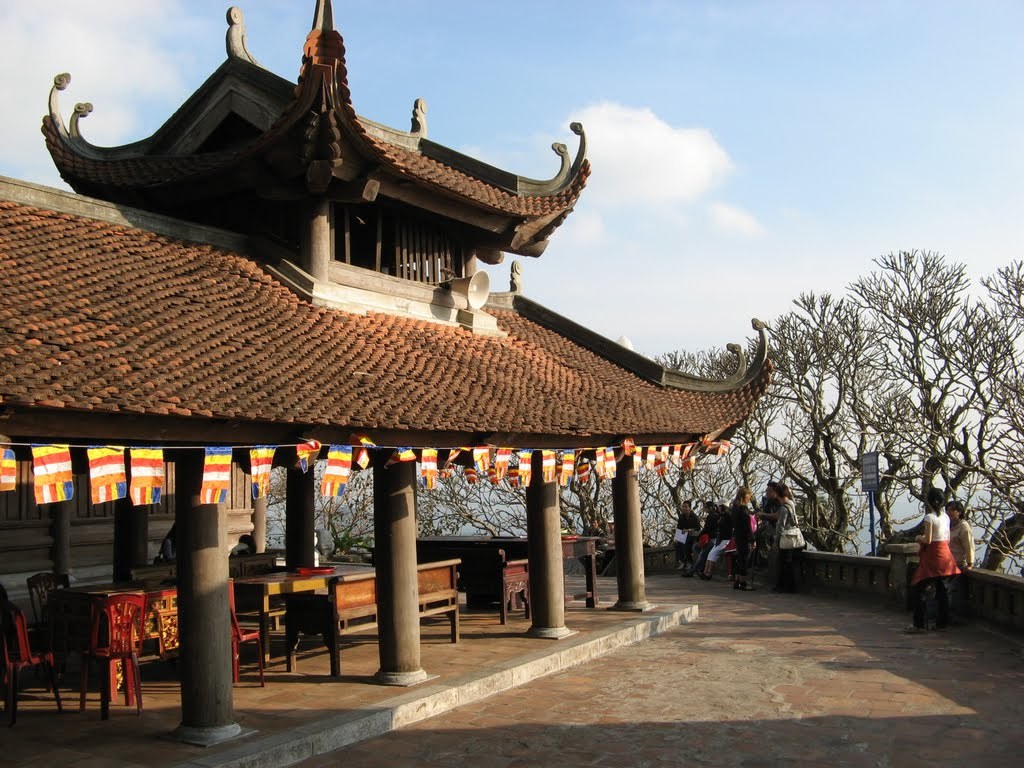
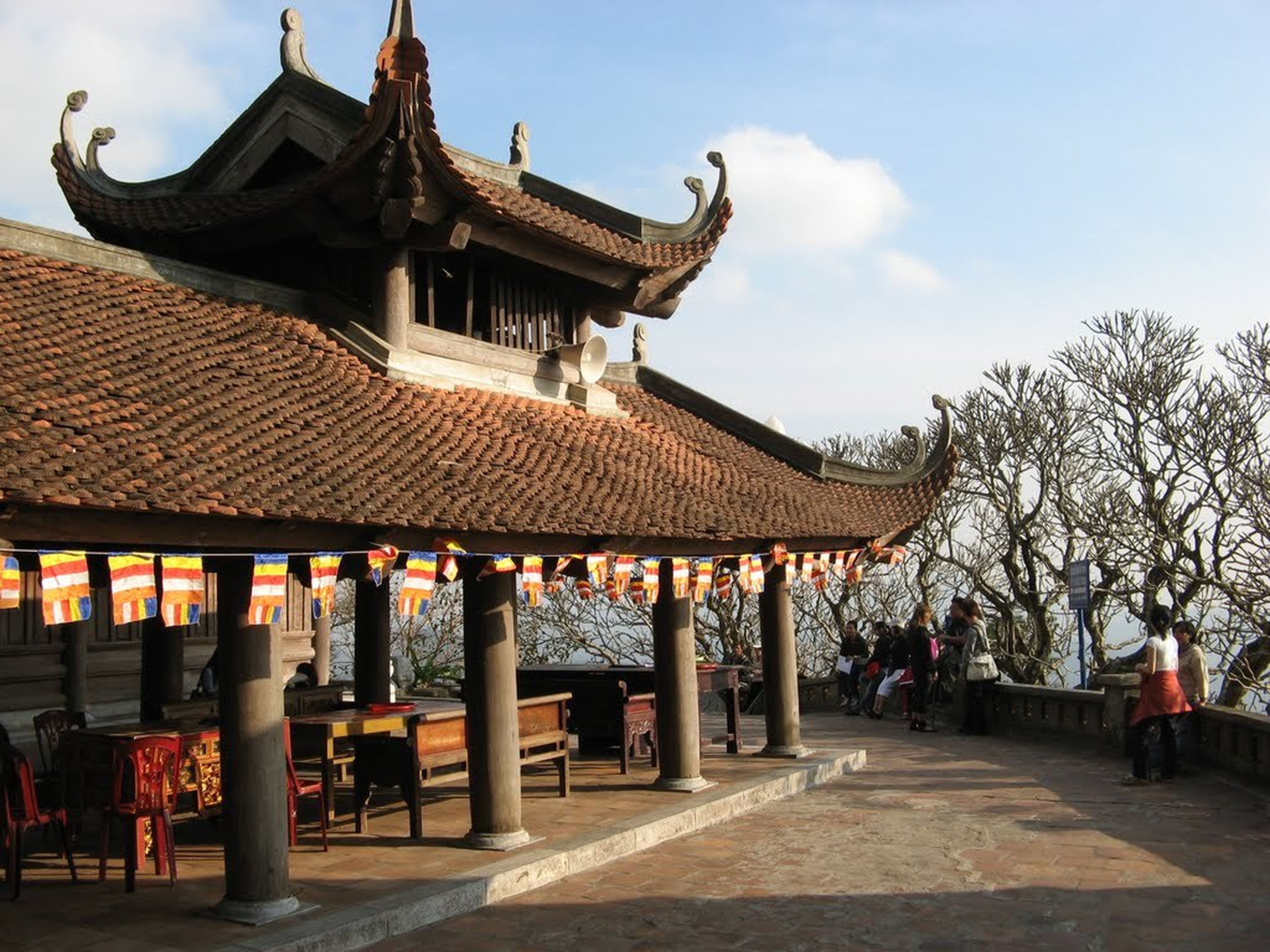
Trình Pagoda is also considered the sacred gateway leading visitors to explore Yên Tử
Today, Trình Pagoda still serves as a sacred gateway and a place where people entrust their hopes to heaven and earth as they begin their spiritual journey. If you have the chance to visit Quảng Ninh or Hạ Long Bay, you should not miss this site or the sacred Yên Tử mountains. You will surely enjoy precious moments of reflection, relax your body, and heal your spirit on a journey of spiritual discovery through life.