1 Where is Hua Mountain’s Stork Forest?
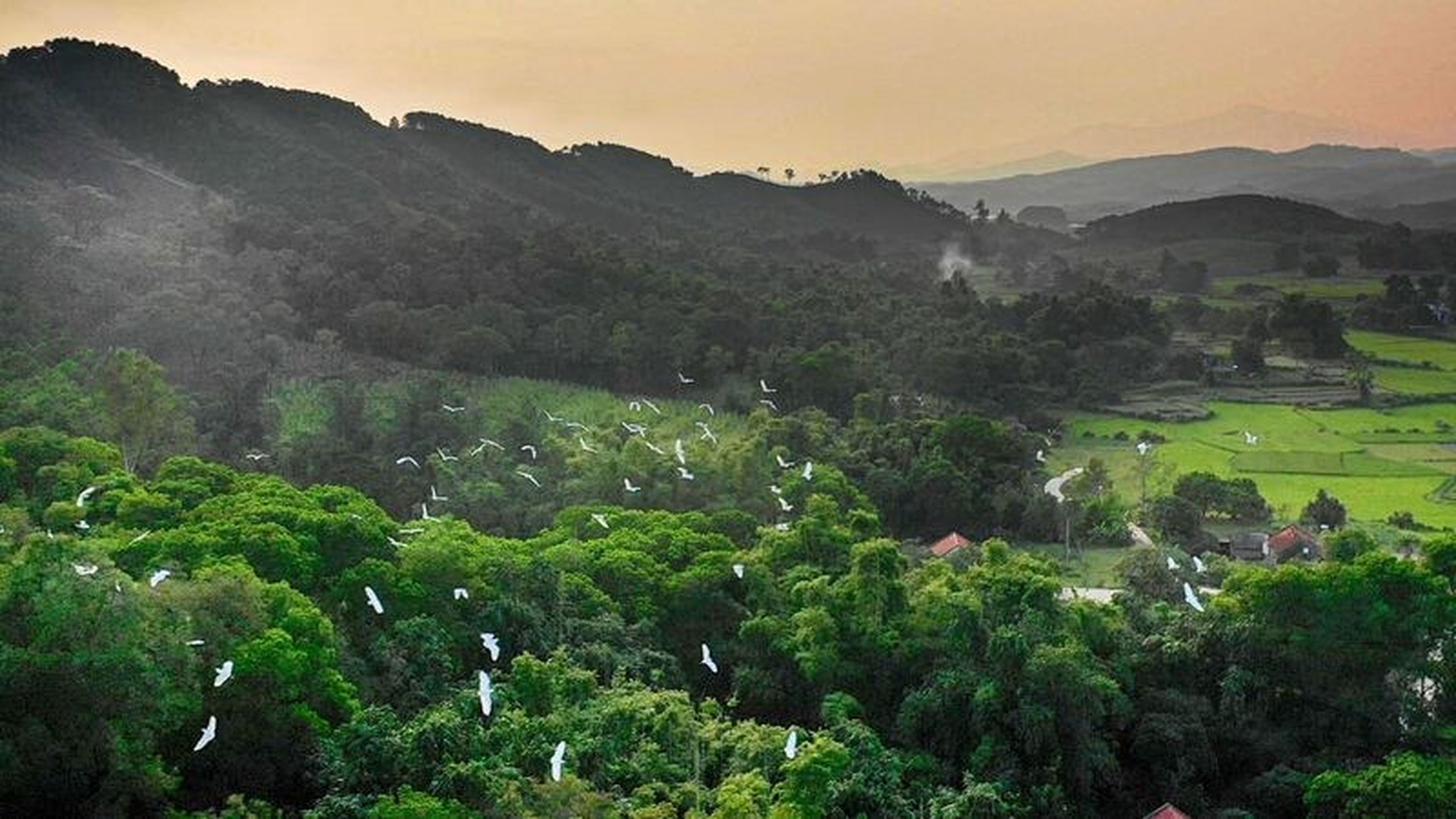
Hua Mountain’s Stork Forest is located in Lang Ruong Hamlet, Dai Binh Commune, Dam Ha District, Quang Ninh Province. It is about 10km from the center of Dam Ha Town. This 1ha area is home to flocks of migratory birds and nestles at the foot of the majestic Hua Mountain range, offering a peaceful glimpse of the fresh air and gentle charm of the midland countryside.
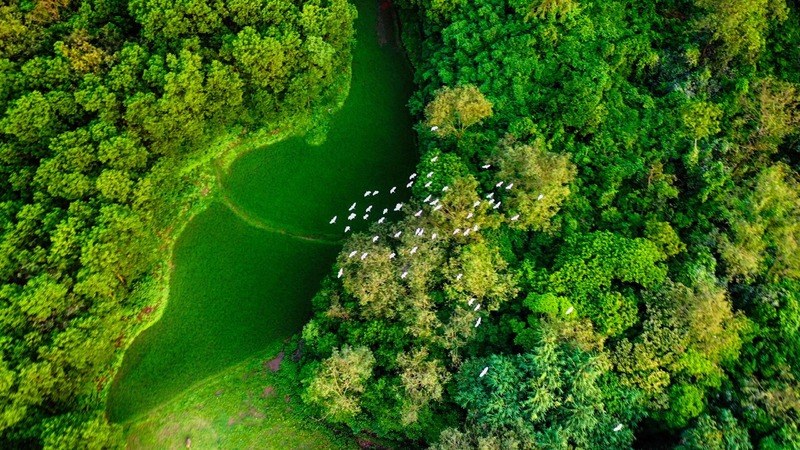
Hua Mountain’s Stork Forest is home to flocks of migratory birds across an area of about 1ha
2 How to get there from the district center
I made my way to Hua Mountain’s Stork Forest by motorbike, following the coastal highway. Here are two easy ways to get to the forest:
- Option 1 (Drive yourself): From the center of Dam Ha Town, I rode along the highway for about 4km. At the turnoff to Dai Binh Commune, I asked local residents for directions to Lang Ruong Hamlet. The people of Dam Ha are incredibly friendly and welcoming, and they will gladly point you all the way to Hua Mountain’s Stork Forest.
- Option 2 (Public transport): If you’re traveling to Quang Ninh by coach, you can get off at the Dam Ha District Post Office. From there, you can easily take a taxi or a local motorbike taxi straight to Lang Ruong Hamlet.
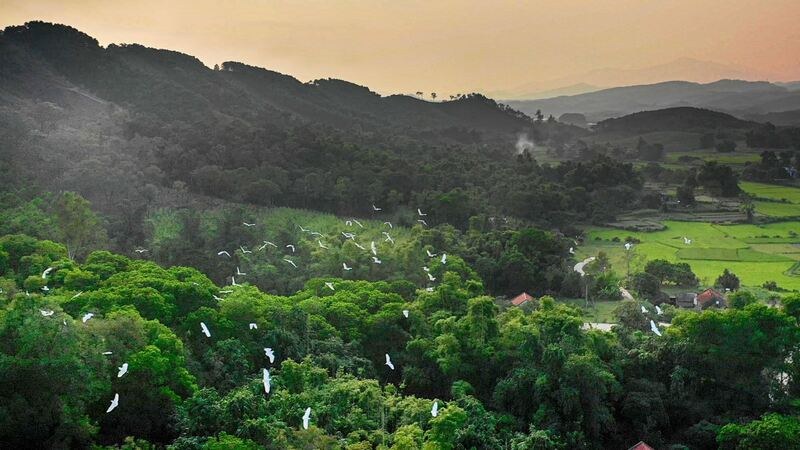
White storks among the tranquil mountains and forests are a major draw here
3 Explore the “three-story apartment building” of thousands of white storks
As I stepped into the untouched bamboo and eucalyptus forest in Lang Ruong, I was amazed by how the storks’ daily lives were organized into distinct levels, much like a luxury apartment building. According to village elders, white storks began arriving in small numbers in the 1970s, when the first households came to clear the land and establish a settlement. Thanks to the clean environment, abundant food from the rivers and streams, and the locals’ commitment to protecting the birds and not hunting them, their numbers have grown to thousands today.
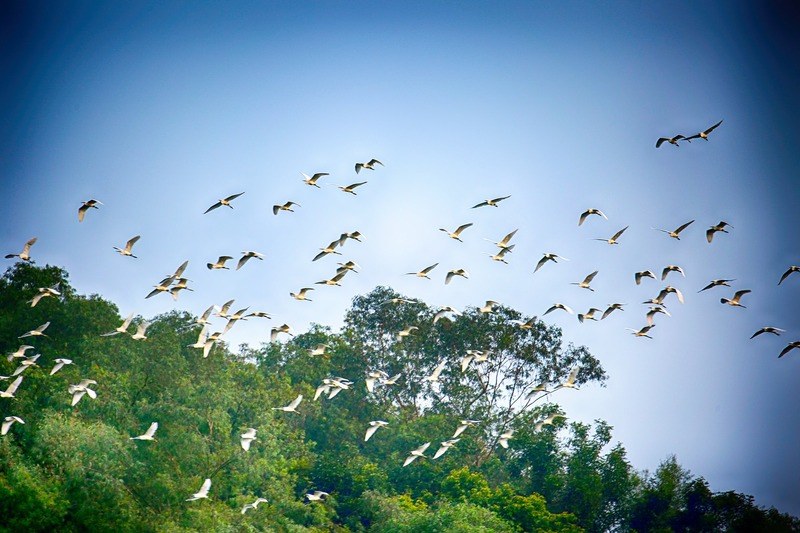
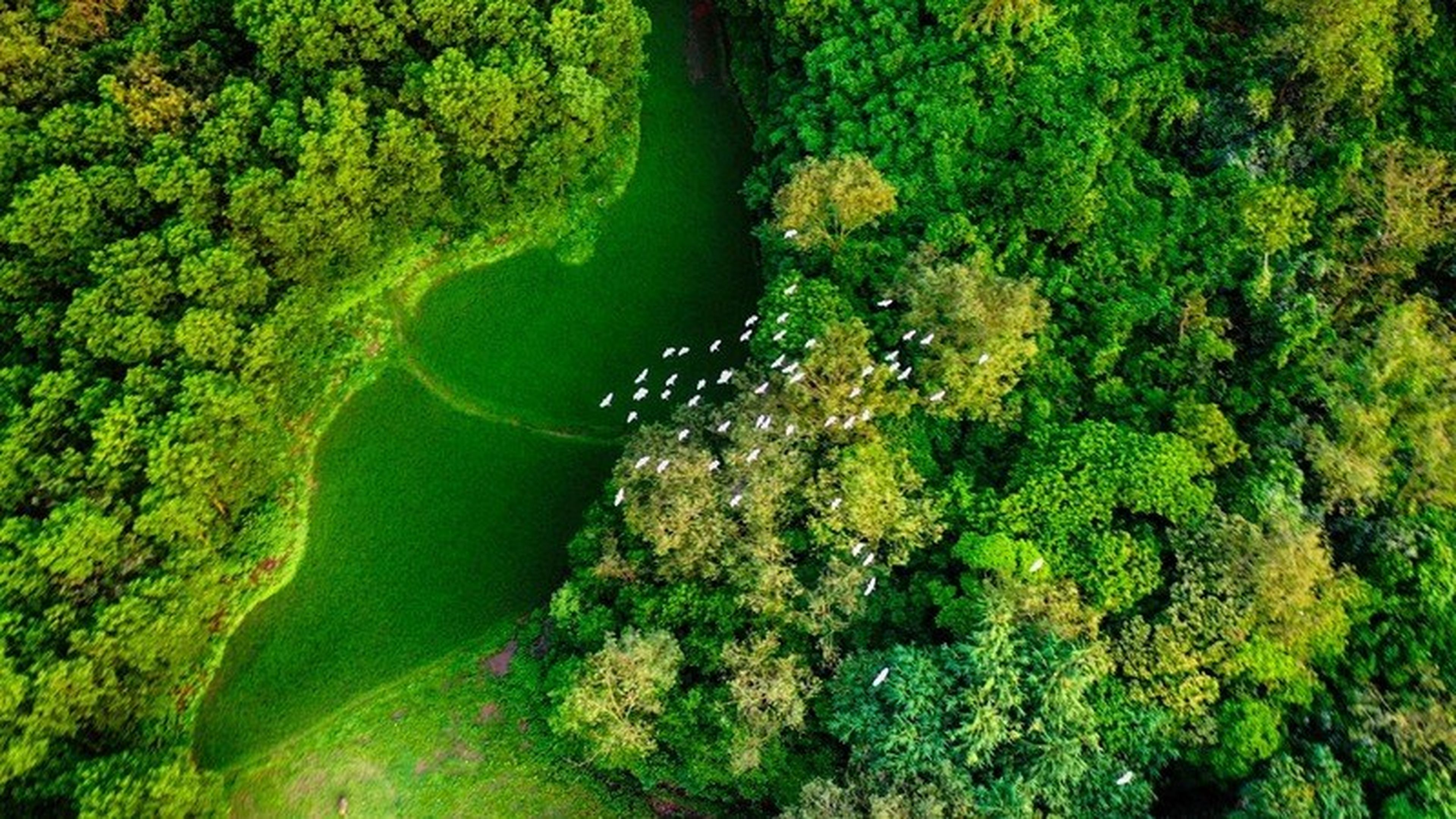
Hua Mountain’s Stork Forest has a remarkably organized layout for nesting and roosting, arranged in distinct levels
The storks’ main 1ha habitat is divided into three distinct ecological levels:
- Top level (the tallest treetops): This is where adult storks perch, settle in for the night, or keep watch to protect the whole flock.
- Middle level (forks and mid-sized branches): This central area is where pairs of storks weave dry branches together to build nests, breed, and incubate their eggs.
- Bottom level (branches close to the ground): This area is like a miniature “school,” where young storks take their first tentative flights and learn to forage among the soft bamboo shrubs.
To catch Hua Mountain’s Stork Forest at its most spectacular, I had to arrive very early and wait patiently. The best times to watch the storks are from 4h – 5h in the morning, when the whole flock wakes up and takes flight to feed, and from 17h – 18h in the evening, when the sun sets and the storks return to their nests.
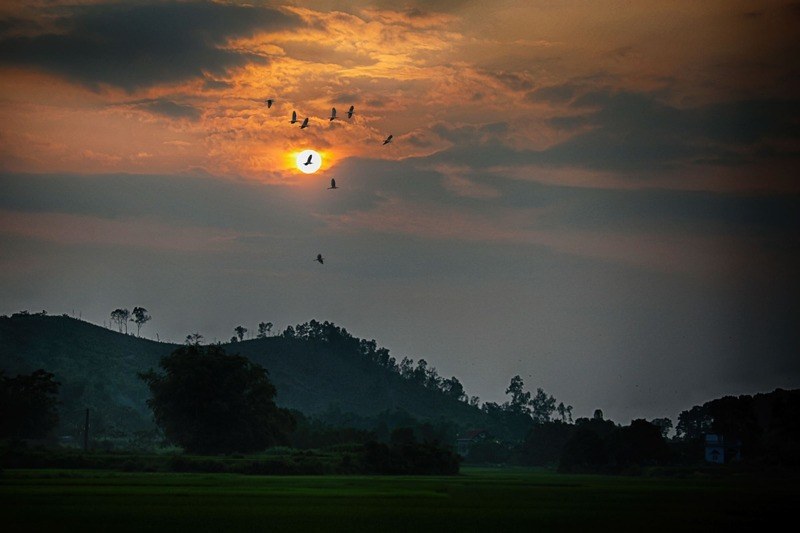
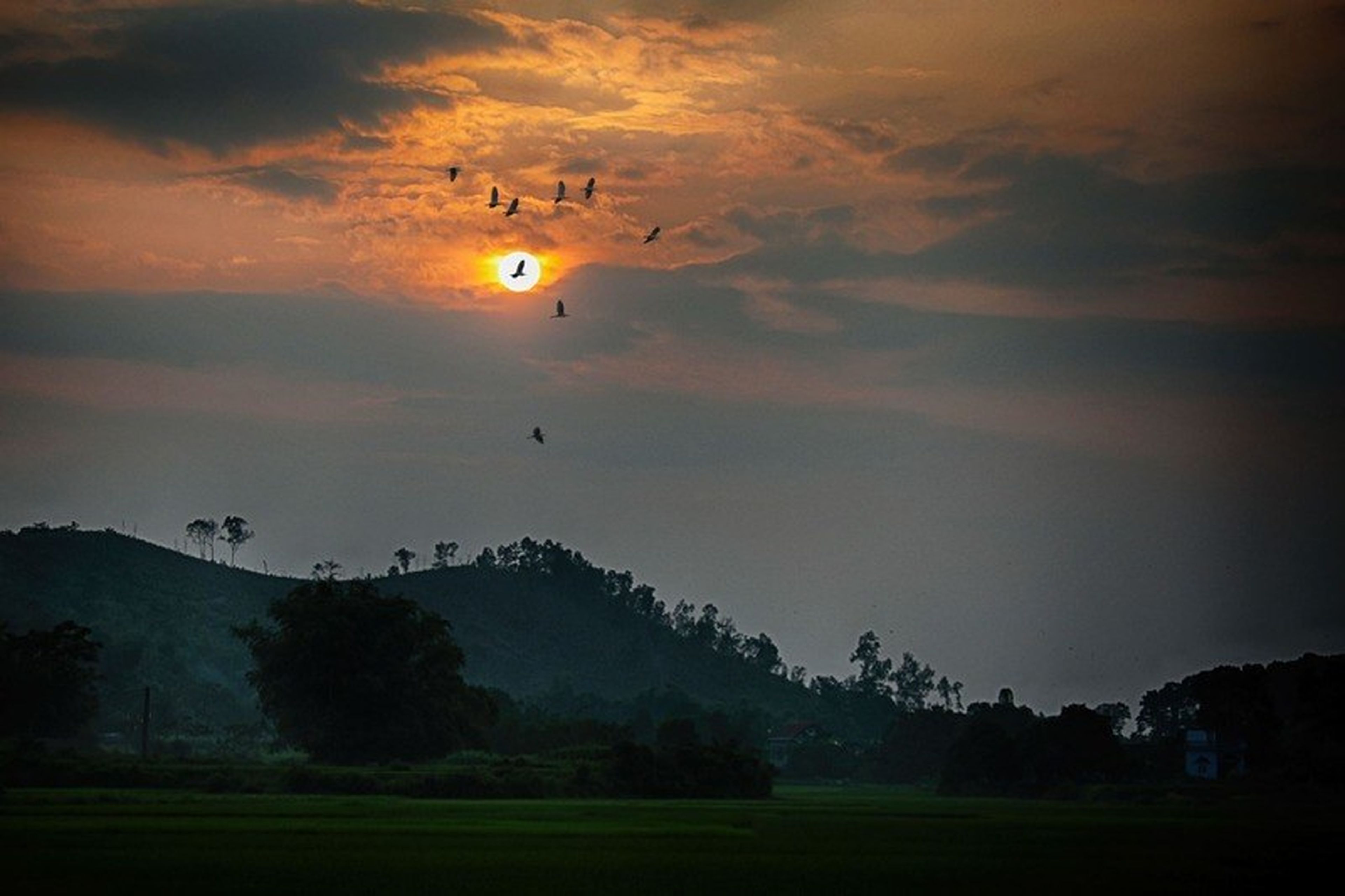
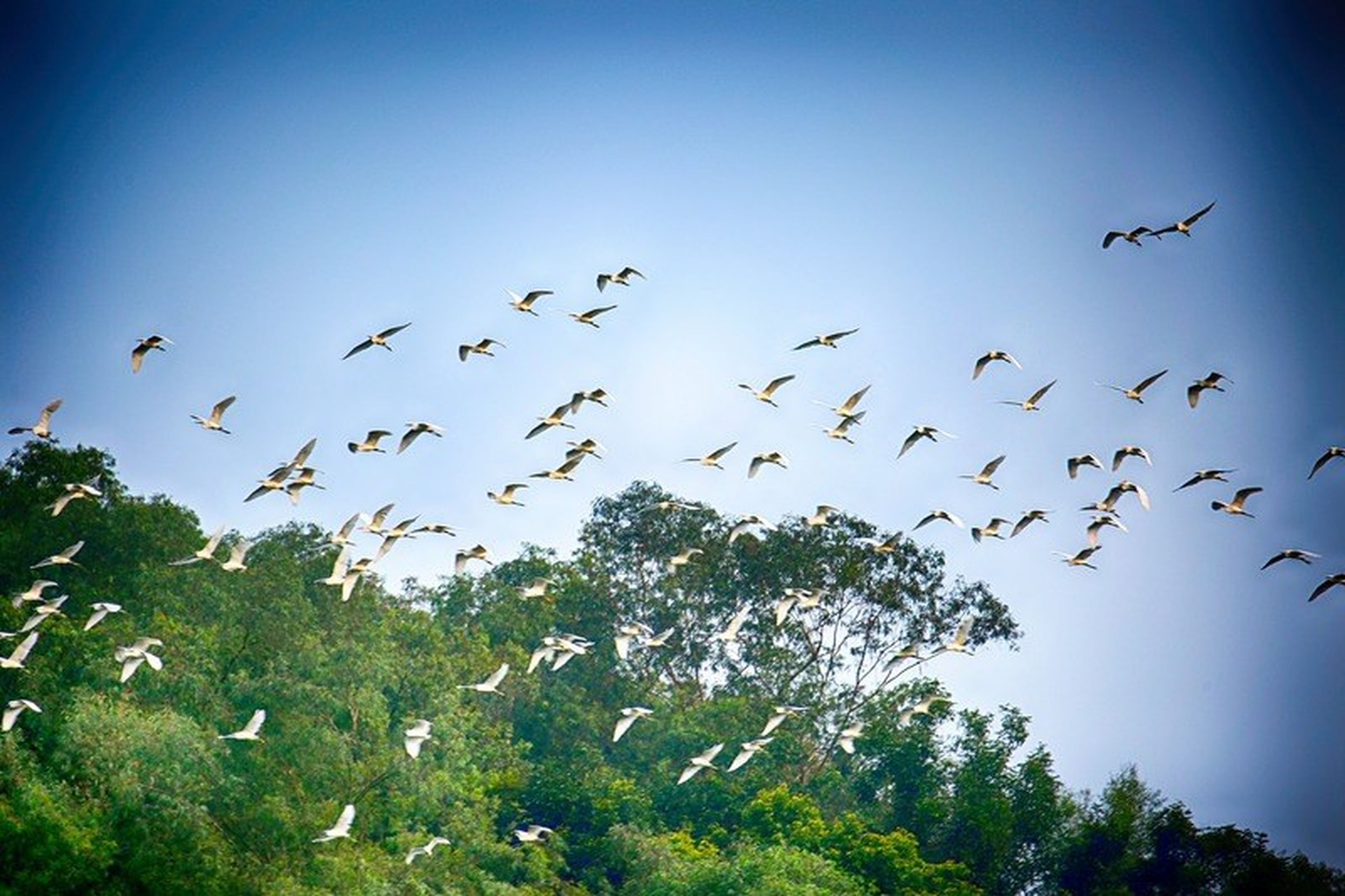
At sunset, the storks return to their nests after a day of foraging
As the sun sank behind the mountain peak, the fiery orange-red light tinged the horizon pink. Then thousands of pure white storks spread their wings and circled overhead, shedding snowy feathers over the bamboo forest. The rush of beating wings blended with the flock’s echoing calls to create a vibrant symphony of the mountains that captivated every traveler’s heart.
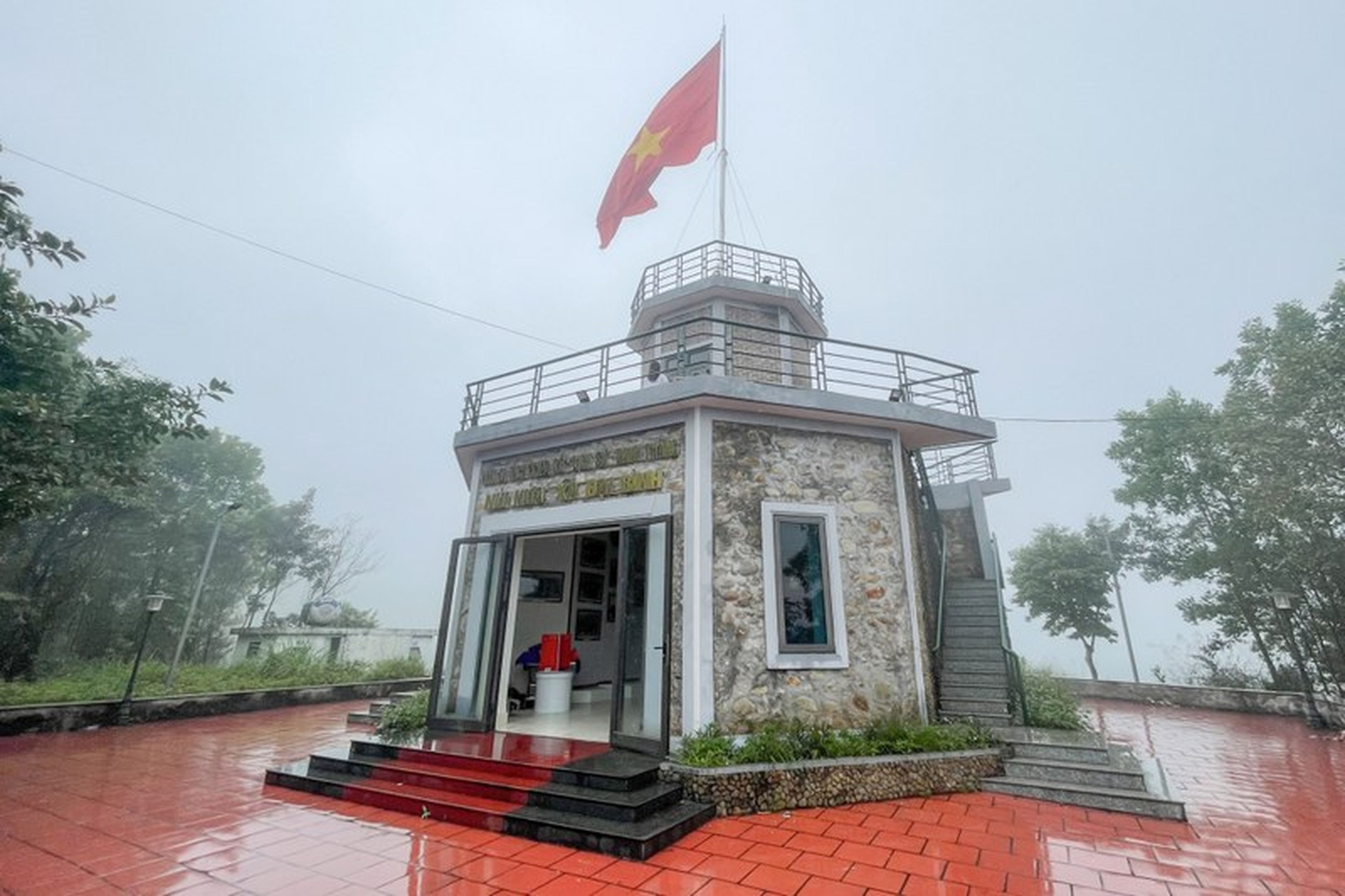
4 Climb 459 stone steps to Hua Mountain’s flagpole and explore its archaeological and historical heritage
If you visit Hua Mountain’s Stork Forest, your trip doesn’t have to end with birdwatching. The area is also a provincial archaeological, historical, and scenic heritage site, recognized in 2012, with plenty of fascinating stories to uncover.
4.1 Enjoy sweeping views from Hua Mountain’s flagpole
From the foot of Hua Mountain, I challenged myself to climb a steep path of 459 stone steps. The narrow trail winds beneath shady groves of ivory bamboo, with patches of white stork droppings on the forest leaves here and there. When I reached the summit and stood beneath the windswept Hua Mountain flagpole, I was completely overwhelmed by the vast mountain landscape and the sight of white storks gliding across the deep blue sky above Lang Ruong Hamlet.
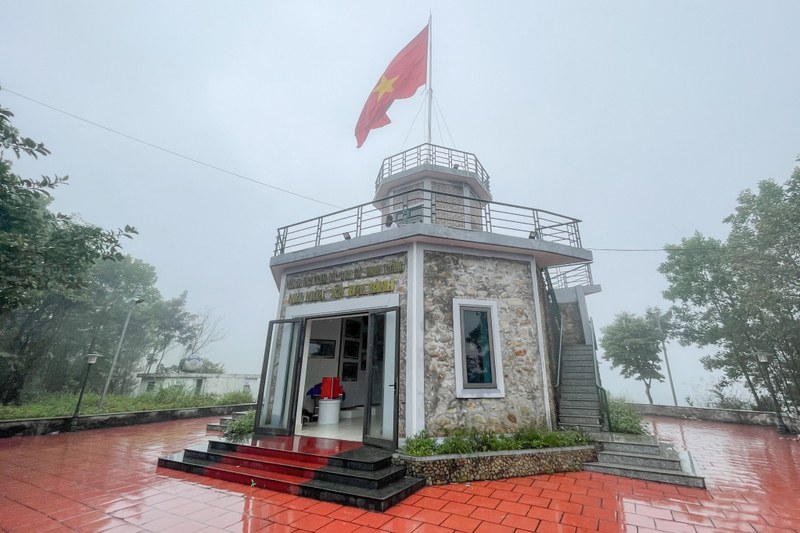
Hua Mountain’s flagpole is also a popular attraction for many tourists
4.2 Explore the archaeological site and revolutionary base
If you visit Hua Mountain’s Stork Forest in winter, when the storks migrate to escape the cold and fewer remain in the forest, Hua Mountain offers a different kind of treat: its remarkable historical legacy.
- Archaeological site: Covering more than 10.000m² at the foot of the mountain, this is where scientists discovered numerous stone tools used by ancient Vietnamese people. The site’s original features remain almost entirely intact.
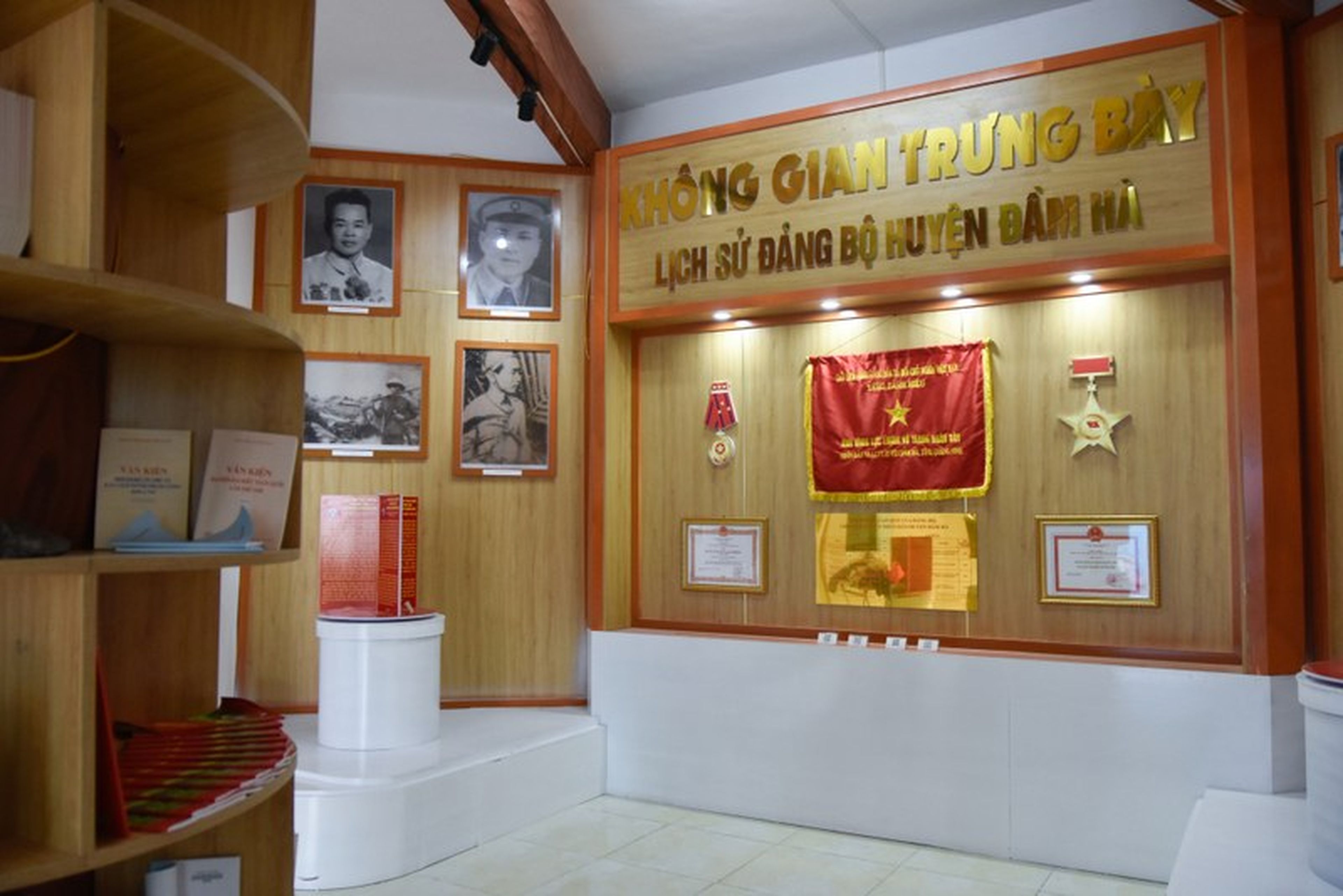
- Hua Mountain was a strong revolutionary base and the site where the first Communist Party cell in Dam Ha District was established. It is a source of great pride for generations of people from the mining region.
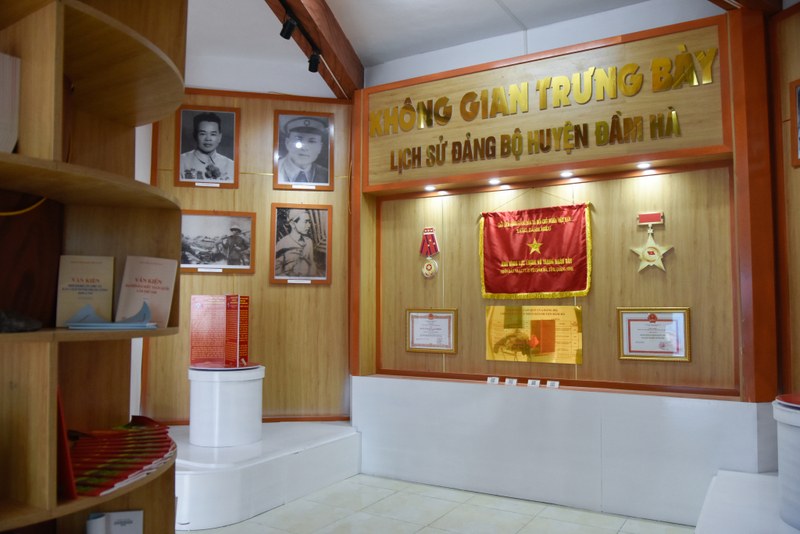
There is also an exhibition area displaying revolutionary artifacts from the first Communist Party cell in Dam Ha District
5 Savor the distinctive culinary delights of Dam Ha’s forested countryside
After a long day hiking through forests and streams, my favorite moment was sitting down to a simple meal with the people of Lang Ruong and sampling local specialties made with ingredients gathered straight from nature:
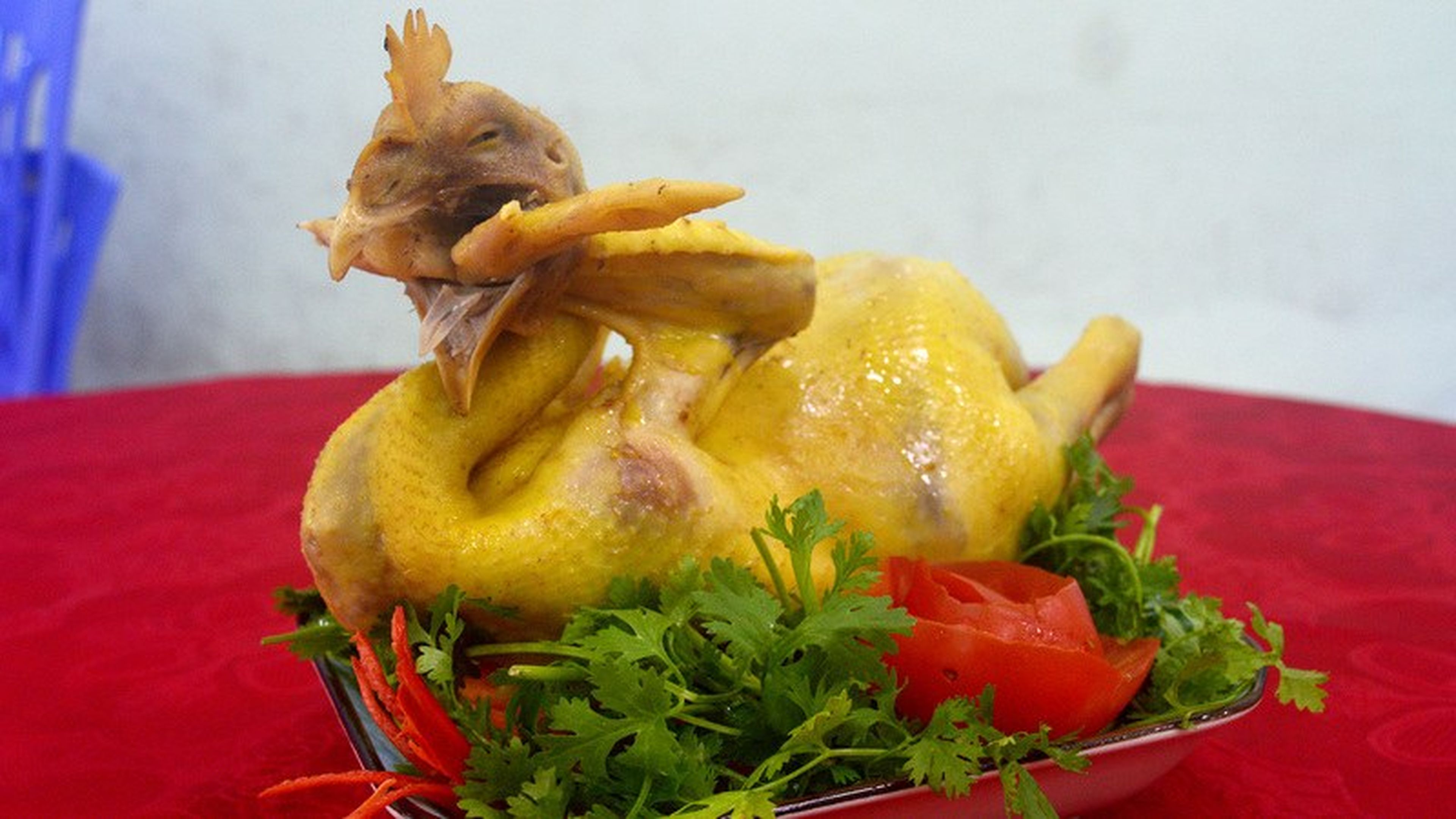
- Dam Ha native chicken, once served to the king: This is definitely a dish you should try at least once in your life. Dam Ha chickens are raised free-range, giving them firm meat and golden skin that turns glossy when boiled, as if glazed with honey or turmeric.
- Specialties made with insects and ingredients from rivers and streams: Try ant patties, rich and nutty fried sticky rice with ant eggs, fresh river fish wrapped in wild betel leaves and grilled until lightly charred, or a refreshing bowl of forest vegetable soup served with steaming boiled apple snails. Add a glass of corn wine, leaf-fermented rice wine, or purple perilla wild-plum wine, and you’ll be pleasantly tipsy and reluctant to leave.
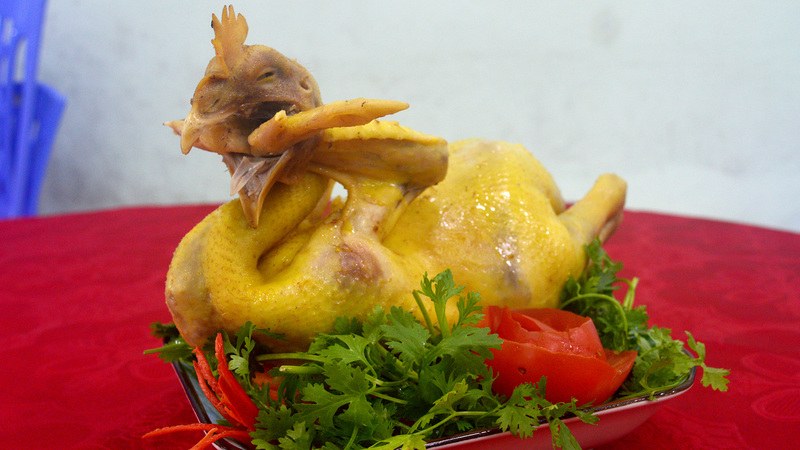
Dam Ha native chicken, once served to the king, is a dish you shouldn’t miss
6 Tips for a memorable visit to Hua Mountain’s Stork Forest
For a smooth trip to Hua Mountain’s Stork Forest, keep these tips in mind:
- Storks are migratory birds, so you won’t see many if you visit in winter. Come in summer, when the flock is breeding and raising its young, and the forest will be at its liveliest.
- Wear sports shoes or flat shoes with good grip, as the route up to the flagpole is steep and has 459 stone steps. You may also want to wear a baseball cap or a wide-brimmed hat when walking through the bamboo forest to avoid... getting hit by falling bird droppings.
- Help protect the environment: don’t litter, and never hunt the storks or disturb their nests, so the birds can continue to enjoy their peaceful habitat.
My trip to Hua Mountain’s Stork Forest gave me a completely new perspective on Quang Ninh—a place of remarkable gentleness, untouched beauty, and tranquility. If you’re tired of crowded tourist destinations this summer, pack your bags and immerse yourself in the natural beauty of Dam Ha.