

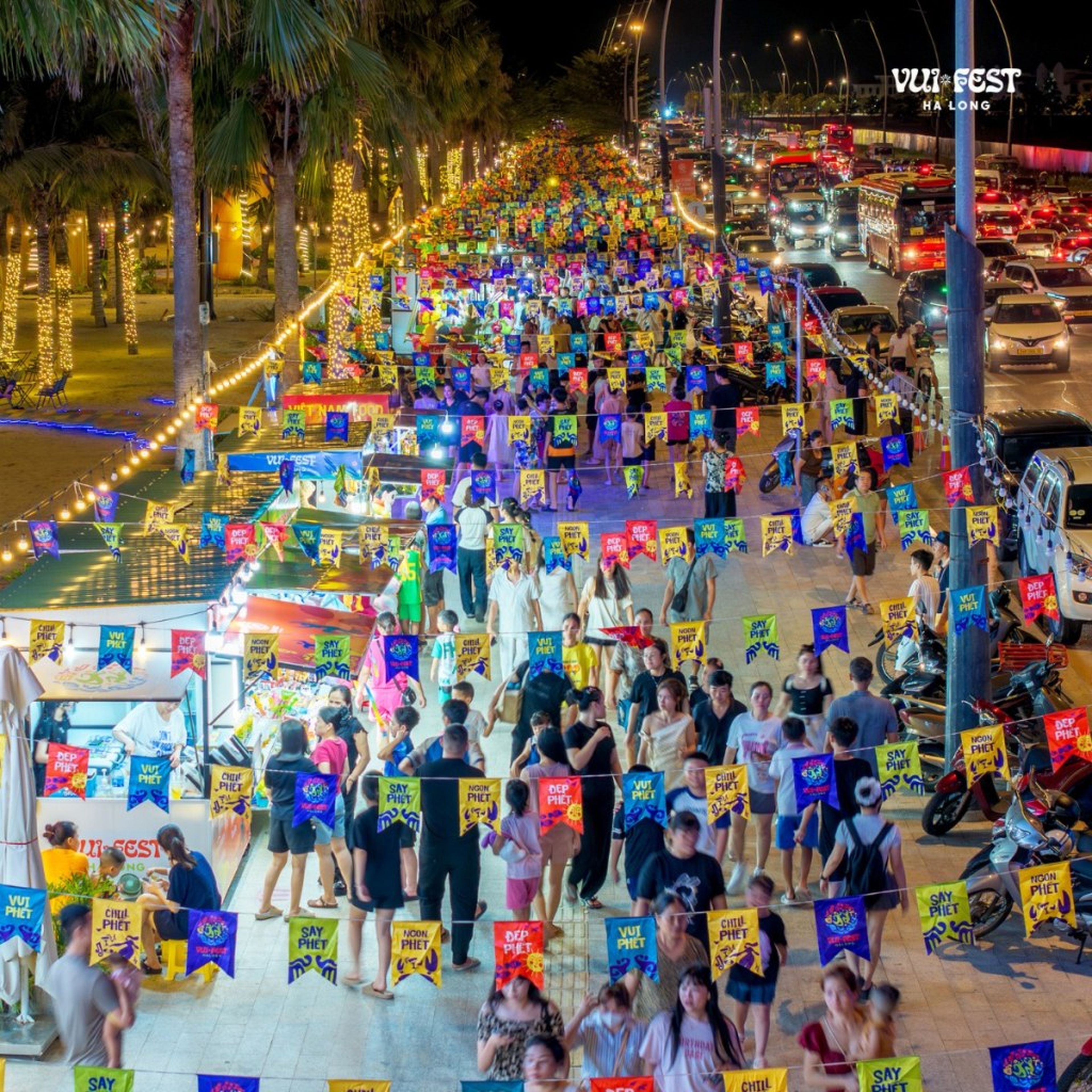
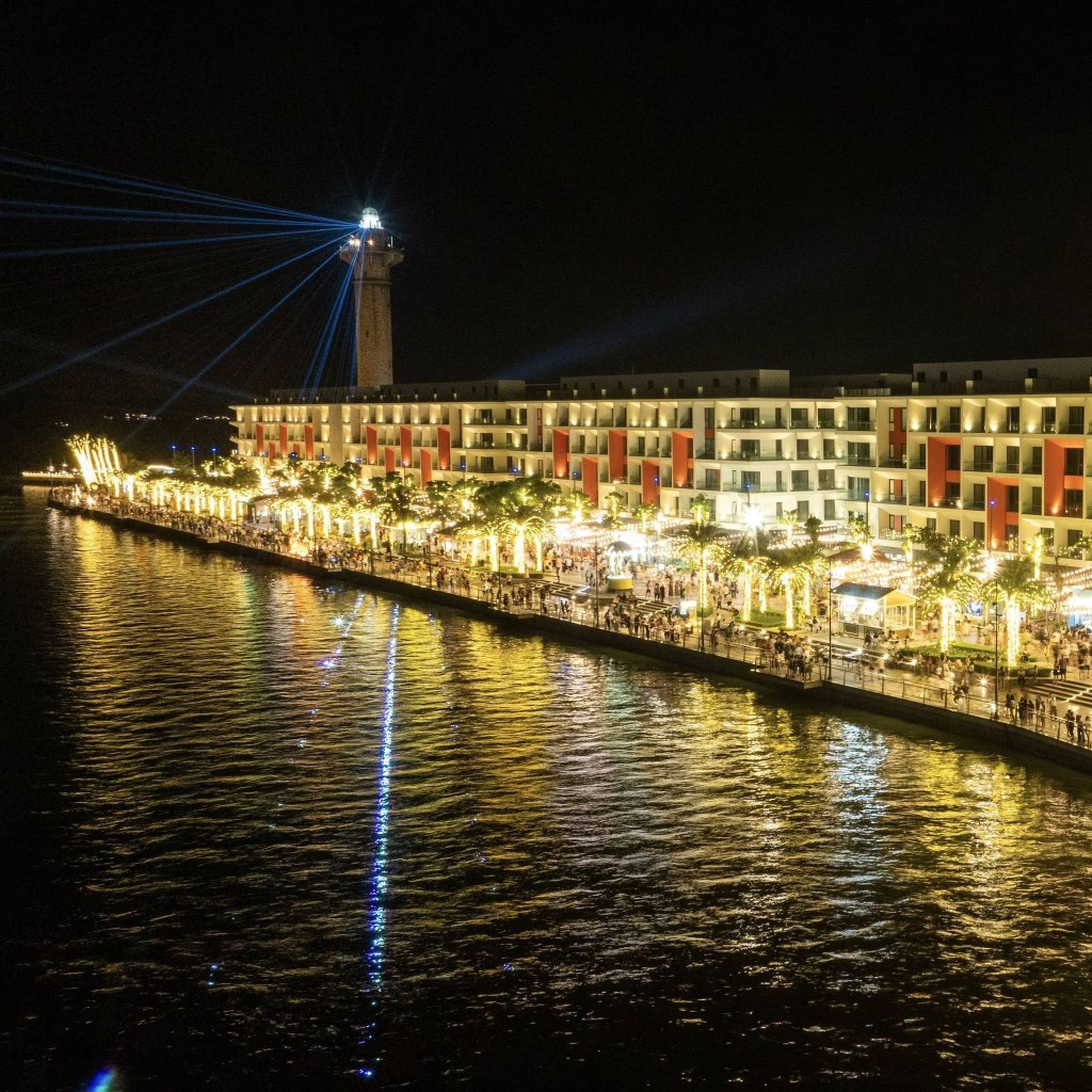
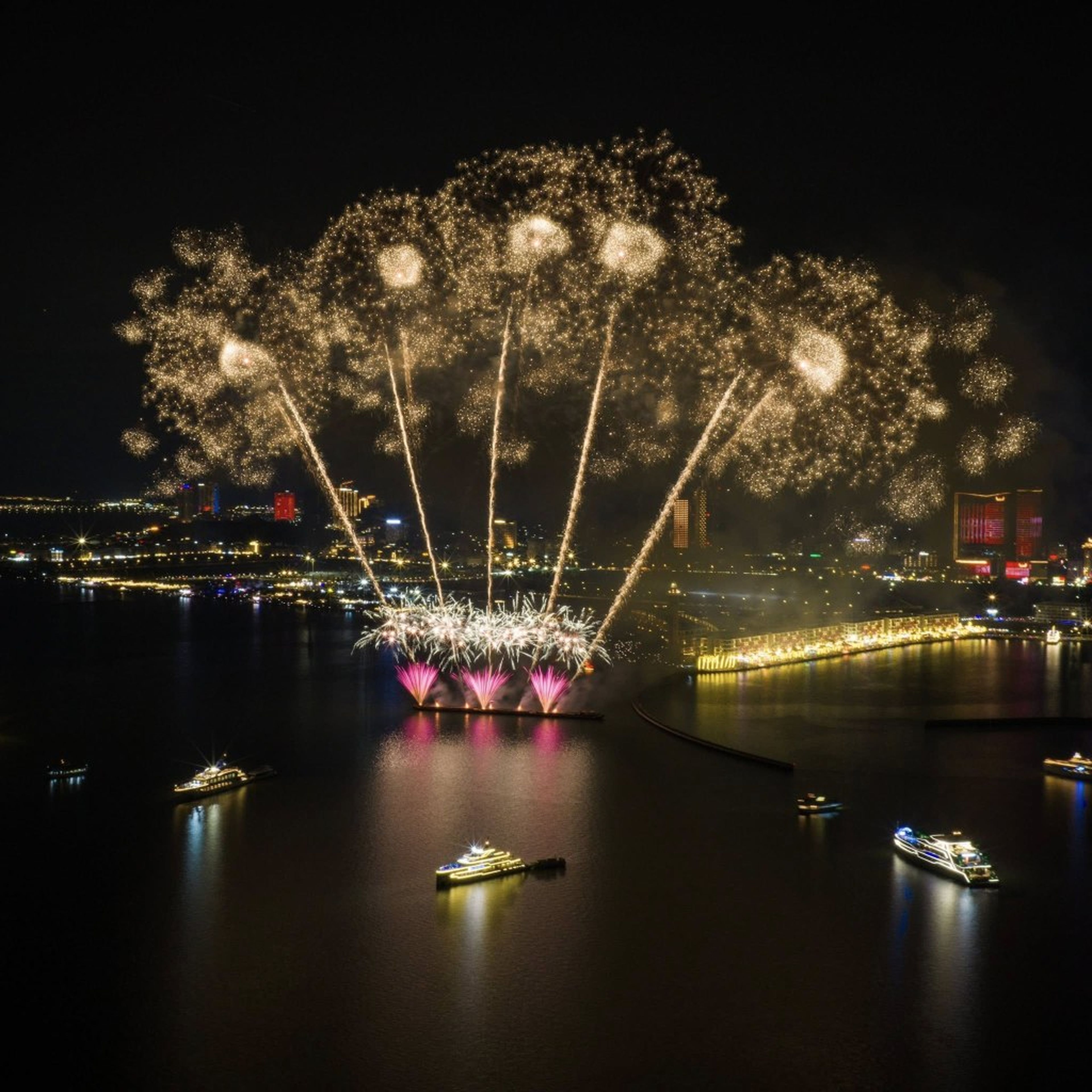
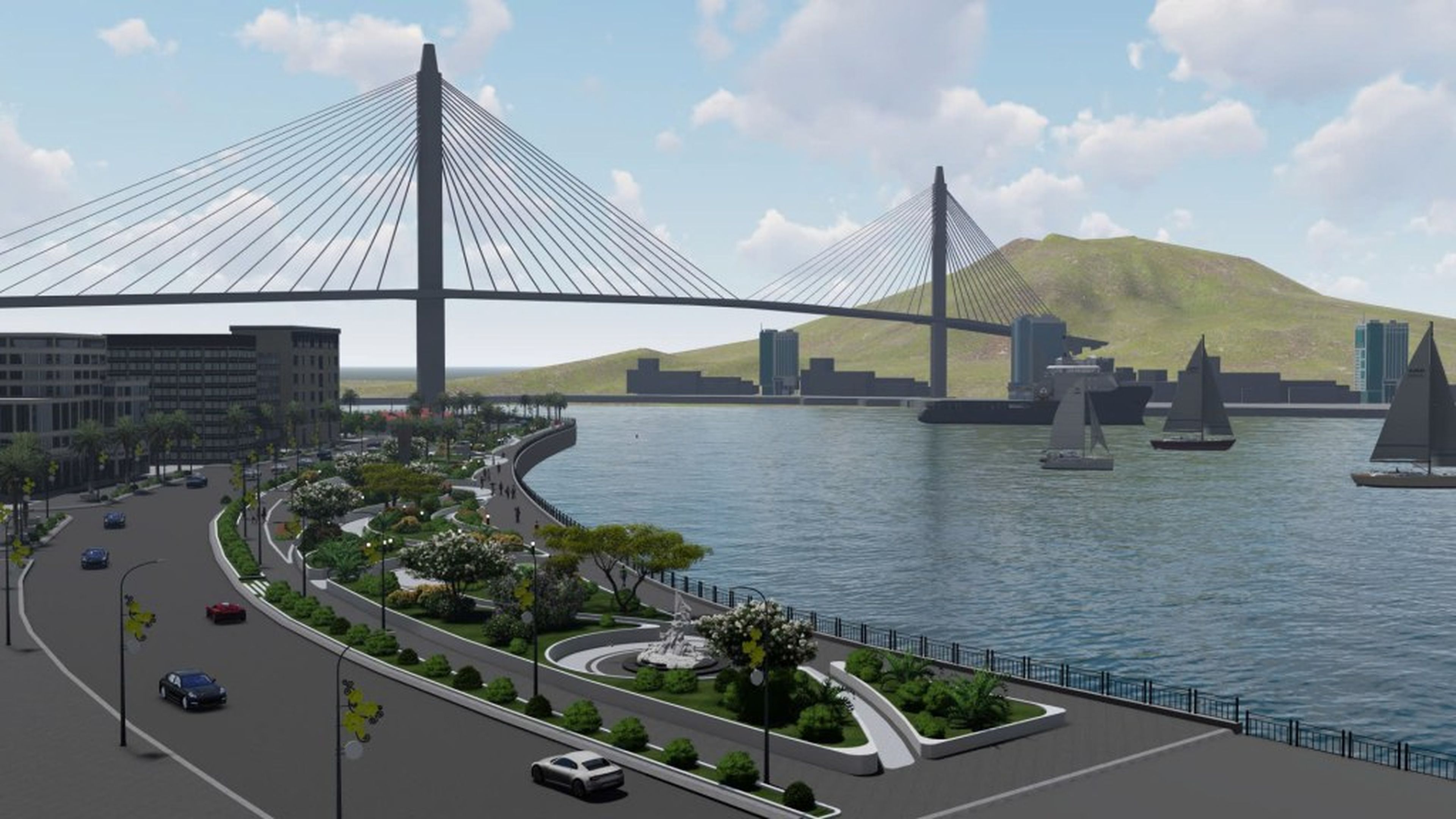

Statistics from the two consecutive public holidays—Hung Kings’ Commemoration Day and April 30–May 1—show that the province’s tourism sector made a strong impression by welcoming more than 1.3 million visitors (accounting for over 10% of the country’s total visitor numbers). The destination that attracted the most visitors during the recent holiday was Bai Chay Ward. From brilliantly lit seaside streets to dazzling fireworks displays every evening, Bai Chay Ward is demonstrating efforts to renew its tourism spaces toward a diversity of experiences and continuous operation, with an increasingly vibrant rhythm of life after sunset.
From a “night-time rendezvous” to a diverse experience ecosystem
A few years ago, most visitors to Bai Chay would end their journey after dinner or a stroll along the beach. Night-time activities were mainly limited to the night market, several food streets and small-scale services. Today, however, the night-time rhythm of life in Bai Chay has changed.
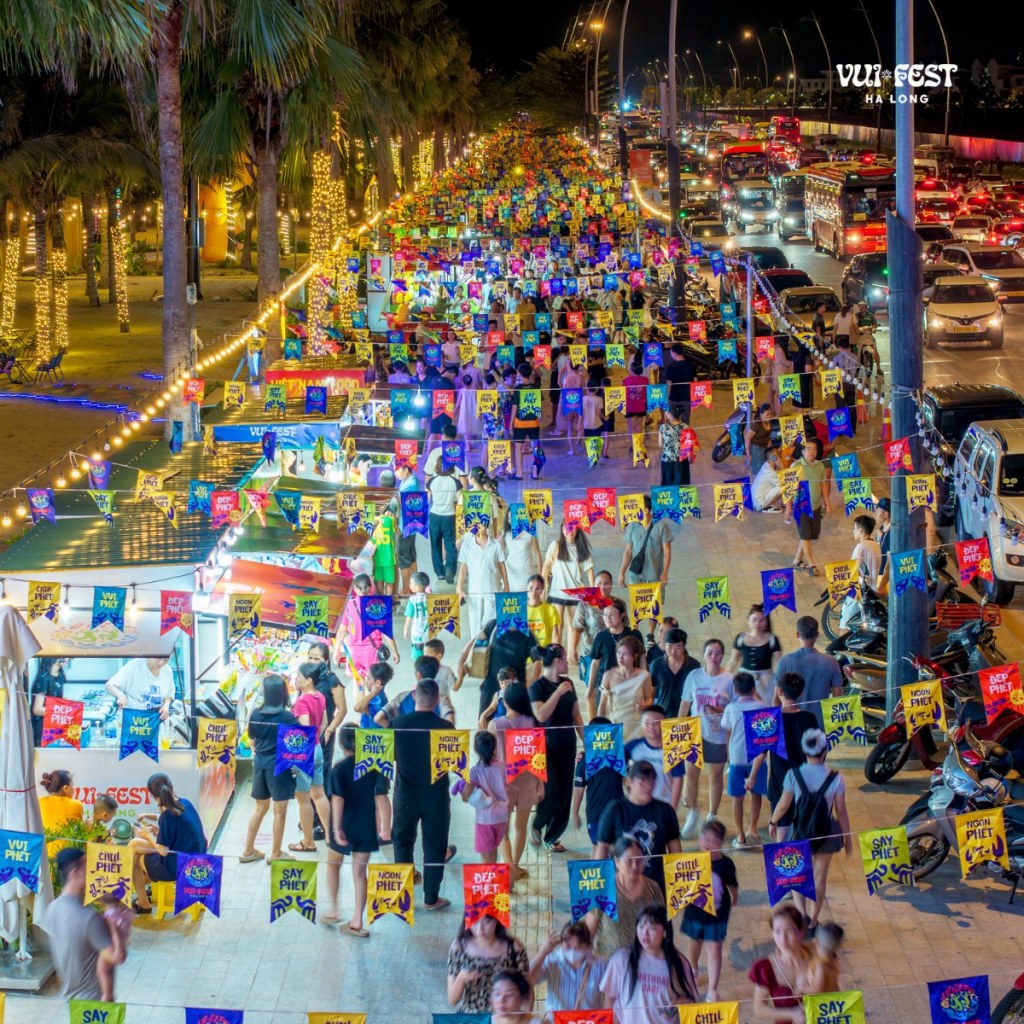
Not only on weekends, but also during the peak summer season, the seaside area is often illuminated until late at night. Increasing numbers of people are flocking to pedestrian streets, seaside squares and entertainment complexes. This vibrant atmosphere partly reflects a clear shift in the way the locality is developing tourism.
A notable highlight in recent times is the VUI-Fest Ha Long night market in the area of Hai Dang lighthouse and Ky Quan Street. Since beginning operations at the end of April 2026, the complex has quickly become a new rendezvous for visitors to Bai Chay. More than simply a commercial street, this entertainment, culinary and arts complex was developed under the inspiration of a “Prosperous Trading Port,” recreating the trading spirit of the heritage land in a contemporary festival setting.
Every evening, the space is bustling with music programs, street entertainment and interactive artistic performances. The seaside food stalls operate until late at night, creating an exceptionally lively atmosphere for a northern coastal tourism city.
In particular, the 3D mapping show “Long Van Khanh Hoi,” launched last May, is also considered a new experiment in bringing modern performance technology into the development of the night-time economy. Light, laser and music recreate stories associated with Ha Long’s culture, history and legends through the language of digital technology, adding to the appeal of Bai Chay’s seaside area. On peak days, VUI-Fest Ha Long welcomes up to 20,000 visitors. This is considered a positive signal for the evolving night-time tourism landscape at the heritage-side resort destination.
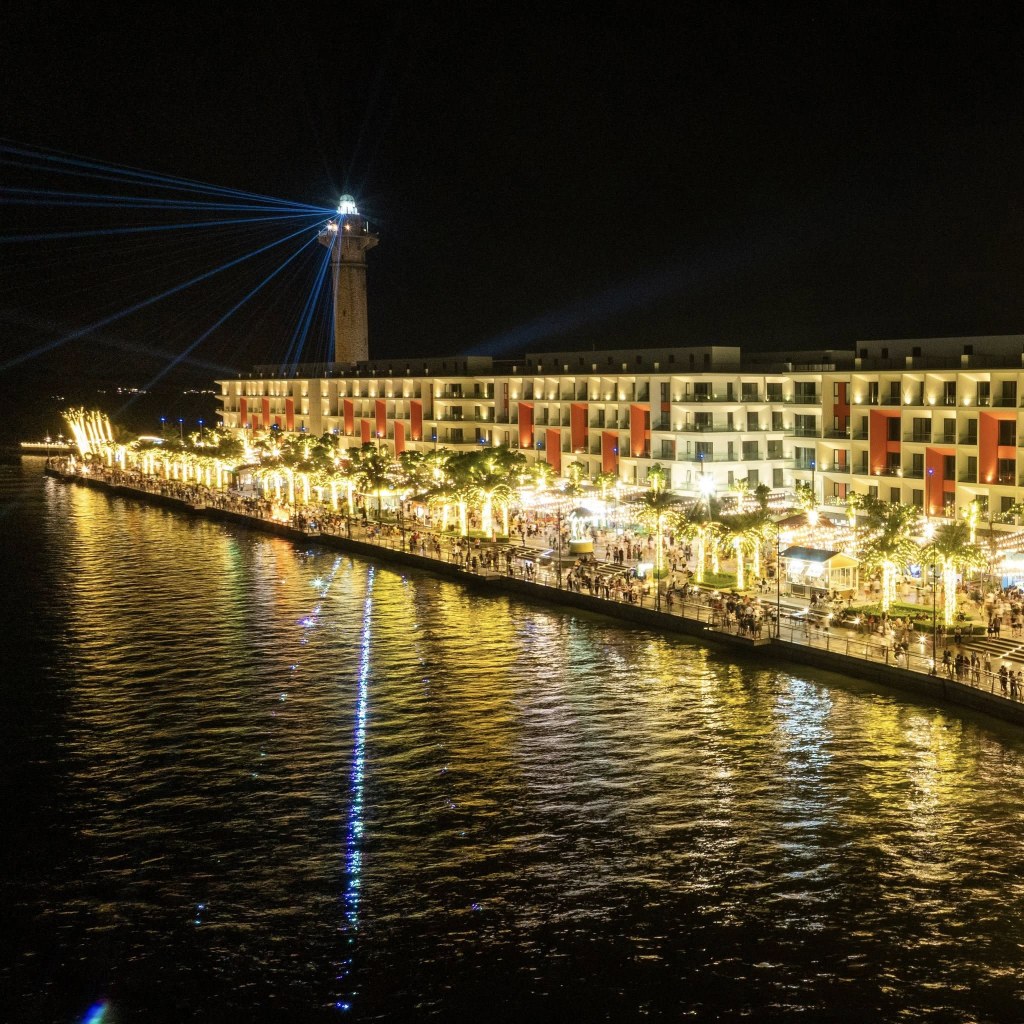
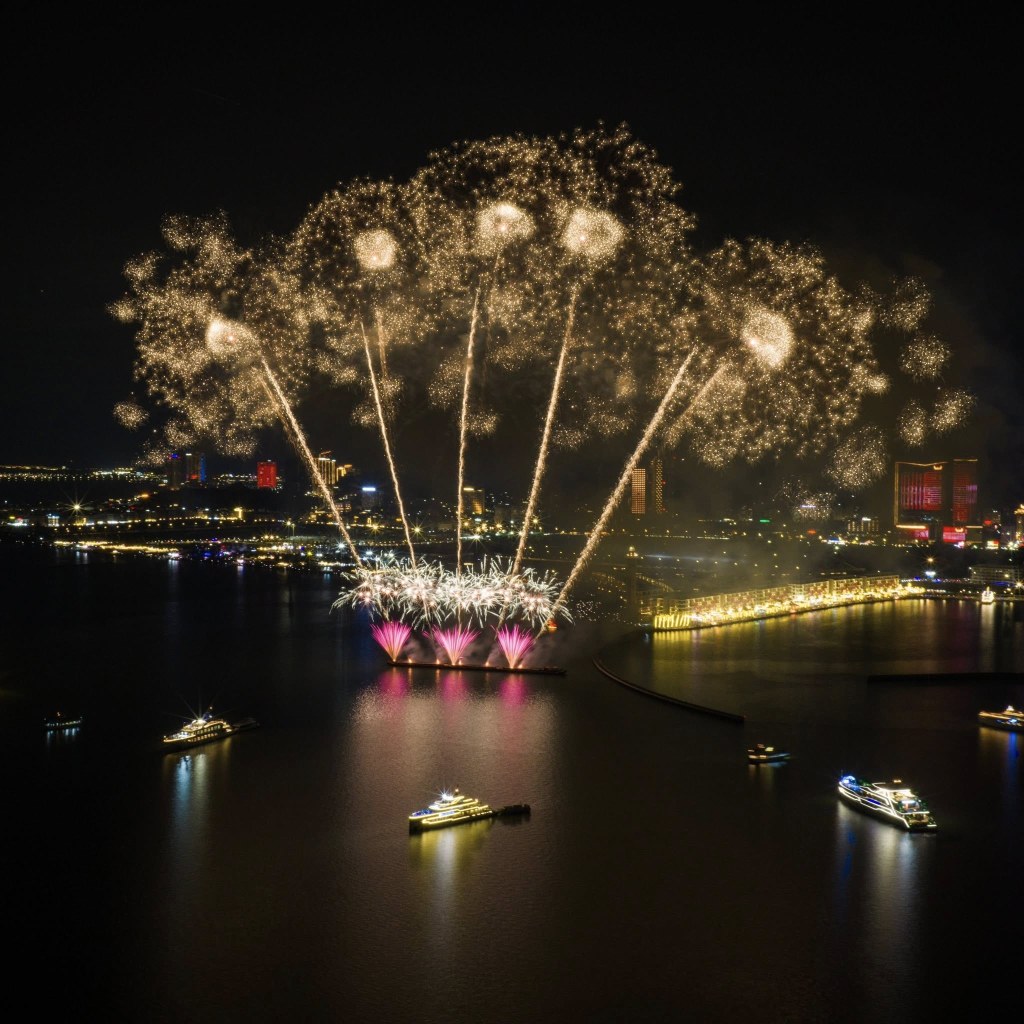
Watching the performance by the bay, Nguyen Thu Ha, a visitor from Hanoi, shared: “Previously, after visiting Ha Long Bay, we would mainly go out to eat in the evening and then return to the hotel to rest. But now we have many new experiences, from strolling through the streets and watching 3D mapping performances to enjoying seaside music spaces. I like the feeling of watching a light show while admiring Ha Long Bay at night. Most notably, there is no need to wait for New Year’s Eve anymore; whenever we come to Bai Chay, we can watch fireworks throughout all 7 days of the week. This is quite a special experience and shows the locality’s very positive progress in developing tourism.”
The arrival of VUI-Fest Ha Long and the dazzling daily fireworks shows that Bai Chay’s night-time economy is shifting from a model of small-scale services toward the development of a diverse experience complex. Visitors come not only to eat and shop, but also to take part in entertainment activities, enjoy the arts and experience a cultural space at the same destination.
More importantly, these products do not operate separately but are gradually forming an interconnected chain. During the day, visitors explore the bay and stay at seaside hotel complexes. In the evening, they continue with experiences such as pedestrian streets, artistic performances, fireworks and night-time entertainment activities. Extending the chain of experiences helps lengthen stays and increase visitor spending.
According to the report on implementing the pilot project for the night-time economic development model for 2023–2025, several clearly defined night-time economic spaces have now been formed in Bai Chay Ward, including Sun Carnival Square, the Marina urban area, Bai Chay Walking Street, VUI-Fest Ha Long commercial street, Marina Night Market and overnight services on the bay.
In addition to its advantage of having seaside spaces, Bai Chay also possesses the province’s largest tourism infrastructure system. The ward currently has more than 370 accommodation establishments with approximately 18,000 rooms, along with hundreds of businesses operating in the service and tourism sectors. The night-time economy not only generates additional service revenue but also helps create jobs and promote the restructuring of the local economy. During the 2021–2025 period alone, night-time economic activities helped create jobs for more than 3,380 workers. This is an important foundation for forming a chain of services for visitors both day and night.
Art performances, water music shows and high-altitude fireworks are also adding to the appeal of the night-time economy. According to a local report, during the first quarter of 2026 alone, Sun Carnival Square maintained 12 major shows, attracting an average of approximately 15,000 visitors each night. The ward is also developing a cluster of night-time entertainment services along the coastal road and in commercial areas, operating at peak times from 20:00 the previous day until 02:00 the following day. In parallel, it is expanding night-time bay sightseeing tours by tourist boat. The “Restaurant Boat” service currently serves an average of 2,500 visitors per night.
These developments show that the night-time economy is no longer a supplementary sideline, but is gradually playing an important role in Bai Chay Ward’s tourism development strategy.
Toward structured and sustainable development
Despite many positive changes, the night-time economy in Bai Chay Ward is still taking shape and has no shortage of bottlenecks that need to be addressed.
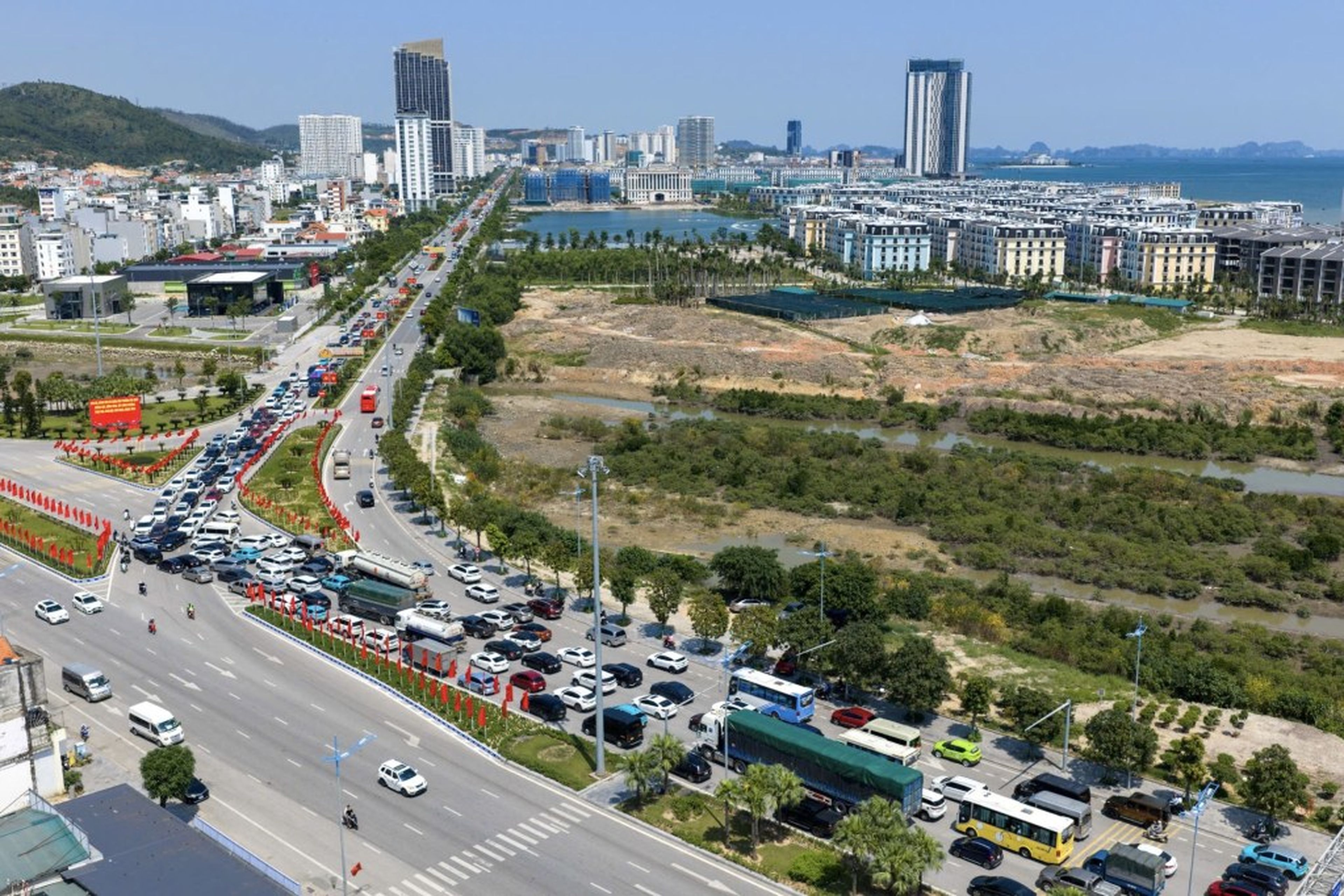
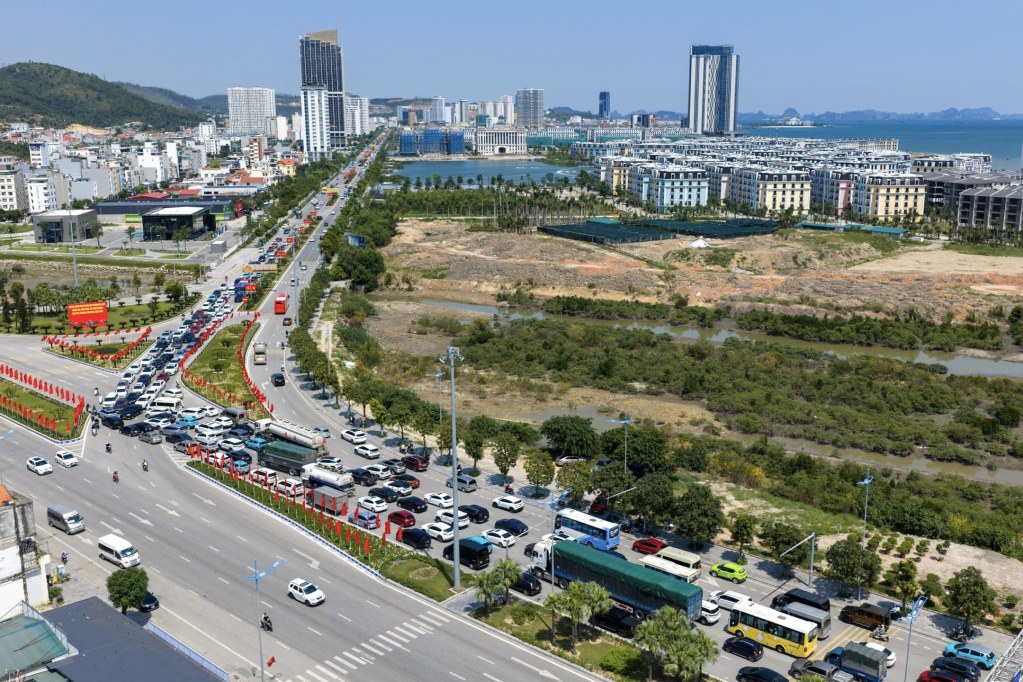
Nguyen Hoang Nghia, a visitor from Da Nang City, shared: One of the most noticeable limitations is that the transport infrastructure serving night-time activities is not yet truly integrated. During peak periods, many roads in the central area often experience localized congestion, while public transport after 22:00 remains quite limited. This significantly affects visitors’ experiences, as well as the ability to expand the night-time economic space.
Although the night-time service space has expanded, it still lacks depth and a clear sense of distinction. Most current activities remain focused on dining, shopping or short-term event performances. Products capable of keeping visitors longer—such as night-time cultural complexes, large-scale artistic shows, immersive performances and distinctive local experience activities—are still limited.
The seasonal nature of tourism also means that night-time economic activities are not yet truly stable. Summer and public holidays are usually very lively, but during the low season, many areas slow down noticeably. This creates a requirement to develop a product system attractive enough to maintain visitor flows year-round.
In addition, the pressure of managing the city at night is increasing. As activities continue into the late hours, issues of security and public order, noise, environmental sanitation and visitor safety become mandatory requirements. Another difficulty lies in policy mechanisms. Some types of night-time services still face obstacles concerning operating hours, event organization permits or regulations related to noise. Meanwhile, the night-time economy is a specialized sector that requires more flexible mechanisms to encourage businesses to invest for the long term.
The workforce serving the night-time economy is also an issue that requires attention. Night-time service activities require employees with professional skills, foreign-language communication abilities and conduct appropriate for an international tourism environment. However, the specialized workforce for this sector still does not fully meet development needs.
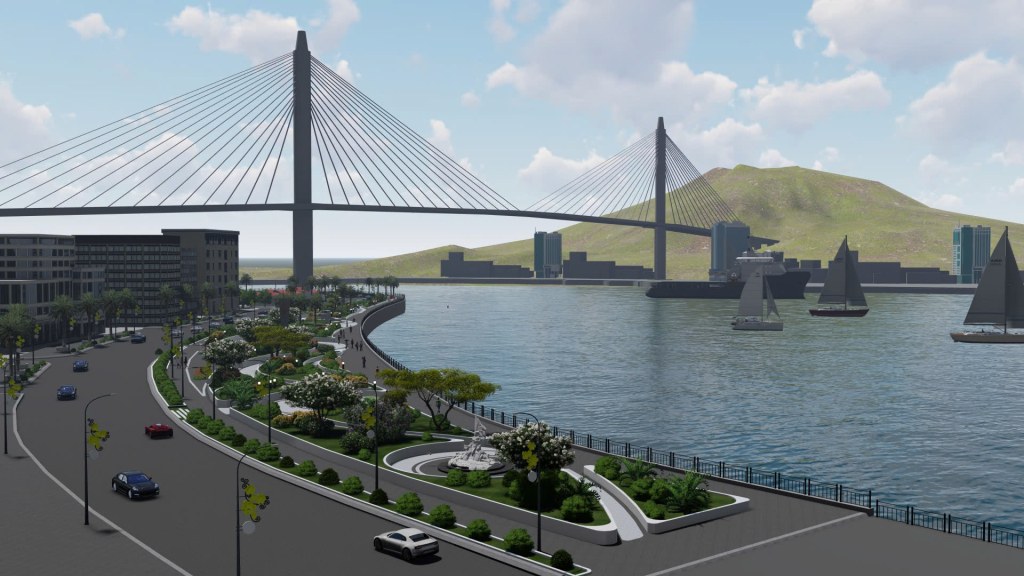
In response to this reality, Bai Chay Ward is planning to implement various solutions to develop the night-time economy in a more structured and sustainable direction. First is the continued improvement of infrastructure serving night-time activities. In 2026, the ward invested nearly VND 100 billion in digital infrastructure and a smart urban management system, adding parking areas and developing a public transport system serving visitors at night.
The ward has now installed 190 AI cameras to monitor security in key areas. At the same time, it is urgently implementing a series of major projects, including landscaping the Bai Chay flower garden; renovating Ha Long Street from the Royal Hotel to the Bai Chay petrol station; renovating roads around Hung Thang Lake and Ao Ca Lake; and installing a smart LED lighting system, among other works, to improve the landscape and create consistency and integration along the locality’s main tourism roads.

The next important direction is to develop specialized products and enhance the value of experiences rather than simply expand the number of services. The locality is working closely with Sun Group, BIM Group, Lotte and others to complete planning and legal procedures, with a view to developing additional shopping centers and high-end hotels, and introducing more night tours, street festivals, large-scale artistic programs and high-quality forms of entertainment.
Tran Manh Hung, Chairman of the People’s Committee of Bai Chay Ward, said: In the trend toward modern tourism, visitors are not only looking for places to have fun but also want to experience local identity. Therefore, incorporating Ha Long culture, marine culture and heritage into night-time products will be an important direction for creating a distinctive identity for Bai Chay. However, developing distinctive products suited to the night-time economy requires an appropriate development mechanism. We hope the relevant authorities will soon complete policies supporting businesses investing in entertainment and night-time services, and create more favorable conditions for operating permits and event organization. If the bottlenecks in infrastructure, mechanisms and products continue to be resolved, the night-time economy will not only help increase tourism revenue but also gradually become a new growth pillar for Bai Chay on its journey to building a modern tourism city beside the heritage site.