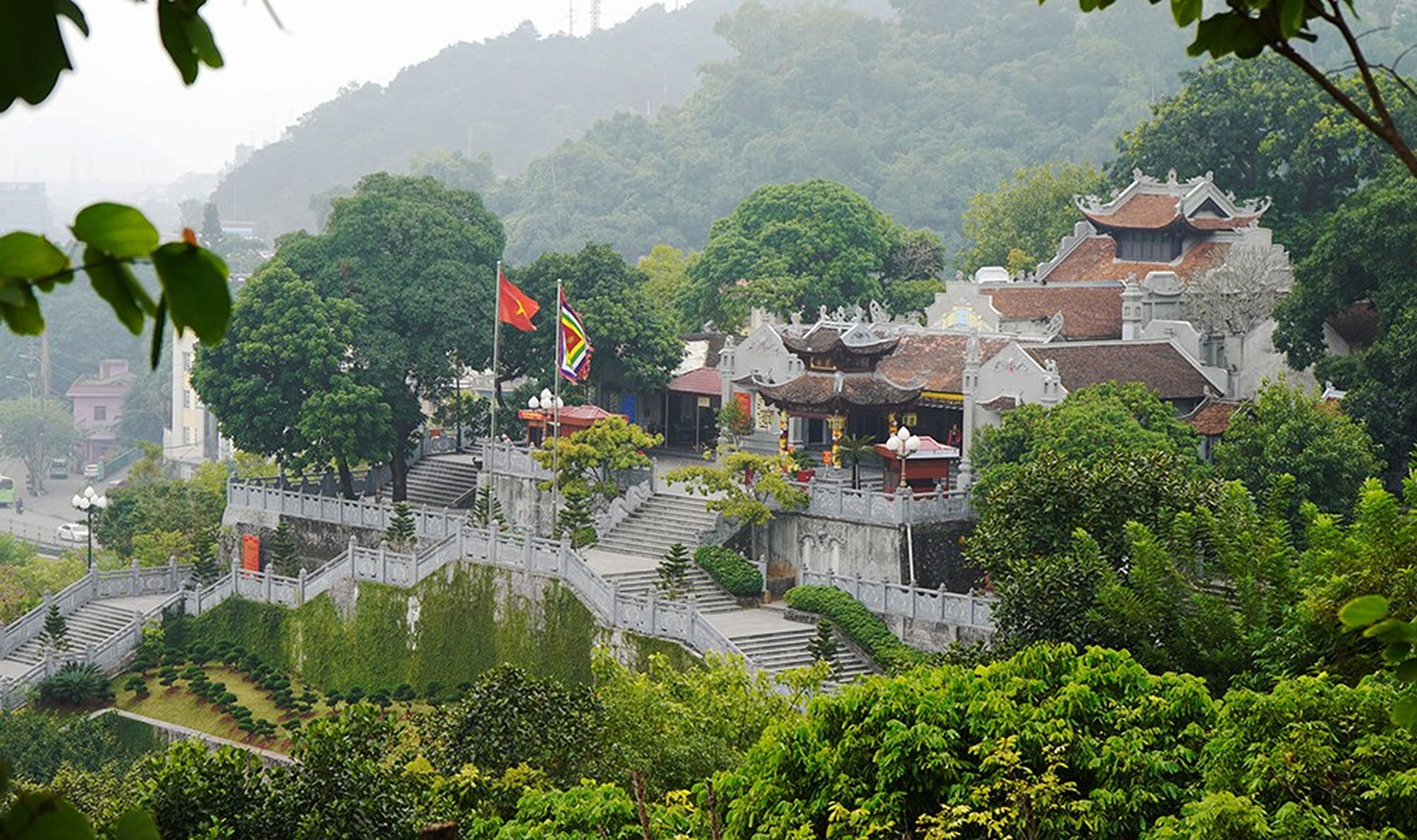
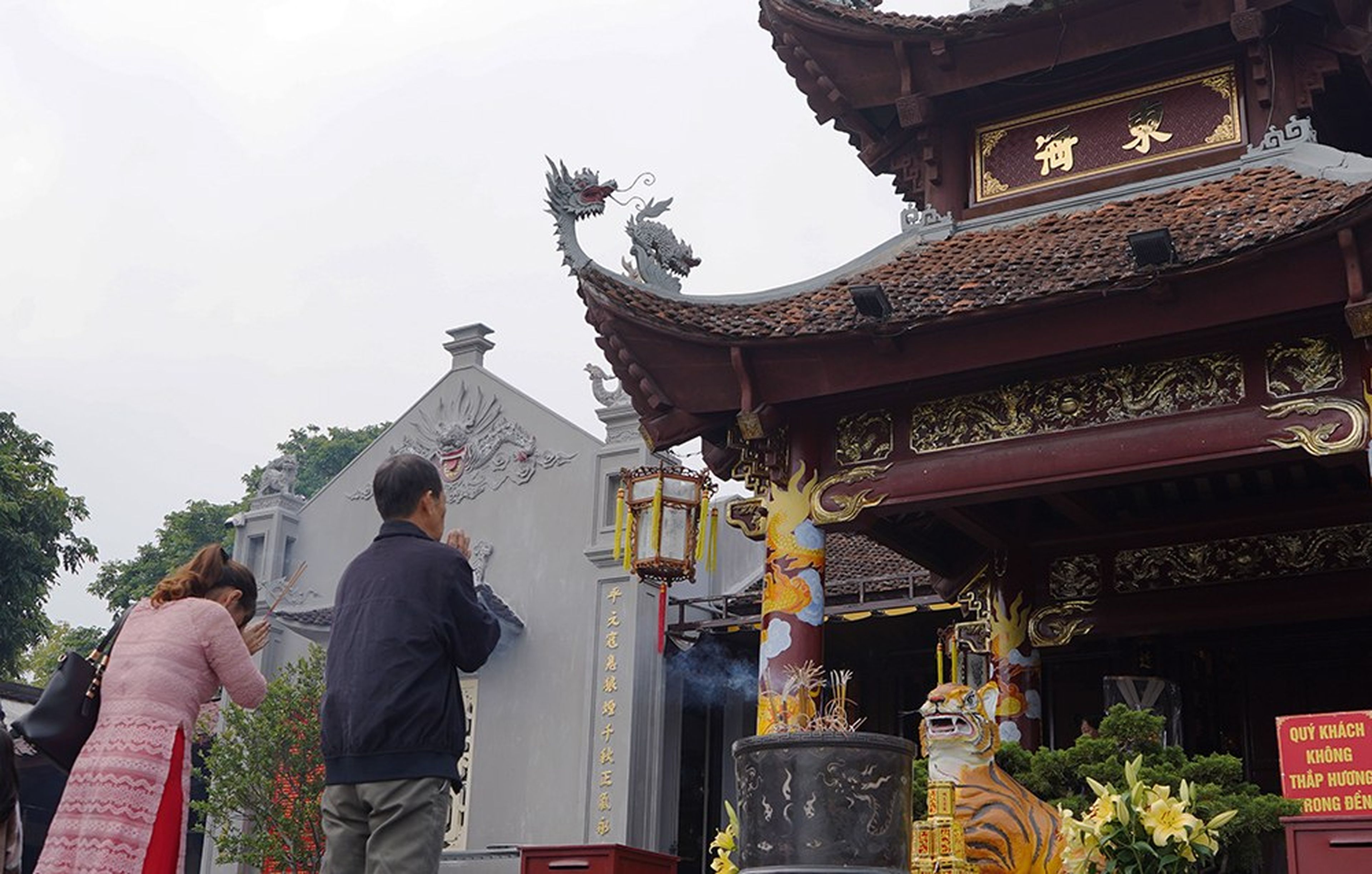
Cua Ong Temple is located in Cam Pha City and is one of the most famous spiritual destinations in Quang Ninh Province. The temple has been recognized as a special national historical relic since 2017.
Cua Ong Temple in Quang Ninh, one of the most beautiful temples in Vietnam
History of Cua Ong Temple
Cua Ong Temple is situated on a nearly 100-meter-high hill overlooking Bai Tu Long Bay and is one of the historical and cultural relics of the Tran dynasty. It is dedicated to Hung Nhuong Vuong Tran Quoc Tang, who helped defend the northeastern border and drive out the Yuan-Mongol invaders in the 13th century.
The temple is also a place of worship for the family of Hung Dao Dai Vuong Tran Quoc Tuan and the talented generals of the Tran dynasty: Yet Kieu, Da Tuong, Tran Khanh Du, Pham Ngu Lao…
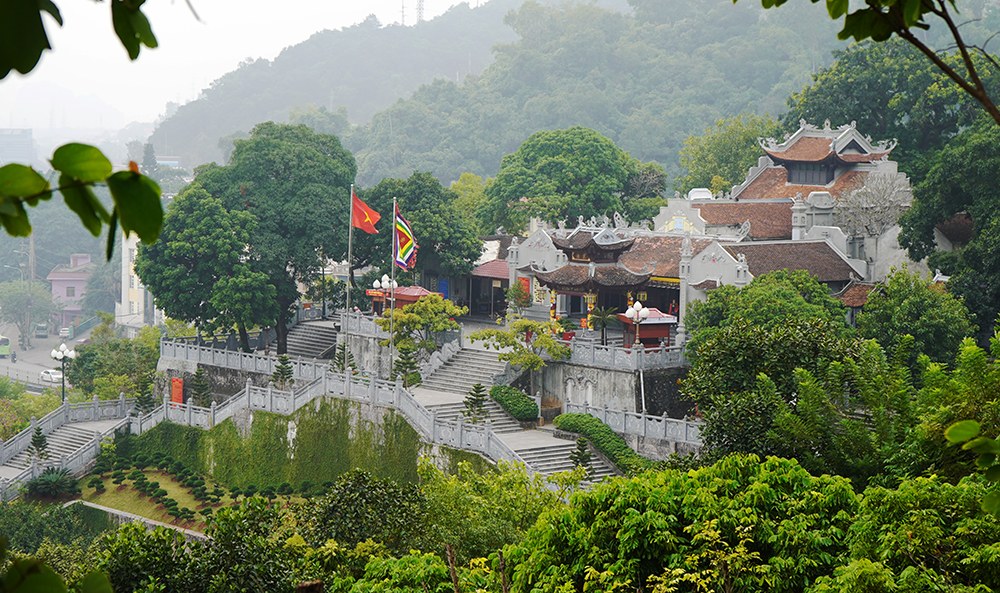
The Cua Ong Temple complex. Photo: Quang Ninh Newspaper.
The terrain around Cua Ong Temple is a narrow valley stretching along Route 18, situated between two high mountain ranges. Since ancient times, the road through Cua Ong has been the only route leading to the northeastern border region. Cua Ong is like a throat connecting the undulating, mountainous eastern region with the wealthy mining area and the vast western region.
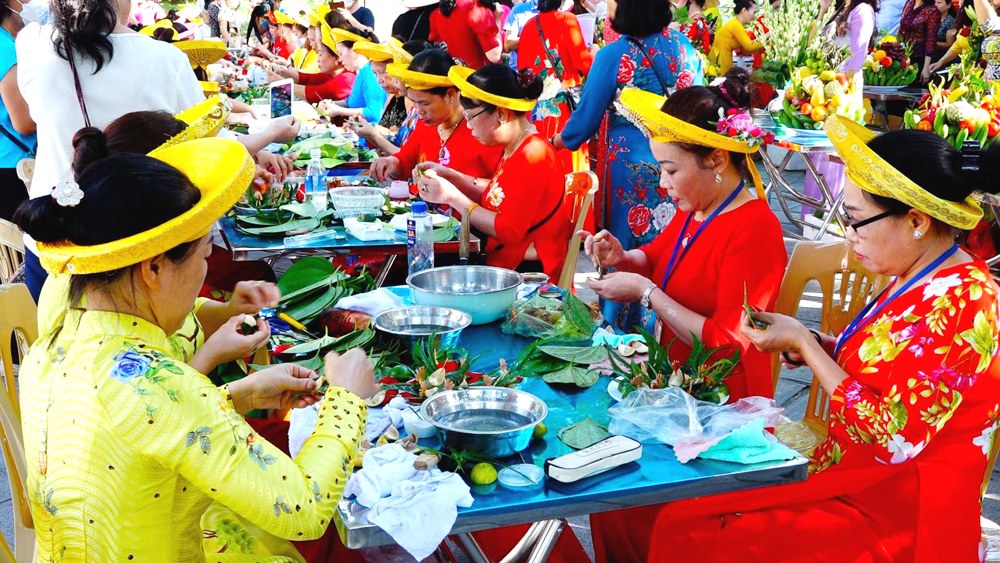
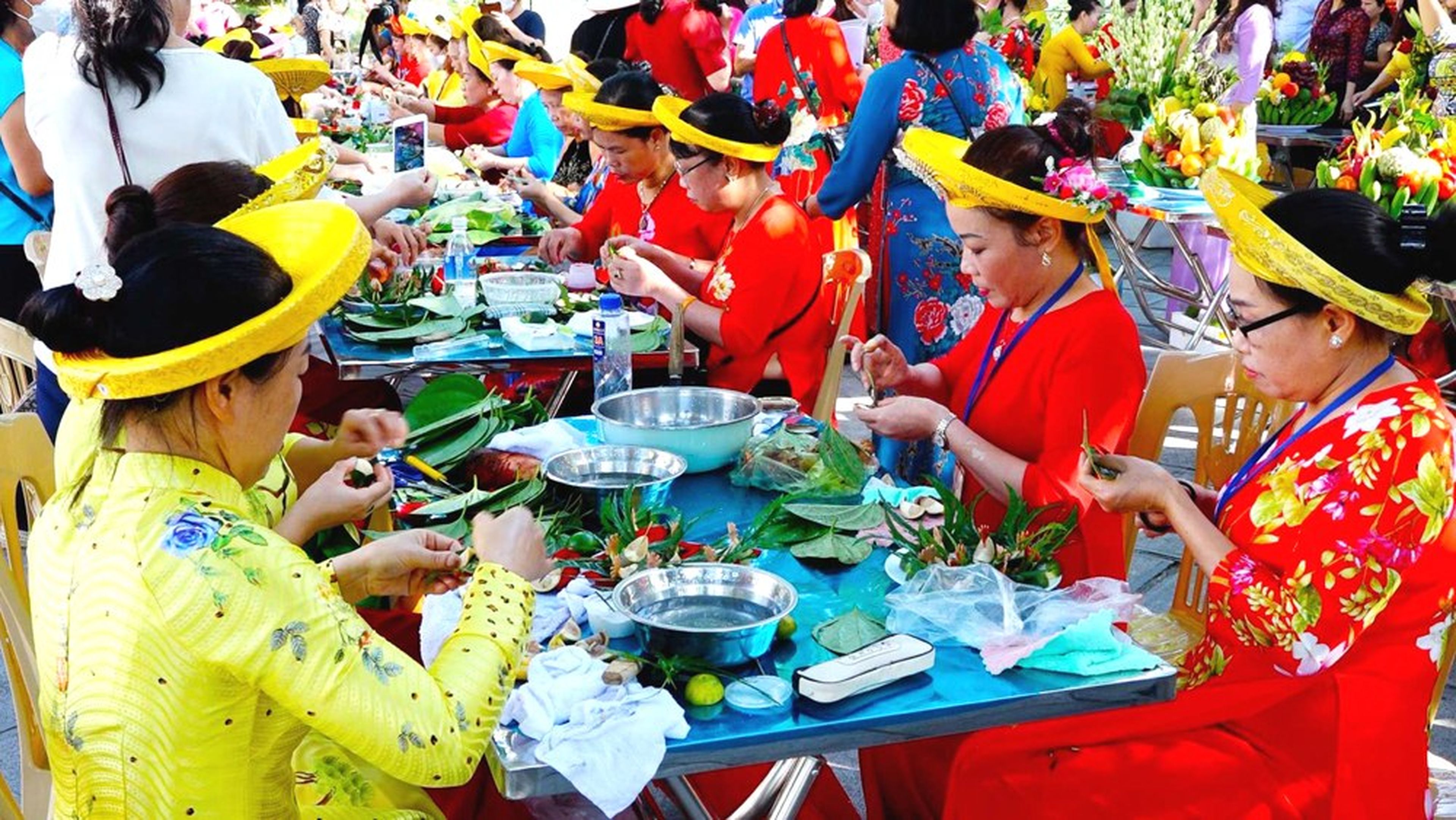
Phượng-wing betel quid-making contest. Photo: Quang Ninh Newspaper.
The northern campaigns of conquest, as well as the military movements of feudal dynasties toward the northeastern border, all passed through Cua Ong. Therefore, a military outpost was established here for defense. To the south of Cua Ong is Bai Tu Long Bay, a prosperous maritime area that gave the locality an advantage as a seaport.
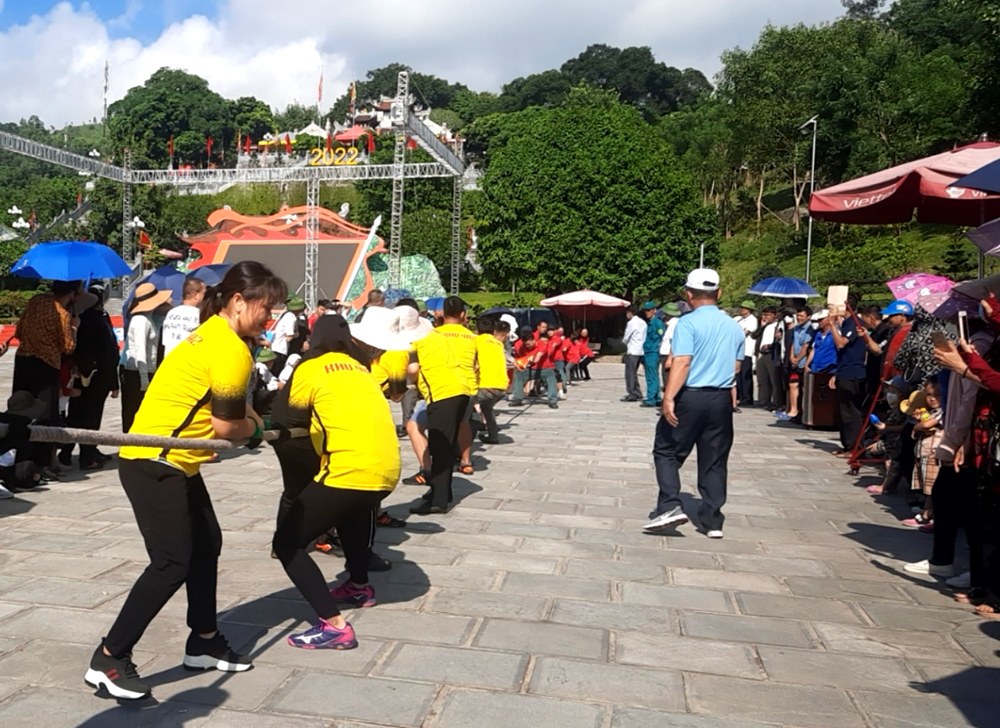
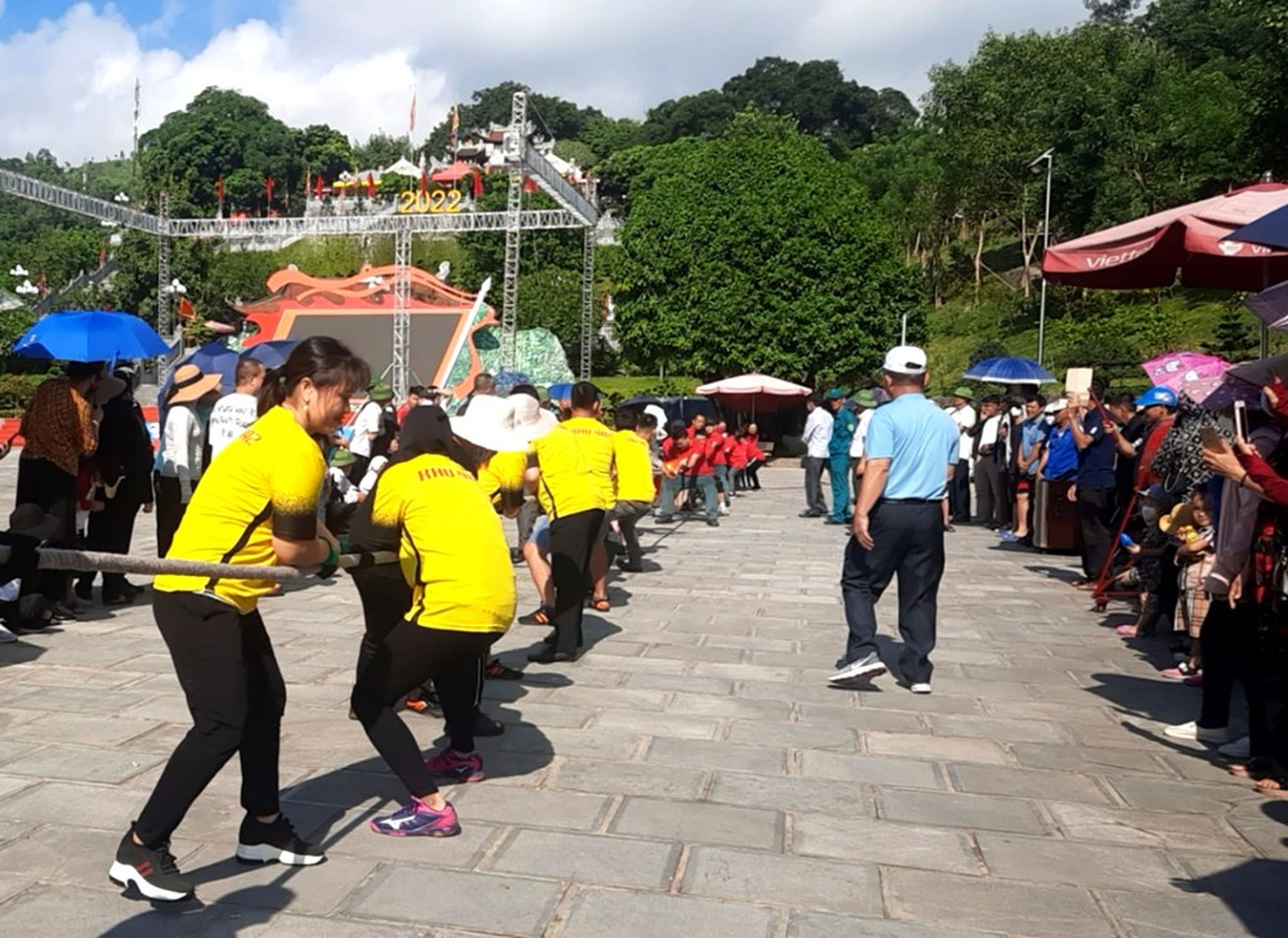
Tug-of-war competition. Photo: Quang Ninh Newspaper.
With a location and terrain favorable for building a seaport, this place has been a trading harbor since ancient times, connecting the Red River Delta with northeastern Vietnam and southeastern China. The Cua Ong harbor was called Cua Suot at that time.
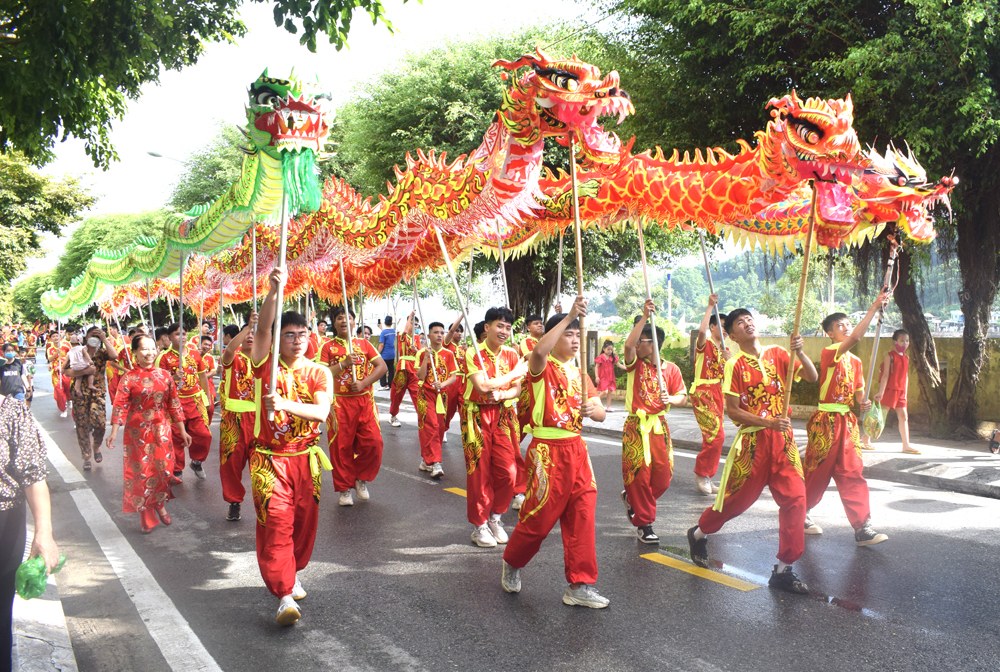
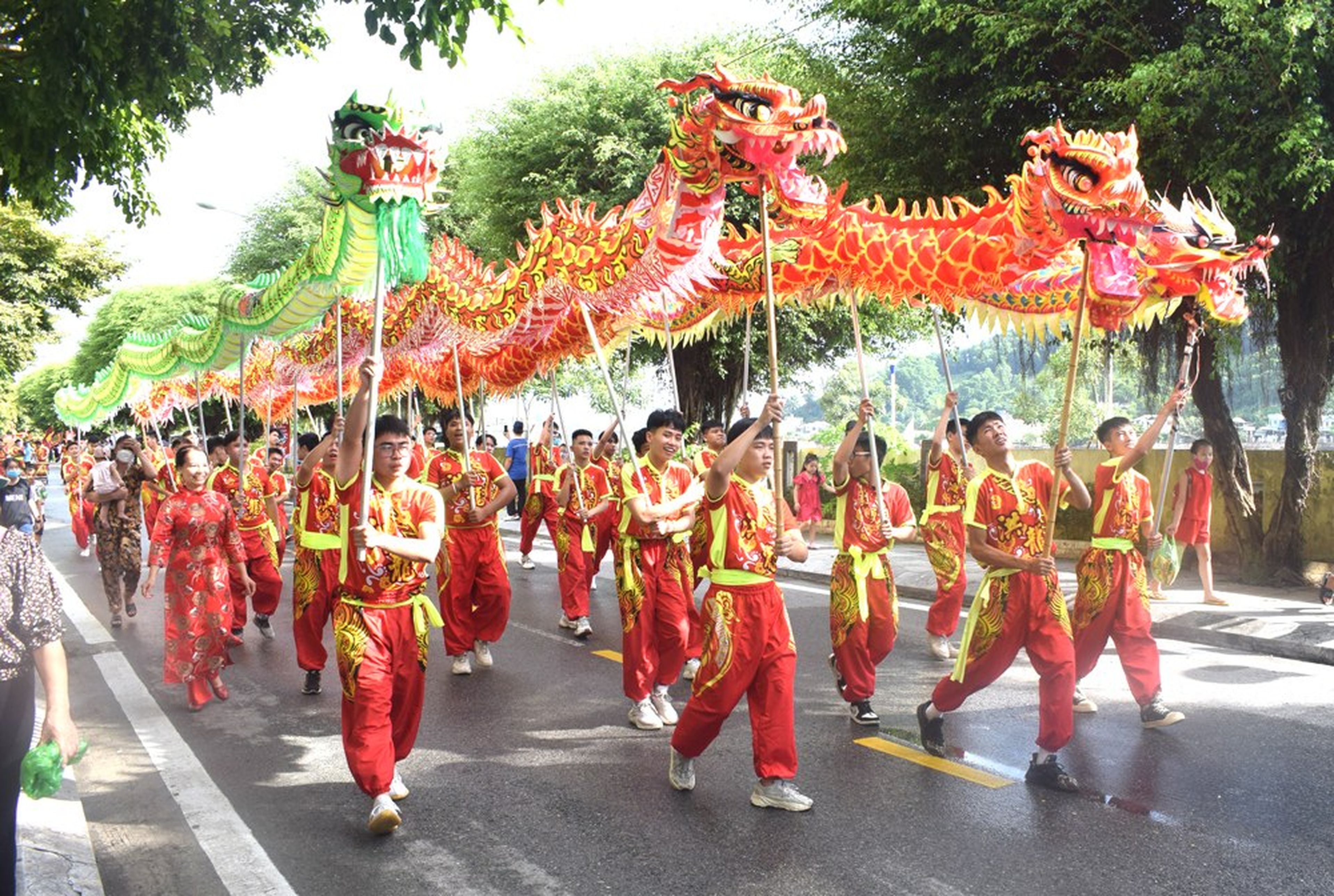
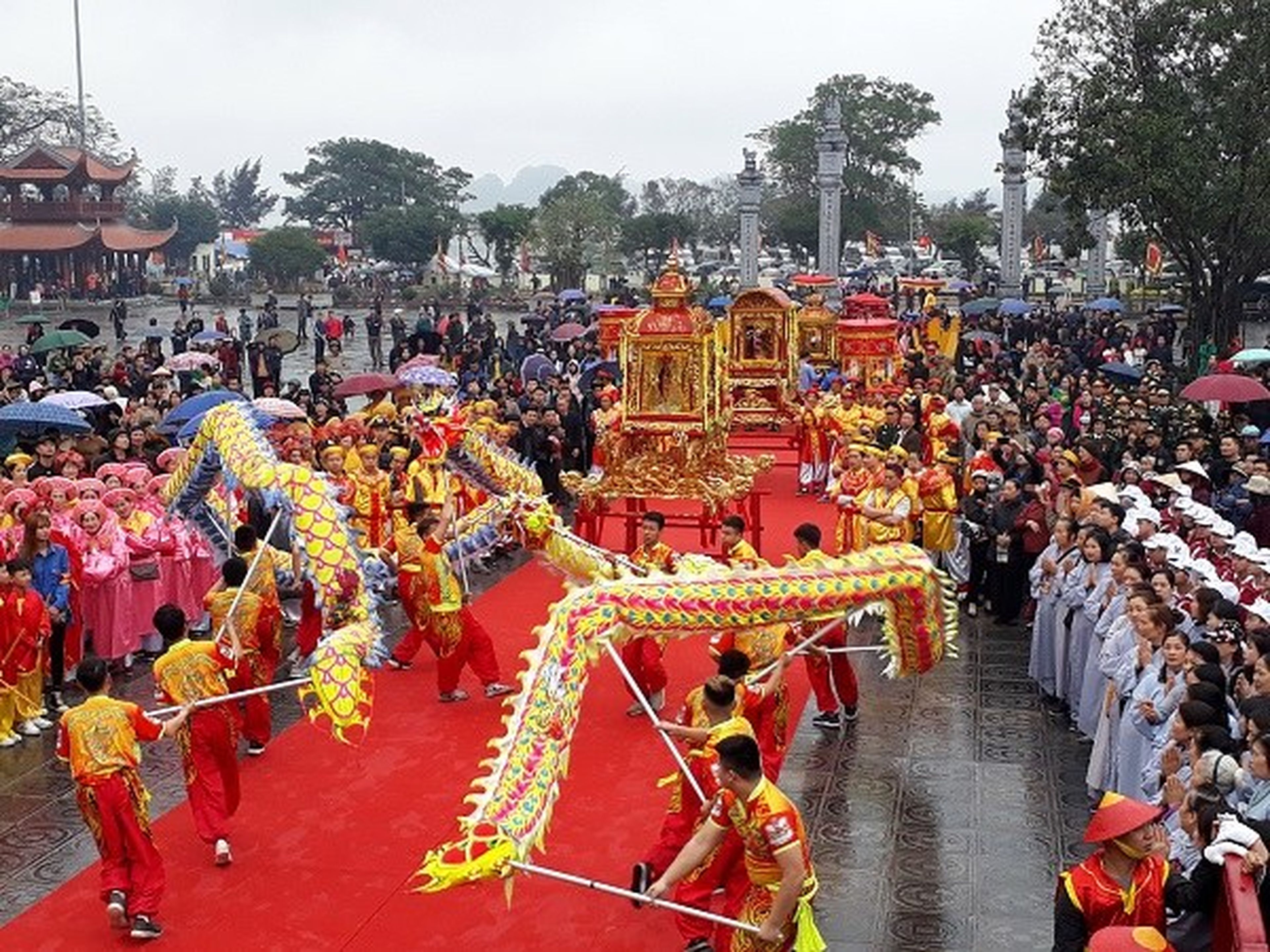
The dragon dance procession at the festival. Photo: Quang Ninh Newspaper.
Cua Ong Temple not only has great historical value but also carries profound artistic and cultural significance. The temple complex is arranged across low hills, interspersed beneath the shade of ancient trees, creating a tranquil and solemn landscape.
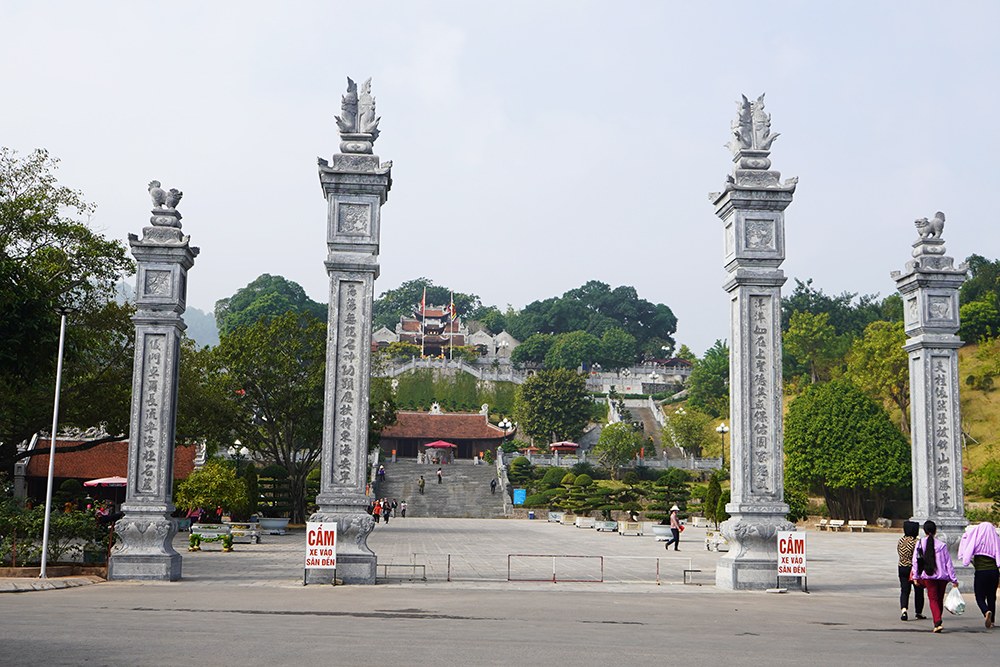
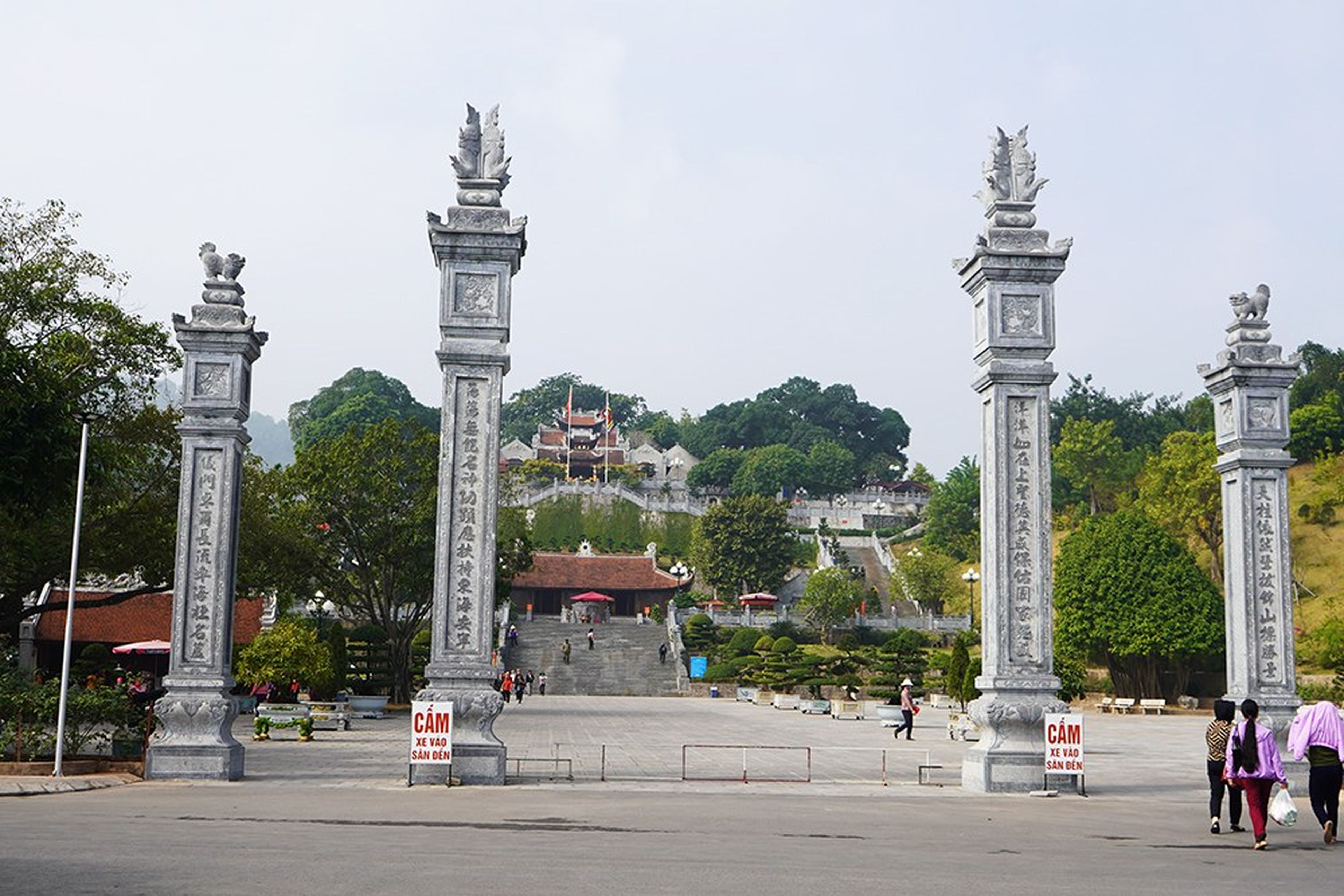
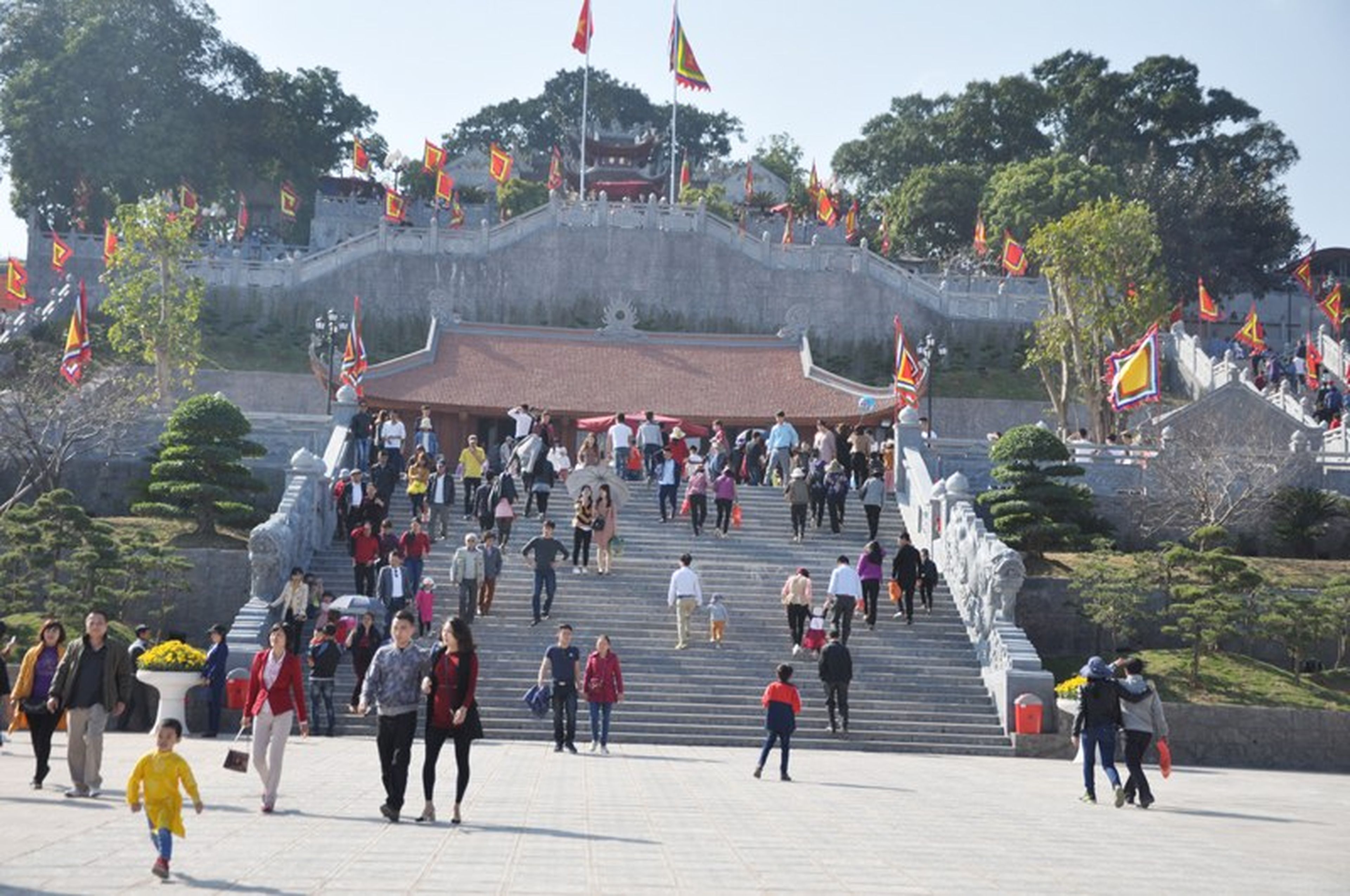
The temple entrance. Photo: Quang Ninh Newspaper.
The temple was built with cast stone, Bat Trang bricks, mortar mixed with molasses, fired-clay floor tiles, fired-clay roof tiles… Its decorations follow the motifs of the Dragon, Qilin, Tortoise and Phoenix. The interior of the temple was constructed from durable, beautiful types of wood: ironwood, lim, trac and gụ wood. The framework was built in the style of rafters, beams, braces and pillars… and decorated with carved reliefs, hanging panels, parallel sentences… and patterns painted red and gilded.
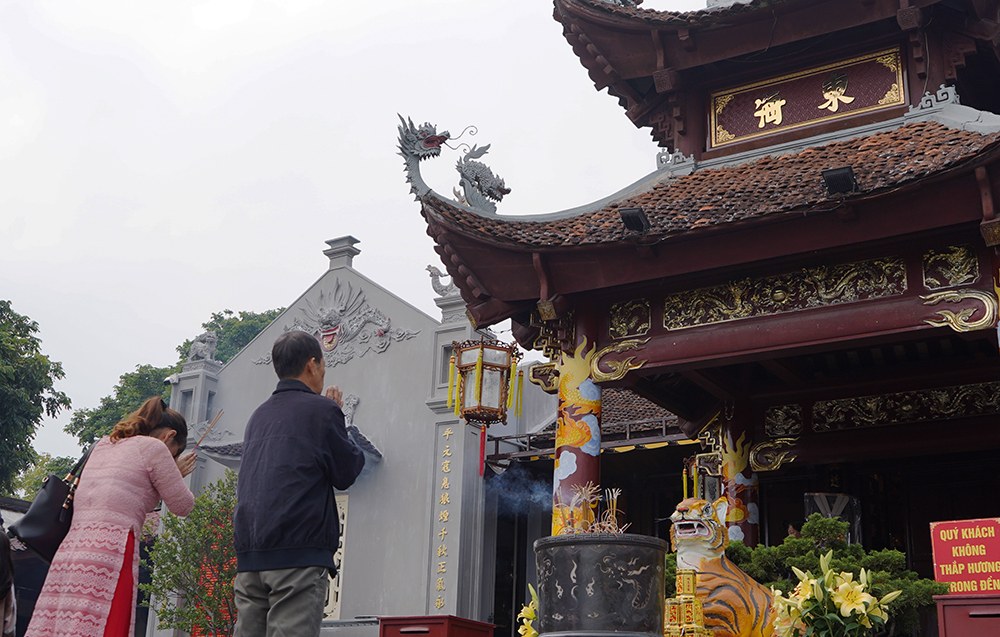
The temple attracts visitors from near and far. Photo: Quang Ninh Newspaper.
Visitors to the temple complex can explore three main areas: the Lower Temple, Middle Temple and Upper Temple, located in three different positions. The Lower Temple is situated below and dedicated to the Mother Goddess; the Upper Temple includes the main temple dedicated to Tran Quoc Tang, Quan Chau Temple, Quan Chanh Temple…
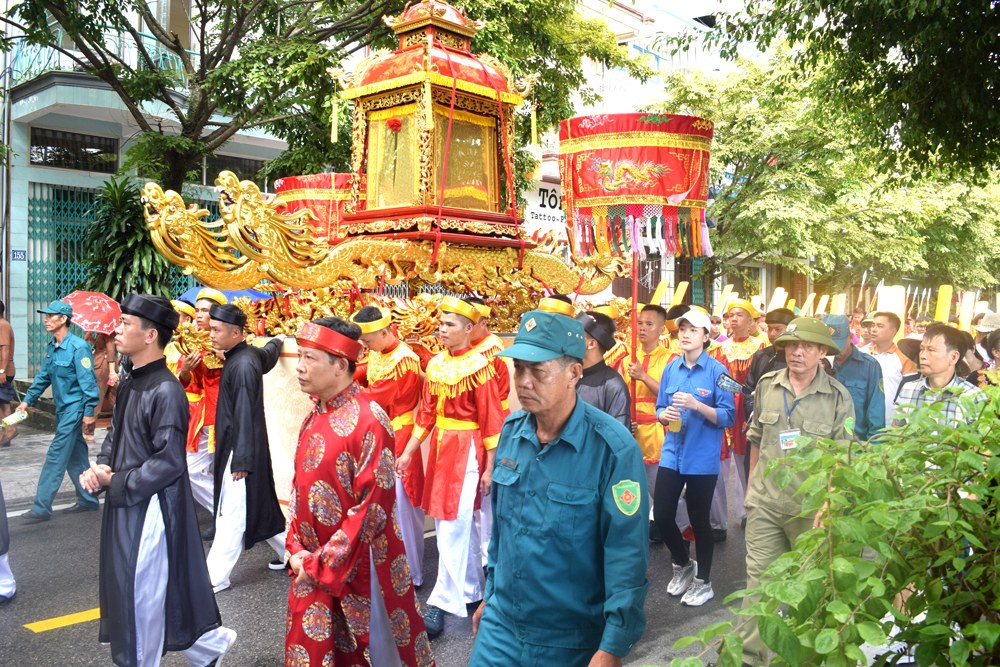
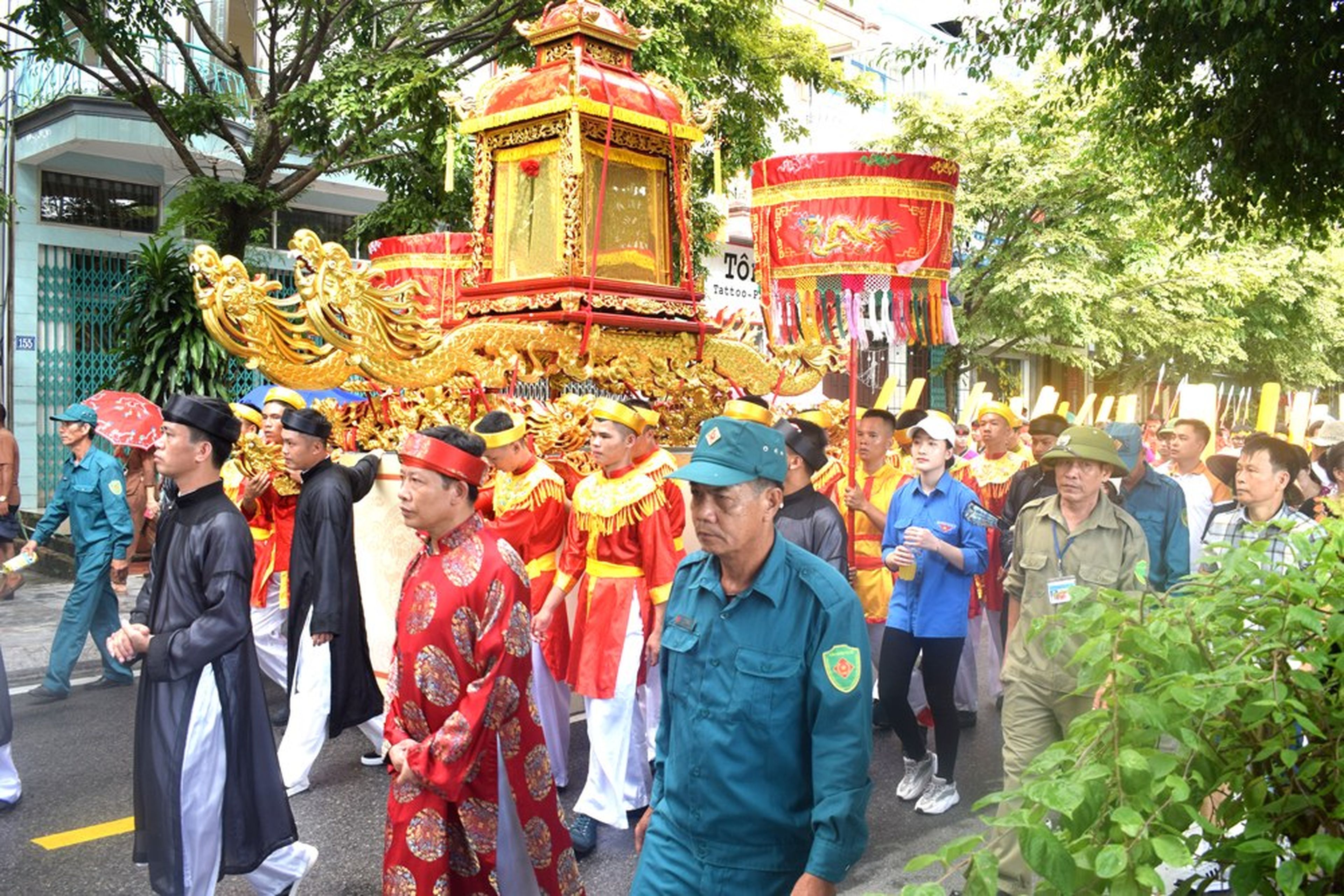
The procession of Duc Ong. Photo: Quang Ninh Newspaper.
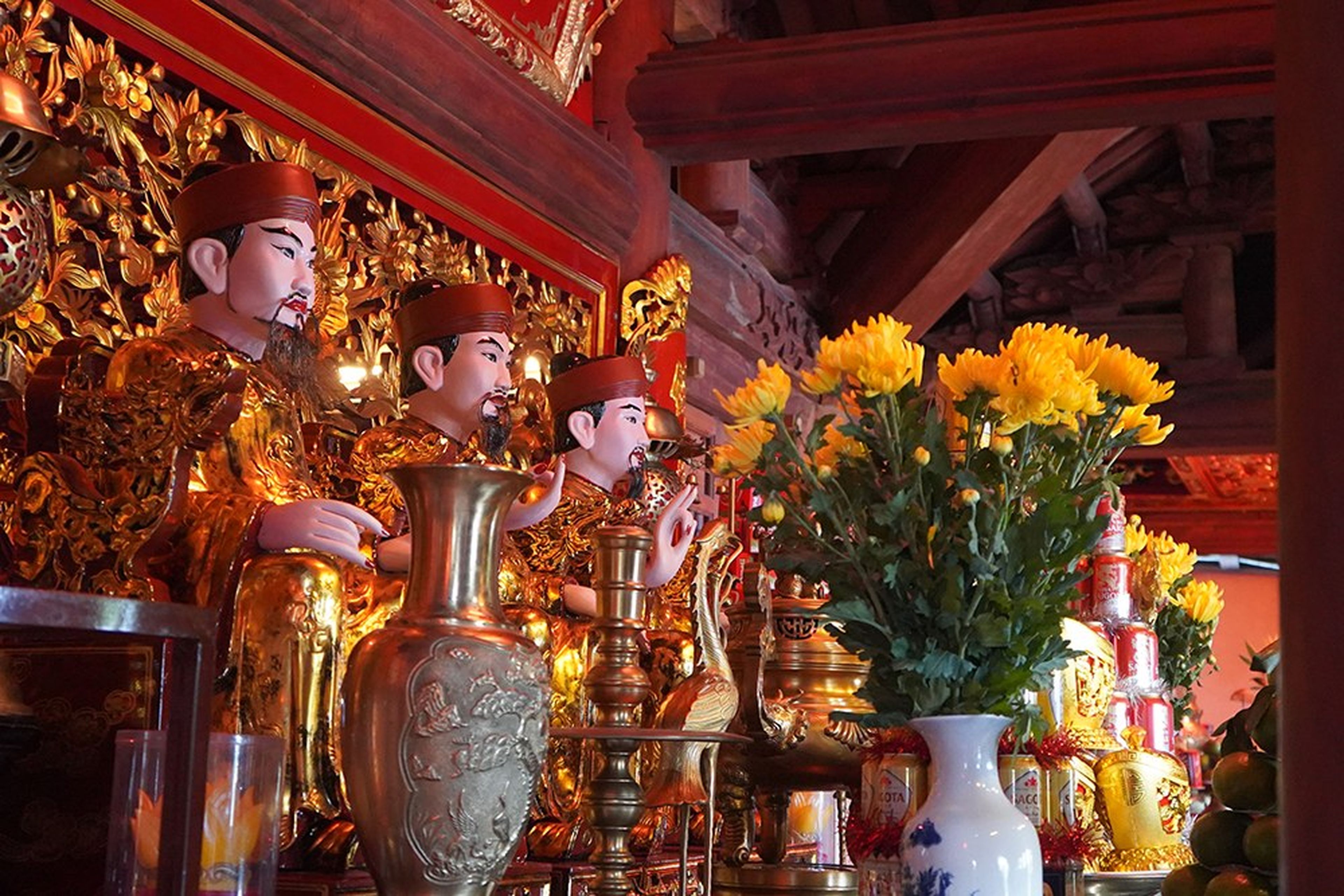
Today, the temple still preserves 34 large and small statues meticulously carved by artisans. Their seated postures on thrones, in shrines and in dragon palanquins are highly balanced and artistically valuable.
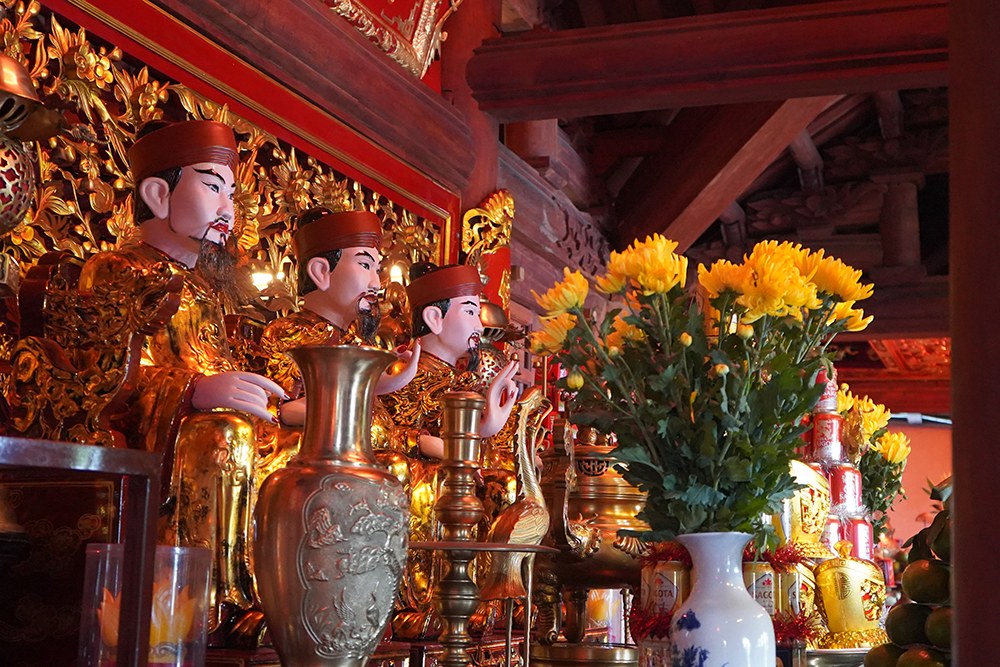
Worship statue at Cua Ong Temple. Photo: Quang Ninh Newspaper.
Cua Ong Temple Festival
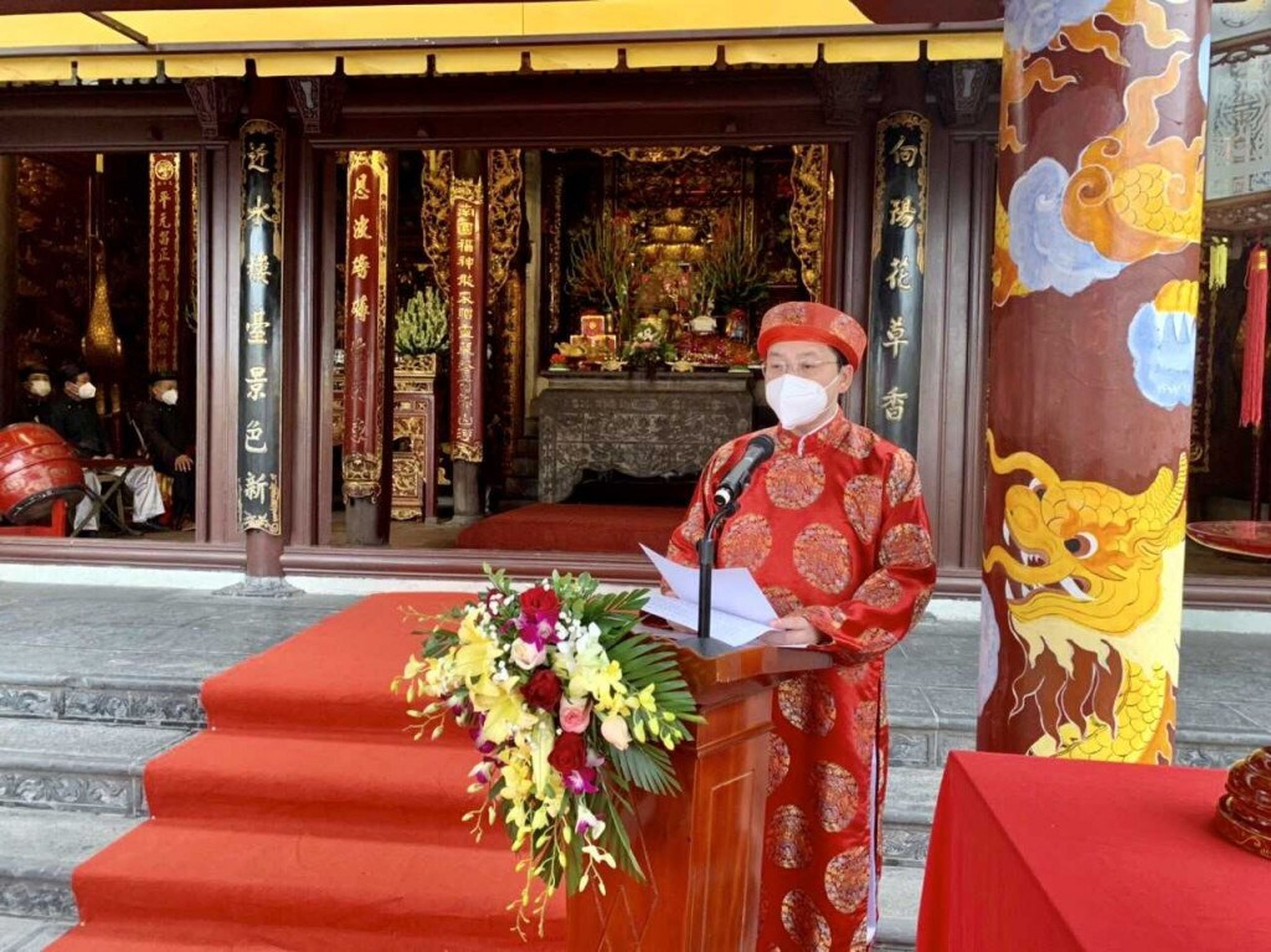
The Cua Ong Temple Festival is held on the 3rd and 4th days of the second lunar month and the 3rd and 4th days of the eighth lunar month every year. The festival consists of two parts: ceremonial rites and festivities. The ceremonial rites begin with a ceremony requesting permission to open the festival at the Upper Temple. This is followed by an incense-offering ceremony requesting permission to escort Duc Ong on a procession at 6h–6h30 at the Upper Temple.
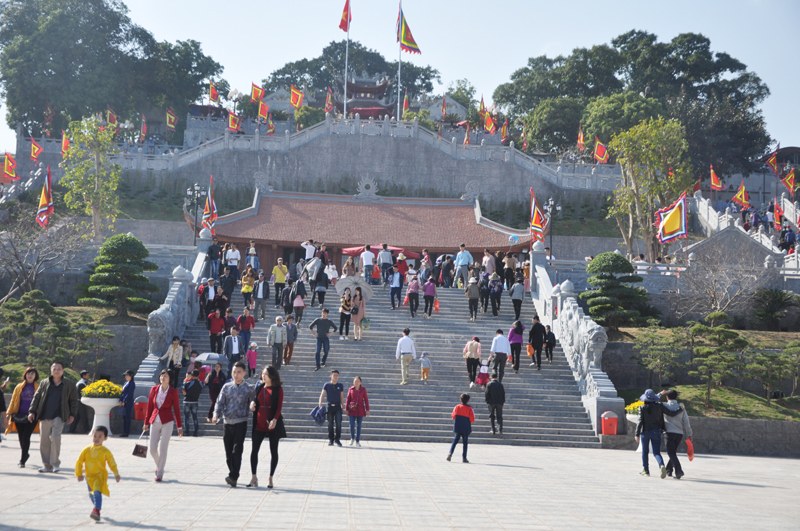
Large numbers of visitors explore the temple. Photo: Quang Ninh Newspaper.
The main ceremony is the procession of Duc Ong and the deified human figures through the area where they are enshrined. The festivities include an artistic program and folk games commonly played in the region.
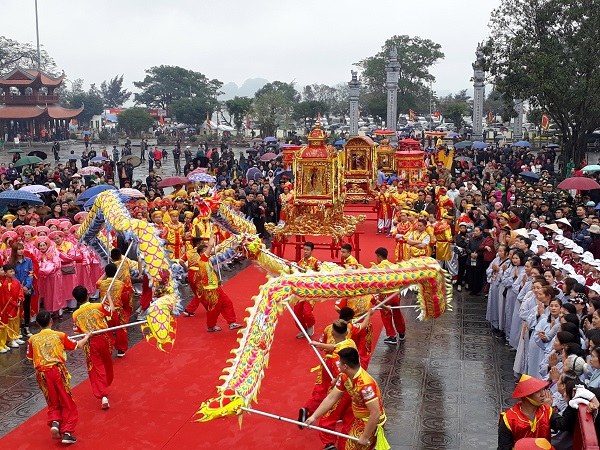
The temple festival. Photo: Thuong hieu va Phap luat.
Activities during the Cua Ong Temple Festival recreate the history and great contributions of the meritorious founders of the nation, as well as those who made contributions to the country and its people. This is also an occasion to express the principle of “When drinking water, remember its source” and awaken national pride in everyone.
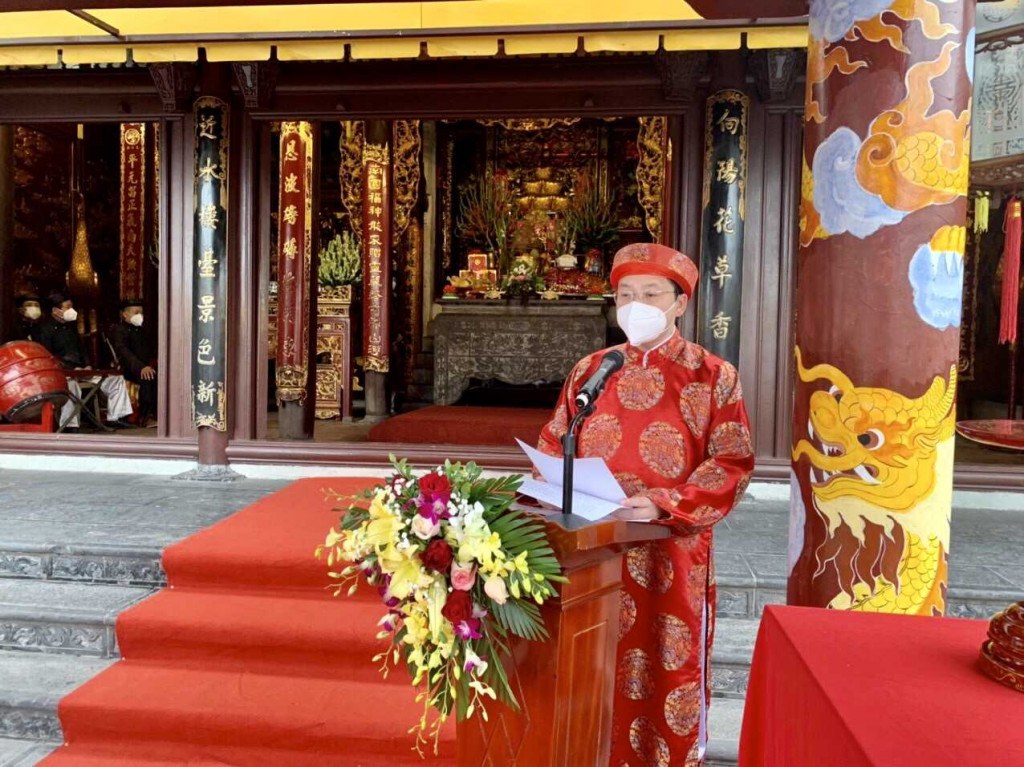
Photo: Cam Pha.
In addition, the festival provides an opportunity to promote the outstanding values of the special national relic of Cua Ong Temple. At the same time, the event plays an important role in helping revive and attract tourists to Cam Pha City in particular and Quang Ninh Province in general.