


Bình Liêu District attracts visitors with its sky-white reed fields, beautiful waterfalls, border markers and mountain peaks… Join iVIVU in experiencing the ascent of Cao Xiêm Mountain, the highest mountain in Quảng Ninh and a favorite among many travelers.
Conquering Cao Xiêm Peak – the “rooftop” of Quảng Ninh Province
Bình Liêu is located at the eastern gateway of Quảng Ninh Province. This mountainous district has an average elevation of 500-600m above sea level, with many peaks rising above 1,000m (Cao Xiêm, Cao Ba Lanh, Ngàn Chi…). The climate here is cool year-round, with warm sunshine at noon and cold afternoons and nights. 96% of Bình Liêu’s population belongs to the Tày, Dao, Sán Chỉ, Hoa and other ethnic groups.

Mountain peak. Photo: Hồng Hà.
Visitors to Bình Liêu enjoy conquering high mountains and experiencing the pristine beauty of nature, with waterfalls, sở flower forests, golden camellia, medicinal plant forests, as well as touring the process of making arrowroot vermicelli and visiting ethnic minority villages…
The hills are home to many raspberry-like berries and purple sim fruits. Photo: Hương Chi.
Bình Liêu particularly impresses visitors with its mountain peaks and border markers that they want to conquer, including Cao Xiêm Mountain the highest peak in Quảng Ninh Province. Of the 64 border markers, only a few have been developed for tourism, such as 1300, 1302, 1305 and 1327. Among them, visitors most often choose to conquer border marker 1305.
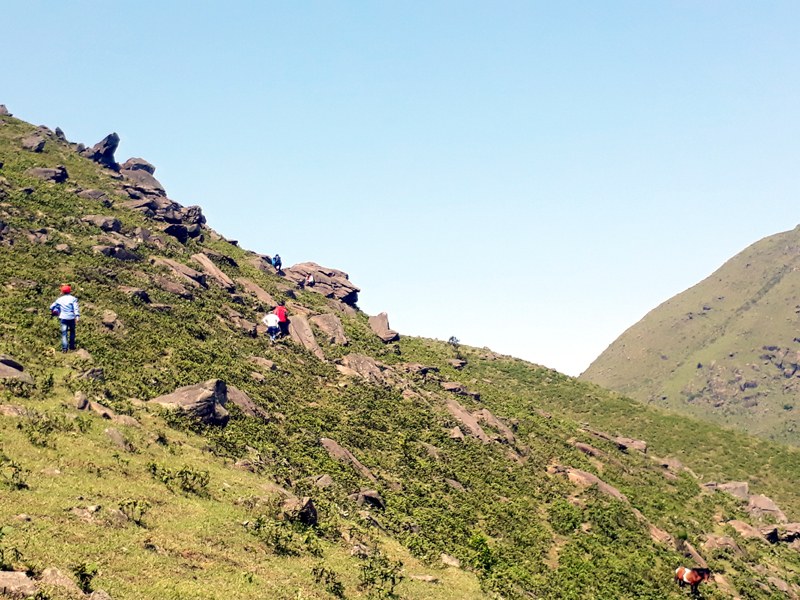
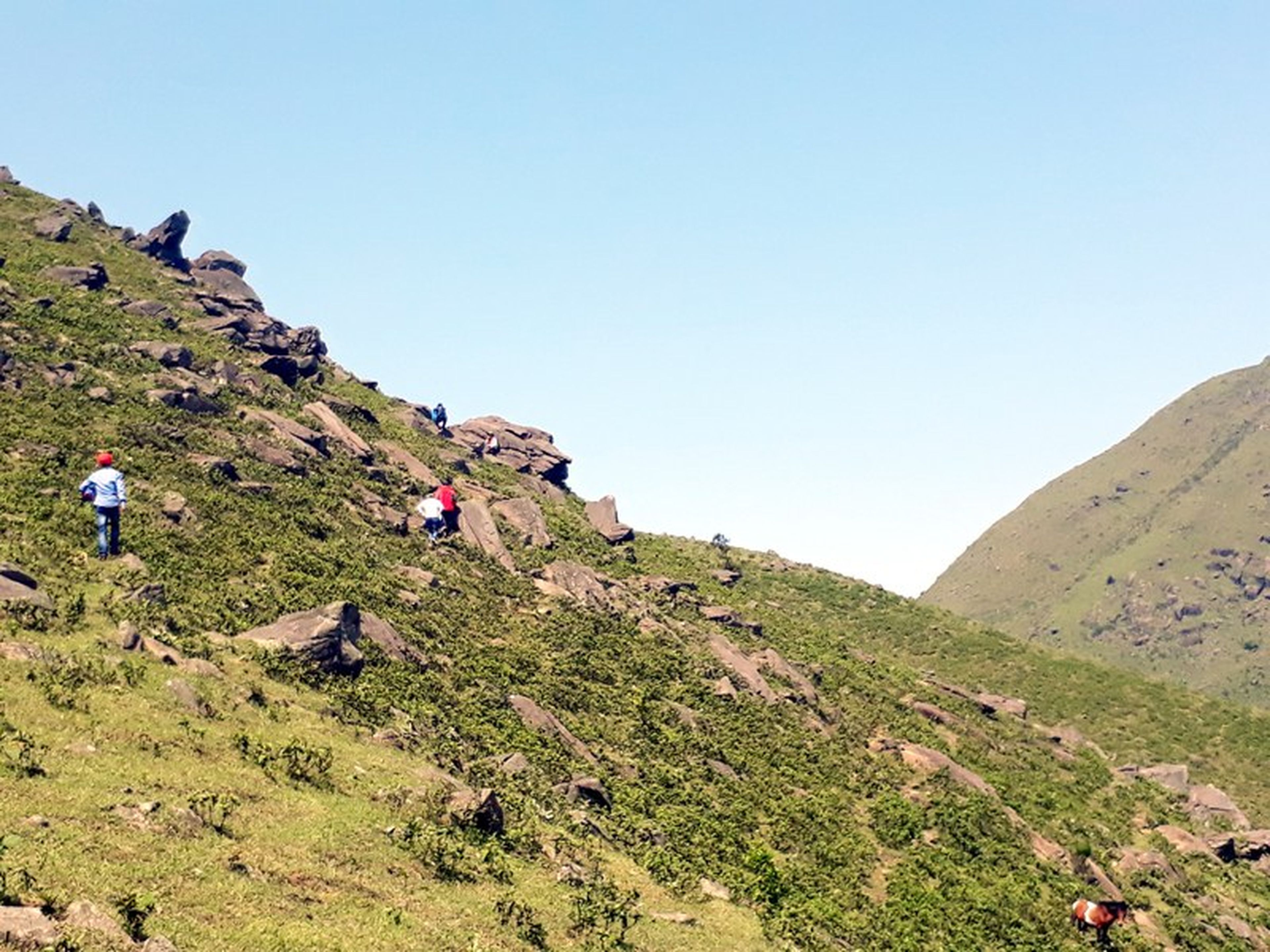
Rocky, rugged slopes. Photo: Quảng Ninh Newspaper.
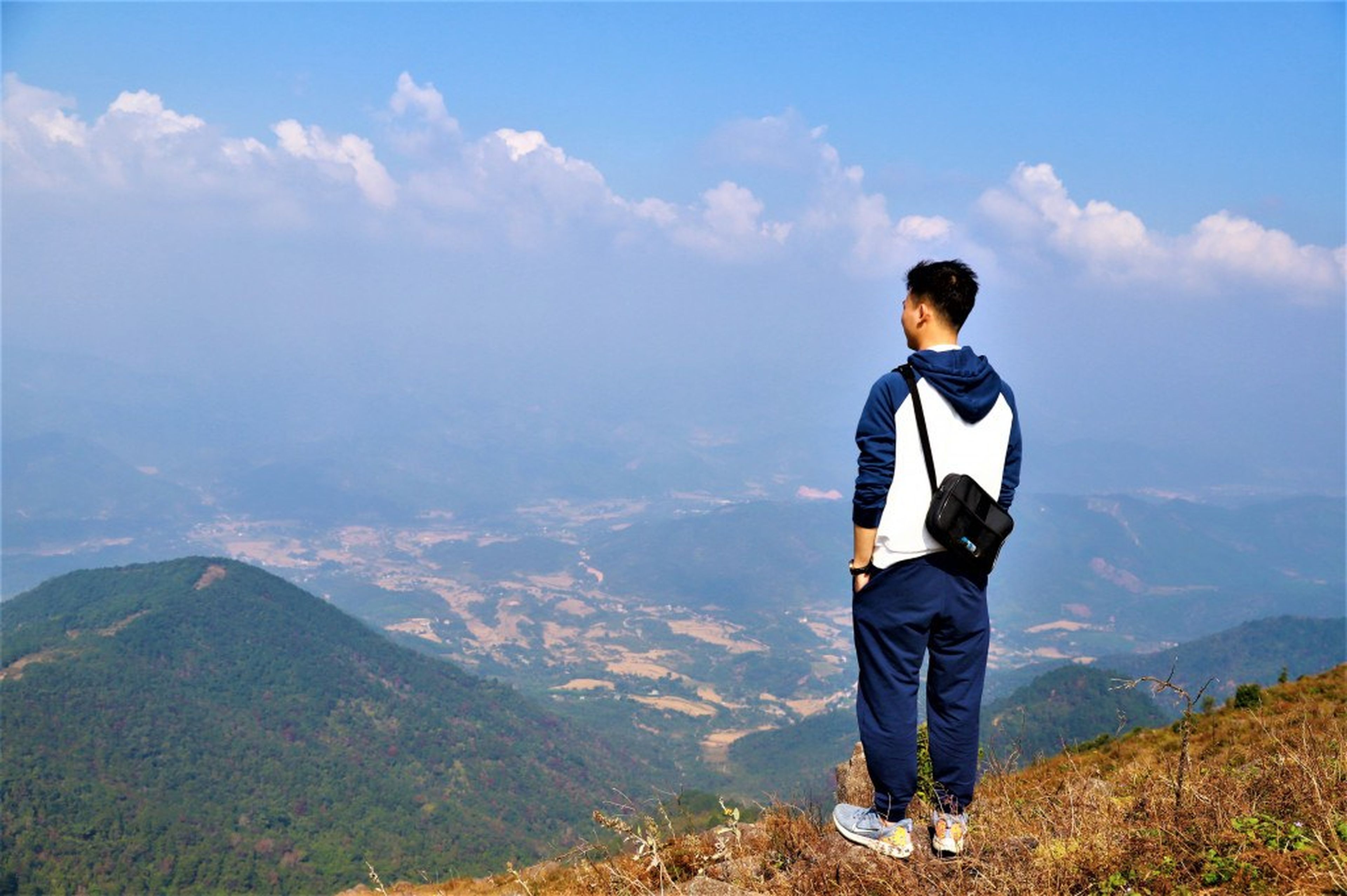
Cao Xiêm Peak is also known as Khau Khoang Peak or Cột Cờ, with an elevation of 1.429m above sea level. The cold season here usually begins in November and lasts until the end of March the following year, which is also the season for mountain climbing and cloud hunting. From the summit at 1.429m, visitors can take in a panoramic view of Bình Liêu District’s majestic, undulating mountains.
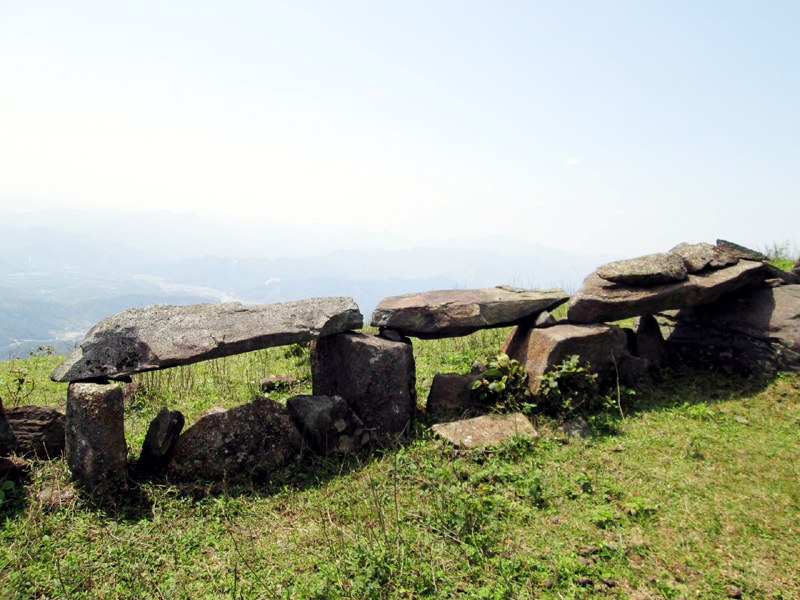
Photo: Quảng Ninh Newspaper.
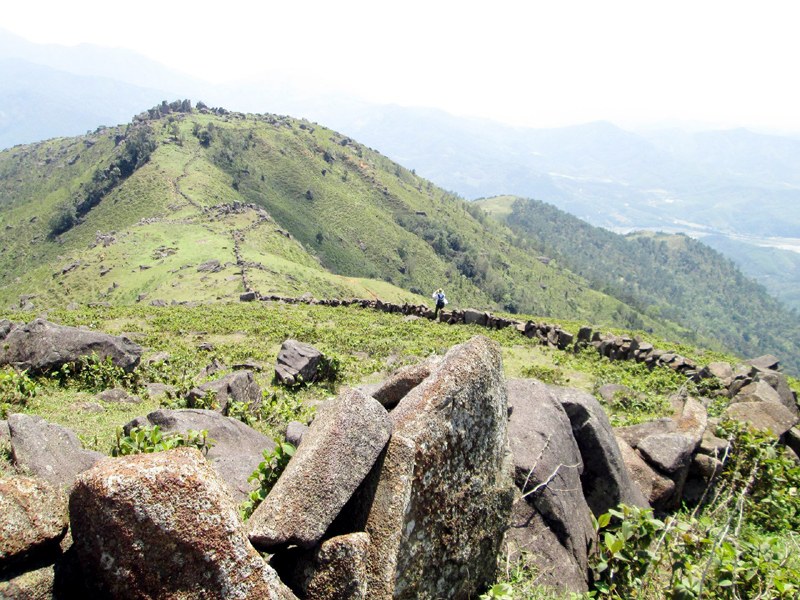
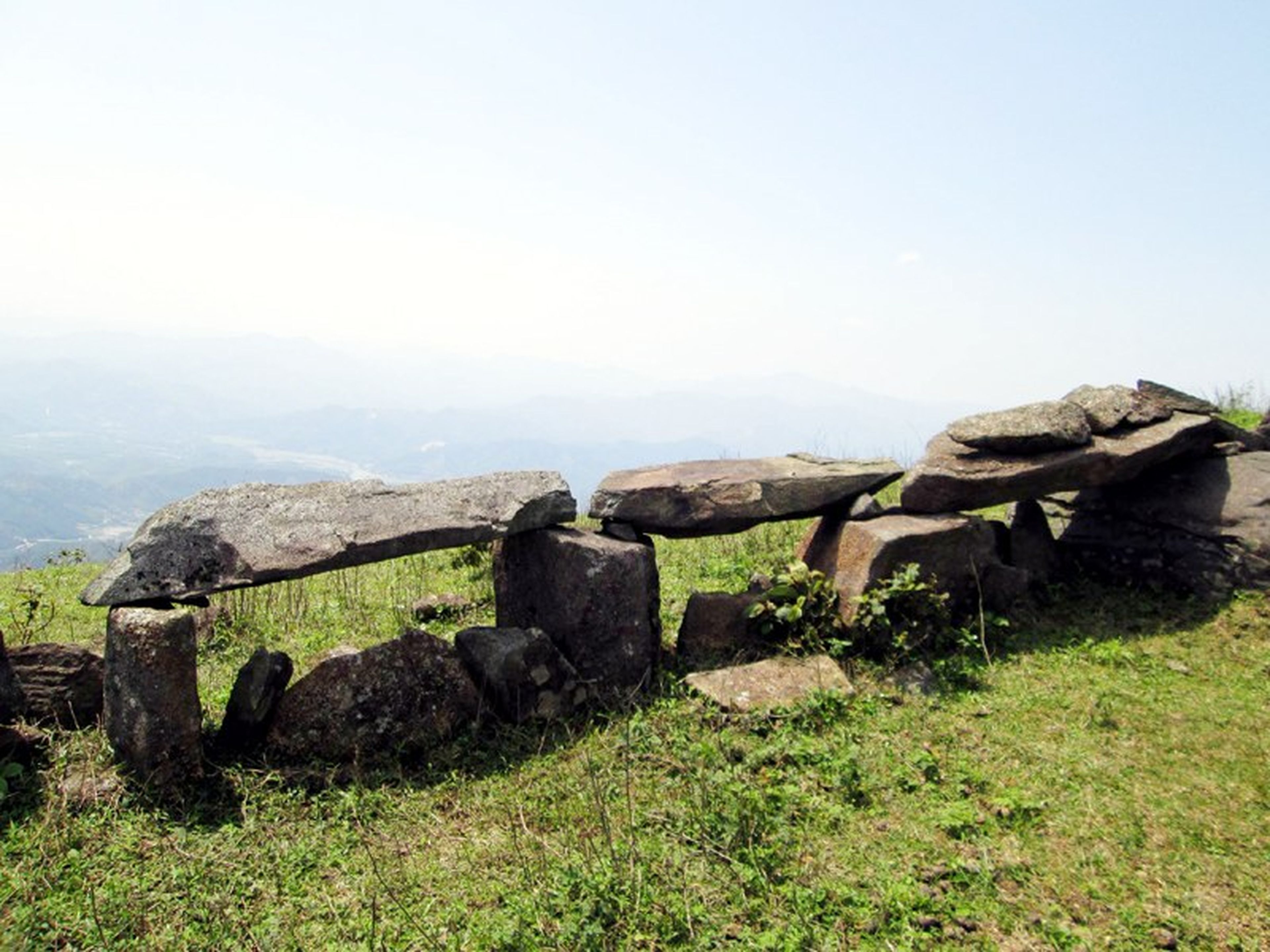
Stone ramparts. Photo: Quảng Ninh Newspaper.
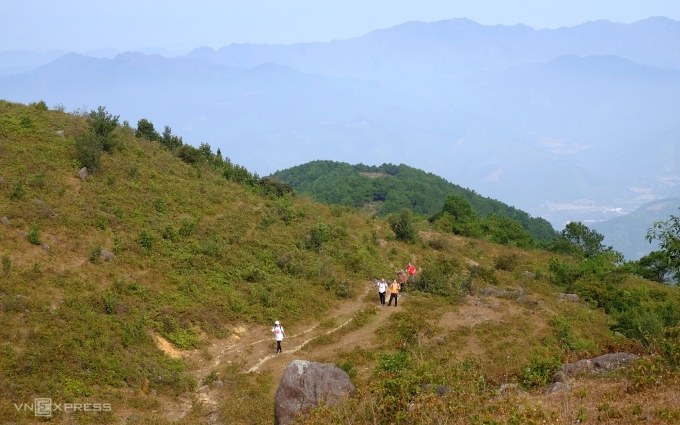
The route from the foot of Cao Xiêm Mountain to the summit is more than 7 km long, so visitors can combine mountain climbing with camping and outdoor activities. The route is primarily a trail winding along the mountainside and crossing vast reed-covered hills. From Bình Liêu town center, there are 4 routes to conquer Cao Xiêm: via Cao Thắng Village (Lục Hồn Commune), via Lục Ngù Village (Húc Động Commune), via Ngàn Mèo Village (Lục Hồn Commune), and via Co Nhan Village (Tình Húc Commune).
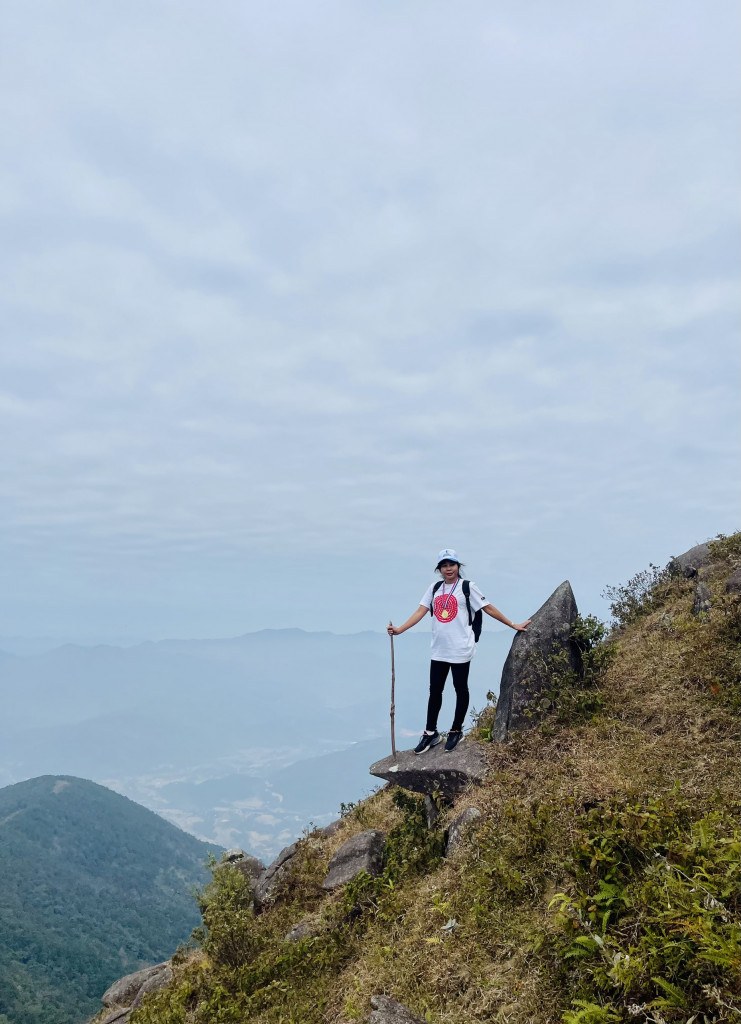
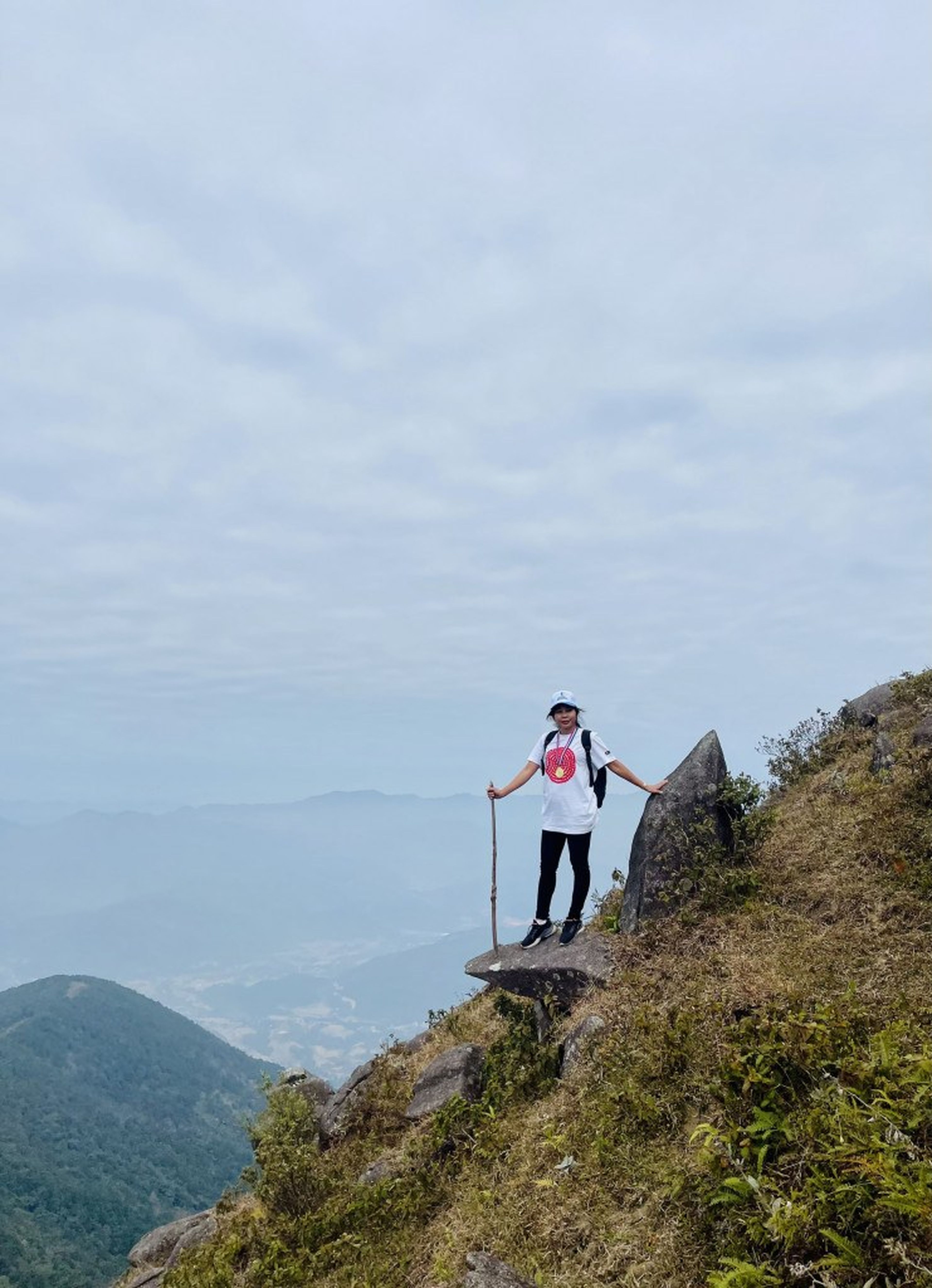
Rest stop for a check-in photo. Photo: Hồng Hà.
However, the Lục Ngù and Co Nhan routes see very few travelers and are mainly used by local residents to graze livestock. The routes via Cao Thắng and Ngàn Mèo are more convenient and are therefore usually chosen by visitors.
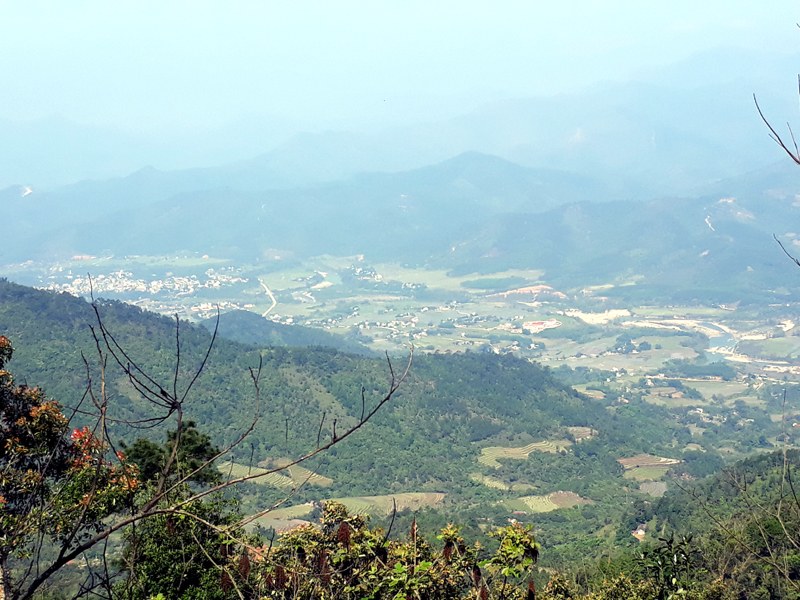
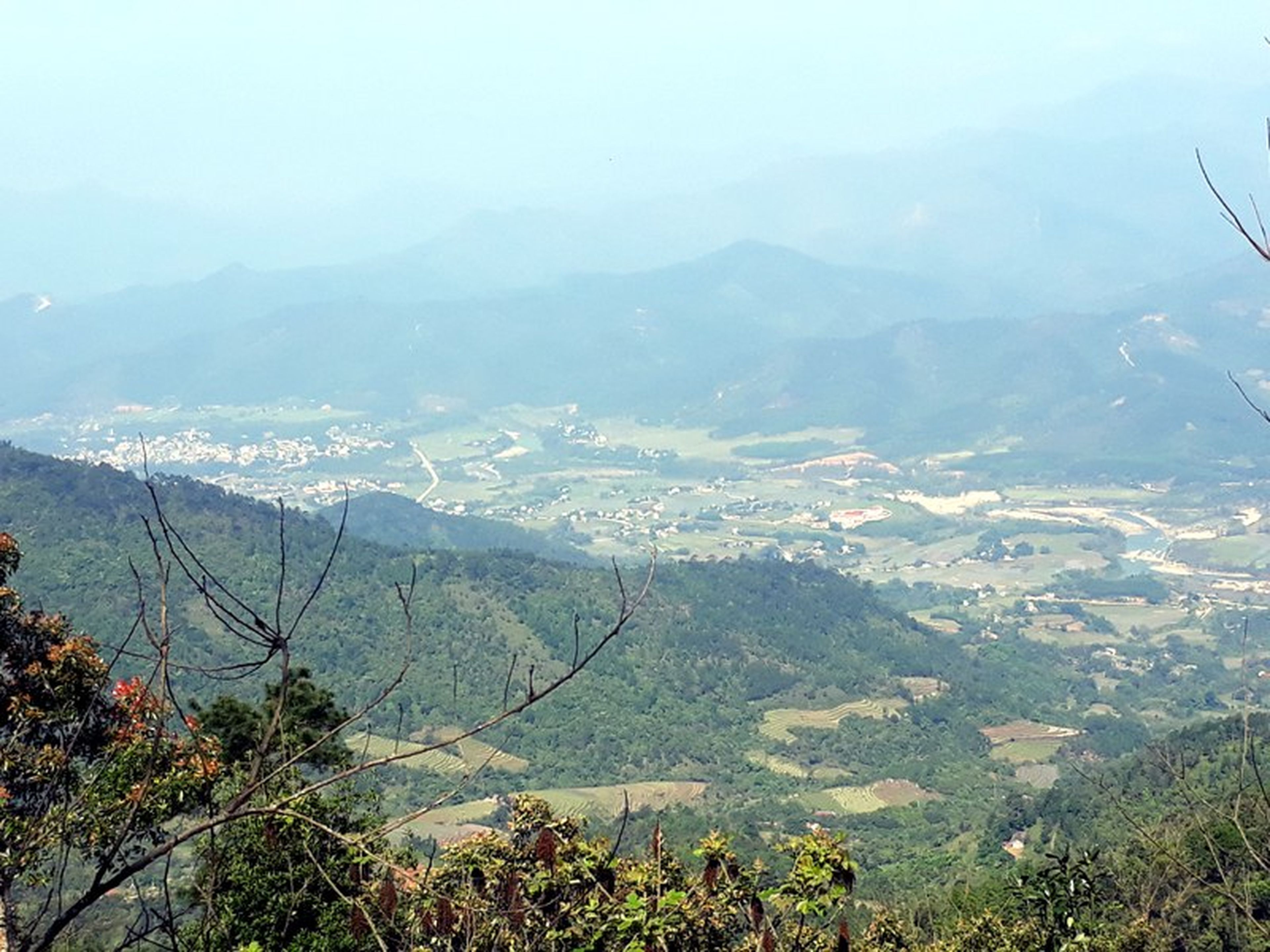
Bình Liêu town viewed from the mountain peak. Photo: Quảng Ninh Newspaper.
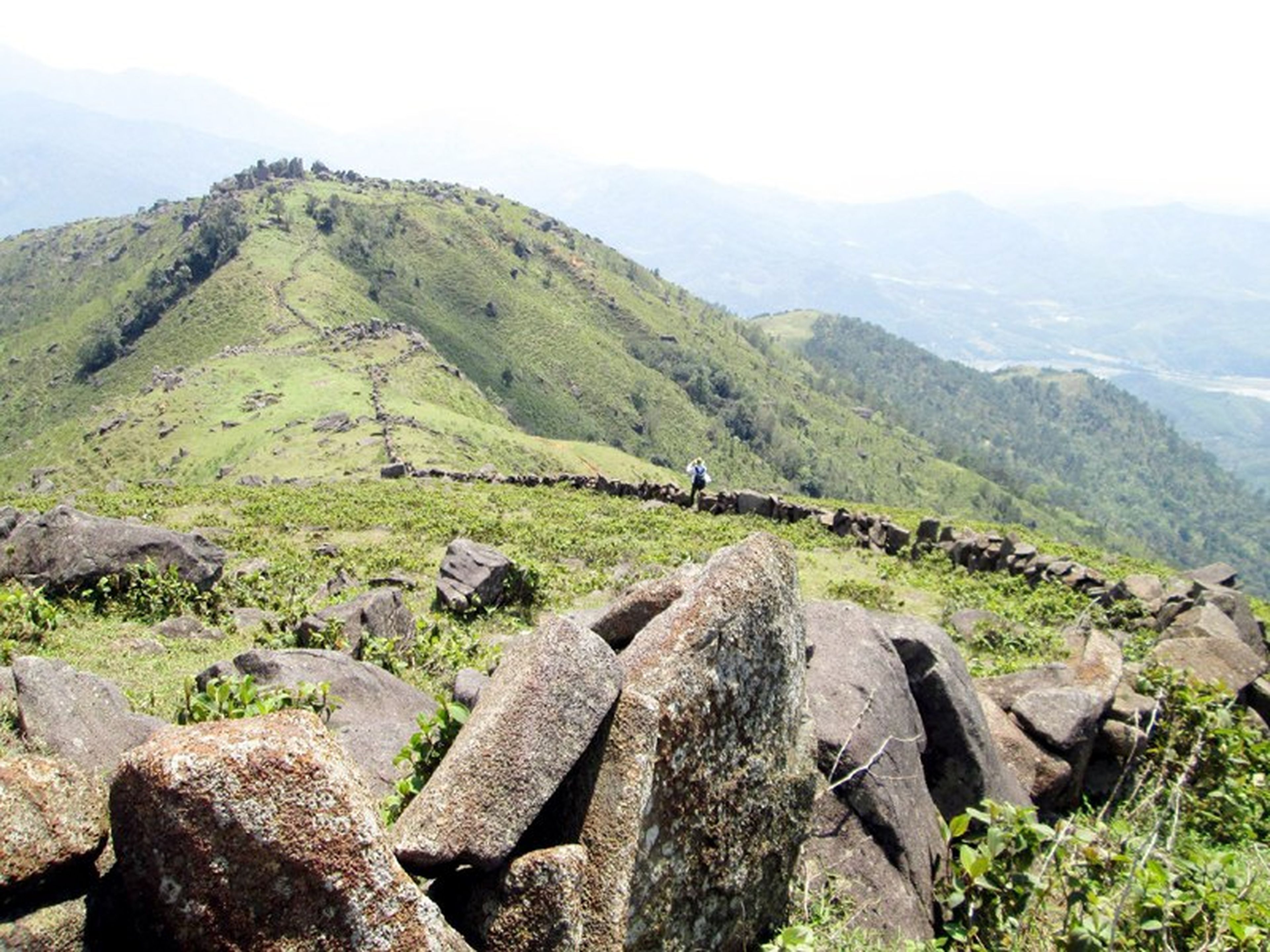
At an elevation of around 1,000m, visitors will clearly feel the change in temperature, while the air becomes thinner. The natural scenery becomes even more majestic, with successive “ramparts” stretching into the distance.
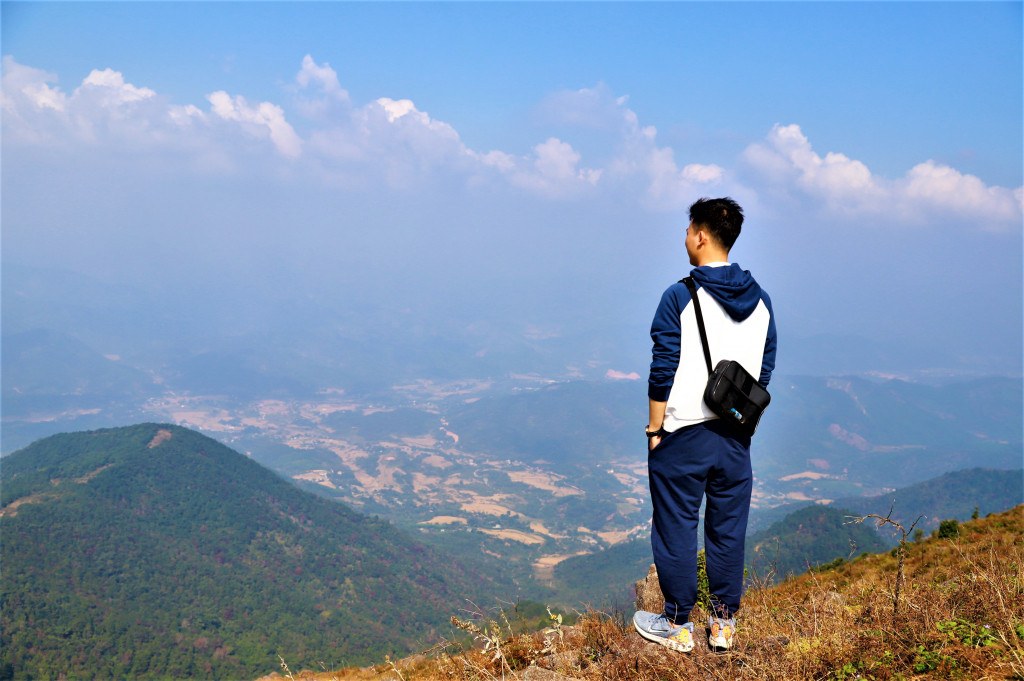
Photo: Bình Phước Newspaper.
These stone walls were built because residents of Lục Hồn and Húc Động created them to divide their territories and prevent their livestock from entering another area. There is also an old legend that a young man and woman from Húc Động and Lục Hồn communes would secretly climb the mountain to meet.
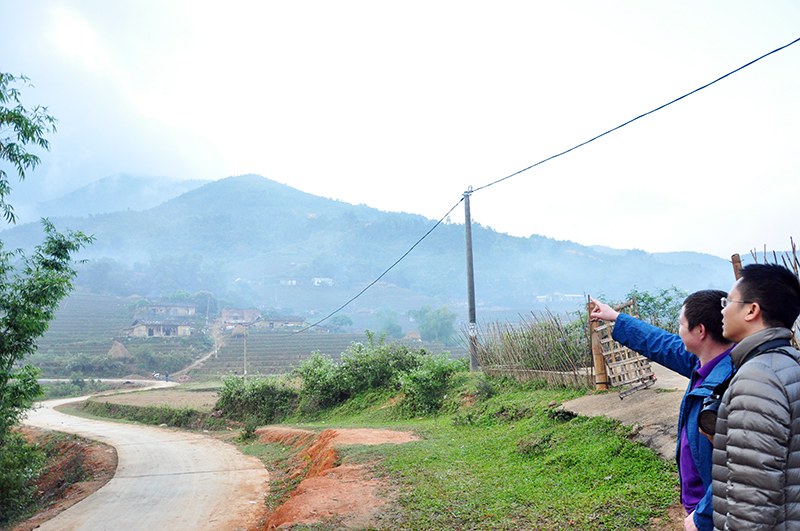
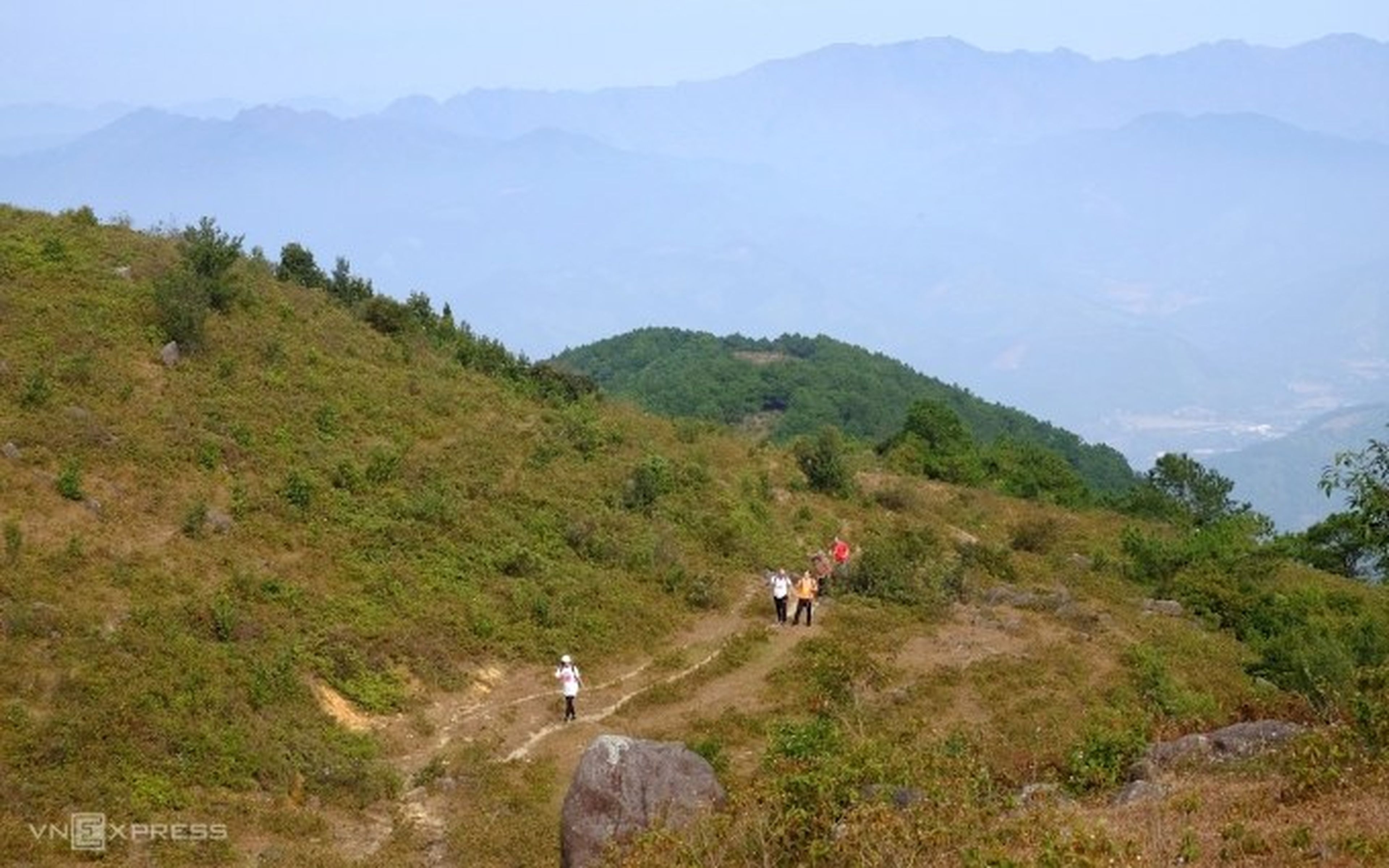
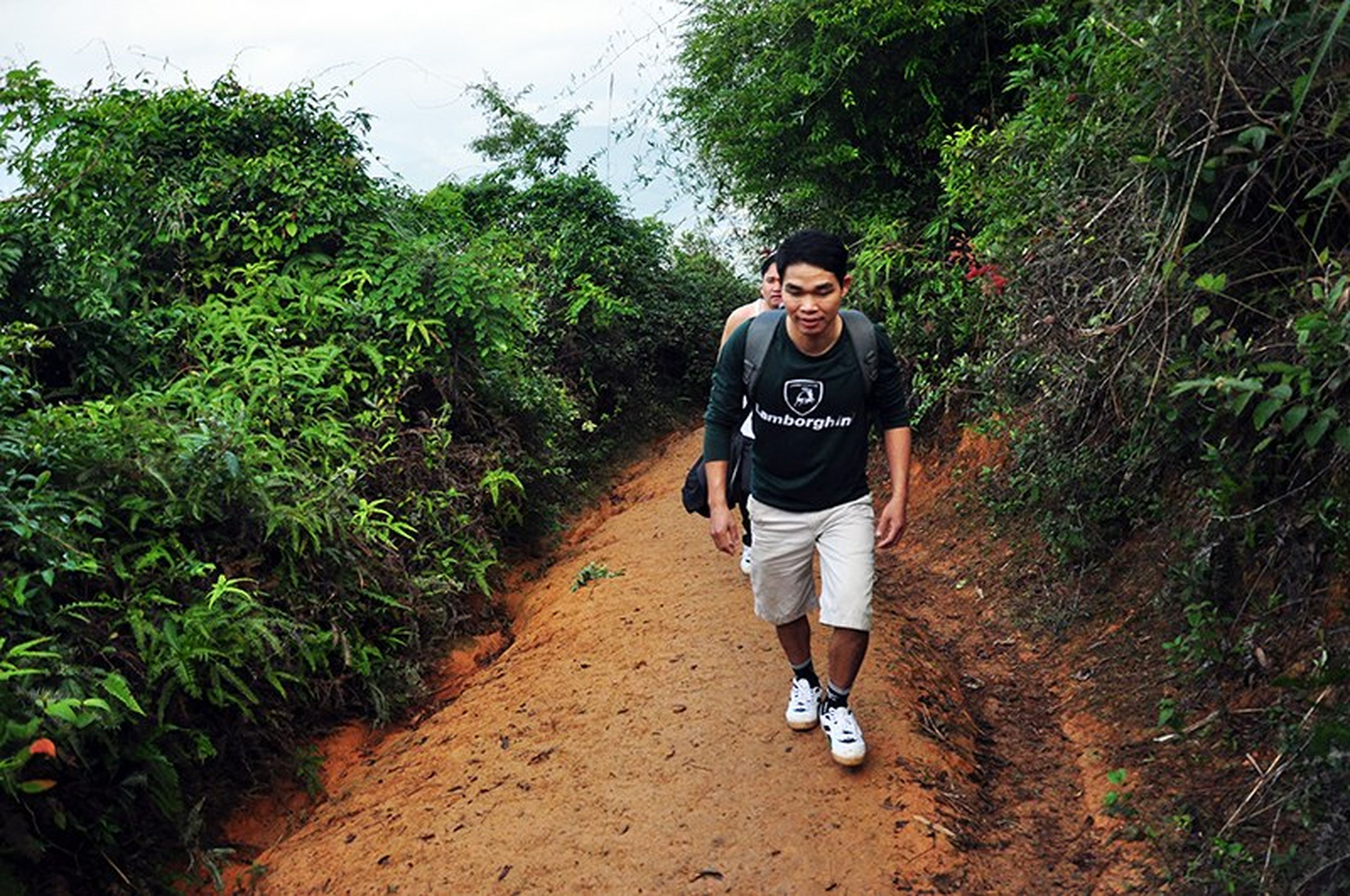
The route up Cao Xiêm Mountain. Photo: Quảng Ninh Newspaper.
The two were discovered by villagers, who forbade them from seeing each other. To avoid gossip, residents of the two communes built this stone fence. The stone walls were erected a very long time ago, and no one knows exactly when.
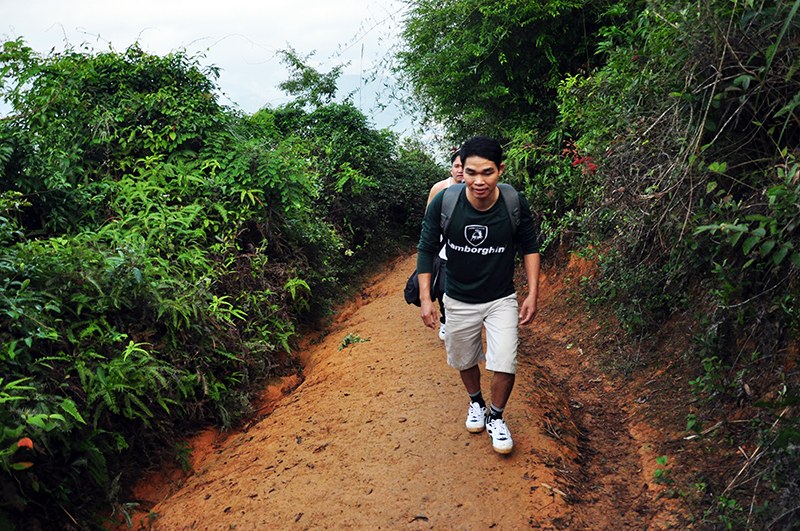
Mountain trail. Photo: Quảng Ninh Newspaper.
From the foot of the mountain, it usually takes about 2 hours to reach Cao Xiêm Peak. In particular, toward the end of the year, along the route up the mountain visitors can encounter many ancient sau sau trees with brilliant red leaves, sở flowers blooming in dazzling white, and star anise trees bearing fruit and spreading their fragrance.
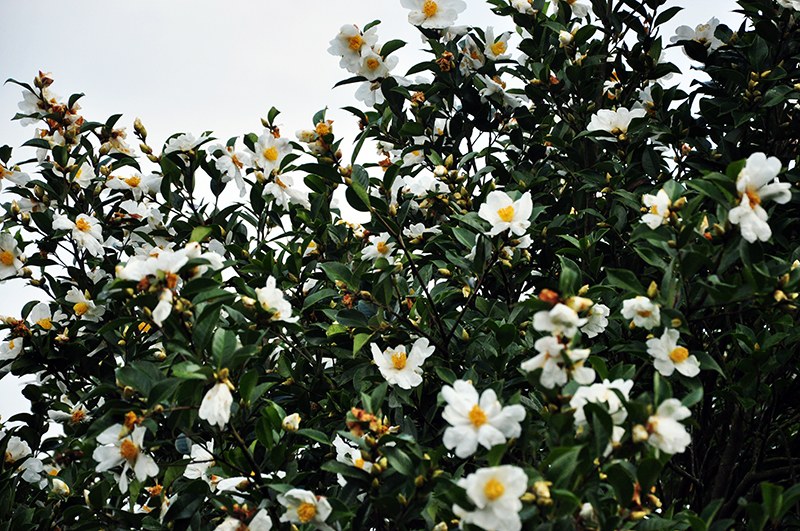
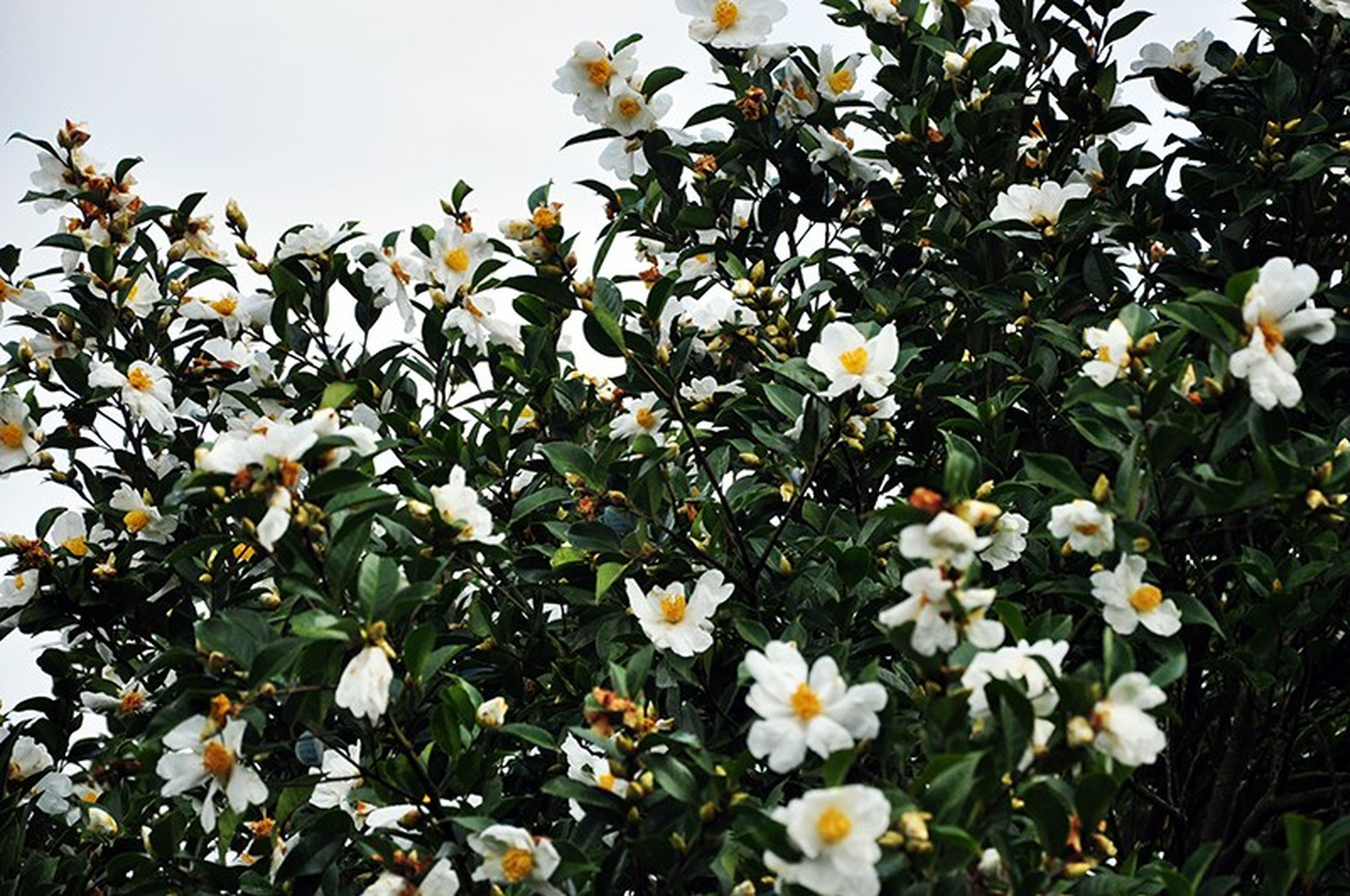
Sở flowers in full white bloom. Photo: Quảng Ninh Newspaper.
The climb up Cao Xiêm Mountain is not too far, but visitors should remember to drink water and rest to conserve their energy. On the summit, temperatures are around 15 – 19 degrees C in summer and fall below 10 degrees C in winter.
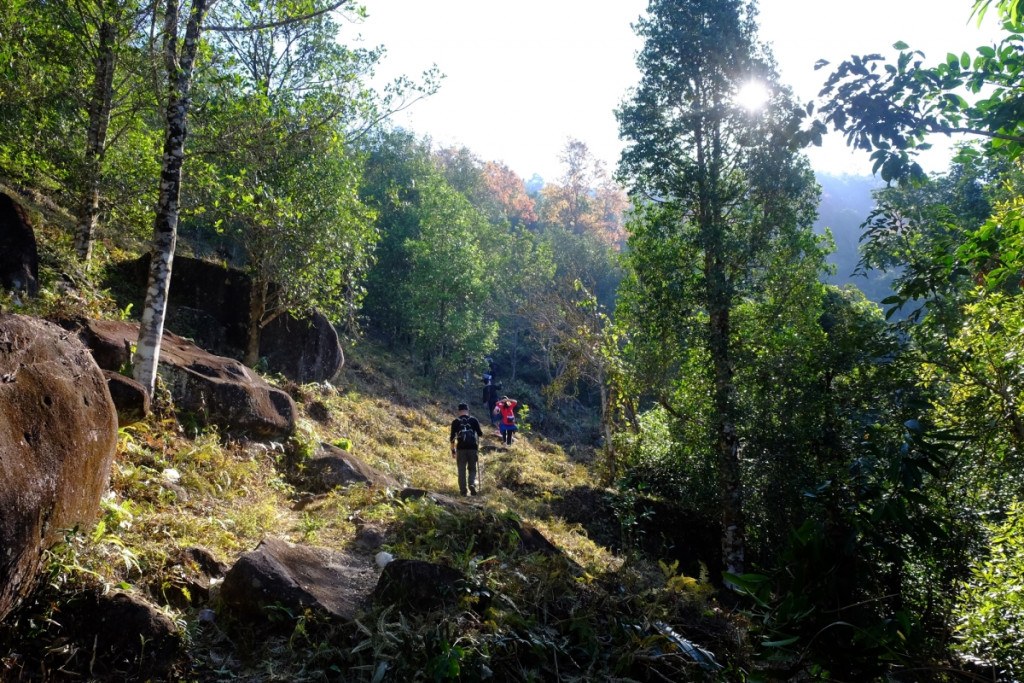
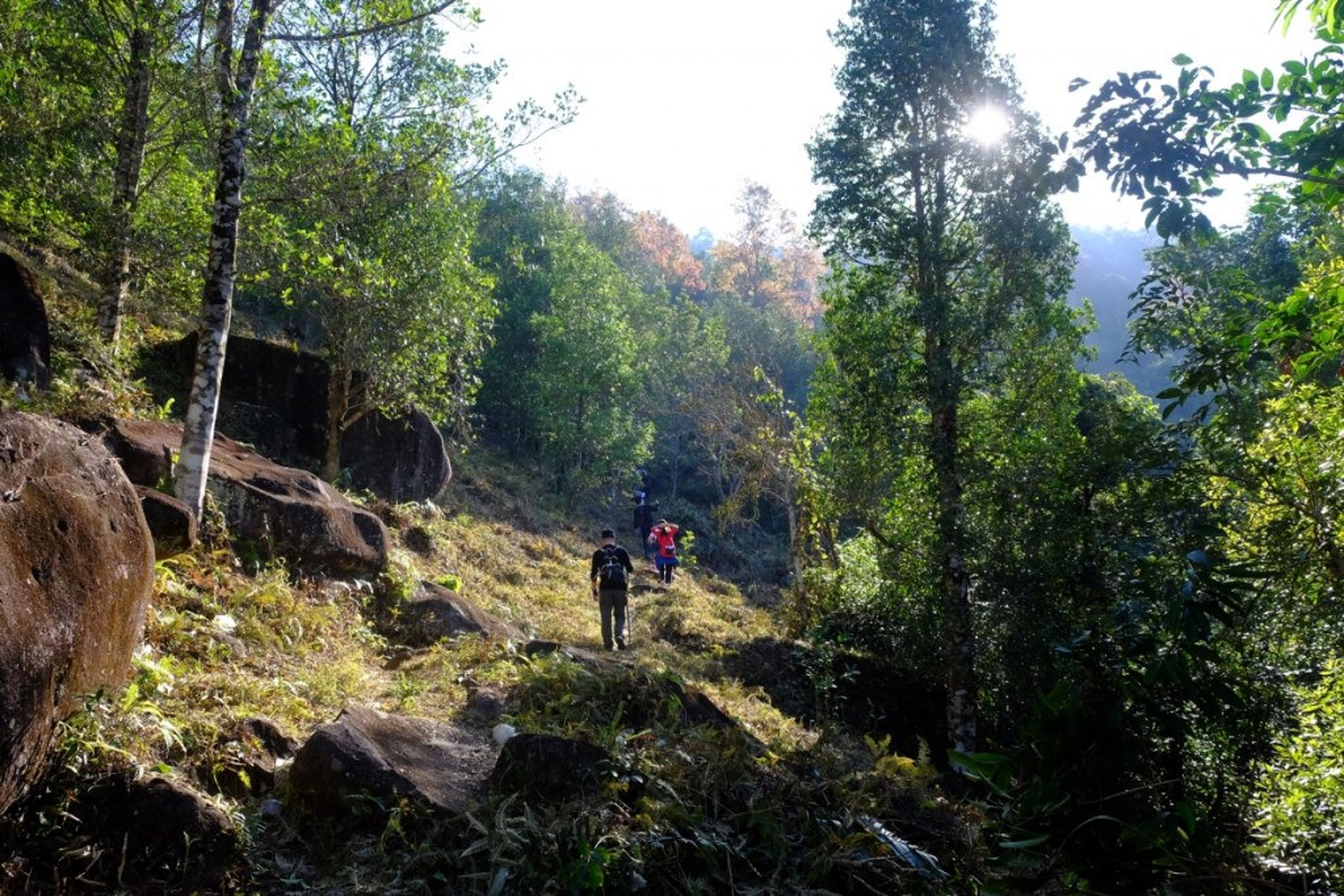
The shade of forest trees helps climbers avoid the sun. Photo: VnExpress.
On clear days, from Cao Xiêm Peak visitors can enjoy a panoramic view of Bình Liêu District and the high mountainous area along the border with China. The descent requires less effort, but those who are not used to exercising continuously may still find their legs giving way. Therefore, to have a complete mountain-climbing trip, you should exercise regularly and take part in activities such as running and cycling to get accustomed to high-intensity physical activity before beginning the climb.