

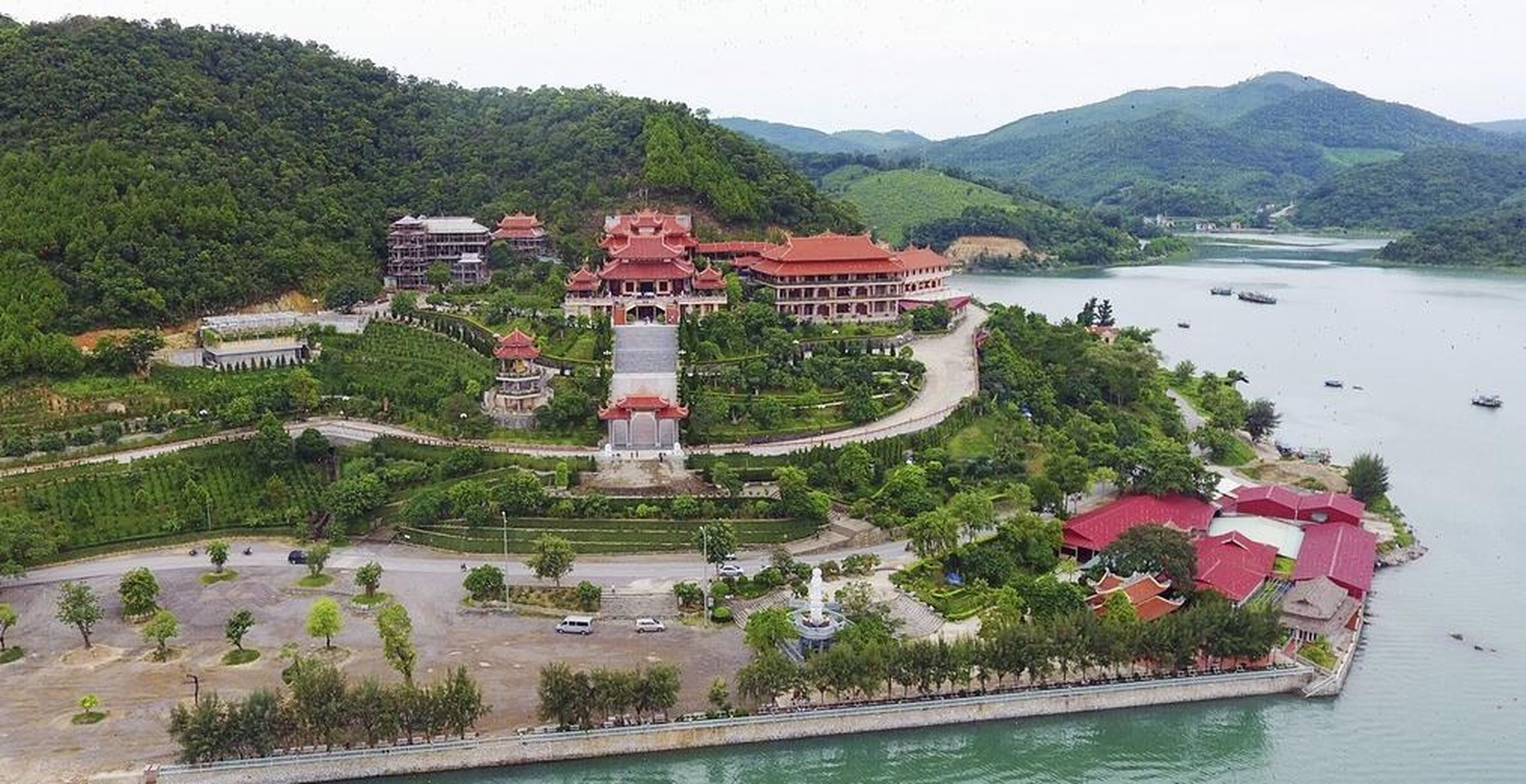
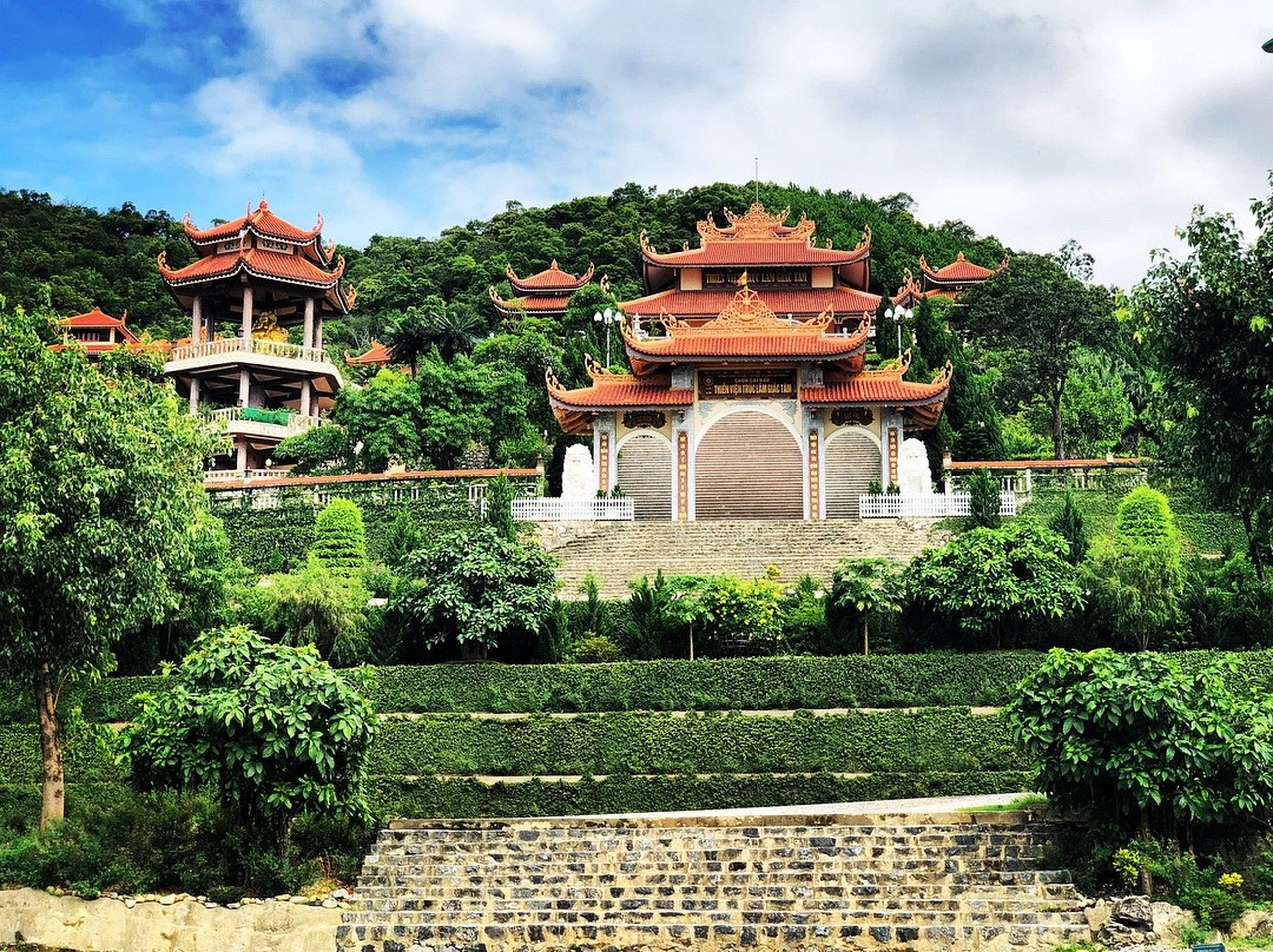
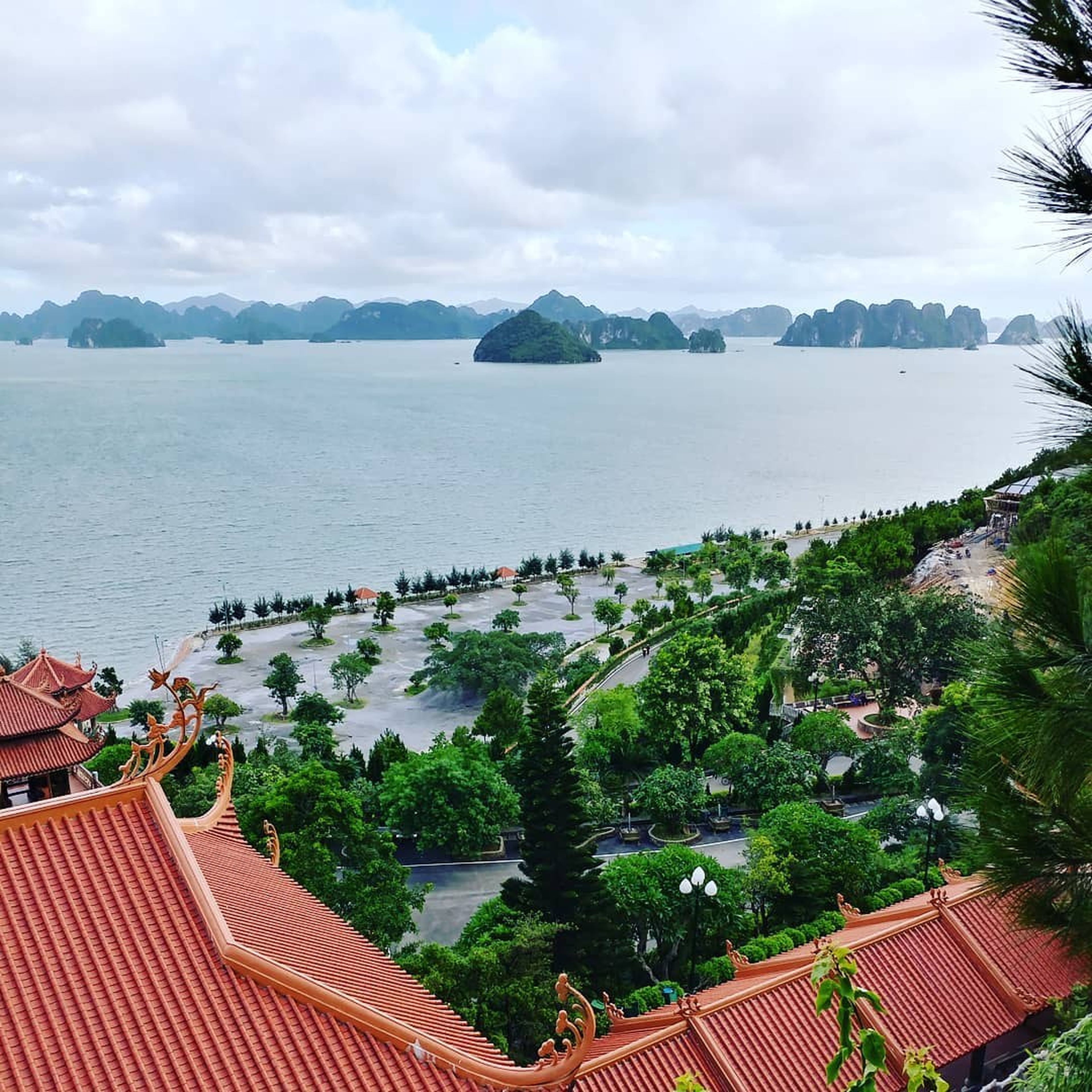
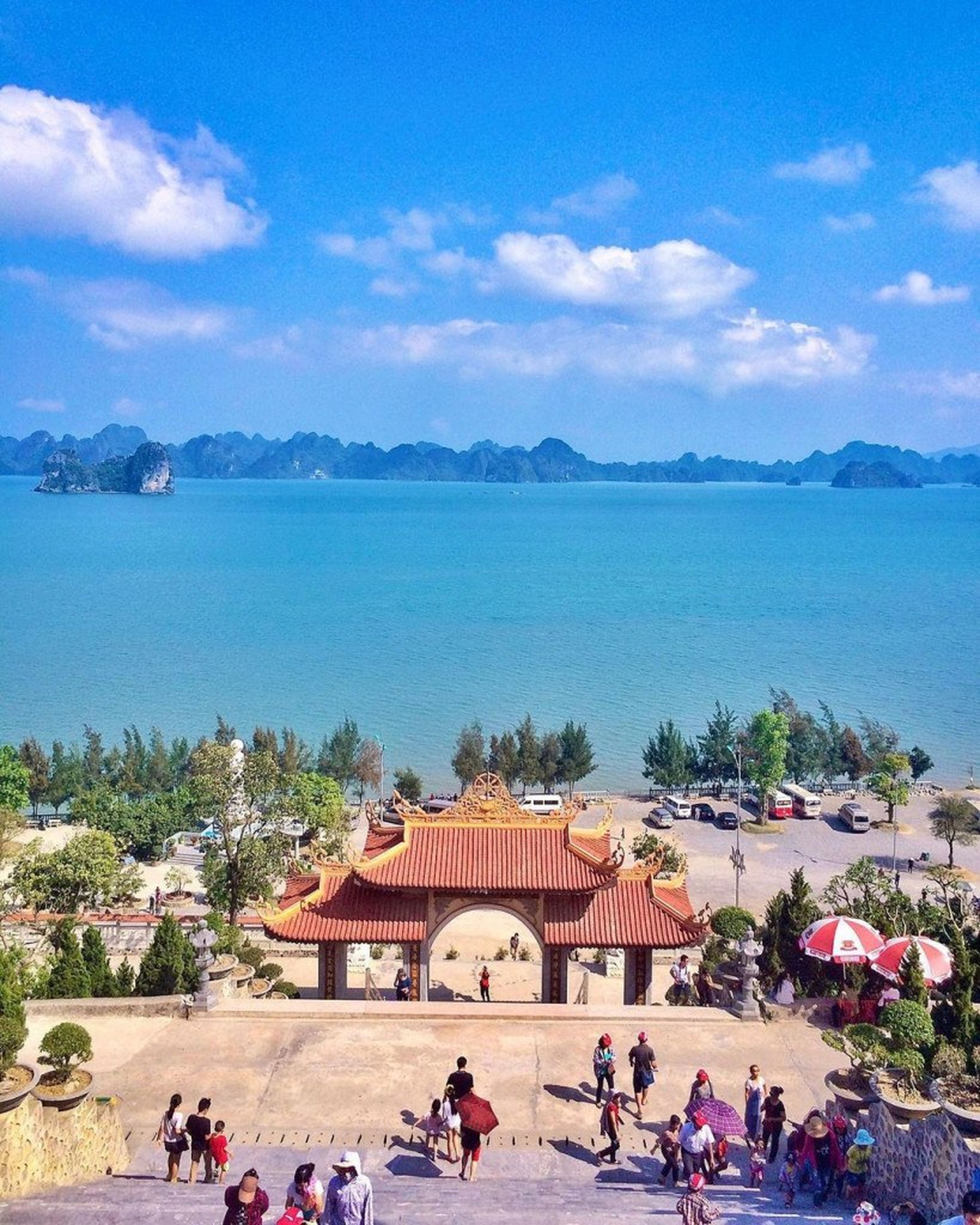
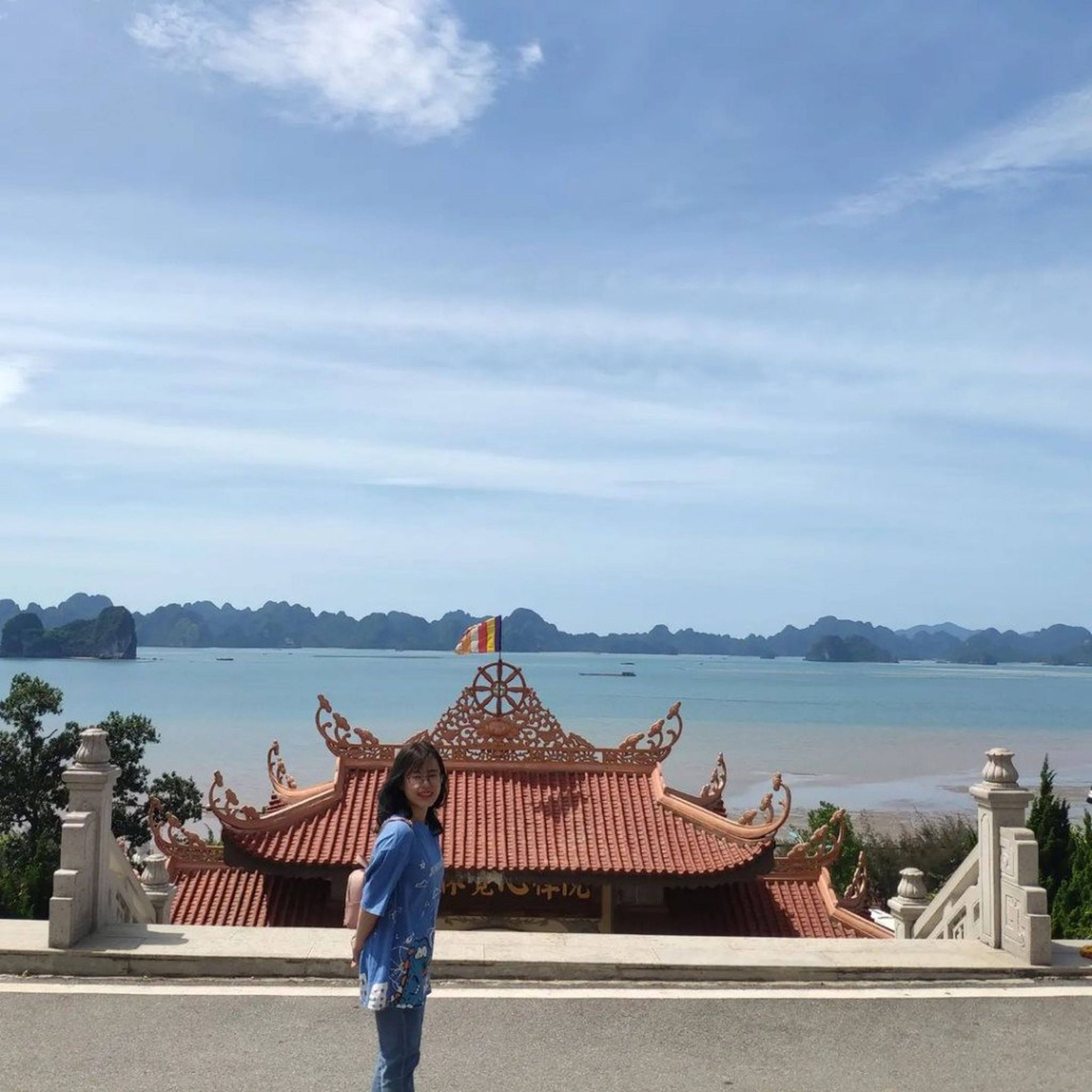
Cái Bau Pagoda (also known as Truc Lam Giac Tam Zen Monastery), located on the shore of Bai Tu Long Bay, is known as the most beautiful seaside pagoda in Vietnam. The pagoda attracts many Buddhists and visitors who come to make pilgrimages and admire the scenery.
Cái Bau Pagoda – The Beautiful Pagoda by Bai Tu Long Bay
Cái Bau Pagoda was rebuilt on the foundations of Phuc Linh Tu Pagoda, which was once a place of worship for the Tran Dynasty generals during the war against the Mongol-Yuan forces in the 13th century. The pagoda’s present-day location witnessed a preemptive battle that laid the groundwork for the resounding victory on the Bach Dang River in 1288.
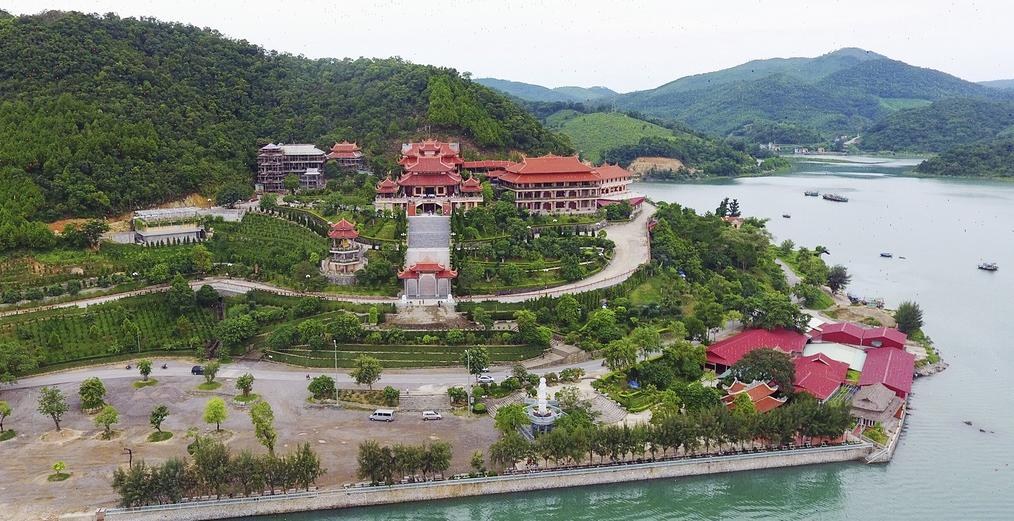
The beautiful pagoda by Bai Tu Long Bay. Photo: phatgiao.org.
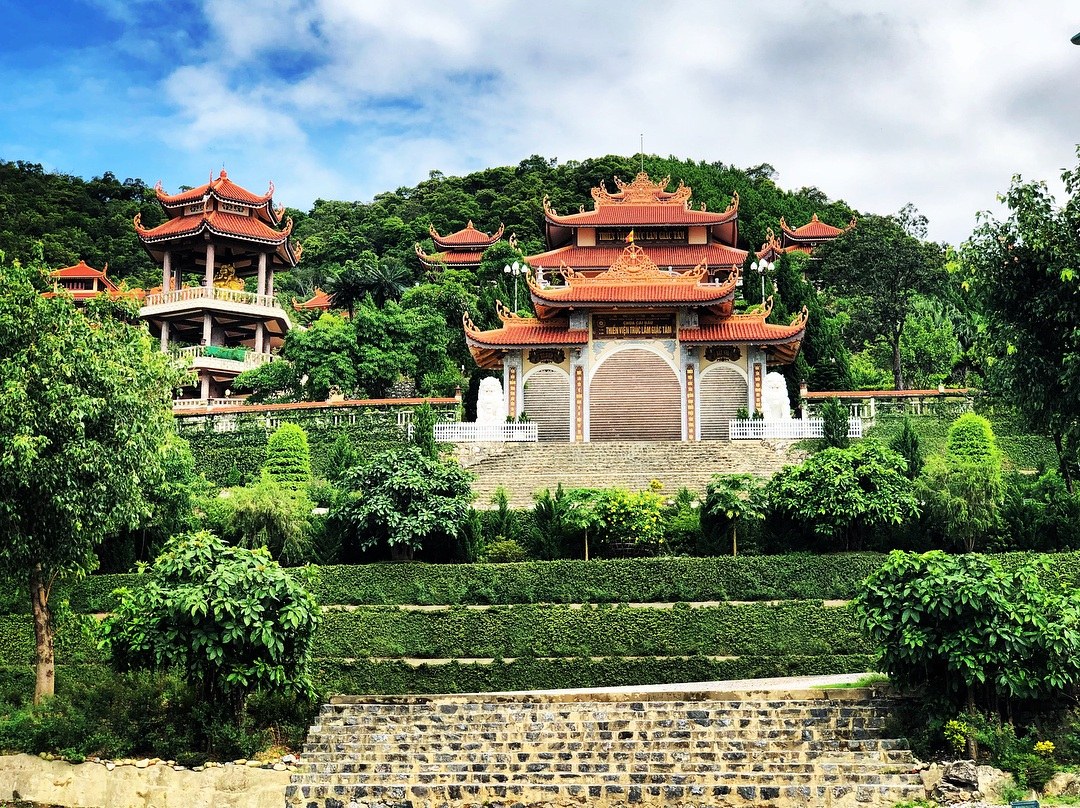
The area surrounding the pagoda is filled with the green hues of nature. Photo: Internet.
To commemorate the merits of the Tran Dynasty heroes, Truc Lam Giac Tam Zen Monastery built a temple within the pagoda’s spiritual grounds. Over time and through historical changes, the pagoda suffered severe damage.
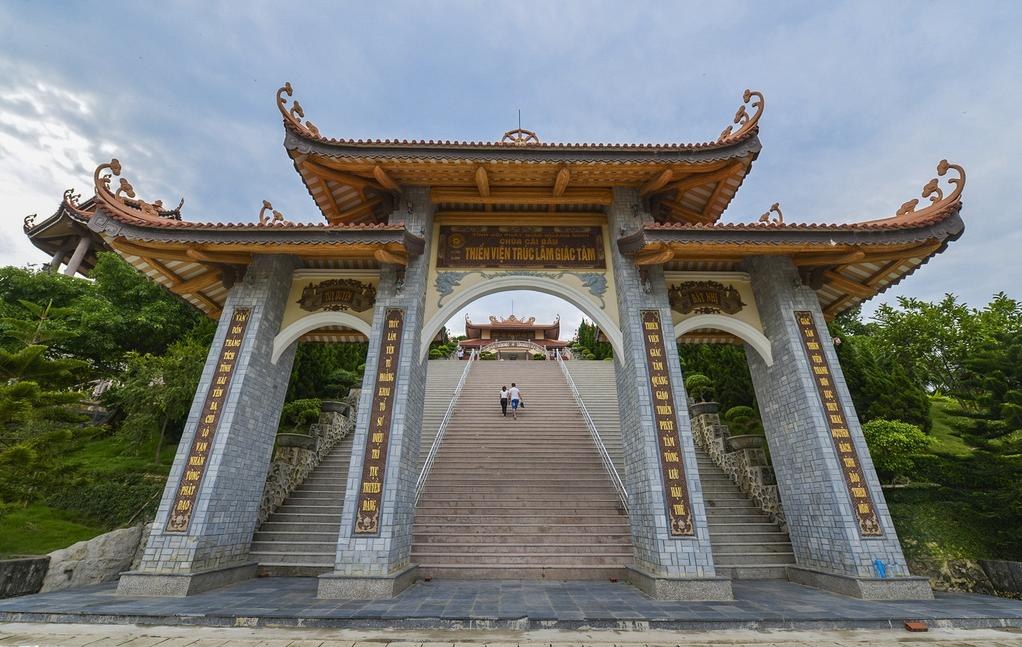
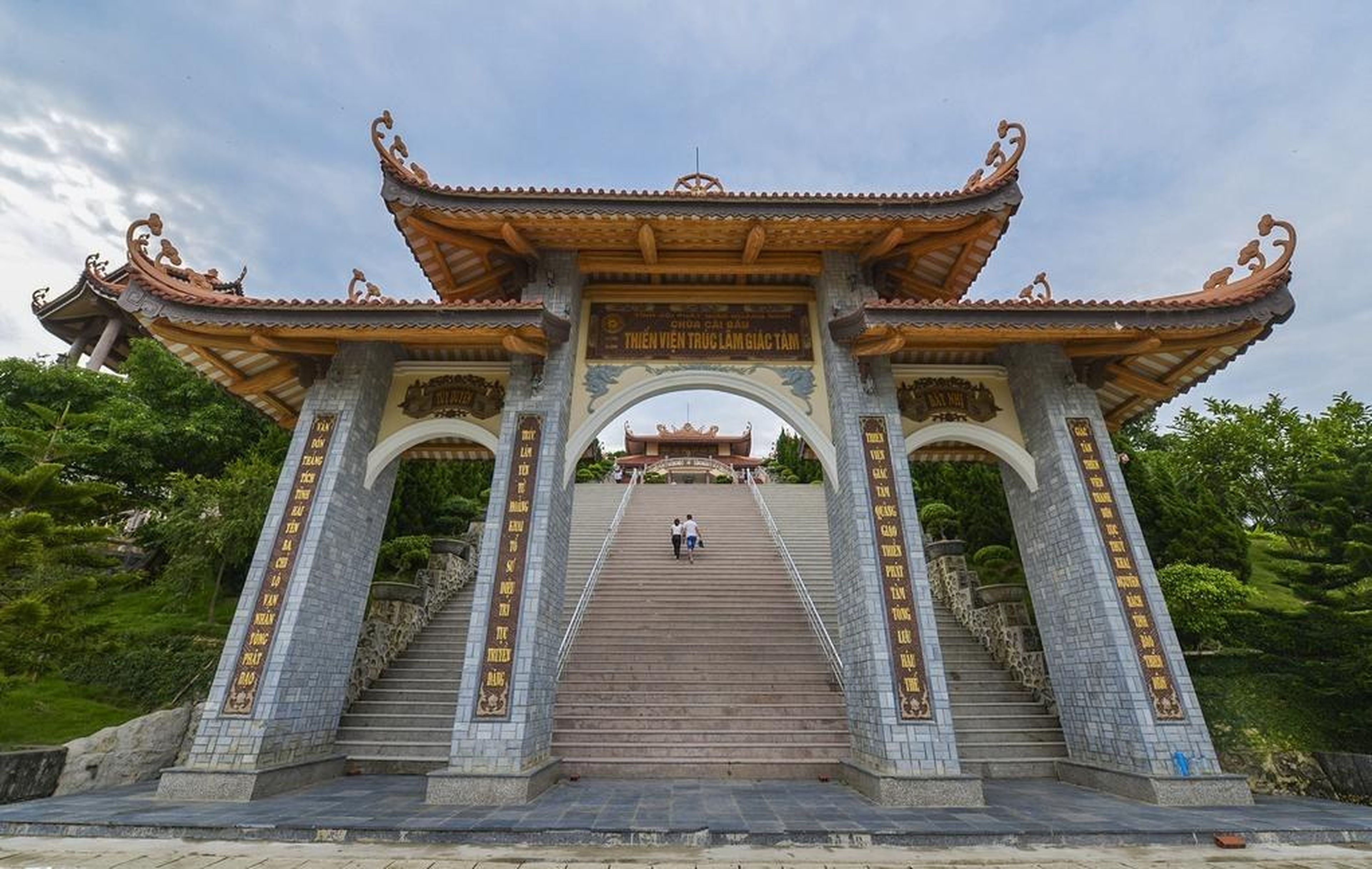
Pagoda gate. Photo: phatgiao.org.
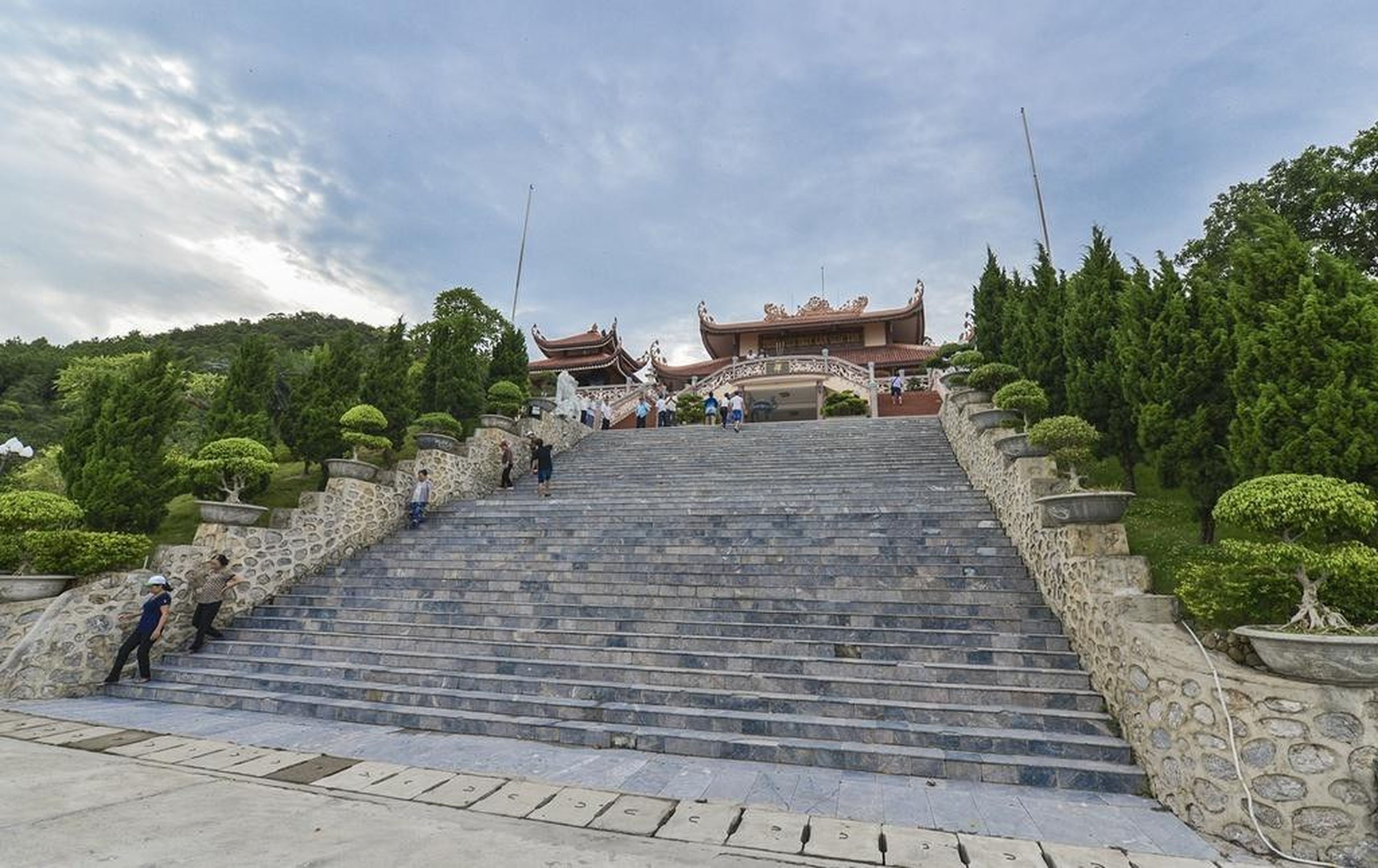
In 2007, construction of the pagoda began on a total area of 20ha in Ha Long Commune, Van Don District, Quang Ninh. After 2 years, the spacious pagoda was inaugurated, befitting the nation’s historical and cultural values.
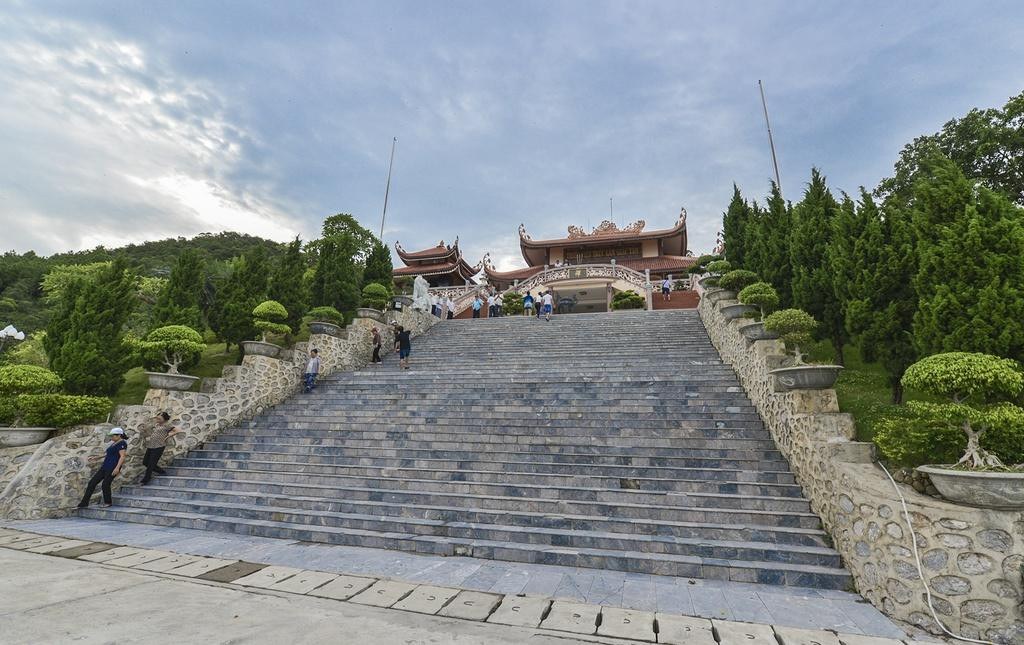
The steps leading up to the pagoda. Photo: phatgiao.org.
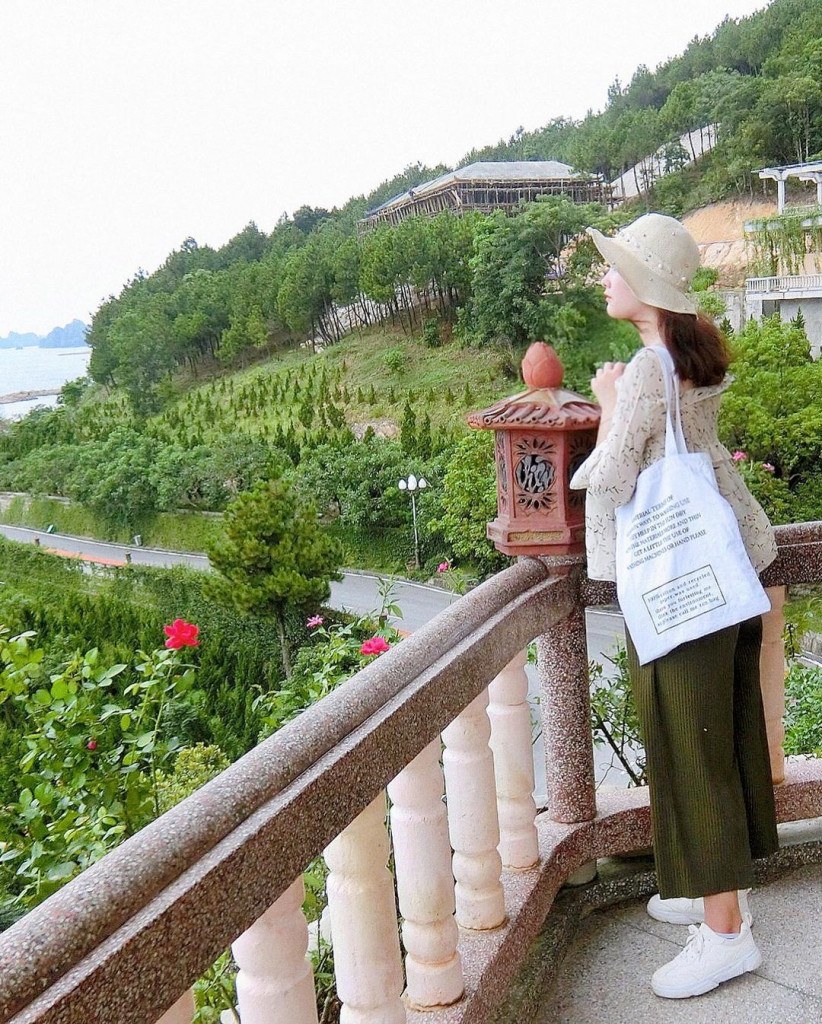
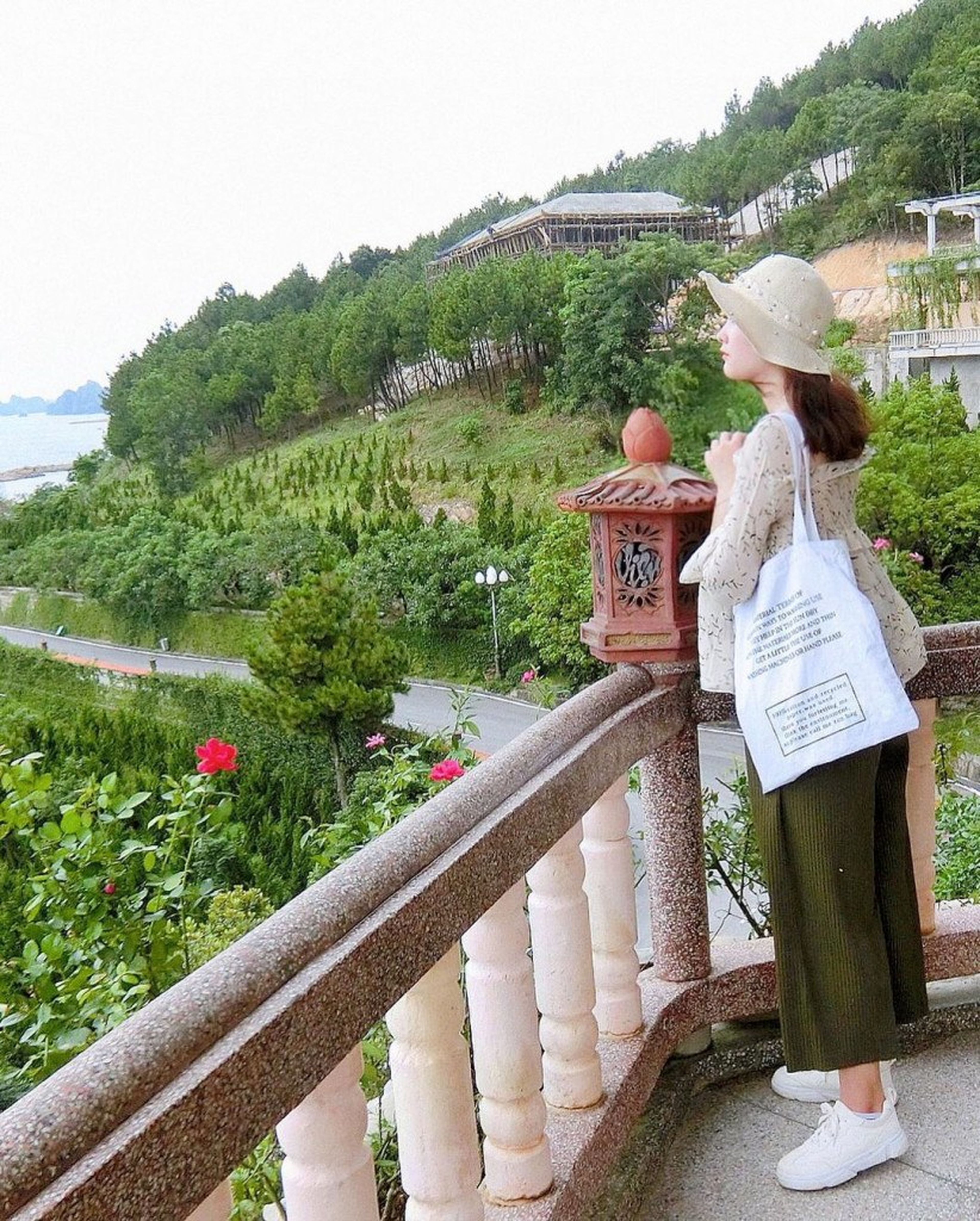
Photo: @t.trangg99.
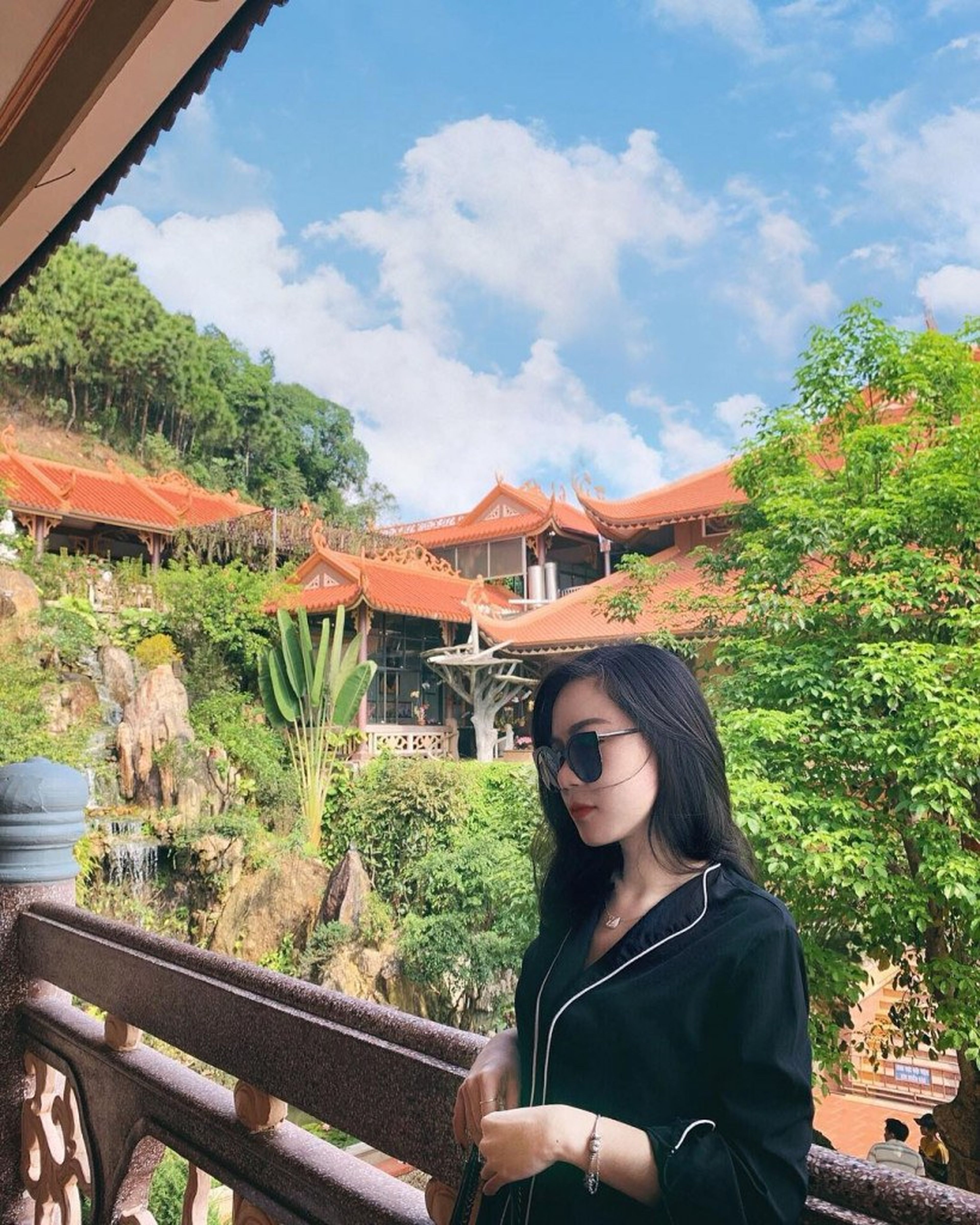
With its back against the mountain, its front facing the sea, and its location far from residential areas, the pagoda is even more serene and solemn. Cái Bau Pagoda consists of the main shrine, bell tower, drum tower, and three-entrance gate.
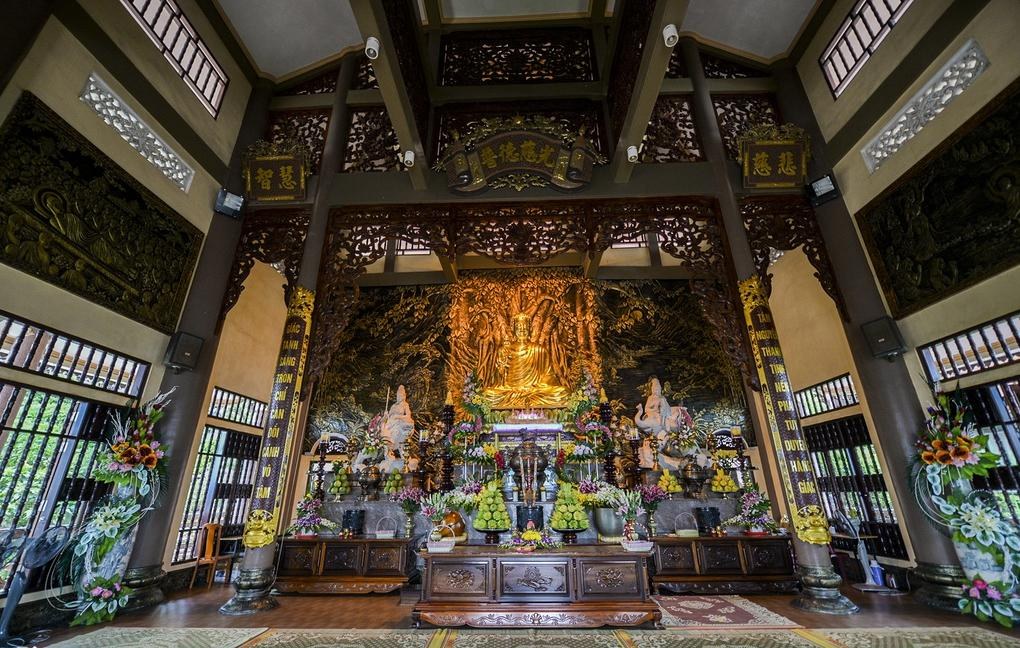
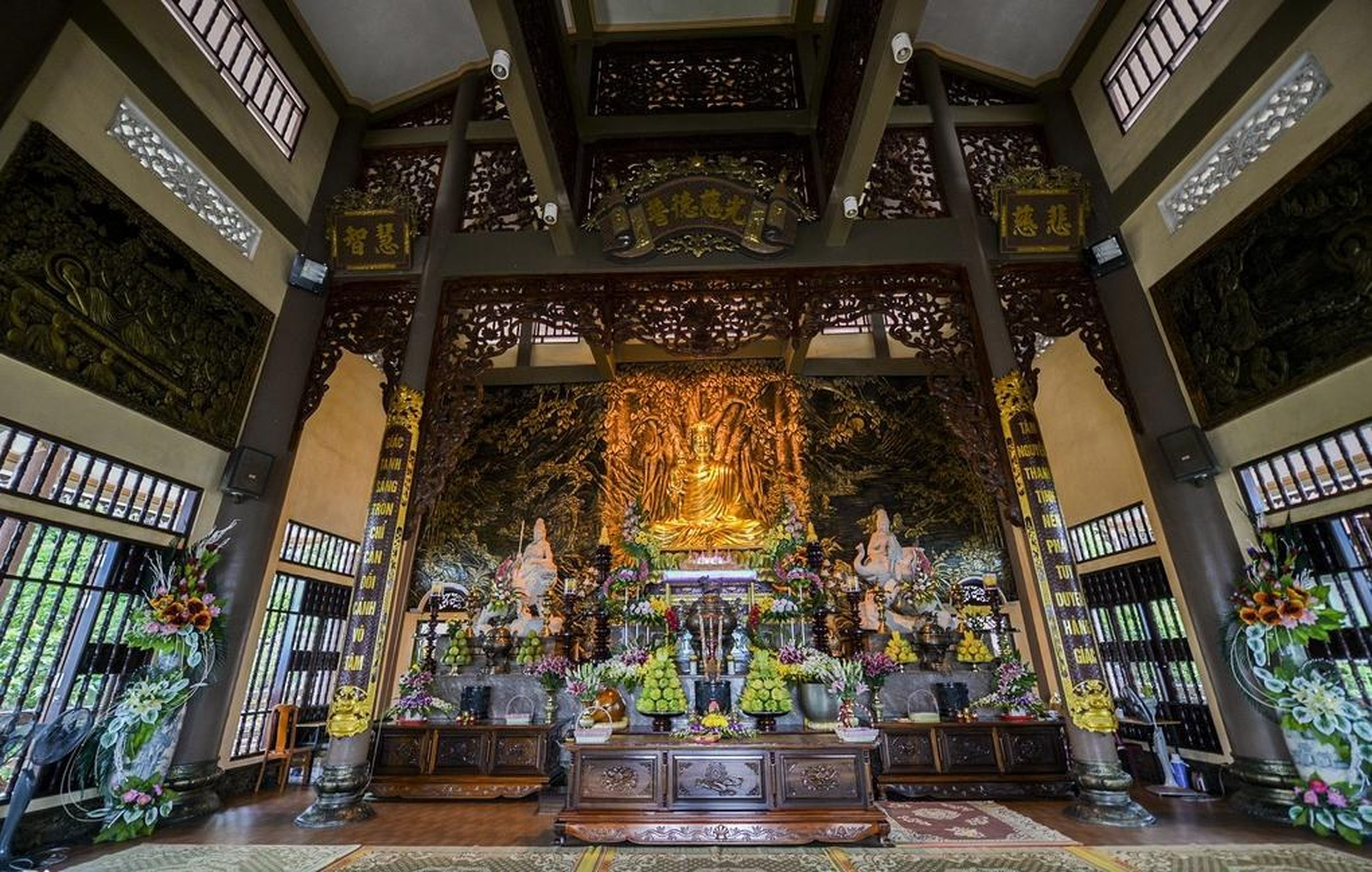
Main shrine. Photo: Phatgiao.org.
The pagoda’s architecture, layout, and bas-reliefs are similar to those of many other pagodas. Cái Bau Pagoda includes a two-storey main shrine covering 6,000 square meters, a three-entrance gate, an ancestral house, a bell tower, quarters for monks, guest quarters for monks and nuns, the abbot’s quarters, quarters for dedicated practice, a meditation hall, and a dining hall; notably, there is also a 50m-high Buddha statue on the mountaintop behind the pagoda.
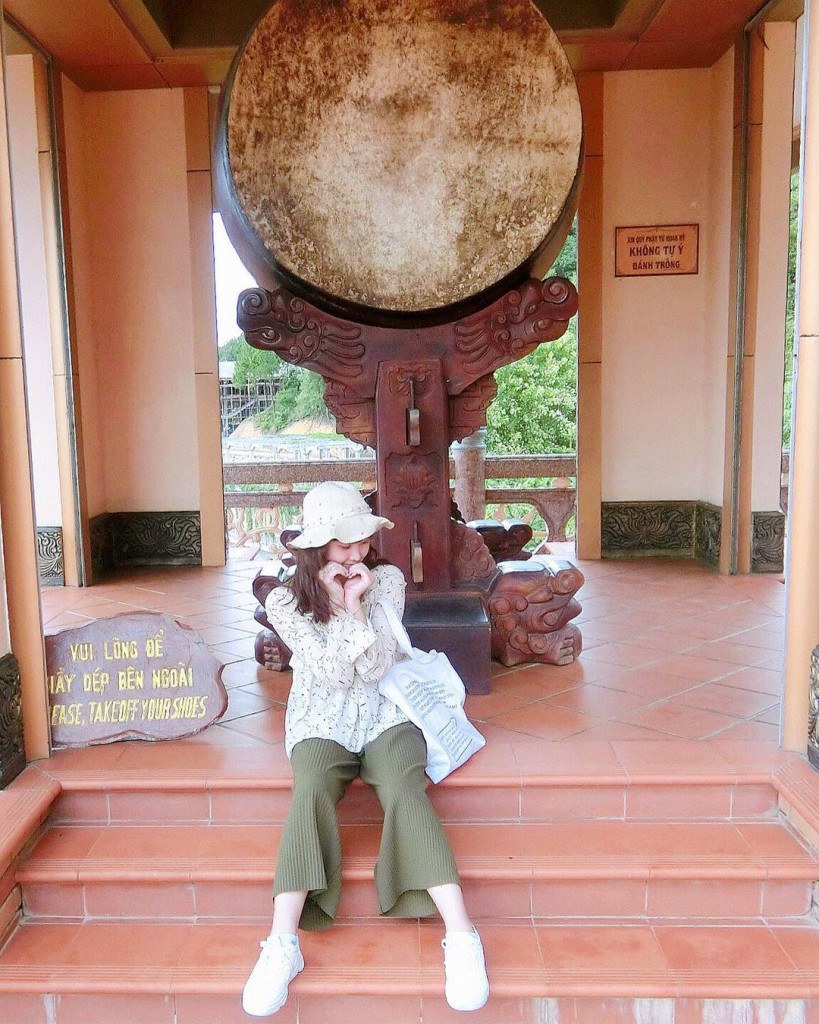
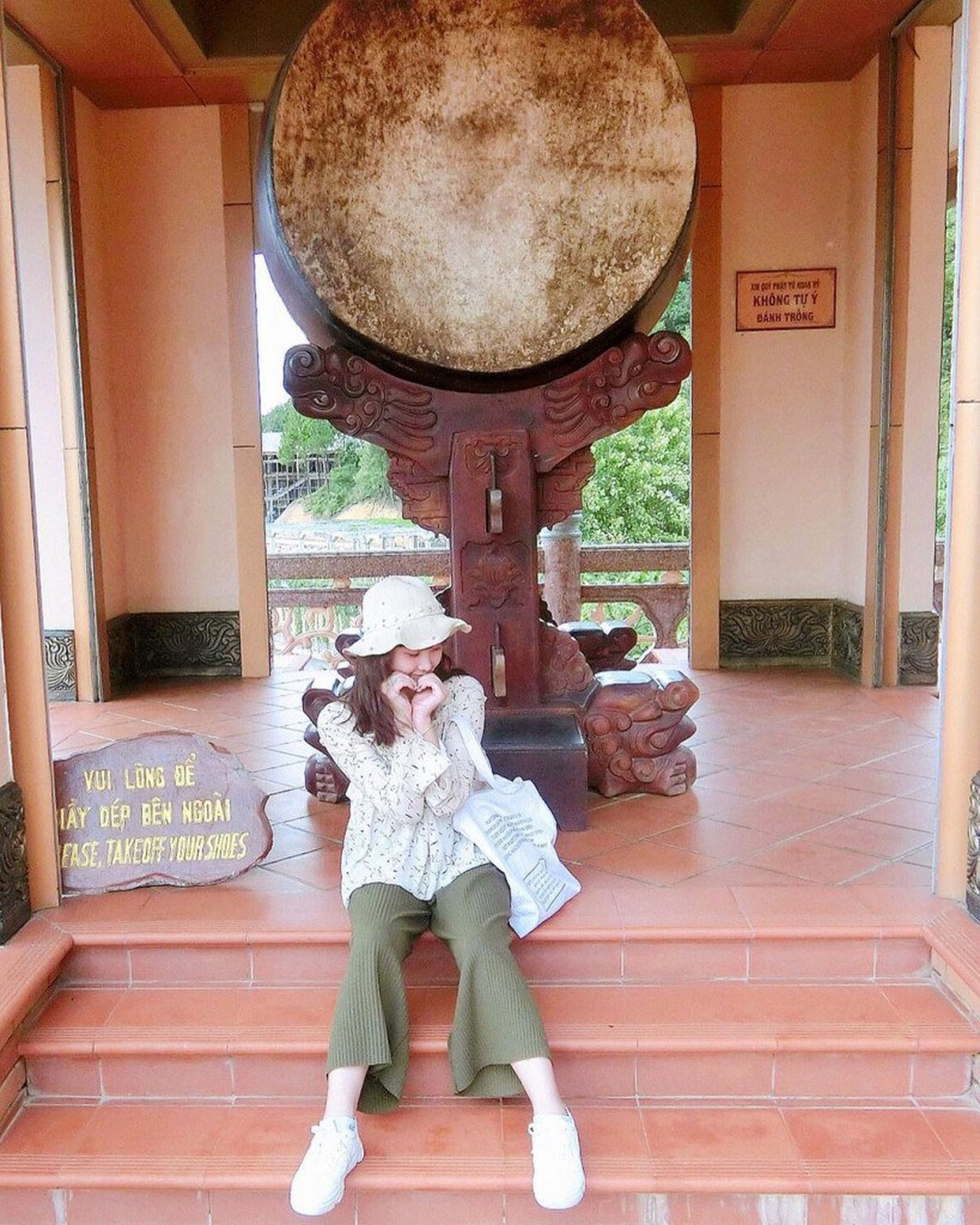
Drum tower. Photo: @t.trangg99.
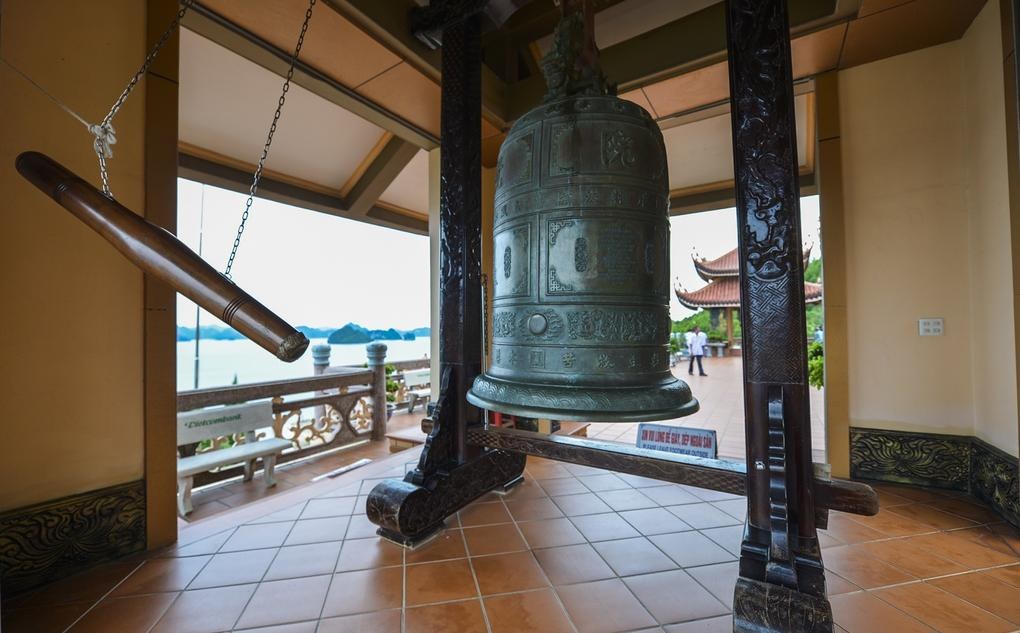
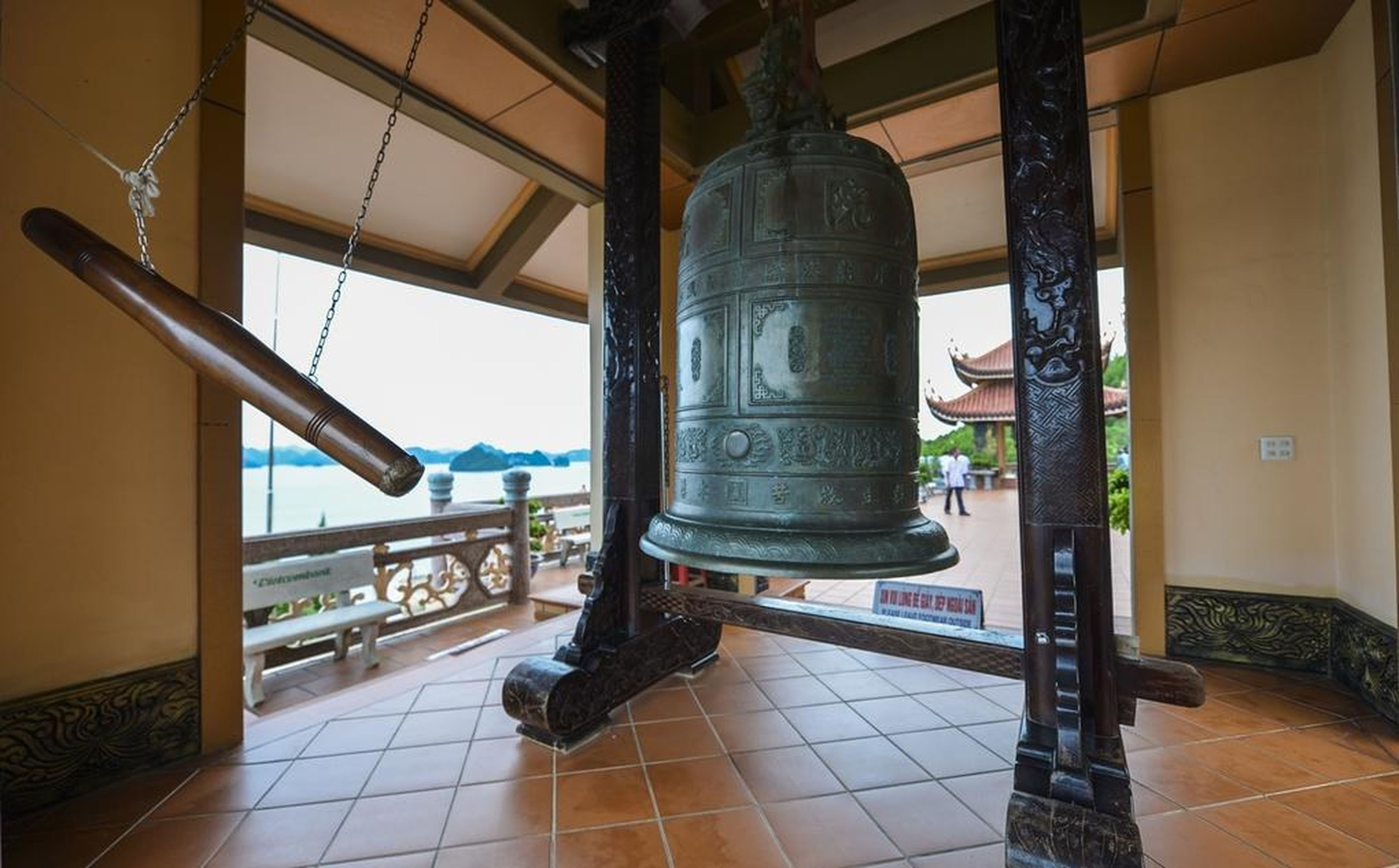
Bell tower. Photo: phatgiao.org.
The main shrine is the largest area and houses a statue of Shakyamuni Buddha. Behind it is a bronze bas-relief depicting the Bodhi tree—the place where the Buddha attained enlightenment. On either side are statues of Manjushri and Samantabhadra Bodhisattva, symbolizing wisdom and compassion.
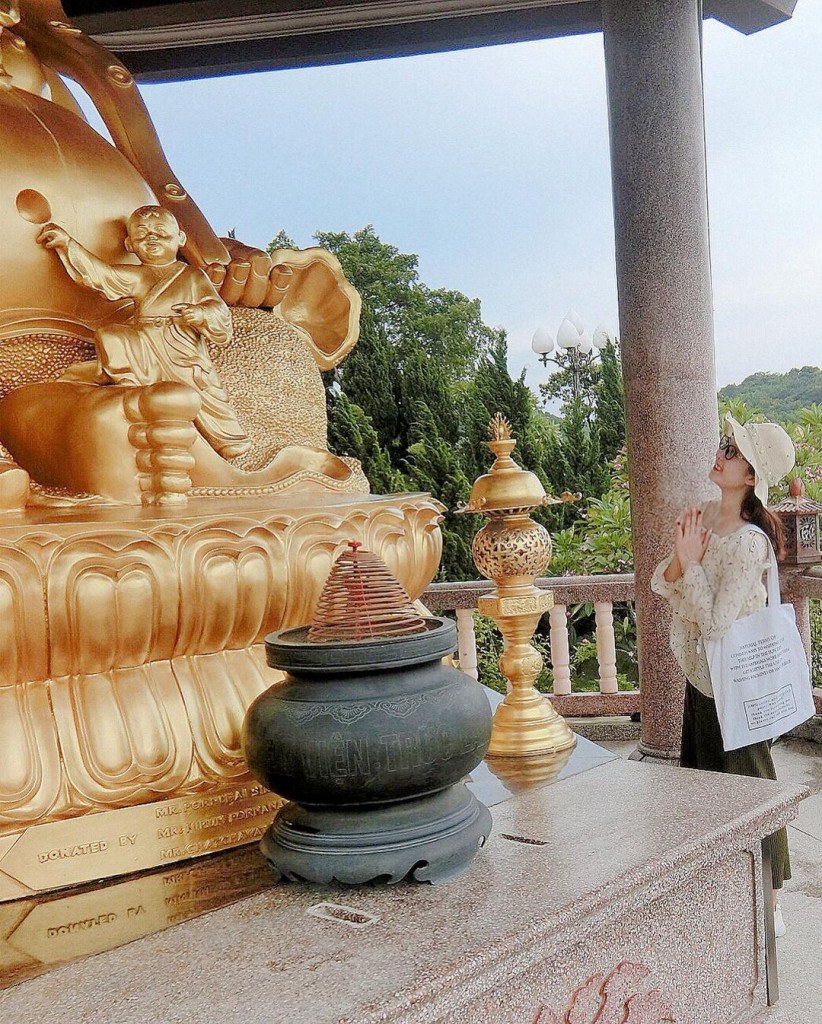
Photo: @t.trangg99.
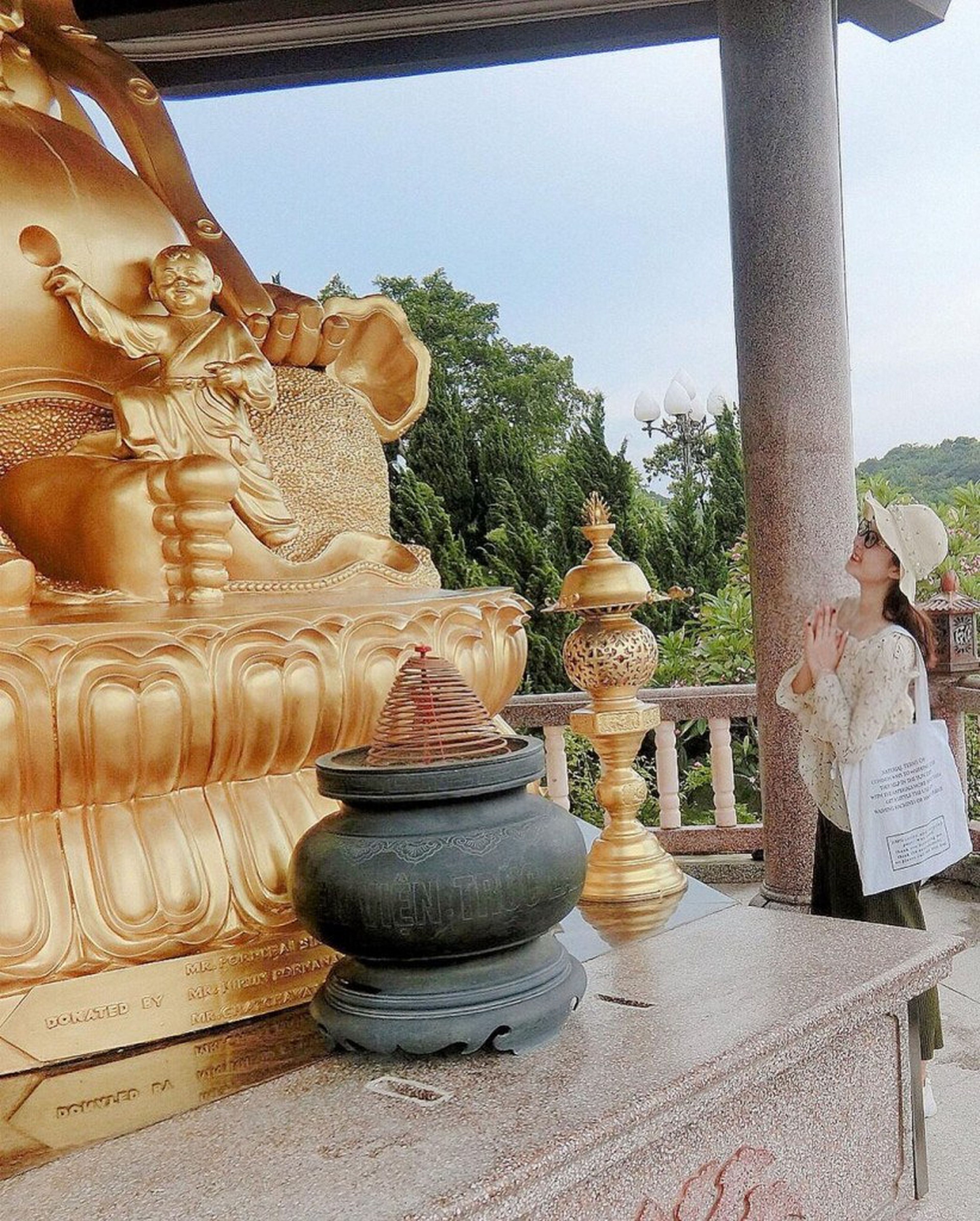
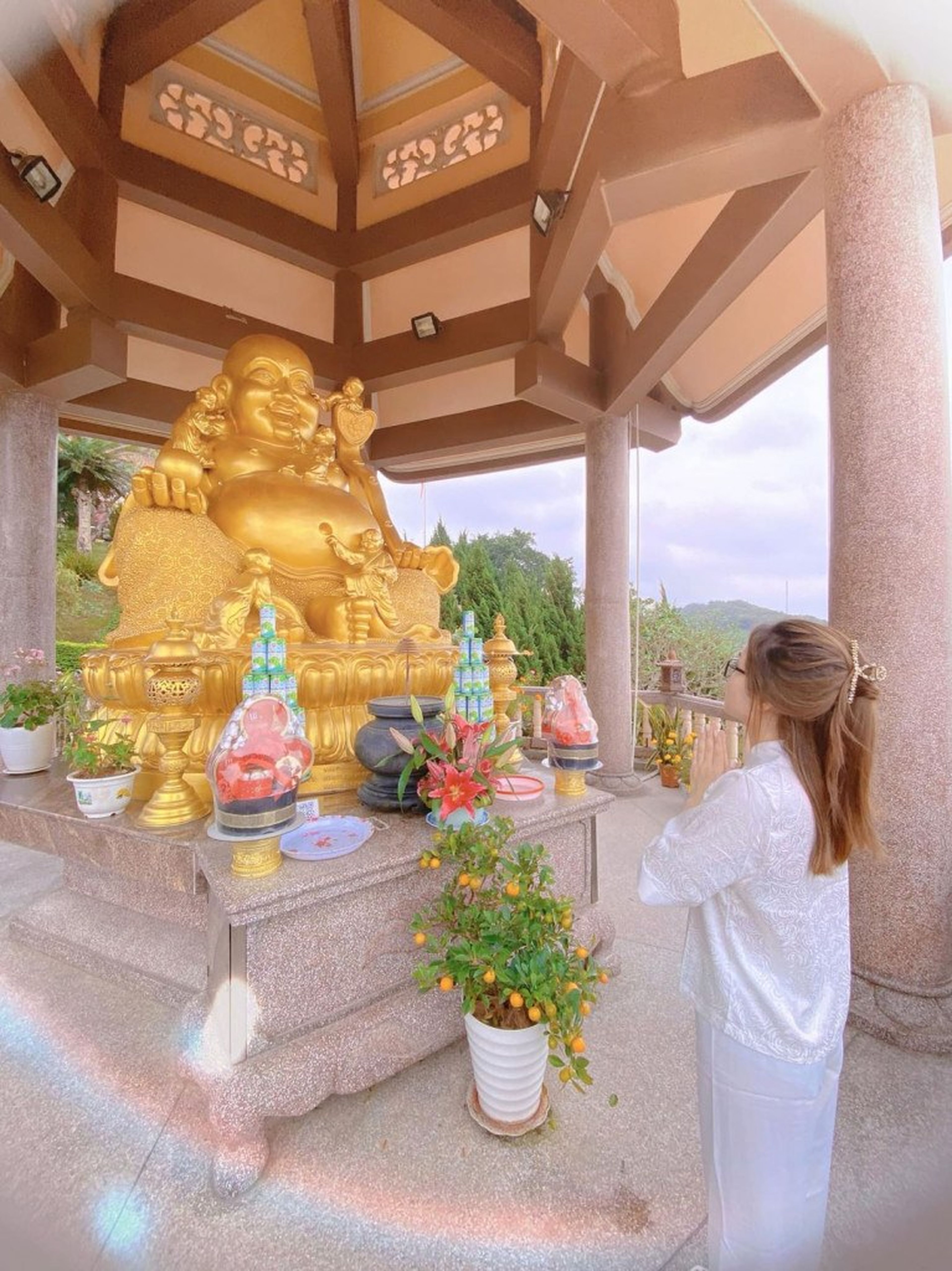
Bell and drum towers stand on either side of the monastery, along with meticulously carved sculptures. To the left of the monastery is a bronze statue of Maitreya Buddha, weighing 4.8 tons.
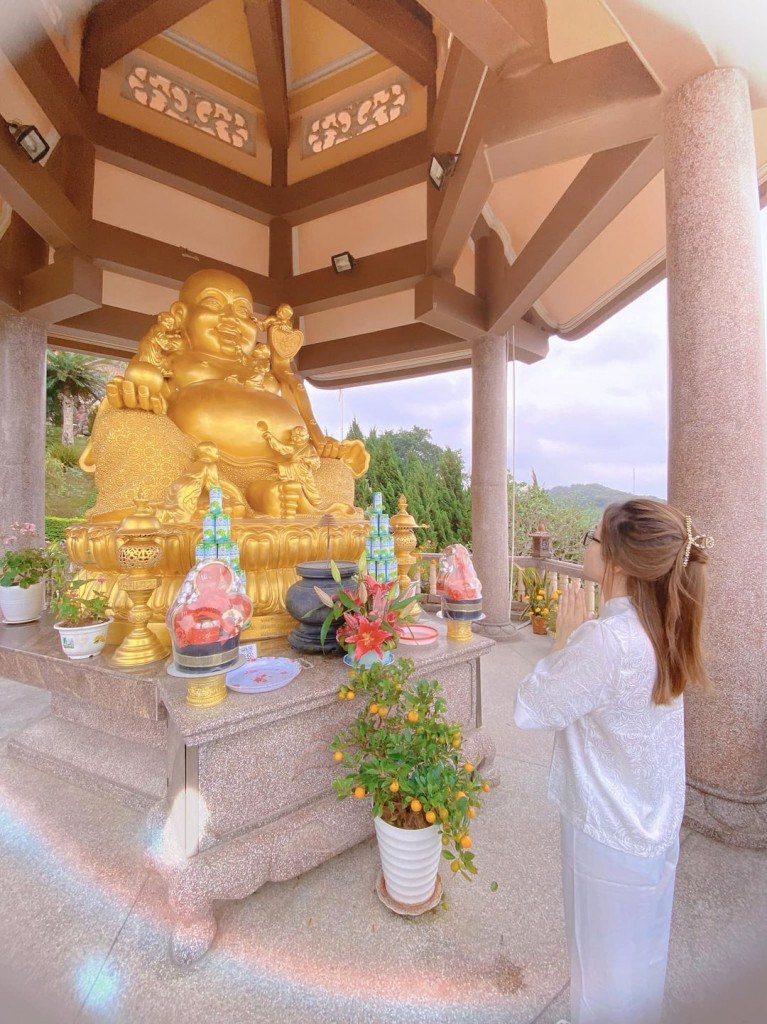
Photo: @haianh.0409.
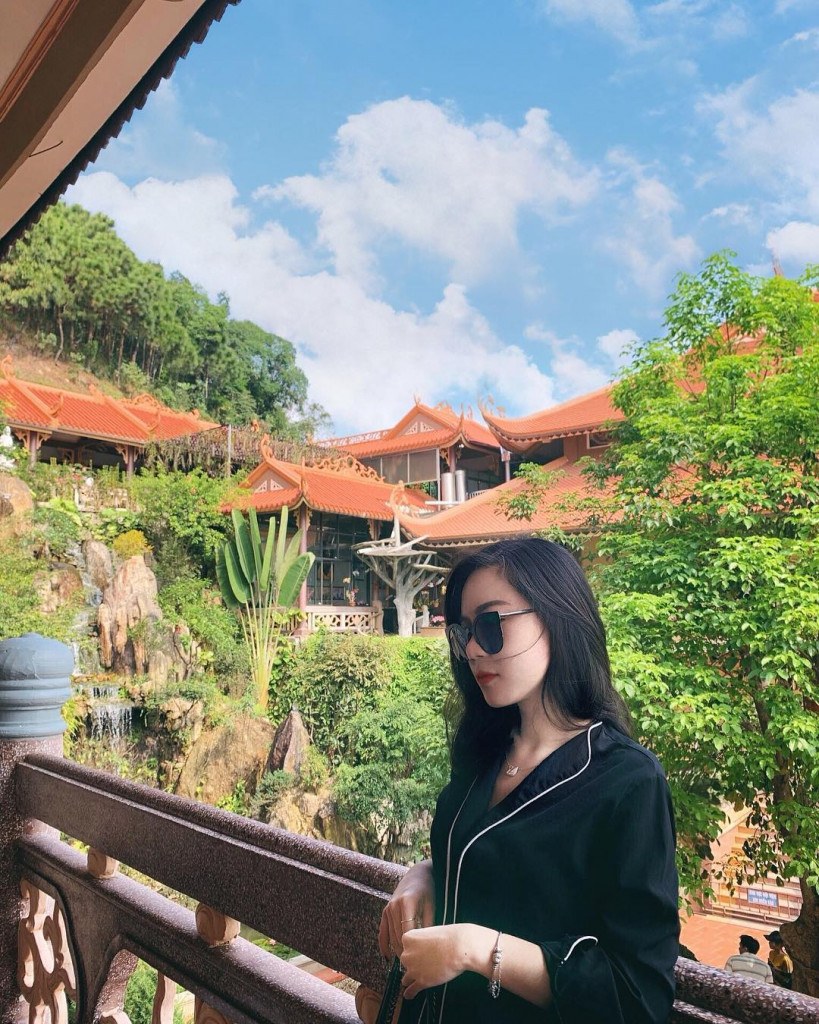
Pagoda grounds. Photo: @huyenbauu96.
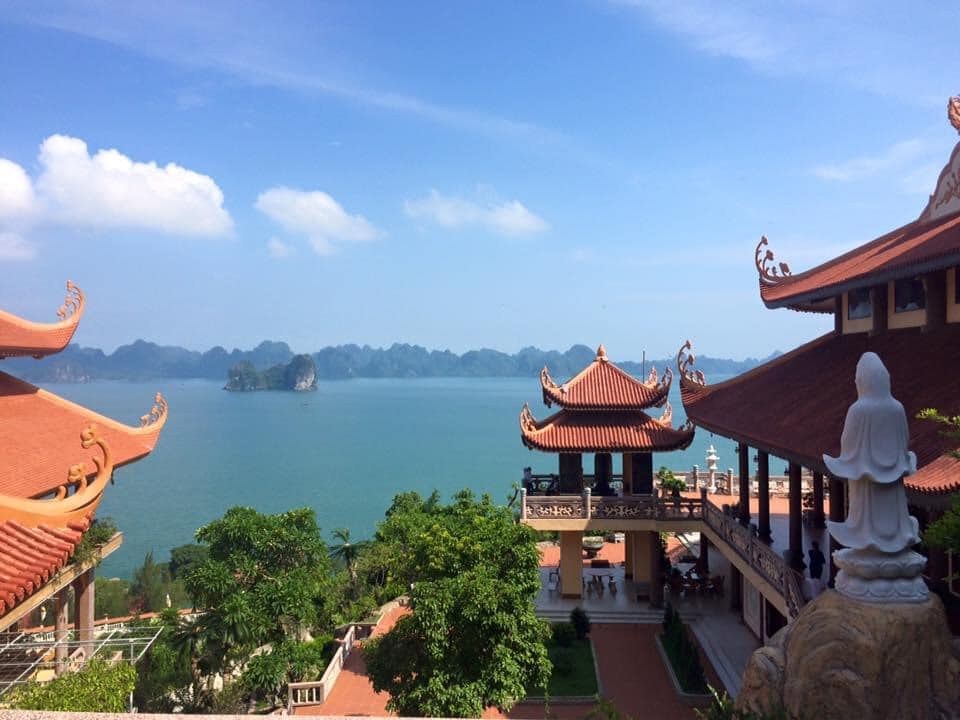
Photo: Fb Chùa Cái Bầu Thiền Viện Trúc Lâm Giác Tâm.
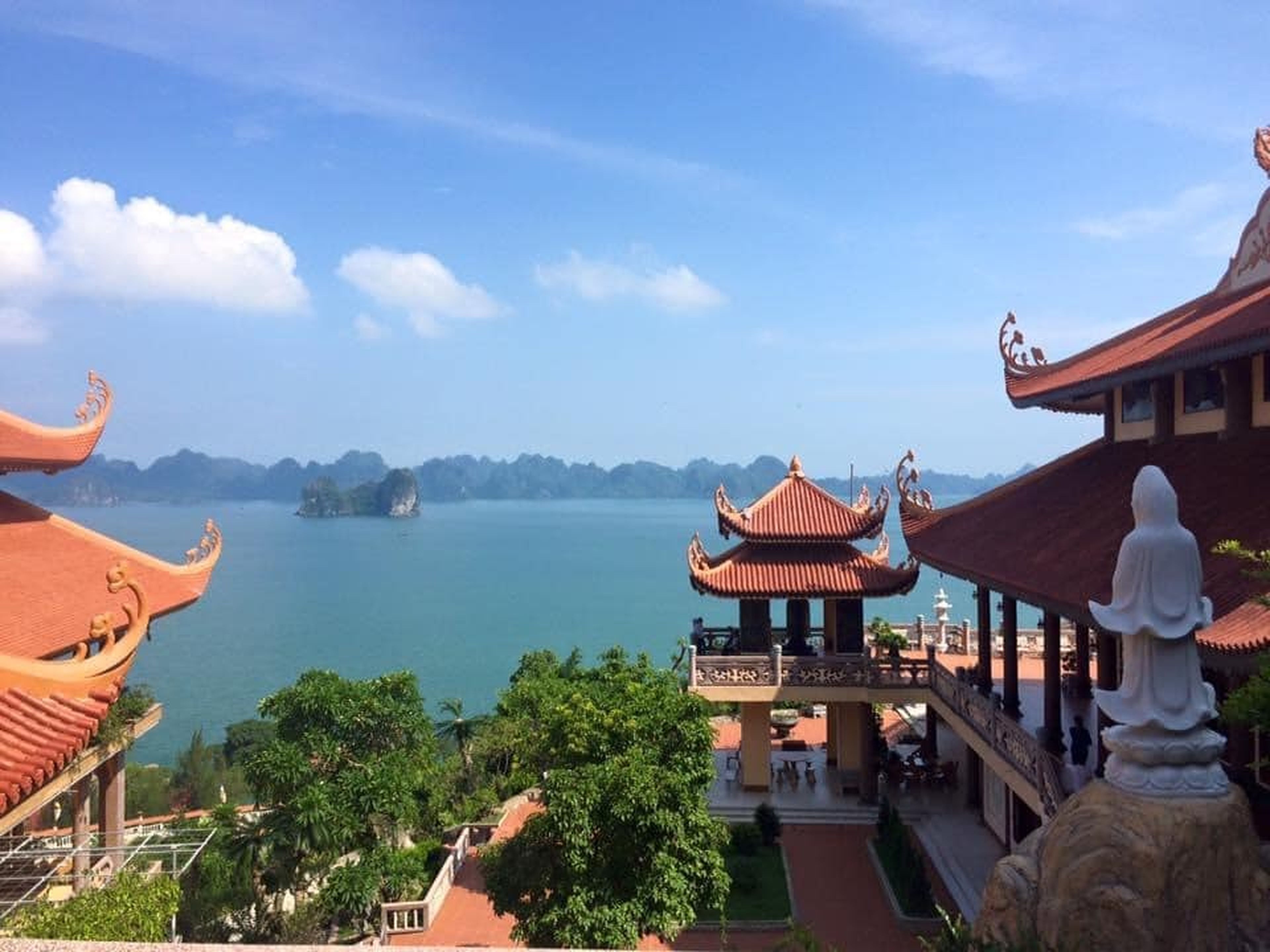
From the monastery courtyard, visitors can gaze into the distance and admire the vast waters of Bai Tu Long Bay, with its rugged, overlapping limestone mountains. The stunning scenery here gives visitors a sense of peace, allowing them, for a moment, to forget life’s troubles.
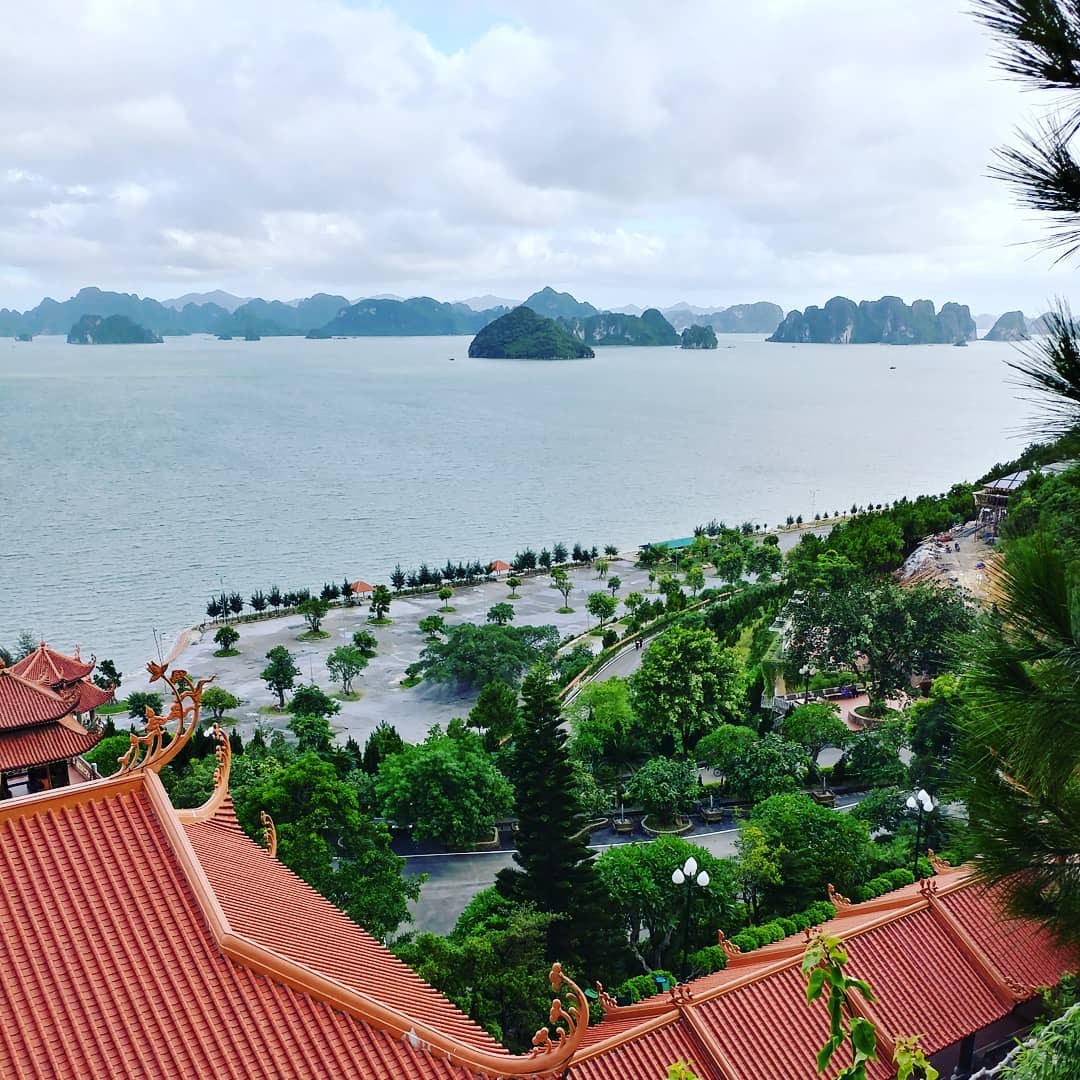
Photo: @levohathieu.
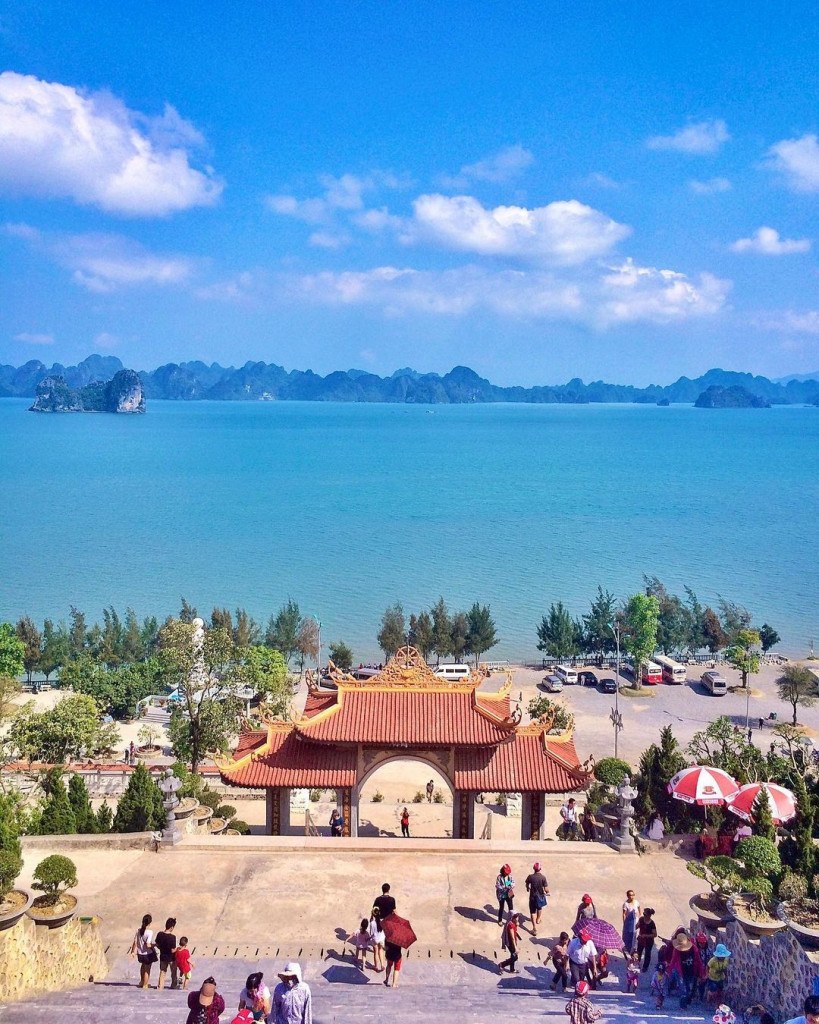
Looking down at the sea from the pagoda. Photo: @lovehandlechronicles.
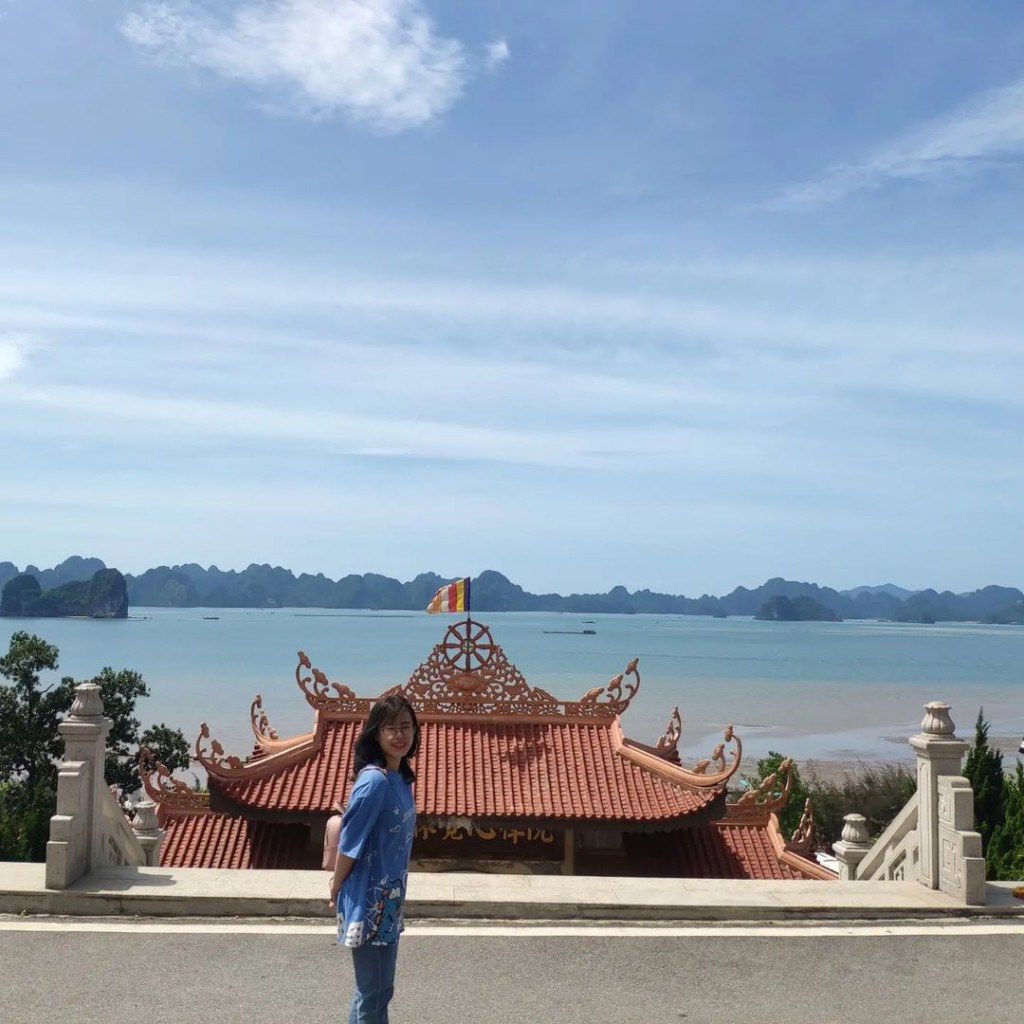
Located beside Bai Tu Long Bay. Photo: @ngocchan.188.
Cái Bau Pagoda prohibits the burning of votive paper, and there are no shops or street vendors outside the pagoda… As a result, visitors can truly immerse themselves in a completely tranquil space, filled only with the sound of temple bells and the clear sounds of nature.