


1 Where is Binh Lieu Dinosaur Backbone?
Address: Northeastern Quang Ninh Province.
Binh Lieu is a mountainous district in northeastern Quang Ninh Province. It features diverse terrain, with high mountain ranges belonging to the Dong Trieu arc and a border stretching for more than 40km alongside China. Known as the "miniature Sa Pa" of the coastal region, Binh Lieu boasts pristine natural beauty and the distinctive cultural heritage of the Tay, Dao, and San Chi ethnic groups.
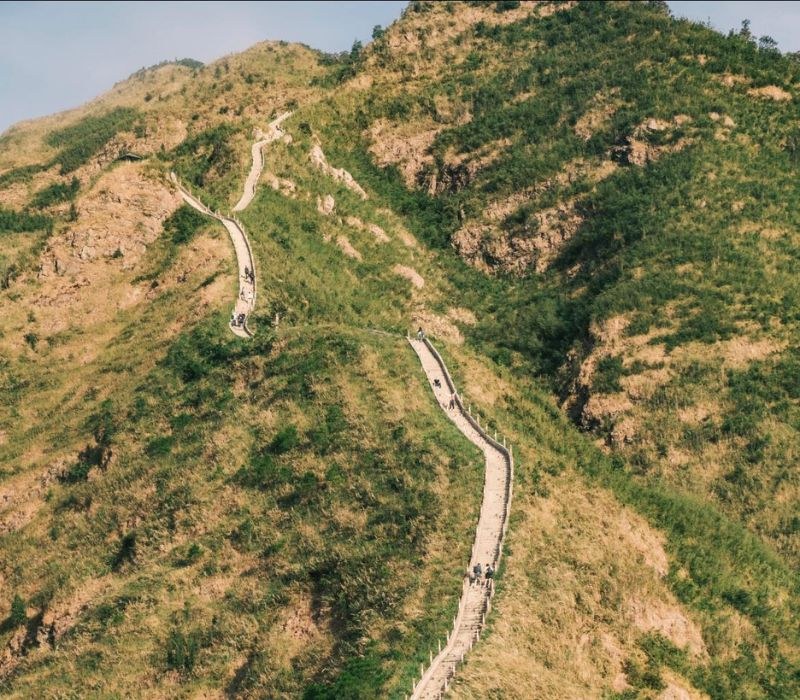
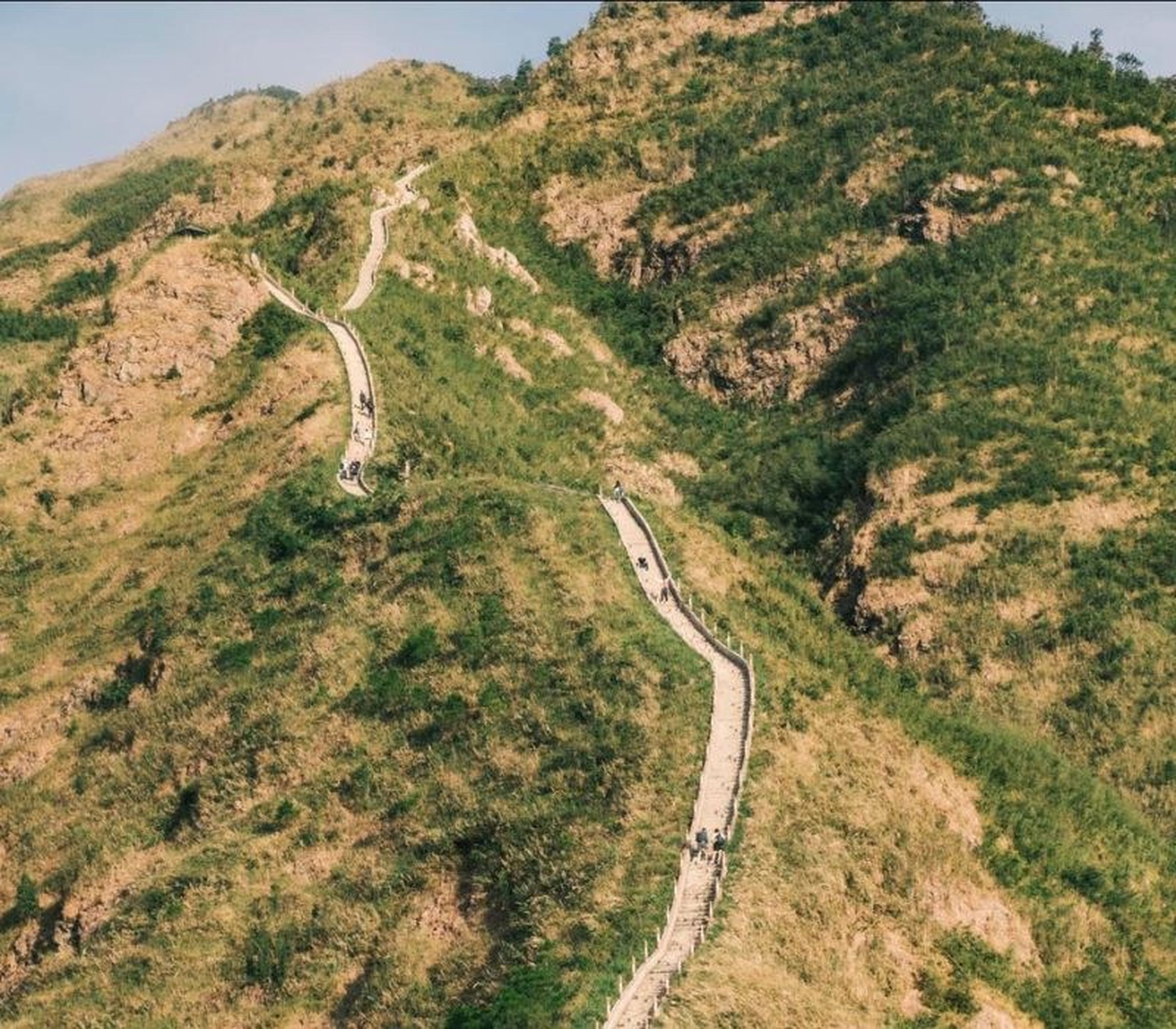
Binh Lieu Dinosaur Backbone is a trekking route that draws adventure lovers. Illustrative photo: Blog Của Rọt
The area attracts visitors with winding border patrol roads, golden terraced fields in autumn, and majestic waterfalls hidden deep in the forest. However, the soul of tourism in Binh Lieu lies in its network of sacred border markers and the legendary trekking route known as "Binh Lieu Dinosaur Backbone." This is not only a destination for explorers but also a place that inspires love for one's homeland, as every step leaves a trace in this frontier region of the country.
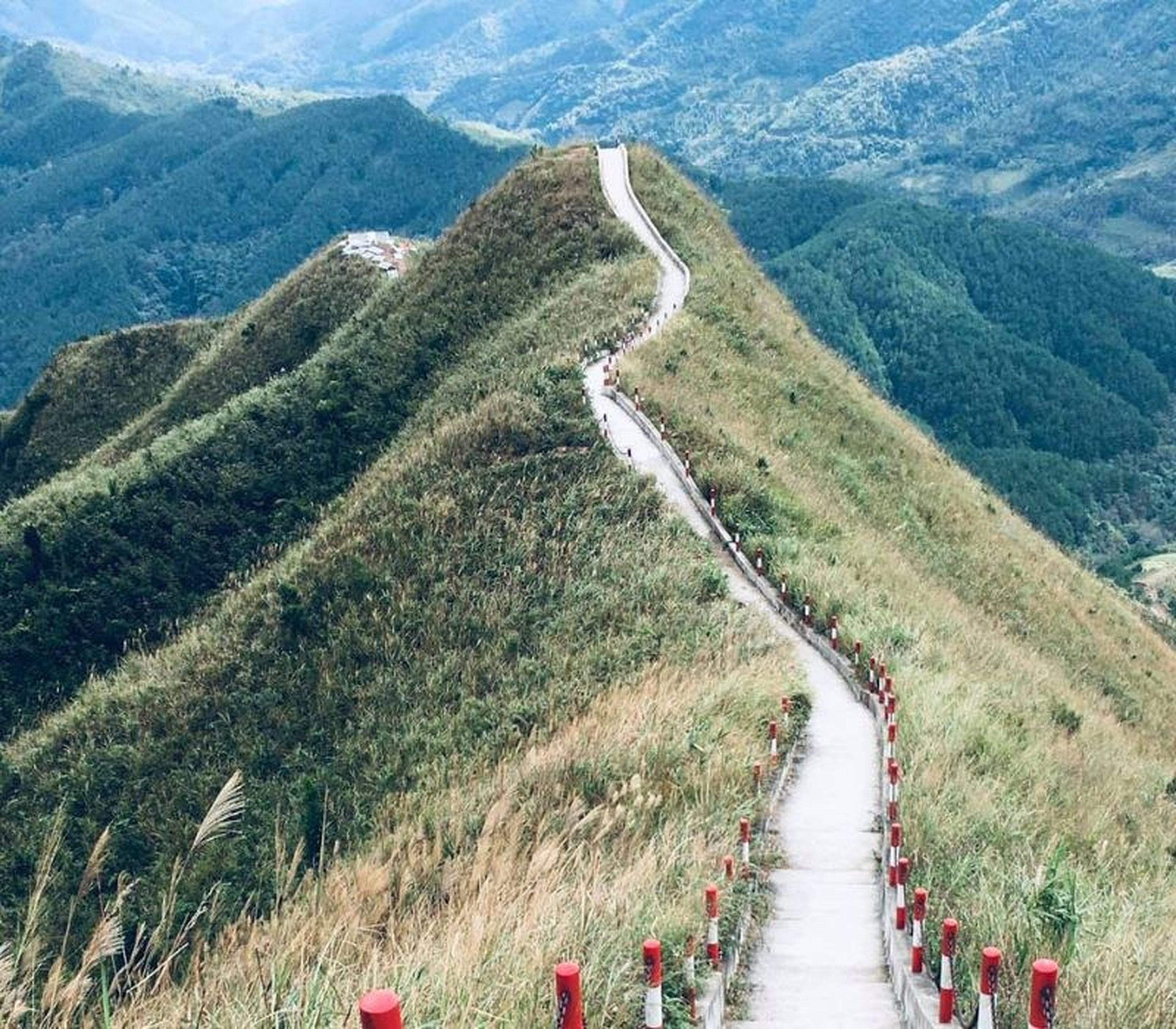
Dinosaur Backbone lies on the boundary between Hoanh Mo and Dong Van communes. This winding border patrol route follows a high mountain range and passes Marker 1305—the highest marker not only in Binh Lieu but in all of Quang Ninh Province.
In fact, "Dinosaur Backbone" is a tiny trail that twists like a ribbon draped across a series of mountain peaks. From a distance, it looks like the backbone of a giant dinosaur sleeping amid the deep-green wilderness.
On either side of the trail lie sheer abysses and vast valleys. Each autumn, instead of green foliage, the entire ridge is covered in a pure-white cloak of silvergrass. The result is a breathtaking scene that is both magnificent and poetic.
2 The best time to explore Binh Lieu Dinosaur Backbone
Unlike other highland regions, Binh Lieu has a distinct beauty in every season. However, to experience the interplay of sky, clouds, and vegetation at its best, visitors usually choose one of these two "golden" periods.
2.1 Conquer Binh Lieu Dinosaur Backbone amid white silvergrass (October–November)
This is peak tourist season in Binh Lieu and Ha Long. From around mid-October to late November, the entire border region seems to awaken beneath a blanket of white silvergrass. Rather than growing in isolated clumps, the silvergrass here forms vast fields that stretch from the foot of the mountains all the way to the border marker summit.
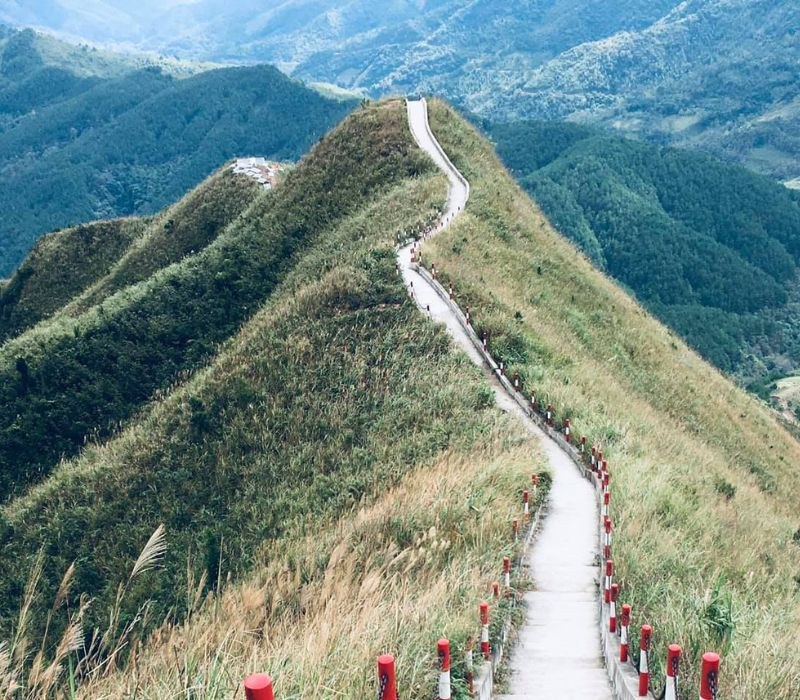
Silvergrass season from October to November is one of the most beautiful times of year in Binh Lieu. Illustrative photo: Vietnam Women's Newspaper
The most wonderful experience comes on brilliant sunset evenings. As the sun gradually disappears behind the distant mountain ranges, golden-orange light washes over the white silvergrass, creating an almost cinematic, dreamlike atmosphere. Standing on Dinosaur Backbone, breathing in the crisp air, and watching waves of silvergrass sway in the wind is an unforgettable experience.
2.2 Golden rice fields and other flower seasons (August–January)
If you miss silvergrass season, Binh Lieu still welcomes you with other colors:
- August–October: This is when the terraced fields in villages such as Luc Hon and Cao Thang ripen. Golden hues spread across the hillsides, evoking a sense of abundance and tranquility.
- December–January: When the Northeast monsoon winds arrive, Binh Lieu is graced with the delicate, pure-white flowers of the sở tree. This is also an ideal time to go cloud hunting on the peaks, as clouds cascade over Dinosaur Backbone like waterfalls.
3 Trekking to conquer Marker 1305
Conquering Dinosaur Backbone is not for the faint-hearted or impatient. The journey is physically challenging, but the rewards are well worth the effort.
3.1 Taking on 2,000 steps among the clouds
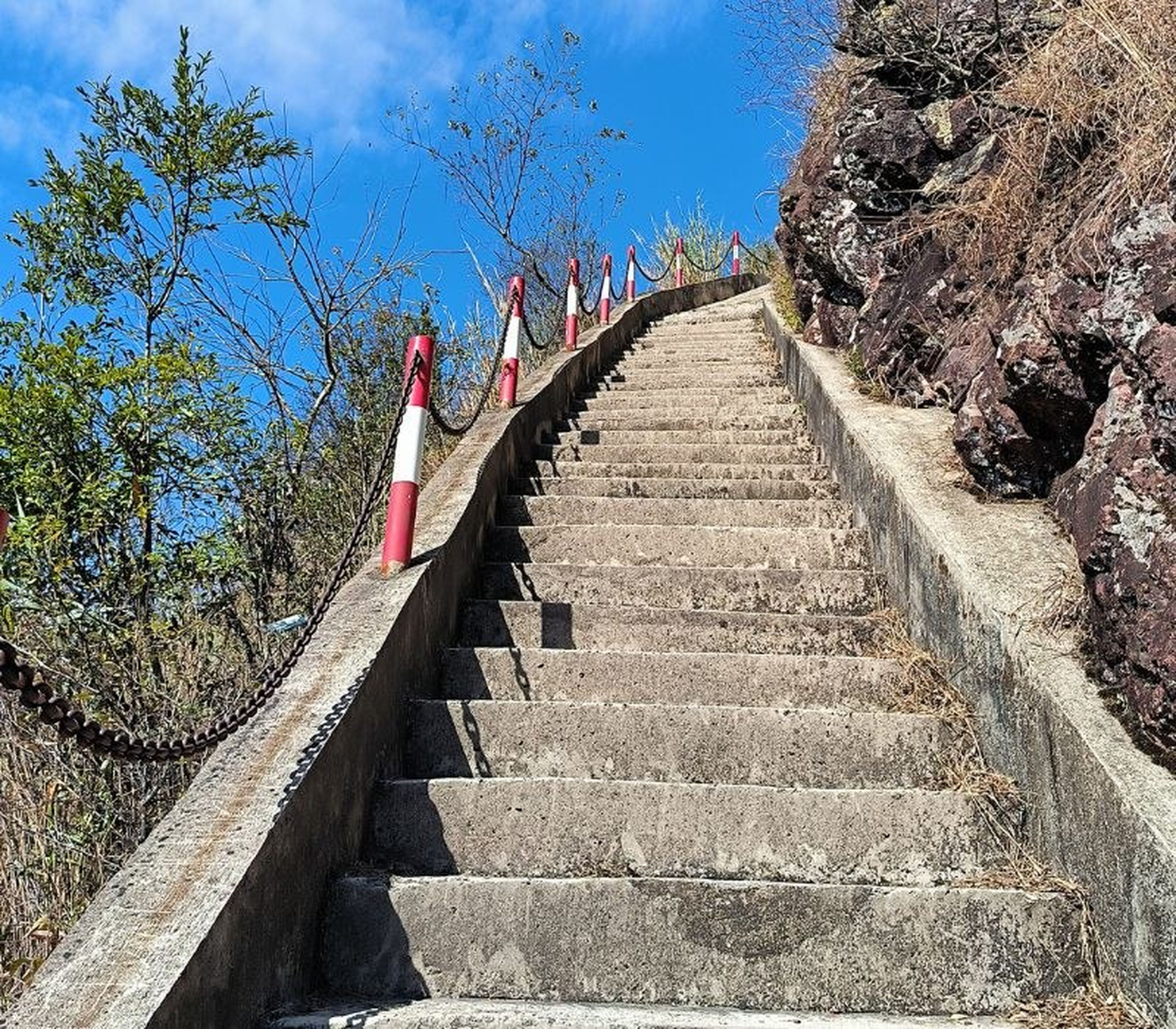
In the past, Dinosaur Backbone was just a narrow, slippery dirt trail that was extremely dangerous. Today, to ensure visitor safety and facilitate border patrols, a sturdy concrete staircase with nearly 2,000 stone steps has been built.
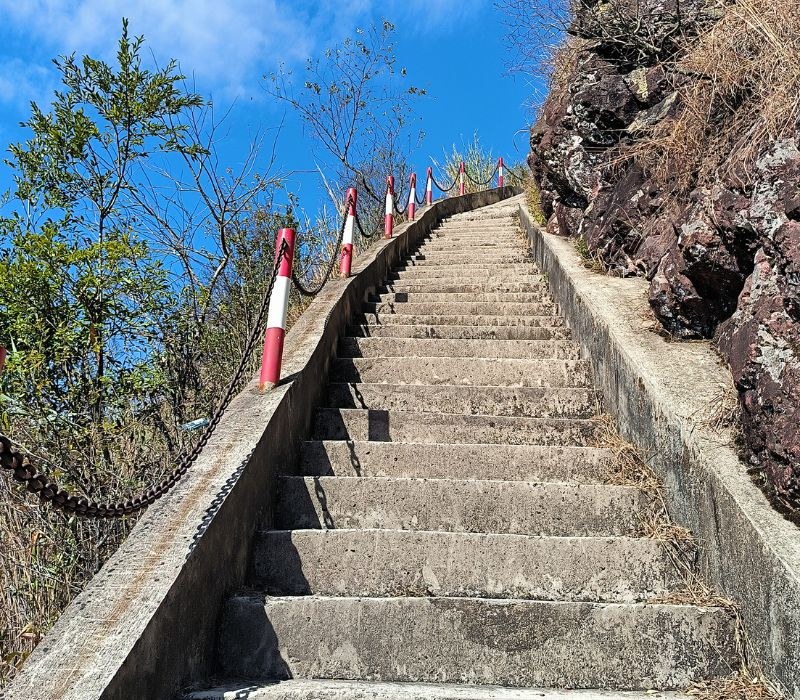
The trek up more than 2,000 steps is a real challenge for visitors to Binh Lieu Dinosaur Backbone. Illustrative photo: Suc Khoe Doi Song
The route is about 2km long, with a fairly steep incline that winds along the ridge. As you climb, you may feel as though you are walking halfway between heaven and earth, with mist-covered slopes on one side and a sheer mountain face on the other. The round trip generally takes around 2 to 3 hours, depending on your fitness and how long you stop to take photos.
3.2 Check in at Marker 1305—the "roof of the world" on the Binh Lieu frontier
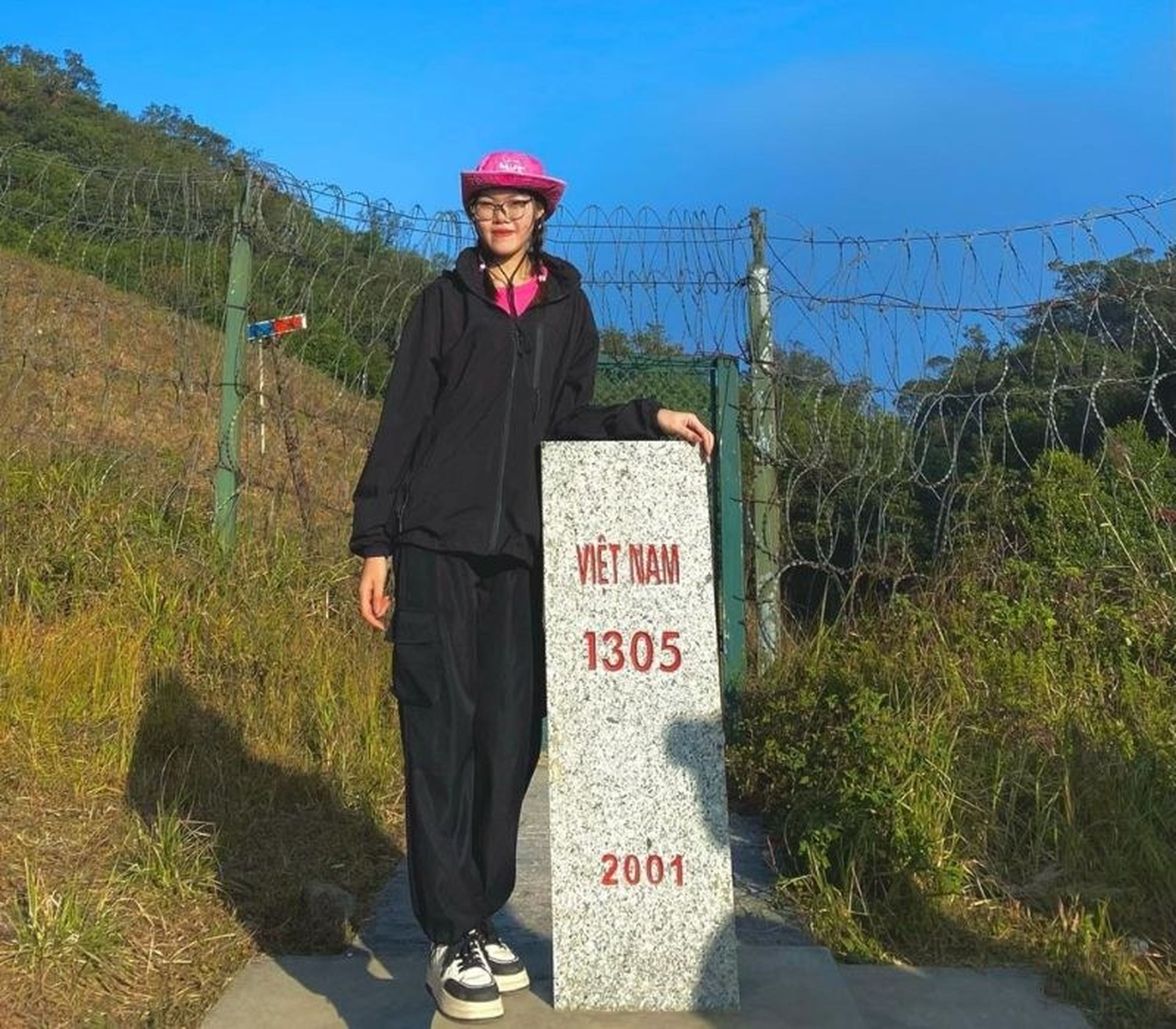
Marker 1305 is the final destination of the trek. The moment you touch this sacred marker, standing more than 1,305m above sea level, all your fatigue seems to disappear. From this highest peak, you can take in sweeping views of the rugged mountain ranges along the Vietnam–China border. The pride you feel in your country, mingled with awe at the beauty of nature, makes this an especially moving moment.
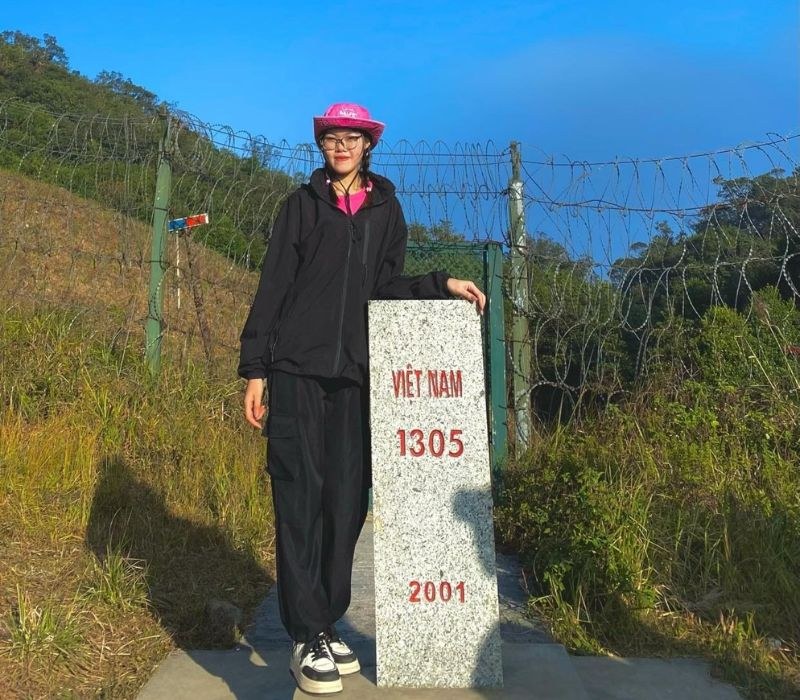
Marker 1305 is the final destination on the Binh Lieu Dinosaur Backbone trek. Illustrative photo: Tien Phong Newspaper
4 Getting around Binh Lieu
Planning your transportation is essential for a smooth trip, especially since Binh Lieu is still a mountainous district with relatively underdeveloped infrastructure.
- From Hanoi: You can take a coach from My Dinh or Giap Bat bus station, or, for the most convenient option, book a limousine with door-to-door pickup. The most common route follows the Hanoi–Hai Phong Expressway, then the Hai Phong–Quang Ninh–Van Don Expressway, before turning toward Tien Yen District and continuing to Binh Lieu. The journey takes about 4–5 hours.
- From Ha Long: Take National Highway 18 toward Mong Cai. At the Tien Yen junction, turn left onto National Highway 18C to reach Binh Lieu town.
- Getting around Binh Lieu: Once you reach town, it is best to rent a motorbike to travel to the foot of Marker 1305 (about 25km from town). The road is scenic, with winding mountain passes, but requires confident riding skills.
5 Important tips for a safe trek
Trekking Dinosaur Backbone is not as difficult as climbing the peaks of the Northwest, but it still calls for careful preparation, including the right gear and good physical fitness.
- Choose proper hiking shoes with good grip or comfortable athletic shoes. Avoid high heels and fashion sandals, as the 2,000 stone steps will make your feet "protest" immediately.
- Wear comfortable, breathable clothing and bring a light jacket or scarf. If you want to take photos among the silvergrass, you can pack a light dress in your backpack and change at a spacious rest stop, so you can get beautiful photos without sacrificing ease of movement.
- Make time for some light training before your trip. Climbing 2,000 steps continuously requires stamina and good respiratory fitness.
- Bring enough drinking water (about 1-1.5 liters per person), some ginger candy to keep warm, and high-energy snacks such as energy bars, chocolate, sweet biscuits, or fruit to replenish your energy along the way.
6 What to eat in Binh Lieu: Must-try local specialties
After a long day of activity, enjoying hearty local dishes inspired by the mountain forests and frontier region will help you quickly recharge.
6.1 Black chicken and grilled stream fish
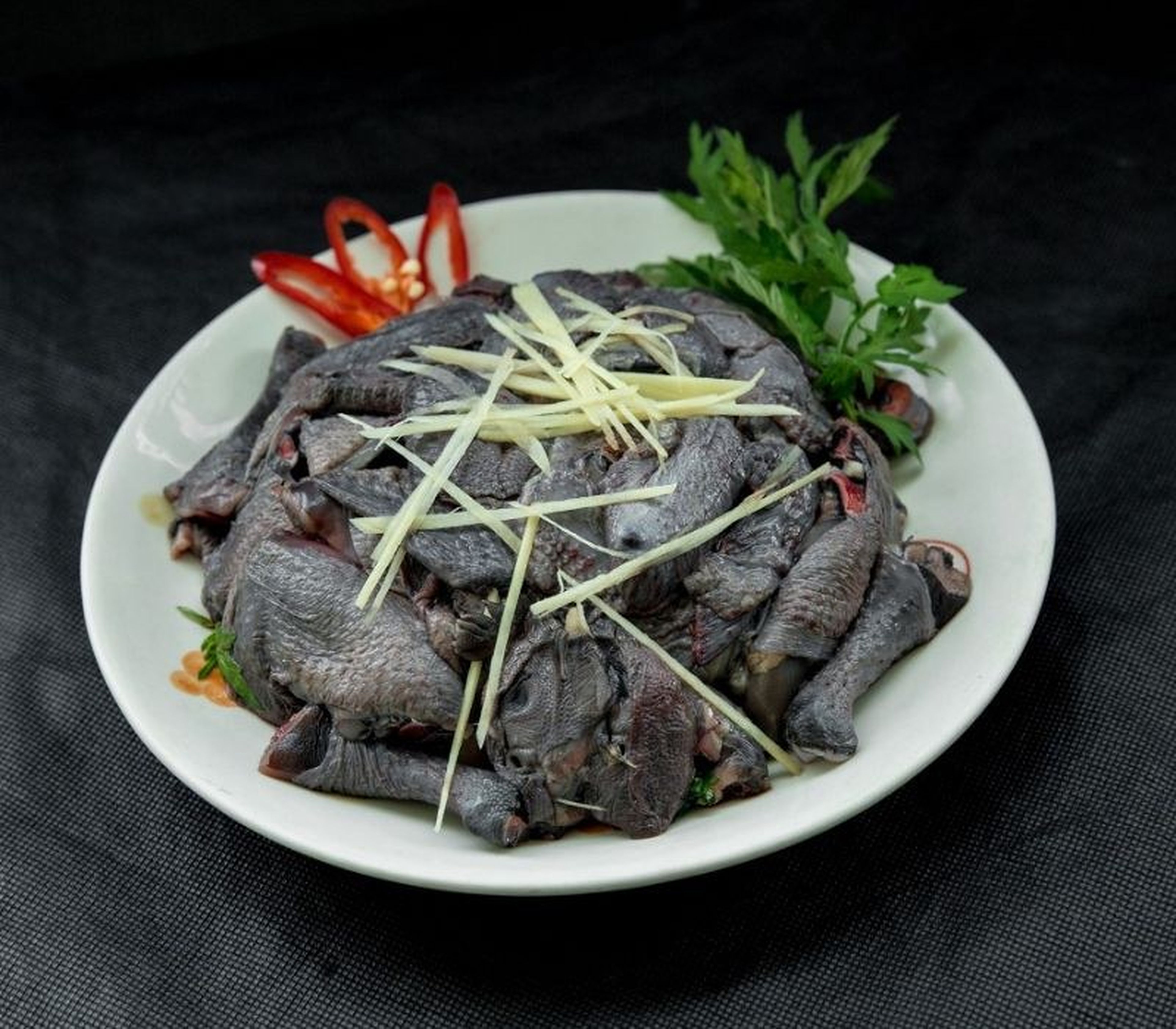
Binh Lieu black chicken is famous for its firm, fragrant, and nutritious meat. It is usually boiled or grilled with wild honey and herbs favored by the Dao people. Crispy fried or charcoal-grilled stream fish is another irresistible dish. Caught in natural streams, these small fish have sweet flesh and crunchy bones; they're delicious dipped in pepper, chili, and lime salt.
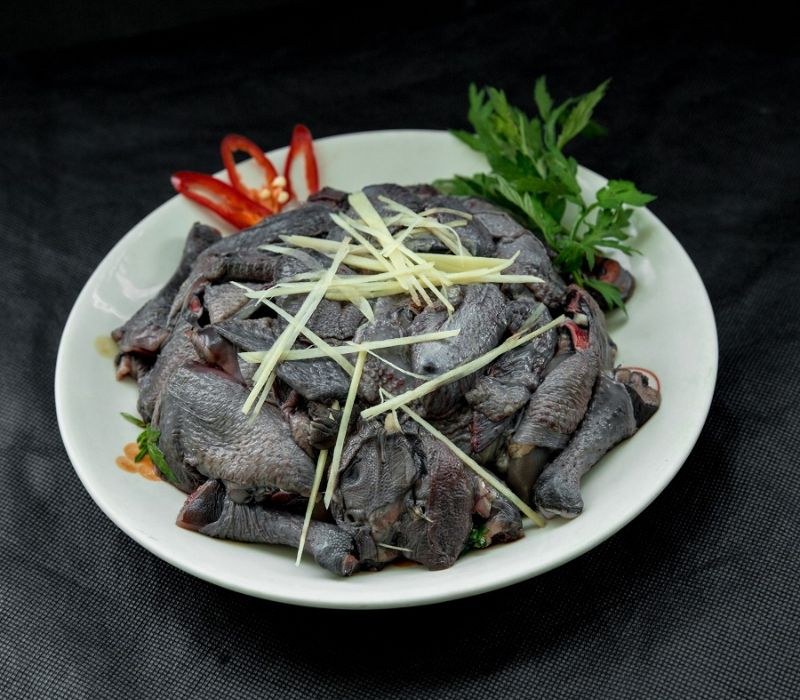
Black chicken is one of the local specialties visitors should try in Binh Lieu. Illustrative photo: Tien Phong Newspaper
6.2 Binh Lieu stir-fried pho and traditional cakes
The pho noodles here are handmade, wide, and thin, then stir-fried with local pork and wild vegetables for a rich, distinctive flavor. Be sure to try traditional cakes made by the Tay and Dao people too, such as banh ngai, banh cooc mo, and the unique tai long ep.
7 Nearby attractions to visit
If you make it to Binh Lieu, don't stop at Dinosaur Backbone. This region is full of other hidden gems waiting to be discovered.
7.1 Marker 1297—a true silvergrass paradise
While Marker 1305 is renowned for its grandeur, Marker 1297 is a "silvergrass paradise" in the truest sense. The climb to Marker 1297 is much easier than the ascent to Marker 1305, taking only about 10-15 minutes up a gentle slope. This is where the silvergrass grows most densely, forming enormous white carpets. Marker 1297 is also Binh Lieu's best "million-view" sunset spot.

Marker 1297 is a "silvergrass paradise," with beautiful views overlooking the grass fields. Illustrative photo: ivivu.com
7.2 Khe Van Waterfall and Na Lang Suspension Bridge
- Khe Van Waterfall: This is Quang Ninh's most impressive three-tiered waterfall, standing more than 100m high. After hours of tiring hiking, taking a dip in its cool waters or sitting beside the stream and listening to the cascading falls will bring you a deep sense of relaxation.
- Na Lang Suspension Bridge: An iron bridge with a distinctly nostalgic style, connecting local ethnic villages. It's a wonderful spot for vintage-style photos.
The journey to conquer Binh Lieu Dinosaur Backbone challenges you to push beyond your limits in order to admire the country's spectacular beauty. Standing high on the frontier, surrounded by clouds and endless fields of white silvergrass, you will feel your heart beat faster with pride and a deep love of nature. Silvergrass season in Binh Lieu is at its most beautiful, and the winding trails are still calling to adventurous travelers. Don't hesitate—get your travel suitcase out and set off to experience the pristine, majestic beauty of Binh Lieu and create some of the brightest memories of your youth on this legendary ridge!