1 Overview of An Sinh Temple - Historic Site
Address: Trại Lộc Village, An Sinh Ward, Quảng Ninh Province (part of the former Đông Triều City)
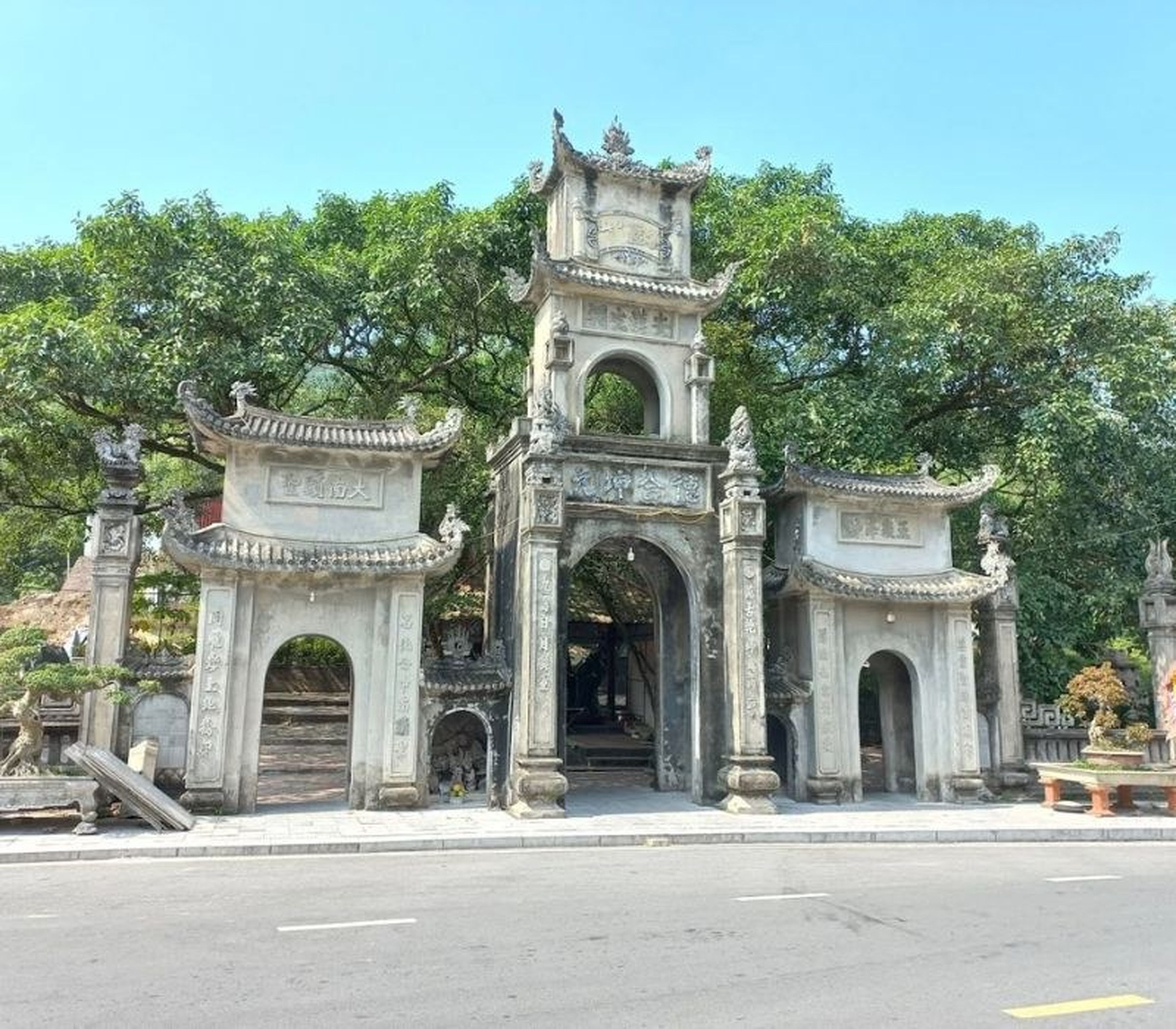
An Sinh Temple is known as the most important religious center within the Special National Historic Site Complex of the Trần Dynasty. This destination has long been a “red address” for spring outings and pilgrimages by visitors from near and far.
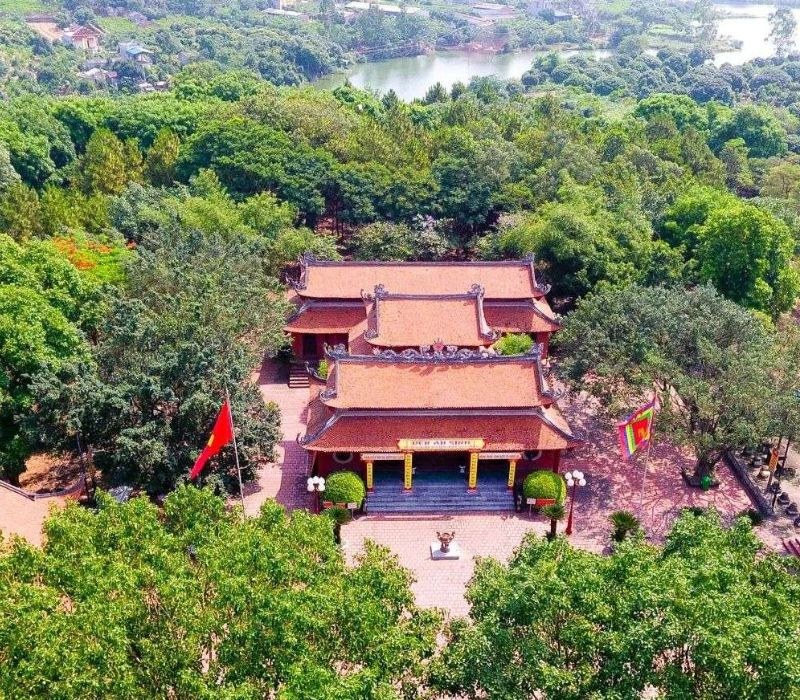
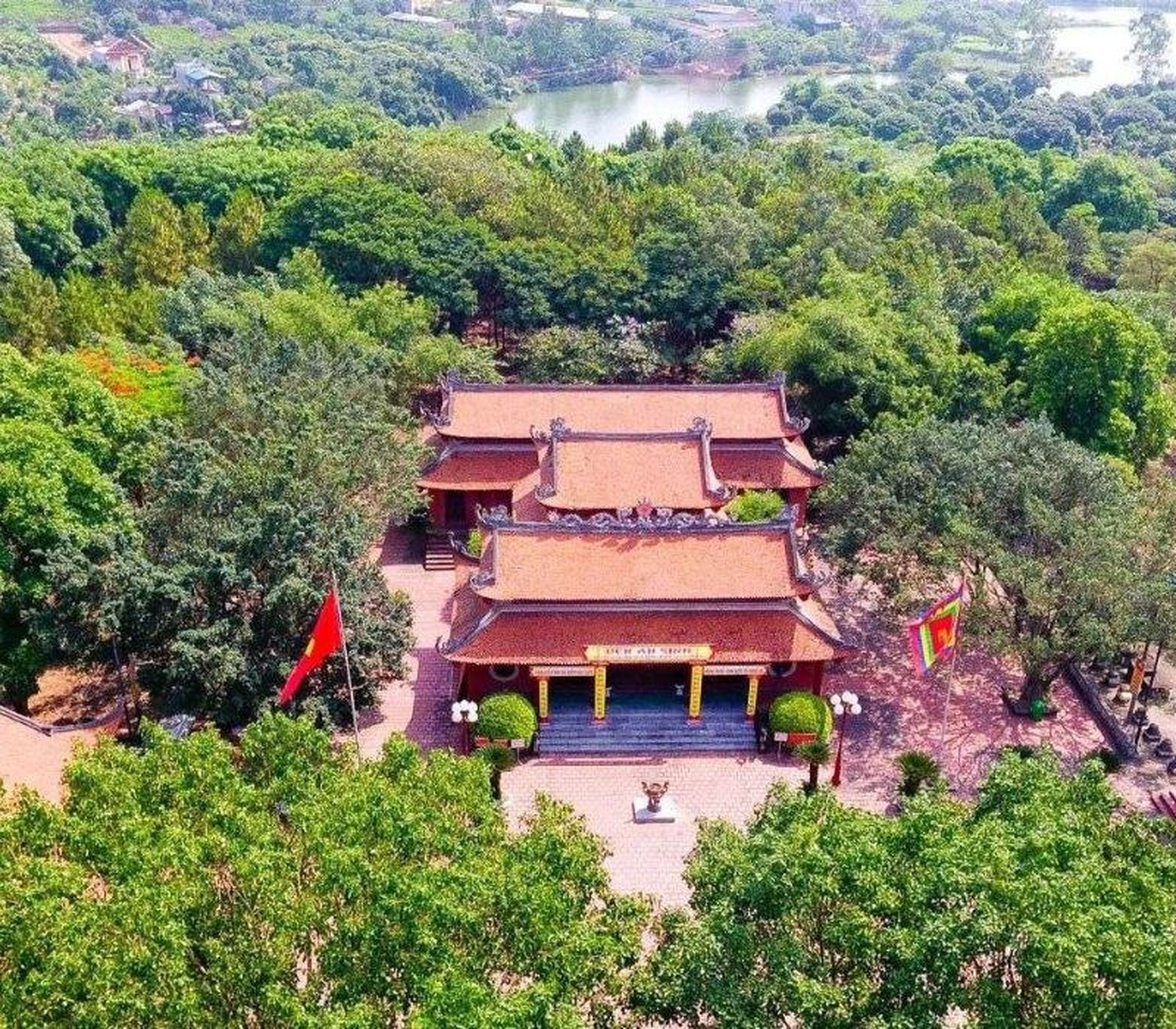
An Sinh Temple is a place of worship for 8 Trần Dynasty kings. Illustrative photo: VinWonders
With a history spanning more than 600 years, the temple serves as the “ancestral homeland”—a place preserving the spirit and soul of the 8 Trần kings and the forebears who made great contributions to founding and defending the nation. Its designation as a special national relic confirms the site’s unparalleled value in preserving national cultural identity and educating future generations about tradition. Upon entering the temple grounds, visitors can feel a powerful vitality, where the intersection of history and spirituality becomes clearer than ever.
2 Discovering the Architecture and Landscape
The architecture of An Sinh Temple is an excellent testament to the combination of human craftsmanship and the majestic beauty of Đông Triều’s nature.
2.1 An Sinh Temple with its ancient setting
Spread across a huge area of up to 80,000m2, An Sinh Temple creates a sense of grandeur and solemnity at first sight. The temple was built on a high, gently sloping hill in an exceptionally auspicious feng shui position, backed by mountains and facing water. In front of the temple lies the vast An Sinh Lake, whose gentle waves lap throughout the year, while behind it rises the majestic Yên Tử mountain range.
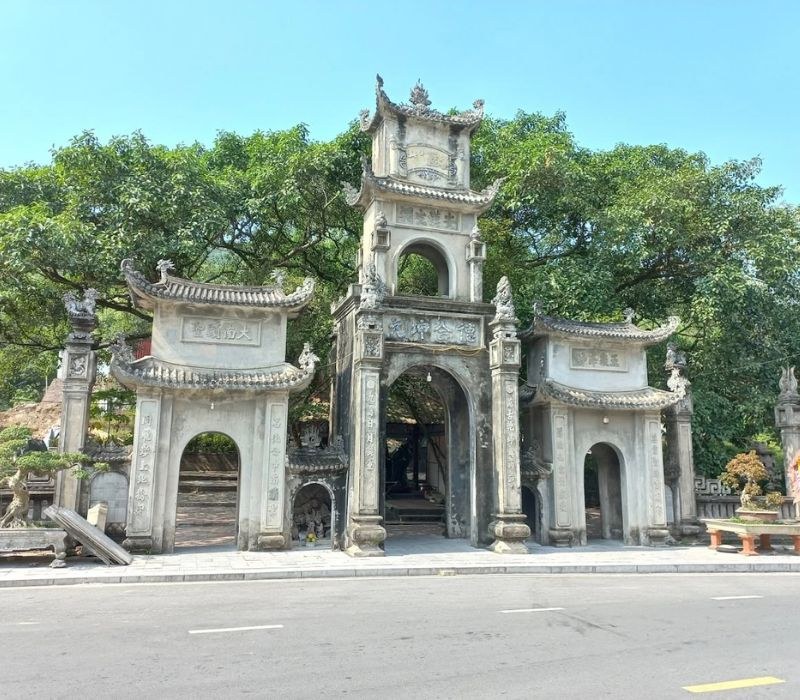
An Sinh Temple boasts an impressive spacious area and sits on a high hill facing the vast An Sinh Lake. Illustrative photo: Vinpearl
This creates a firm “mountains as a screen, water gathered” position, in accordance with ancient Vietnamese feng shui beliefs. The space here is not confined; on the contrary, the expansive grounds allow every visitor to feel their spirit broaden and escape the worries of everyday life.
A special feature that leaves visitors moved as they enter the temple gate is the avenue of centuries-old longan trees. The aged trees have rough trunks marked by the passage of time, yet their foliage remains lush and intertwines to form a naturally cool canopy leading to the main sanctuary.
The rustling of wind through the longan leaves, together with the faint fragrance of longan fruit in season, makes the space tranquil and imbued with the character of a Vietnamese village. This is not merely scenery, but also the heartfelt welcome of An Sinh’s motherland to those returning to visit their roots.
2.2 The Solemn “Công Character” Architecture
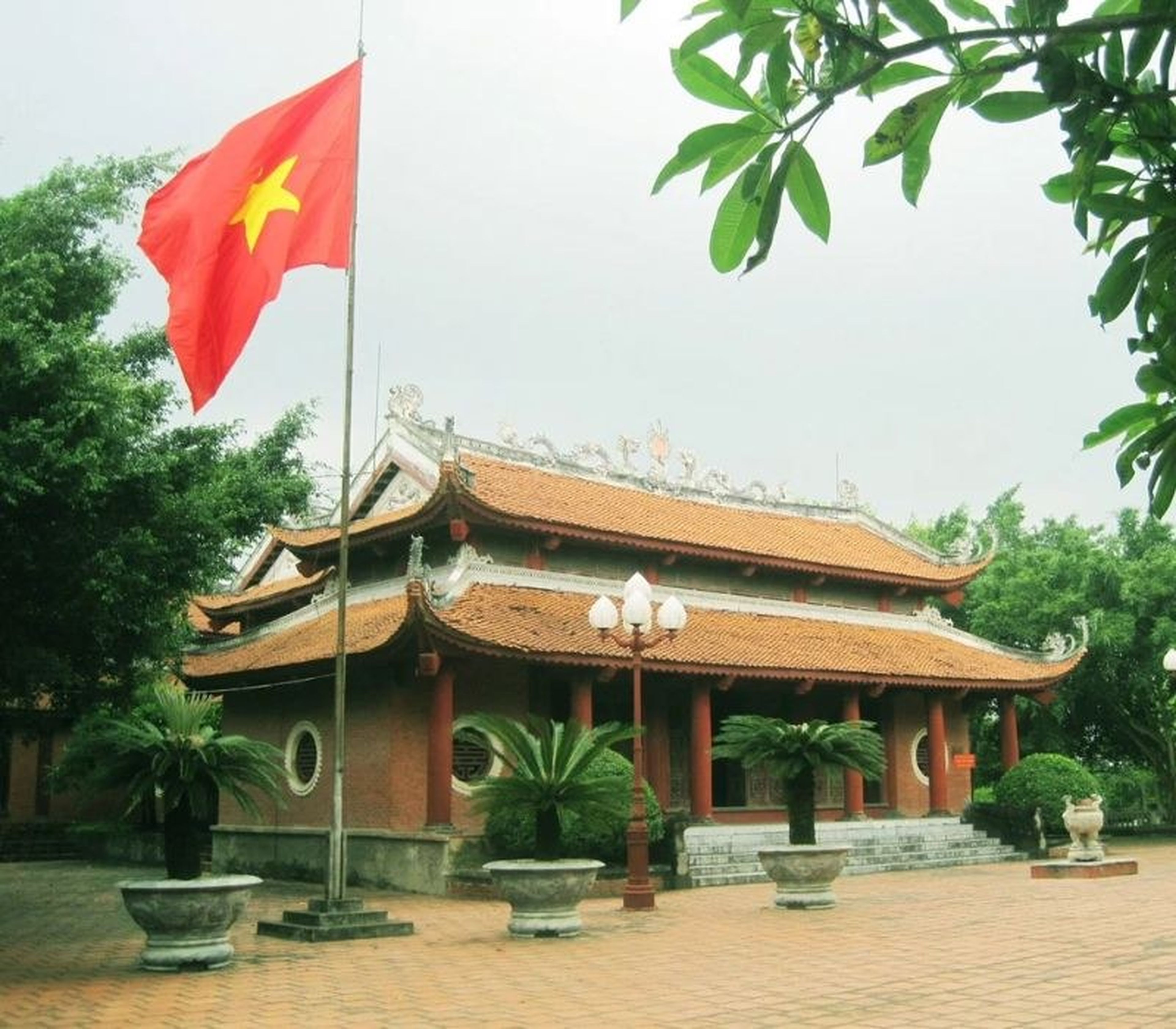
The current architecture of An Sinh Temple is the culmination of many historical periods, especially the large-scale restoration in 2000, which returned the temple to its former grandeur. The entire complex follows a Công-character layout, a typical architectural style of ancient Vietnamese temples and pagodas.
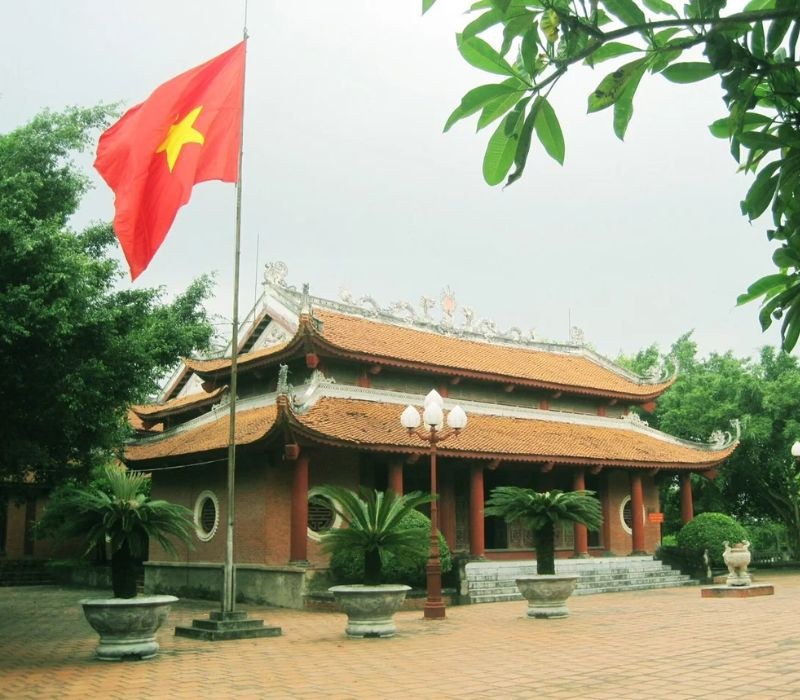
The temple is designed in the shape of the Công character, with three main sections—Bái đường, Trung đường, and Hậu cung—connected by corridors. Illustrative photo: TripAdvisor
This structure consists of three main sections: Bái đường, Trung đường, and Hậu cung, connected by corridors or linking houses, creating continuity and solemnity for worship. Each building is made from precious wood, with weathered red curved-tile roofs; the upturned roof corners curve toward the sky like the former emperors’ aspiration to attain loftiness.
The temple’s architectural changes through the periods also tell an interesting historical story. In its early days under the Trần Dynasty, the site was called An Sinh Palace, with carvings strongly bearing the imprint of Buddhism during its most prosperous period. Under the Nguyễn Dynasty, the temple was renovated according to a Tam-character layout to suit the feudal conventions of the time.
Finally, reconstruction in the Công-character layout in 2000 truly restored the temple’s complete appearance, preserving traditional refinements while meeting the worship needs of tens of thousands of visitors each year and affirming the relic’s remarkable endurance through countless historical upheavals.
2.3 Meaningful Greenery and Symbols
In Vietnamese spiritual culture, trees are not merely decorative but also embody profound philosophies of life. At An Sinh Temple, the arrangement of precious trees throughout the grounds carries a message of gratitude. Most prominent are 14 great trees planted symmetrically along the paths and ceremonial courtyard, symbolizing the 14 Trần Dynasty kings who ruled the country for more than 175 years. Each massive tree stands as a witness to history, towering between earth and sky as if reminding descendants of the strength and enduring spirit of Đông A.
Alongside the great trees, 8 cycads planted solemnly in front of the main sanctuary courtyard also carry a very special spiritual meaning. These 8 trees represent the 8 Trần emperors currently worshipped in the temple’s Hậu cung. With their sturdy trunks and sharp leaves reaching upward, cycads evoke the solemnity and immortality of the monarchs who helped build a prosperous dynasty. Combining brick, stone, and wooden structures with living symbols from nature creates a harmonious whole, making An Sinh Temple not merely a collection of dry historical facts but a place full of vitality and sacredness.
3 Whom Does An Sinh Temple Worship?
The question “Whom does An Sinh Temple worship?” is always one of visitors’ foremost concerns when they come on pilgrimage. This is where the spirits of the leaders of the Trần Dynasty converge, from the kings who founded the dynasty to the heroes who saved the nation.
3.1 A Gathering Place for the Spirits of 8 Trần Kings
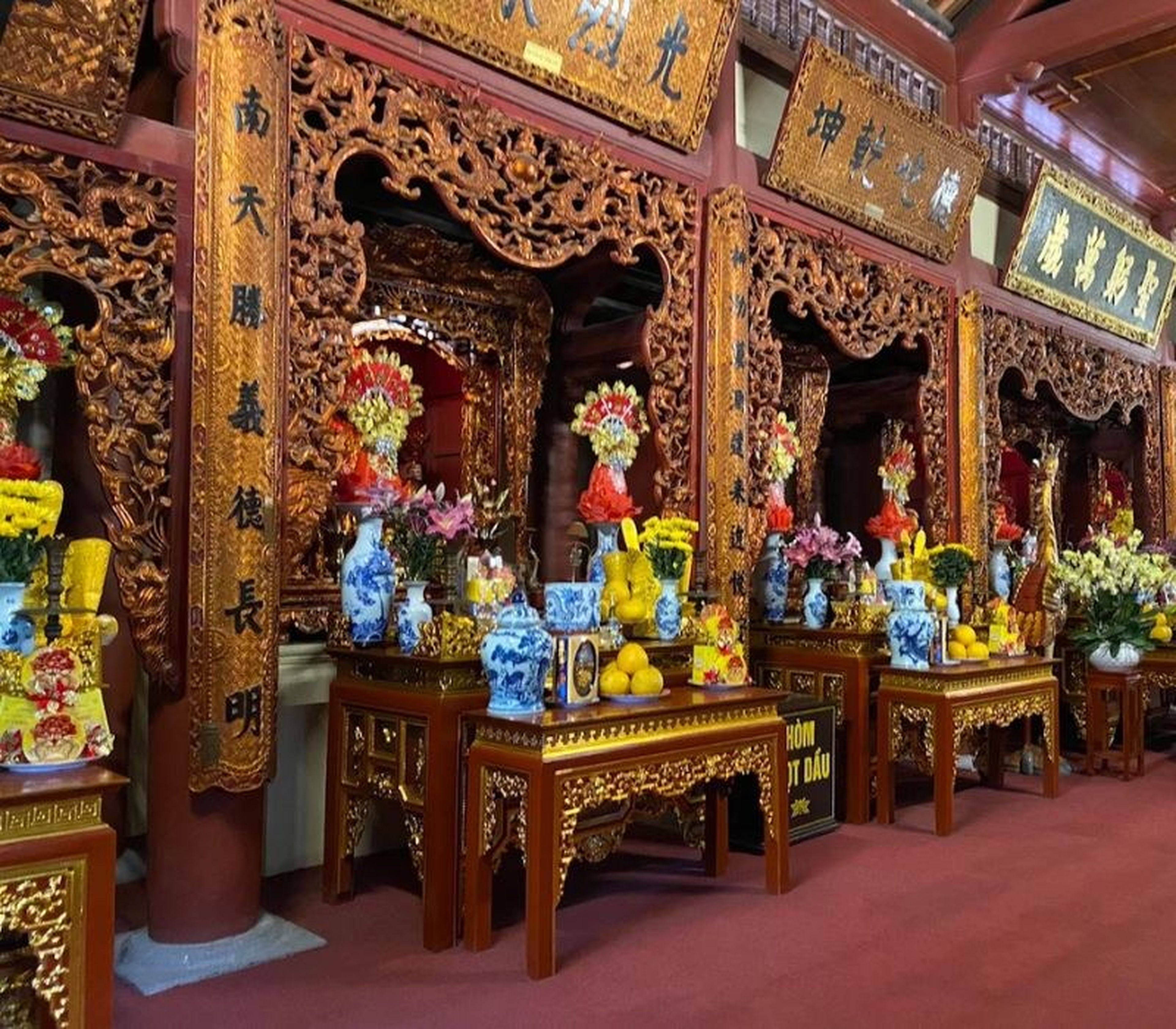
The Hậu cung of An Sinh Temple is the most sacred and quiet space, where the worship thrones and tablets of 8 Trần emperors are placed. These were kings who made major contributions to political stability and cultural development, and especially led the people to victory against invasions from the north.
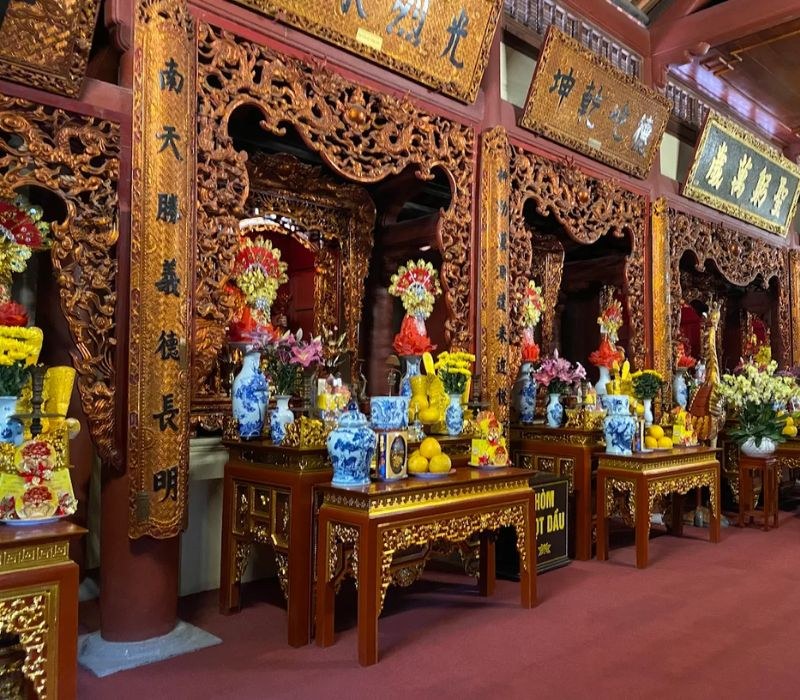
The Hậu cung at An Sinh Temple is where 8 Trần Dynasty kings are worshipped, with solemn displays and incense burning throughout the year. Illustrative photo: TripAdvisor
The 8 emperors worshipped here are Trần Thái Tông—the dynasty’s first king—followed by Trần Thánh Tông, Trần Anh Tông, Trần Minh Tông, Trần Hiến Tông, Trần Dụ Tông, and Trần Nghệ Tông. In particular, the temple also has a worship tablet for King Giản Định, a king of the Later Trần period.
Each altar in the Hậu cung is arranged solemnly with complete ritual objects, while incense burns throughout the year. Standing before the altar of the Eight Former Emperors, visitors often feel deeply moved by their lineage and history. Worshipping the 8 kings together in one space at An Sinh, rather than in separate mausoleums, has transformed this temple into a shared “ancestral temple” for the entire Trần lineage in Đông Triều, a spiritual connection between the living and the wise rulers of the past.
3.2 Worship of An Sinh Prince Trần Liễu
The Trung đường is where figures of great importance to the Trần Dynasty as a whole and to Đông Triều in particular are worshipped. First among them is An Sinh Prince Trần Liễu, the father of Hưng Đạo Đại Vương Trần Quốc Tuấn. An Sinh Prince made major contributions to reclaiming and developing the An Sinh fiefdom from its earliest days.
Beside An Sinh Prince is the altar of his wife, Thiện Đạo Quốc Mẫu, and that of the renowned national hero Hưng Đạo Đại Vương Trần Quốc Tuấn. Placing Hưng Đạo Vương’s altar together with those of his parents in the Trung đường not only expresses the Vietnamese value of filial piety but also affirms the blood ties between family and nation. Visitors offering incense here pray not only for their family’s peace but also to honor those who sacrificed personal interests for the nation’s survival, creating a vivid moral lesson for later generations.
3.3 Museum Displaying Archaeological Artifacts
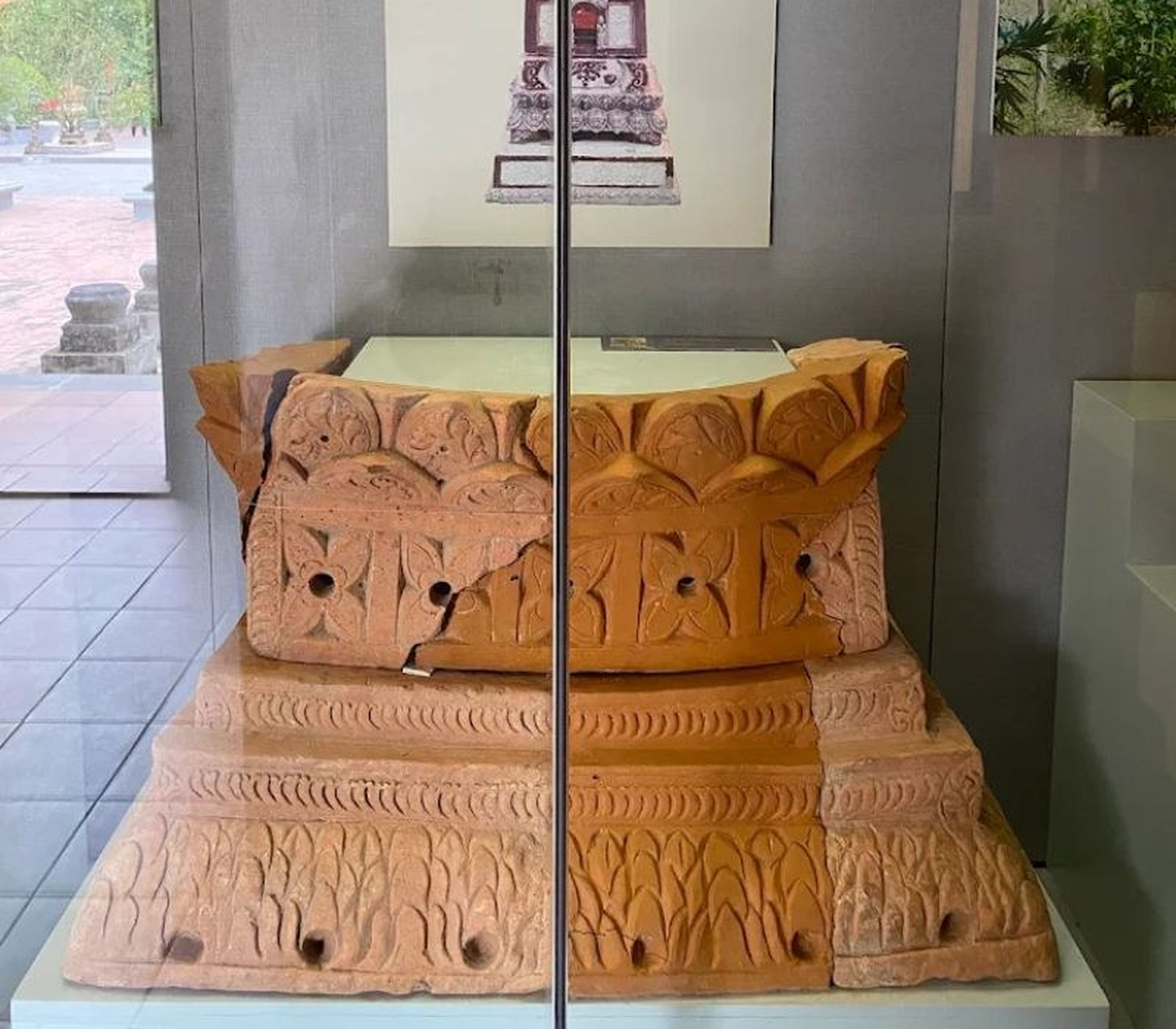
Another distinctive feature that sets An Sinh Temple apart from many others is the presence of a small archaeological museum within the historic site. It preserves and displays hundreds of valuable artifacts discovered during excavations of the old temple foundations and the surrounding Trần kings’ tombs. Bricks, curved roof tiles decorated with flying dragons and dancing phoenixes, and exquisitely crafted bronze phoenix statues all tell stories of our ancestors’ masterful aesthetic abilities more than half a millennium ago.
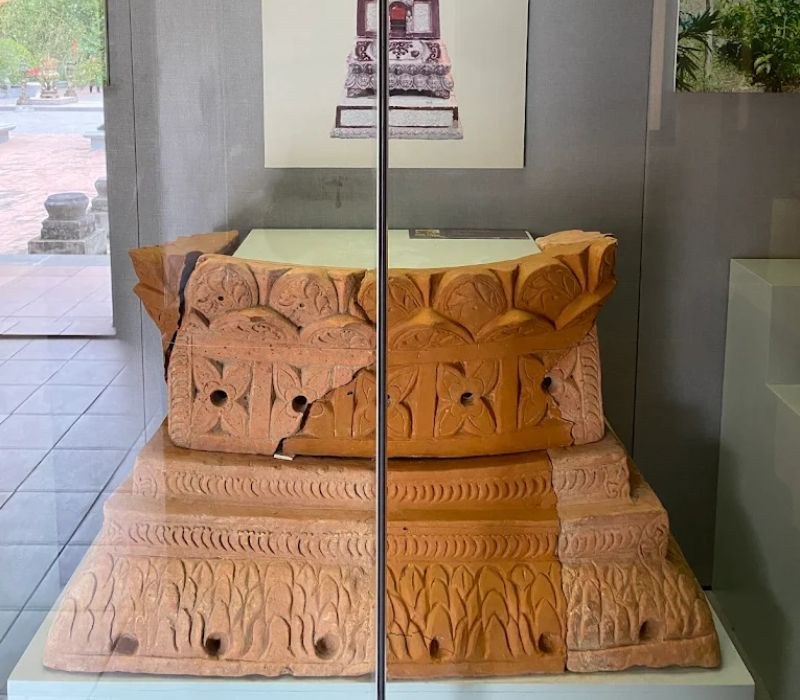
The temple grounds also display antiques showcasing the skill of Vietnamese artisans during the Trần Dynasty. Illustrative photo: Vinpearl
In particular, large brown-patterned ceramic basins with delicate lotus and chrysanthemum motifs testify to the prosperity of Trần-era ceramics—a period when Vietnamese ceramics reached an artistic and technical peak. Visiting this artifact exhibition gives visitors a broader perspective: it is not only about spiritual worship but also about studying and admiring the intelligence of the past. These tangible artifacts bring history closer, making the kings represented on the worship tablets feel more real and vivid through the objects they once used in their palace lives.
4 Tips for Taking Part in the An Sinh Temple Festival
The An Sinh Temple Festival is not only an event for Đông Triều residents; it has become a major festival on the scale of the entire Quảng Ninh Province, attracting tens of thousands of participants each year.
4.1 Annual Festival Period
The An Sinh Temple Festival is held annually during a very special period, from the 20th to the 22nd day of the eighth lunar month. This period coincides with the death anniversary of Đức Thánh Trần (the 20th day of the eighth lunar month), one of the nation’s greatest spiritual symbols.
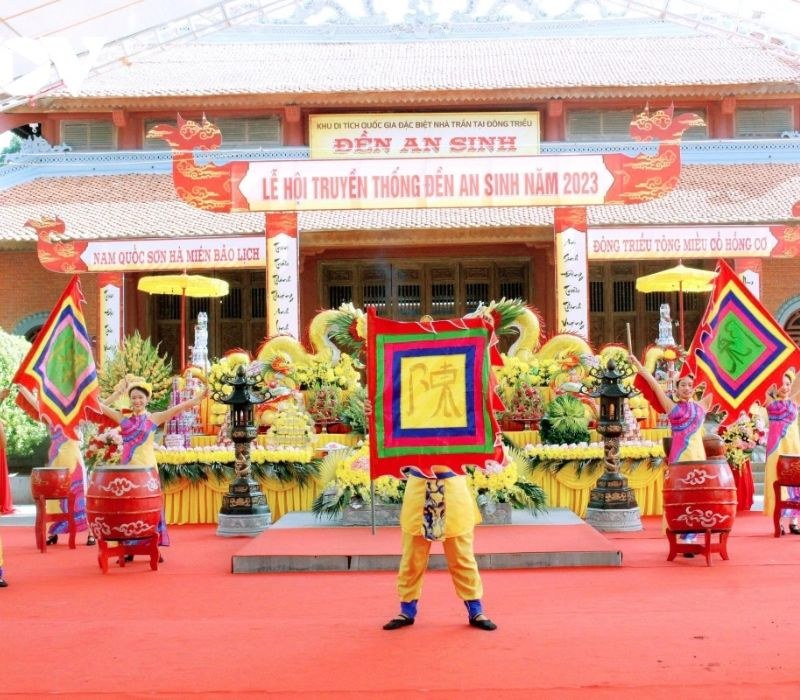
The An Sinh Temple Festival is an occasion to express gratitude to the former emperors. Illustrative photo: VOV
At this time, Đông Triều becomes more vibrant than ever, as the autumn weather begins to cool, creating favorable conditions for visitors to travel and take part in outdoor activities. If you make a pilgrimage to the temple on these days, you will join the bustling crowds and experience most clearly the people’s national pride and profound respect for the former emperors.
4.2 Special Rituals and Festive Activities
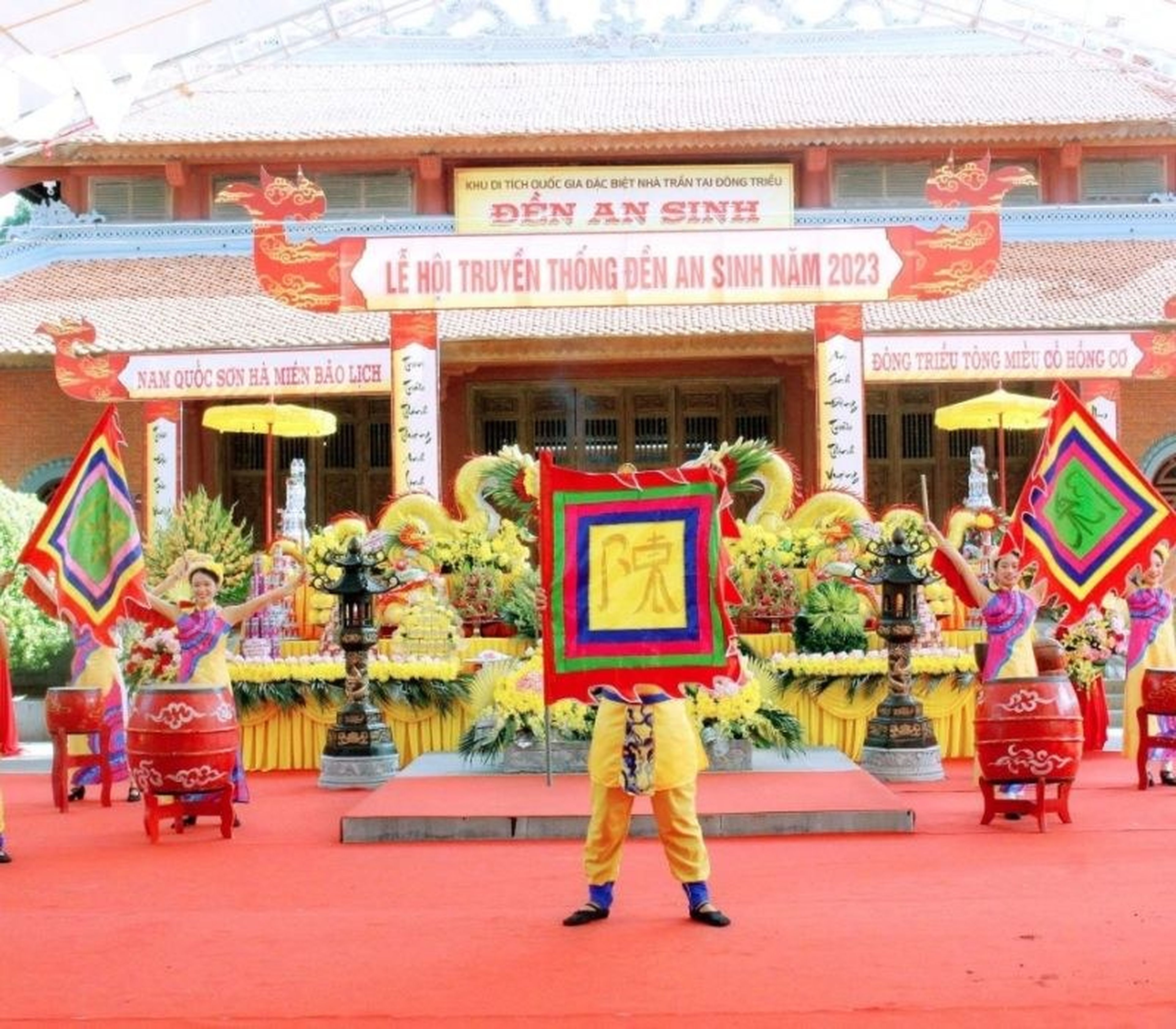
The festival is divided into two main parts: the solemn rituals and the lively festivities. The ritual section begins with the procession of the sacred tablets and highly formal ceremonies conducted by female and male ritual teams arriving from villages throughout the area. The resounding festival drums, accompanied by traditional ceremonial melodies, create a sacred atmosphere that transports visitors back to the nation’s pure cultural values. After the ceremonies comes an incense-offering ritual commemorating the Trần kings’ tombs in the surrounding area, an act of gratitude to the enlightened rulers who have rested for eternity in the earth of An Sinh.
After the solemn rituals comes the festive section, with a range of folk games imbued with the spirit of Đông A. Visitors can watch exciting cockfights, see young men and women swing on tall swings, or take part in friendly volleyball matches between villages.
In addition, artistic performances reenacting the lives and careers of the Trần kings are an indispensable source of spiritual entertainment. The combination of tradition and modernity has made An Sinh Temple an appealing cultural destination, helping people feel more connected to their homeland and appreciate precious historical values.
5 Things to Note When Visiting An Sinh Temple
To preserve the site’s solemnity and ensure their own comfort, visitors should keep several important points in mind when visiting An Sinh Temple:
- Visitors should wear long, modest, and polite clothing, avoiding outfits that are too short or revealing.
- When entering the main sanctuary, walk softly and speak quietly; do not run, play, or make loud noises that disturb the temple’s tranquil atmosphere.
- Keep the surroundings clean and do not litter.
- Do not touch archaeological artifacts or ancient statues without permission, in order to protect the site from damage over time.
An Sinh Temple is truly a precious gem in the system of Trần Dynasty relics throughout the country. The temple is also a place where each of us can quiet our minds and reflect on the values of peace and independence—achievements our ancestors paid for with so much blood and sacrifice. Standing amid the ancestral homeland of the Trần Dynasty and watching the rows of ancient longan trees rustle beneath the autumn sun, we feel lighter and prouder than ever. What are you waiting for? Pull out your travel suitcase and hit the road!